
Learn Wine, One Glass at a Time
Practical, beginner friendly wine education to help you taste with confidence. From understanding labels and regions to pairing food and building your palate, we make wine approachable one guide at a time.
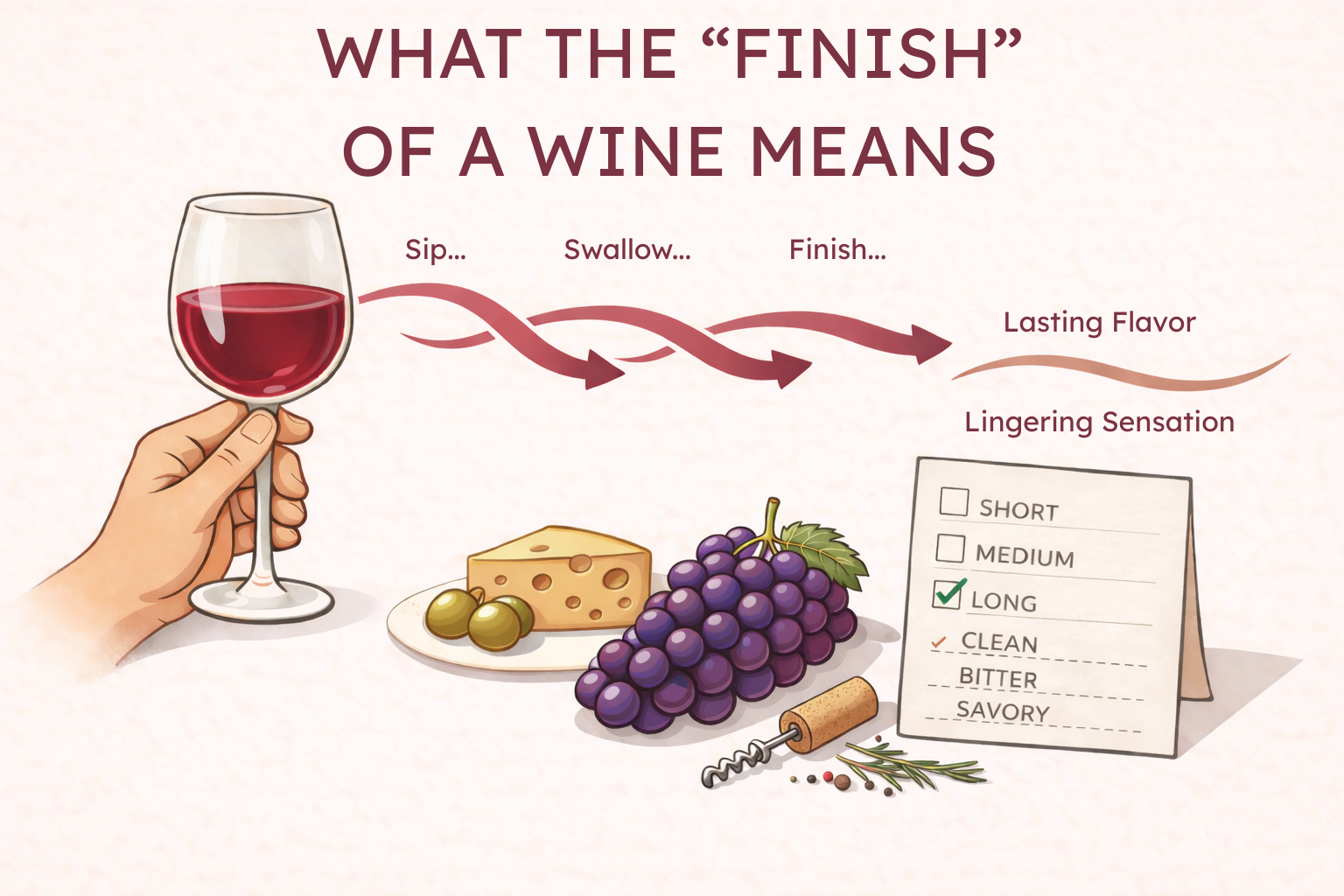
What the “Finish” of a Wine Means
The finish of a wine is what happens after the sip — the flavors, textures, and sensations that linger once the wine is gone. Some wines fade quickly. Others stay with you, changing and unfolding. Understanding finish is one of the easiest ways to tell how a wine is built and why some bottles feel more satisfying than others.
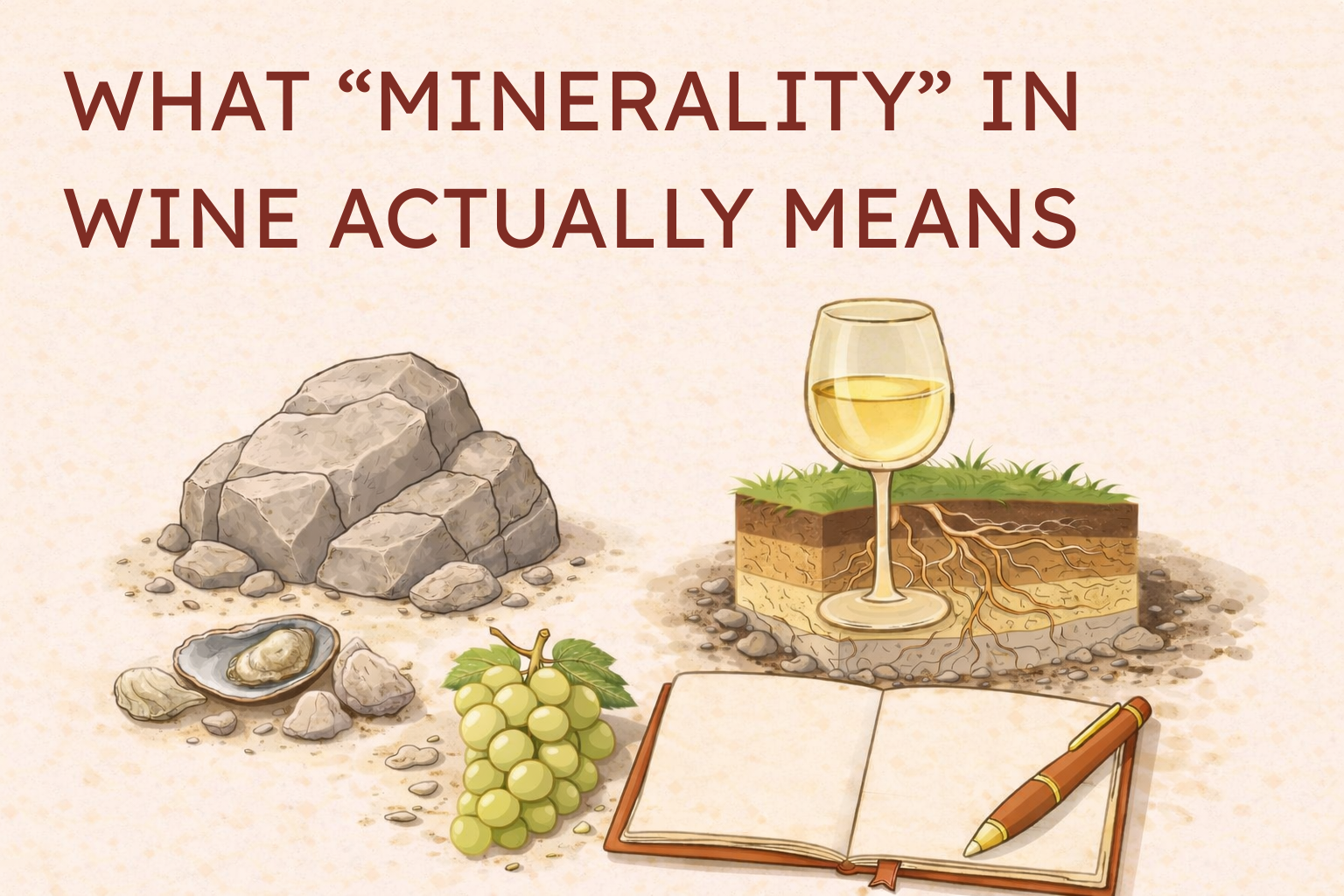
What “Minerality” in Wine Actually Means
Minerality describes wines that feel clean, savory, and refreshing rather than fruity or sweet. It shows up as stony, earthy, or subtly salty notes that create a sense of purity, restraint, and food-friendly balance on the palate.
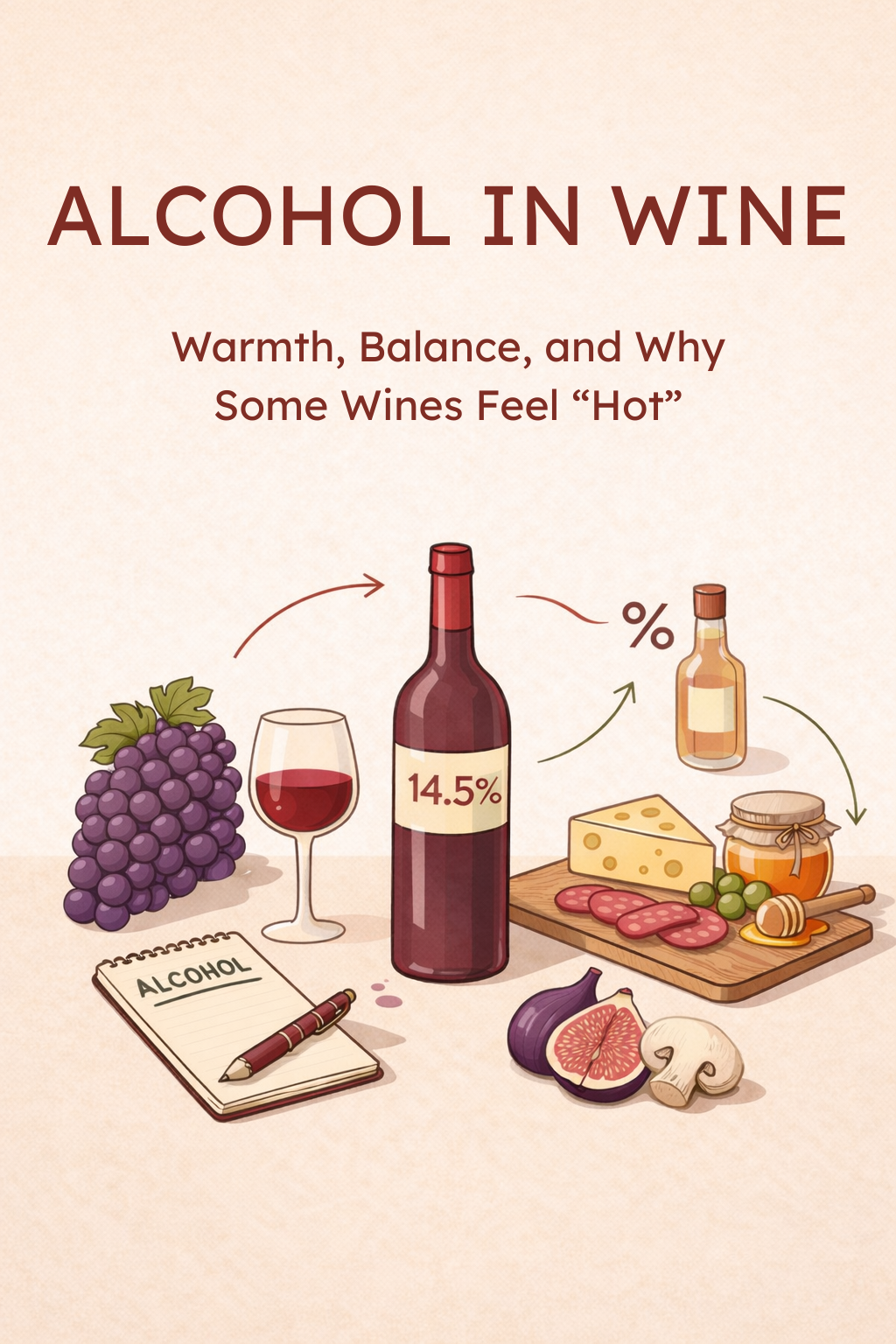
Alcohol in Wine: Warmth, Balance, and Why Some Wines Feel “Hot”
Alcohol can make a wine feel warm, smooth, or sometimes a little harsh. It’s not just about the number on the label—it’s about how alcohol fits into the wine as a whole and how it feels once you start sipping.
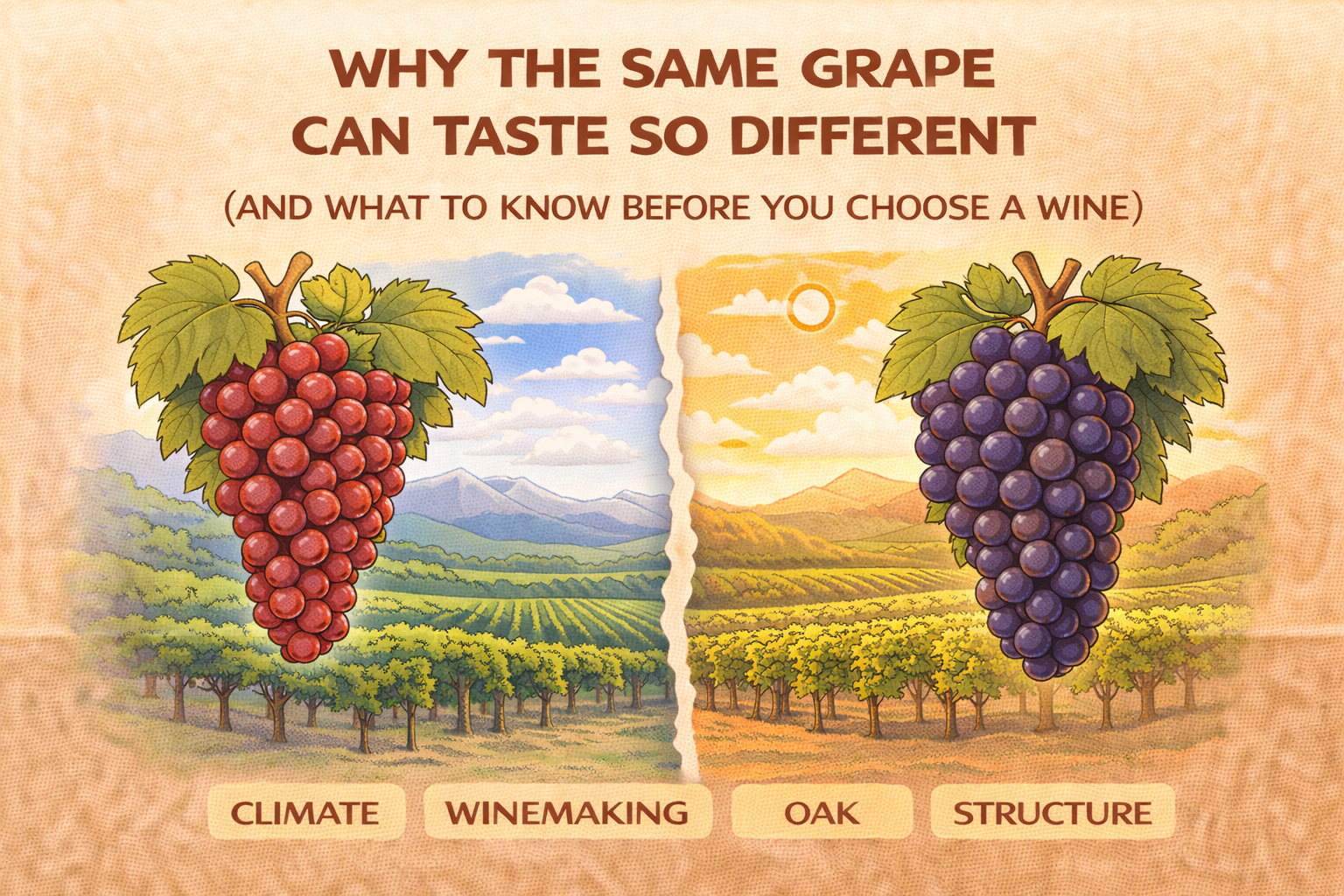
Why the Same Grape Can Taste So Different
If wine has ever felt inconsistent or confusing, this is usually why. You buy a Pinot Noir you love and the next bottle with the same grape on the label tastes darker, earthier, or heavier than you expected. Same grape. Same color. Completely different experience. That disconnect isn’t your palate failing you. It’s how wine actually works. A grape variety is only the starting point. What happens to that grape, where it’s grown, how it’s handled, and how it’s finished has a massive impact on how the wine ends up tasting. Once you understand this, wine stops feeling unpredictable and starts feeling readable.
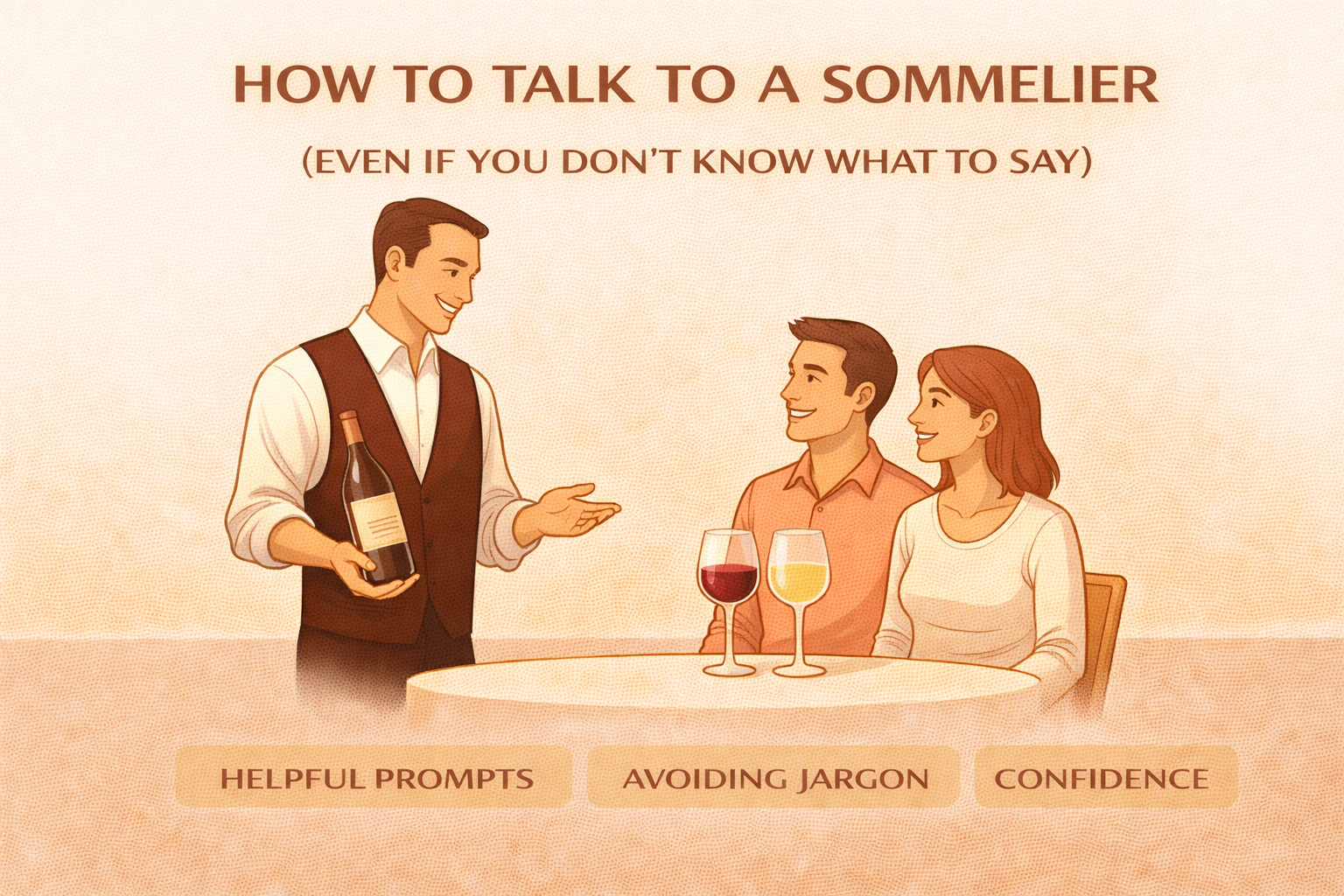
How to Talk to a Sommelier
For a lot of people, the hardest part of ordering wine at a restaurant isn’t the price or the wine list — it’s the moment the sommelier walks over. You might worry about saying the wrong thing. Or sounding inexperienced. Or freezing because the list feels unfamiliar and everyone else seems confident. None of that means you’re bad at wine. It just means the setting adds pressure. The good news? Sommeliers aren’t testing you. They’re trying to help you enjoy your meal. And you don’t need fancy language or deep knowledge to have a great conversation with one.
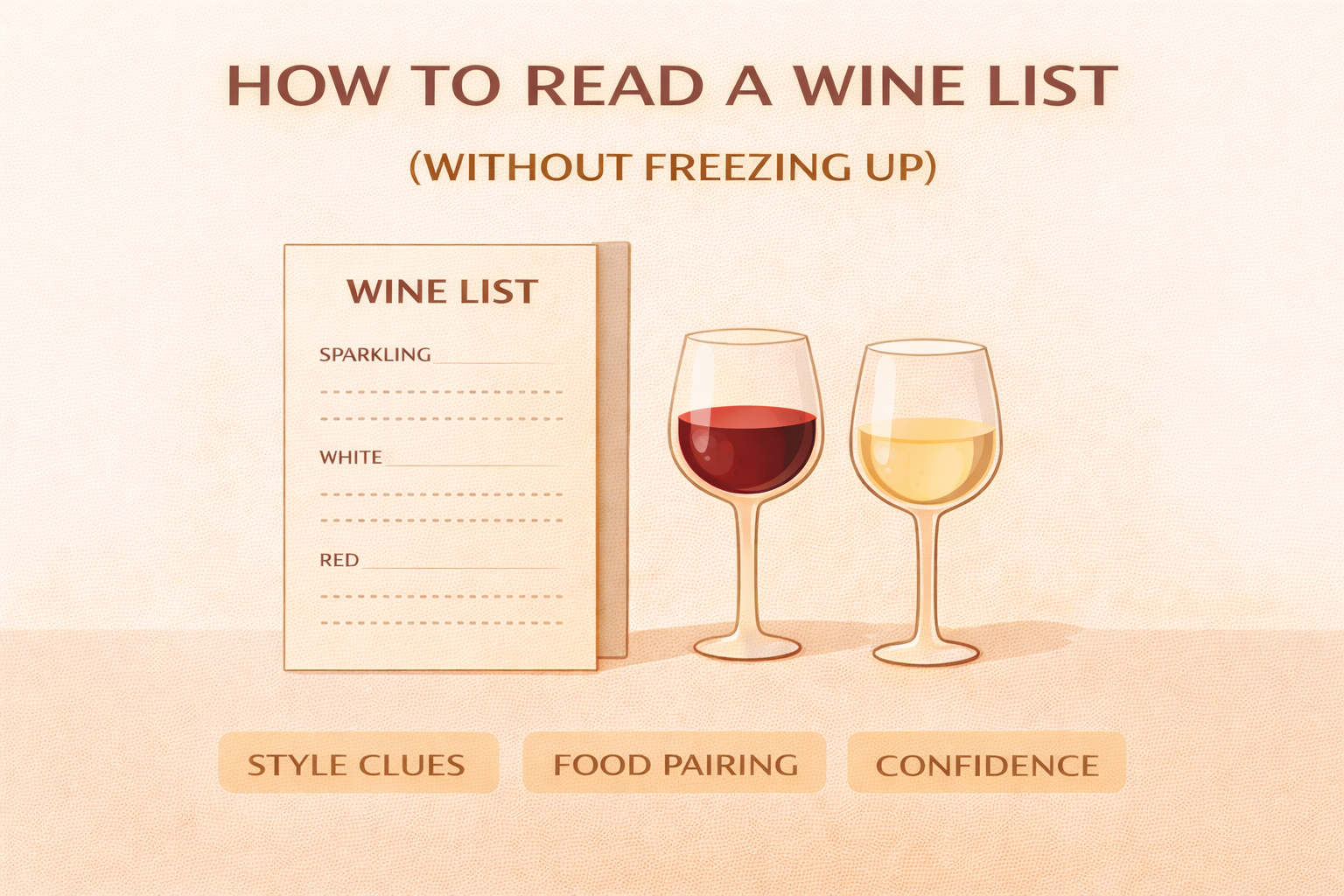
How to Read a Wine List
If you’ve ever opened a wine list and suddenly felt like you were taking a test you didn’t study for, you’re not alone. Wine lists can feel dense, unfamiliar, and oddly high-pressure especially when the table is waiting and the server is standing nearby. But here’s the quiet truth most people don’t realize: you’re not supposed to recognize everything on the page. You’re supposed to recognize your preferences. Once you shift your focus from decoding the list to understanding how it’s organized, ordering wine becomes a lot less intimidating and a lot more enjoyable.
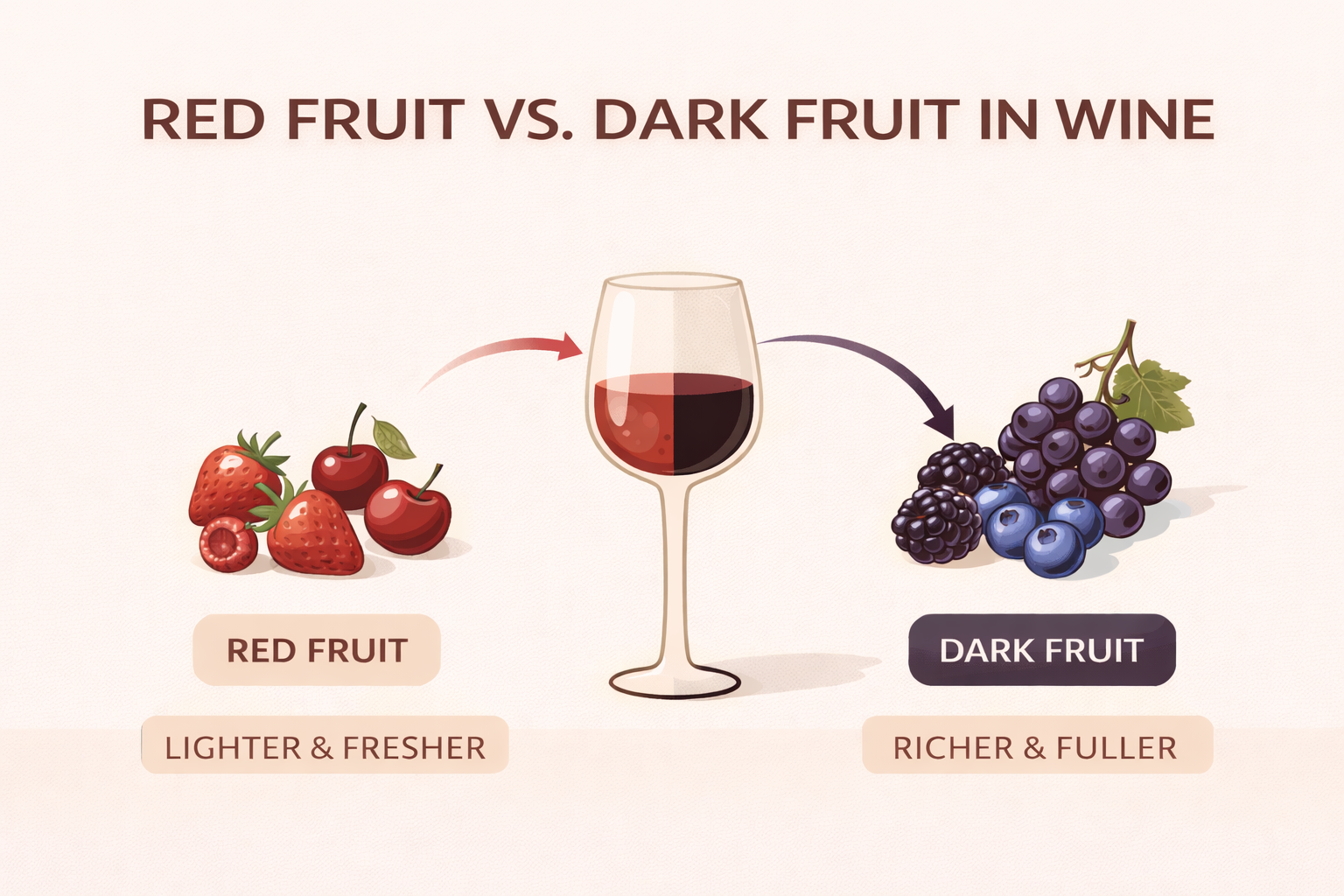
Red Fruit vs. Dark Fruit in Wine
If you’ve ever heard a wine described as red-fruited or dark-fruited and nodded along without being totally sure what that meant, you’re not alone. Those phrases show up everywhere — tasting notes, wine lists, conversations — but they’re rarely explained in a way that feels useful. The good news is this: you don’t need to identify specific fruits or train your nose to tell raspberries from cherries. What matters is understanding what those fruit categories suggest about the wine as a whole. Once you do, these descriptions stop feeling abstract and start helping you choose wines you actually enjoy. Let’s break it down in a way that’s practical, intuitive, and easy to remember
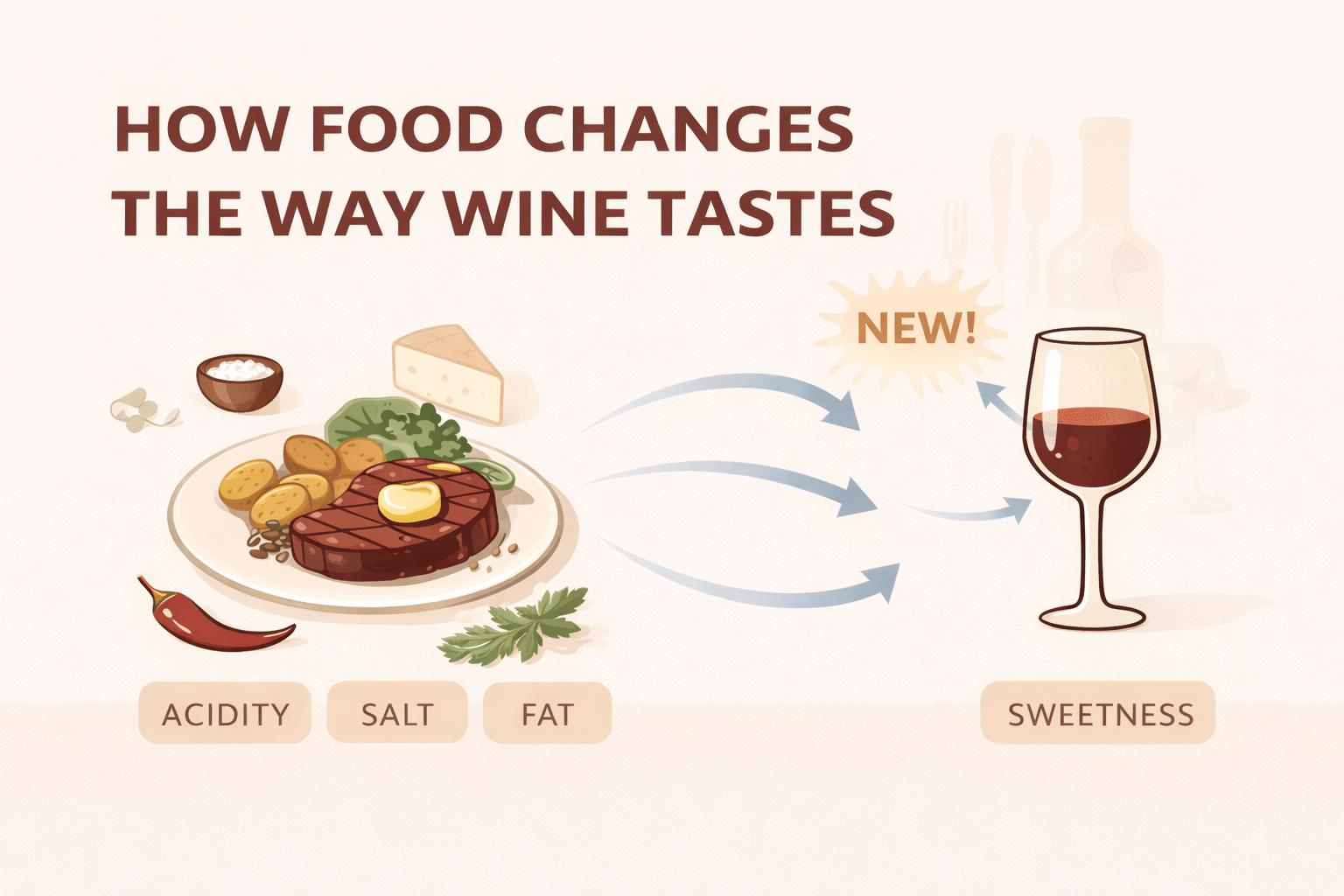
How Food Changes the Way Wine Tastes
If you’ve ever opened a bottle you loved at dinner, then felt a little underwhelmed when you tried it again later, you’re not imagining things. The wine didn’t suddenly lose its charm, it was just missing something. Wine is rarely experienced on its own. Most of the time, it’s part of a larger moment: a meal, a conversation, a setting. What you eat alongside it can quietly change how the wine feels — softening some edges, pulling certain flavors forward, or shifting the balance altogether. Once you start noticing this interaction, wine becomes less mysterious and far more forgiving. Instead of wondering why a bottle feels inconsistent, you begin to see how food is shaping the experience in real time.
Discover Your Wine Style
Take our quick quiz to uncover the wines you’ll love based on your tastes, mood, and lifestyle.
Quick & Easy
Takes less than 2 minutes
Personalized Results
Get wine recommendations that match your style
Better Choices, Every Time
Shop and explore with confidence
Not Sure Where to Start?
Essential Guides to help you build confidence with wine.
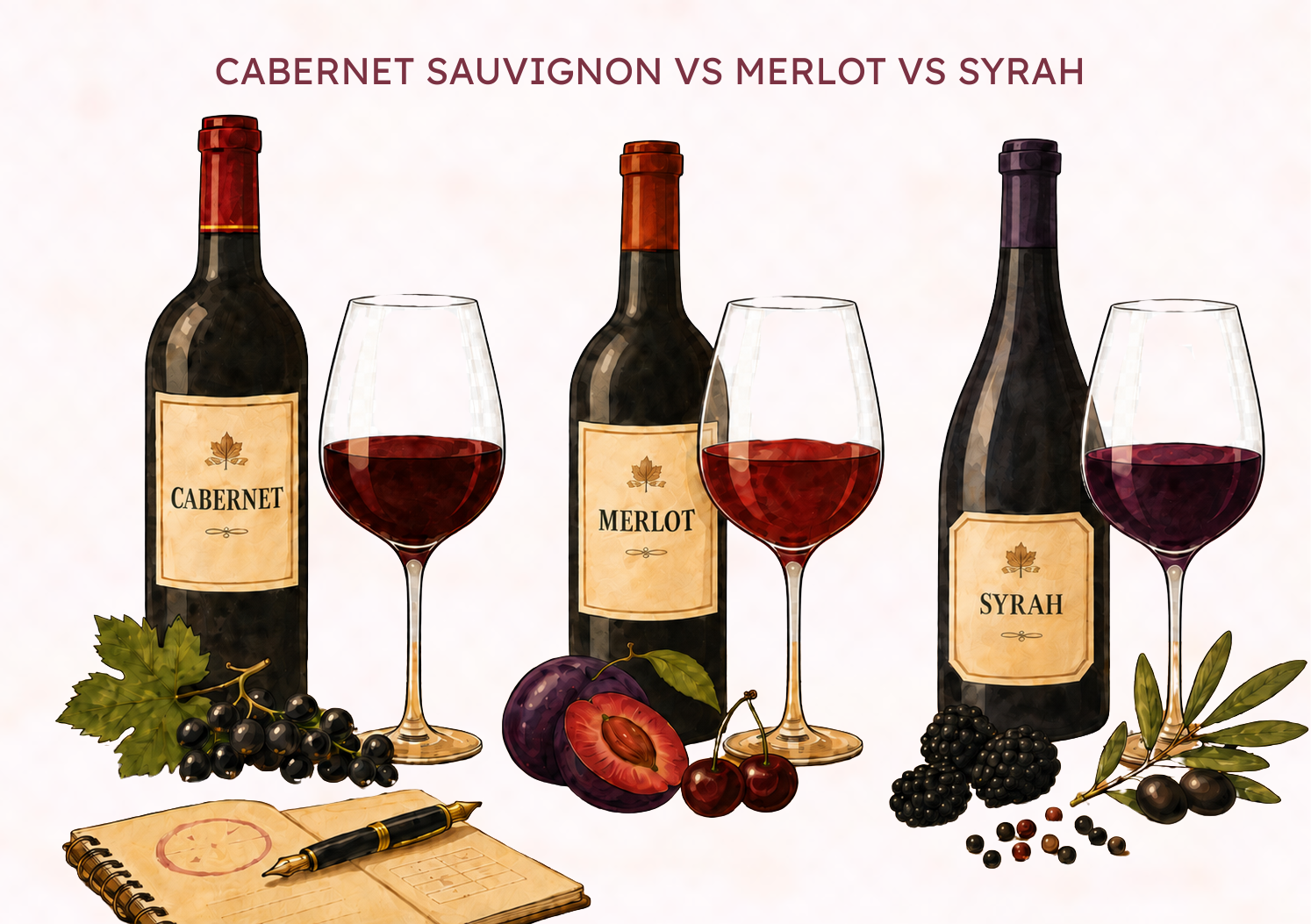
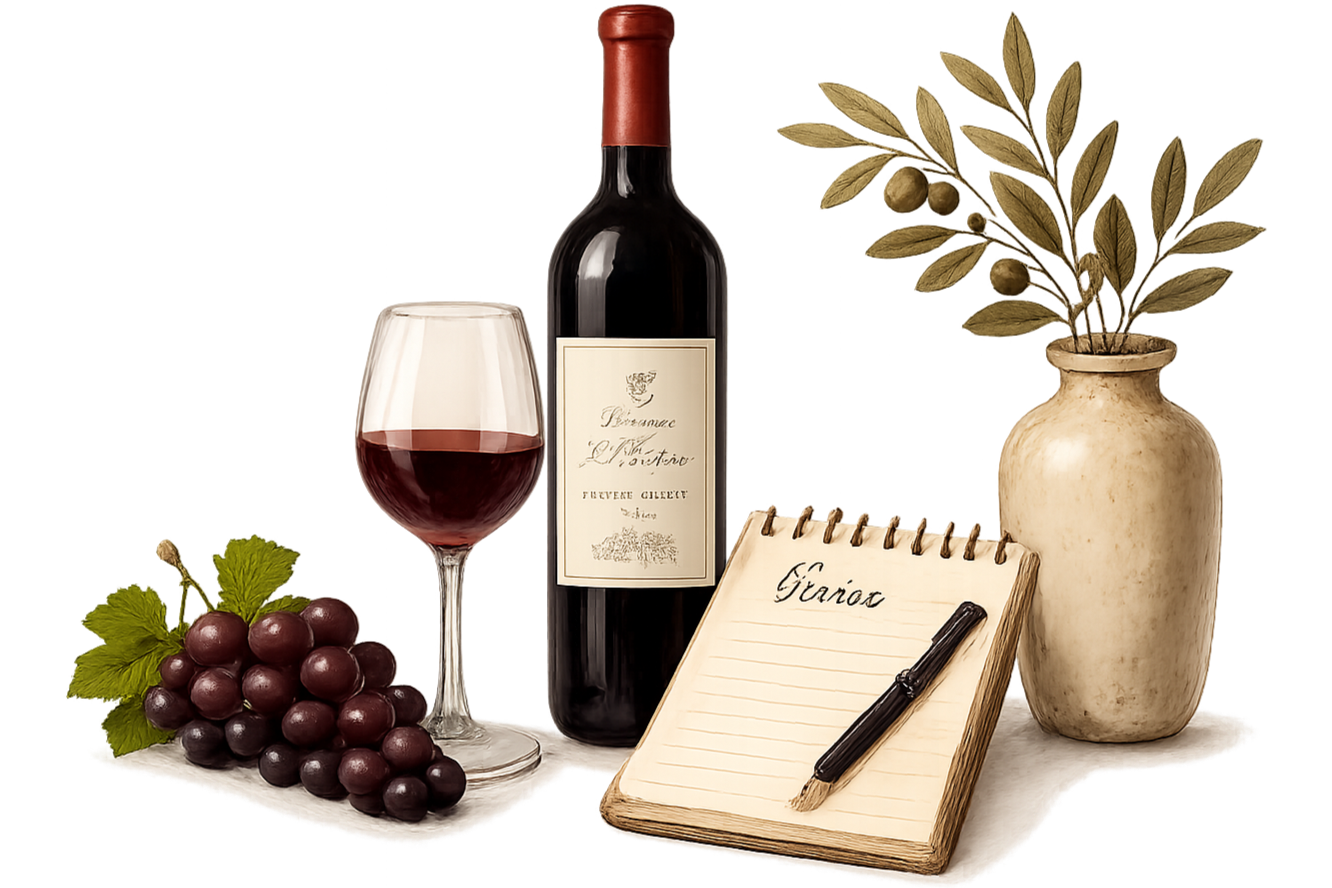
Remember the wines you actually enjoy.
Your free wine journal makes it easy to track what you love, learn from every bottle, and find your perfect pour.