
What the “Finish” of a Wine Means
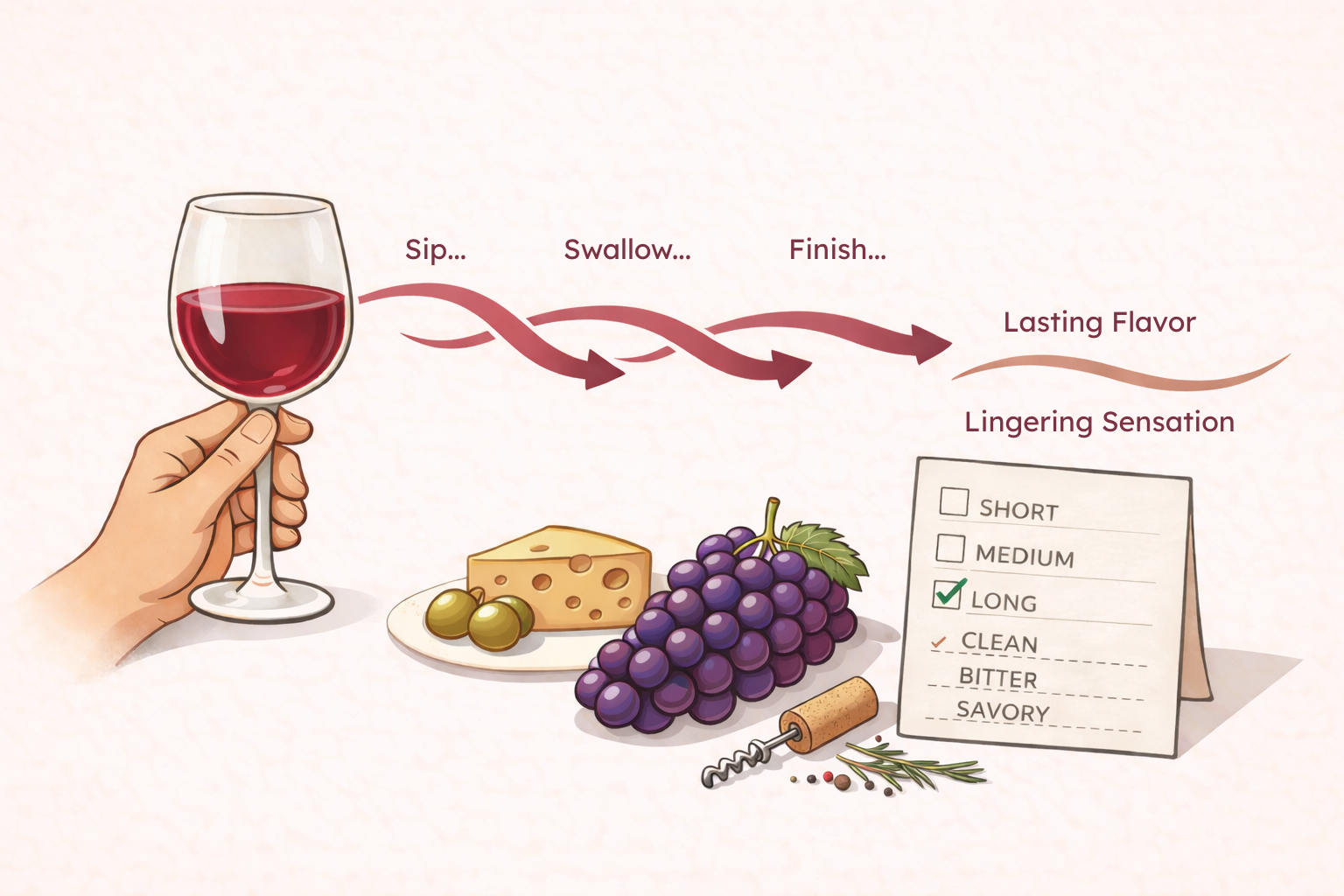
You take a sip of wine. You swallow. And then… the wine keeps talking. Or it doesn’t. That moment after the sip when flavors fade, textures linger, or sensations show up — is what people mean when they talk about a wine’s finish. It’s not a technical trick. It’s not something reserved for experts. The finish is simply the lasting impression a wine leaves once it’s no longer in your mouth. And paying attention to it is one of the easiest ways to understand how a wine is built.
What does “finish” mean in wine?
When tasting wine, the finish (sometimes called the tail) refers to the flavor, texture, and intensity that remain after swallowing or spitting out the wine. You’re not analyzing the sip itself. You’re noticing what sticks around once it’s gone. That includes:
how long the taste lasts
how the flavor changes at the end
how your mouth feels afterward
If the wine disappears quickly, the finish is short. If it lingers in a good way, the finish is longer.
Length: how long does the finish last?
When people talk about finish, they often start with length. This is simply how long the wine’s presence stays noticeable after swallowing. Some wines fade almost immediately. Others linger for 20, 30 seconds or more. In general:
a short finish fades quickly
a medium finish hangs on briefly
a long finish stays present well after the sip
A longer finish often signals better balance and depth, but length alone isn’t everything. A wine can linger for the wrong reasons too, like excess alcohol or bitterness.
Finish isn’t just flavor — it’s texture
This is where finish becomes especially helpful for beginners. Even when flavors fade, texture often remains. Your mouth might still feel something, even if you can’t name a taste. Common finish textures include:
silky or creamy, where the wine feels smooth and coating
dry or grippy, often from tannins
clean and mouthwatering, driven by acidity
warm or spicy, usually related to alcohol
If a wine leaves your mouth feeling dry or puckered, that’s often tannin at work, something you’ll recognize more clearly once you understand tannin in wine. If the finish feels fresh and makes you want another sip, acidity is likely playing a role — which connects directly to acidity in wine.
What flavors tend to show up at the end?
The finish doesn’t always taste like the first sip. Fruit can fade. Savory or earthy notes can appear. Oak, spice, or mineral tones often become more noticeable. People commonly describe finish flavors as:
spice or warmth
lingering fruit
subtle bitterness
oak or toast
mineral or savory notes
You don’t need to name these precisely. The key question is whether the ending feels balanced or distracting.
Common finish descriptors (in plain language)
You’ll hear these words often. Here’s what they usually mean without the fluff:
Long – the wine stays present after swallowing
Smooth / soft – nothing sticks out harshly
Crisp – clean, refreshing ending, often high acidity
Dry / tannic – mouth-drying sensation
Spicy / warm – alcohol shows up at the end
Abrupt – flavor drops off suddenly
None of these are inherently good or bad. They’re simply ways of describing what happened.
Why finish is often a quality signal
Finish matters because it’s hard to fake. A wine can smell impressive and still fall apart at the end. A wine can taste fruity up front but finish hot or harsh. A simple wine can be enjoyable but fade quickly. Wines with better balance tend to hold together through the finish. Flavor, texture, and intensity can fade together instead of one element overpowering the rest. That’s why a long, clean, and balanced finish is often associated with higher-quality wine. Not because longer is always better, but because it suggests the wine has depth and structure.
How to notice finish without overthinking it
Next time you drink wine, try the following steps:
Take a sip
Swallow (or spit)
Pause for five seconds.
Then ask yourself:
Is anything still there?
Does my mouth feel dry, fresh, warm, or smooth?
Did the wine end cleanly or awkwardly?
One honest answer is enough. You don’t need a stopwatch. You don’t need perfect words. You just need to notice.
Why learning finish builds confidence fast
Finish is one of the quickest ways to trust your own palate. You don’t need to memorize grapes or regions. You don’t need to agree with anyone else at the table. You just need to pay attention to what happens after the sip. If a wine leaves your mouth feeling balanced and satisfied, that matters. If it ends harshly or fades too fast, that matters too. That instinct is real — and understanding finish helps you listen to it.
