
Does Glassware Actually Matter?
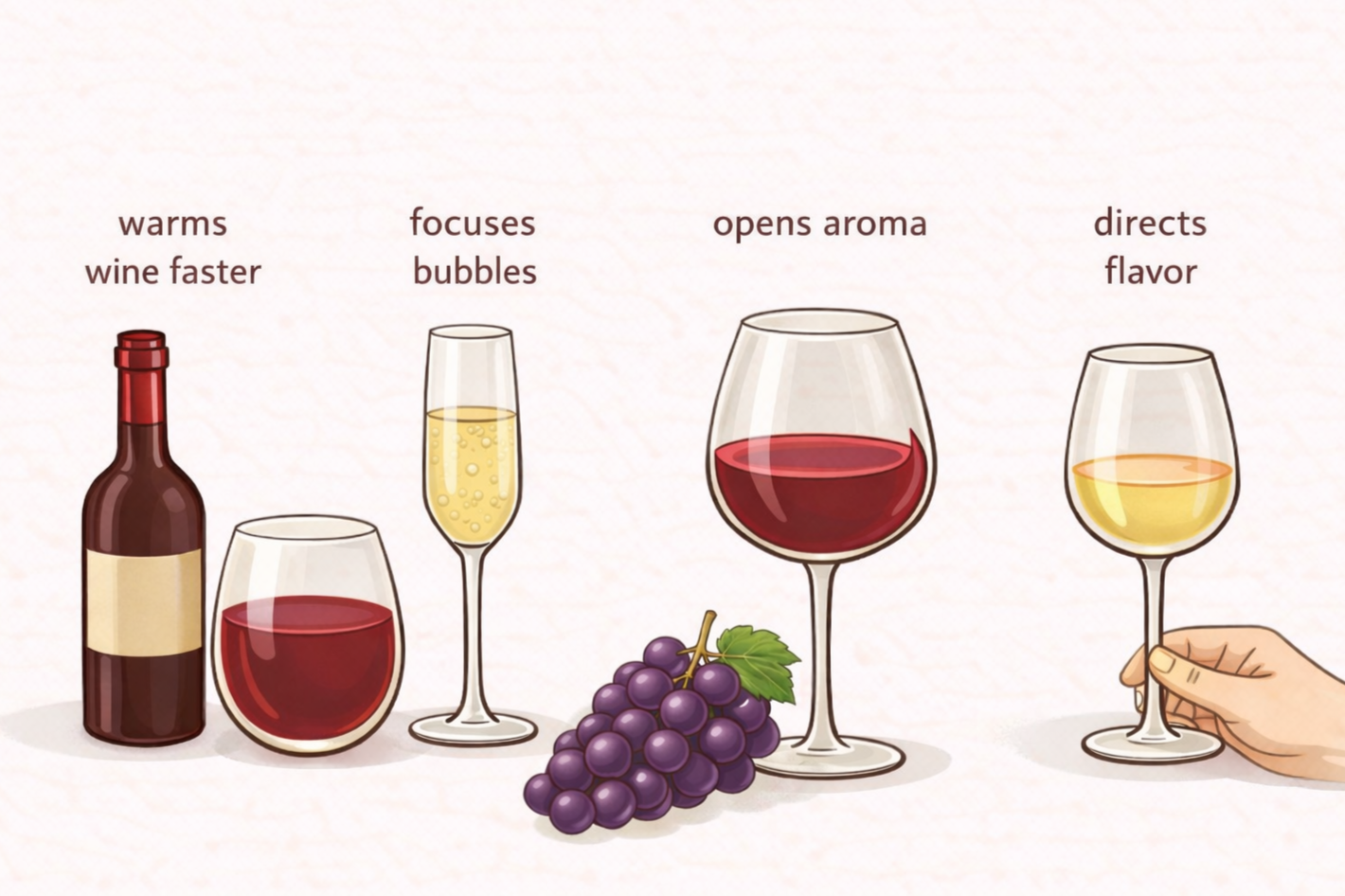
‘Walk into any wine shop and you’ll see shelves of glassware promising a better experience: different shapes for different grapes, bowls for different regions, glasses that look like they require a certification to use correctly. It’s enough to make people wonder whether enjoying wine requires the right equipment. Here’s the honest answer glassware does matte, but not because of rules or grape-specific design. It matters because it subtly changes how wine smells, feels, and opens as you drink it. Once you understand why, the noise drops away.
What a Wine Glass Actually Does
A wine glass isn’t decorative. It serves three practical purposes:
It collects and directs aromas
It influences how wine enters your mouth
It affects how quickly the wine warms and opens
That’s it. Most of what we perceive as “flavor” in wine actually comes from aroma. The bowl and rim shape determine how aromas rise, concentrate, and reach your nose. A wider bowl allows aromas to expand. A slightly tapered rim keeps them focused instead of letting them dissipate. If you’ve read How to Smell Wine, this is the same principle at work: aroma drives perception long before the wine hits your palate.
Why Shape Matters More Than Labels
You don’t need a different glass for every grape variety. That idea is rooted more in tradition and marketing than in real sensory payoff. What actually matters is bowl size and rim shape, not whether the glass says “Pinot Noir” on the box.
In general:
Larger bowls give fuller-bodied or higher-alcohol wines room to breathe, softening heat and spreading aromas
Smaller bowls keep aromas tighter and preserve freshness, which works well for lighter, more delicate wines
This isn’t about matching glass to grape. It’s about matching space to how the wine behaves in air.
The Biggest Upgrade Most People Miss
The biggest improvement rarely comes from buying specialty glassware. It comes from not crowding the wine. Small, straight-sided glasses filled halfway leave no room to swirl. Aromas escape quickly, the wine feels muted, and texture gets lost. Even excellent wine can feel flat in the wrong vessel. A single, well-designed all-purpose glass — moderate bowl size, gentle taper — will outperform a cupboard full of “correct” glasses that never get used. If your goal is clarity, not perfection, that’s the move.
What About Stemless Glasses?
Stemless glasses aren’t wrong, they just change one variable: temperature. Holding the bowl warms the wine faster. That can:
Make alcohol feel more pronounced
Soften acidity more quickly
Change how the wine evolves over the course of a glass
If you’ve read Alcohol in Wine, Explained, this lines up: temperature plays a major role in how alcohol and balance show up on the palate. If you like stemless glasses, use them. Just know what’s happening and adjust expectations — not enjoyment.
The Right Question to Ask
Instead of asking, “Is this the right glass?” ask “Is this glass helping me notice the wine?”
If it makes aromas easier to smell, texture easier to feel, and the wine more engaging to drink, it’s doing its job. Glassware isn’t about correctness. It’s about removing friction between you and the wine. When that friction disappears, the glass fades into the background and the wine finally gets your full attention.
If you’re interested in noticing how wine changes over time — aroma, balance, texture — without memorizing rules or buying gear, Somm Scribe is built to help you track those patterns simply and confidently. Wine doesn’t need the perfect glass. It just needs a little room to show up.
