
Why the Same Wine Can Taste Better (or Worse) on Different Days
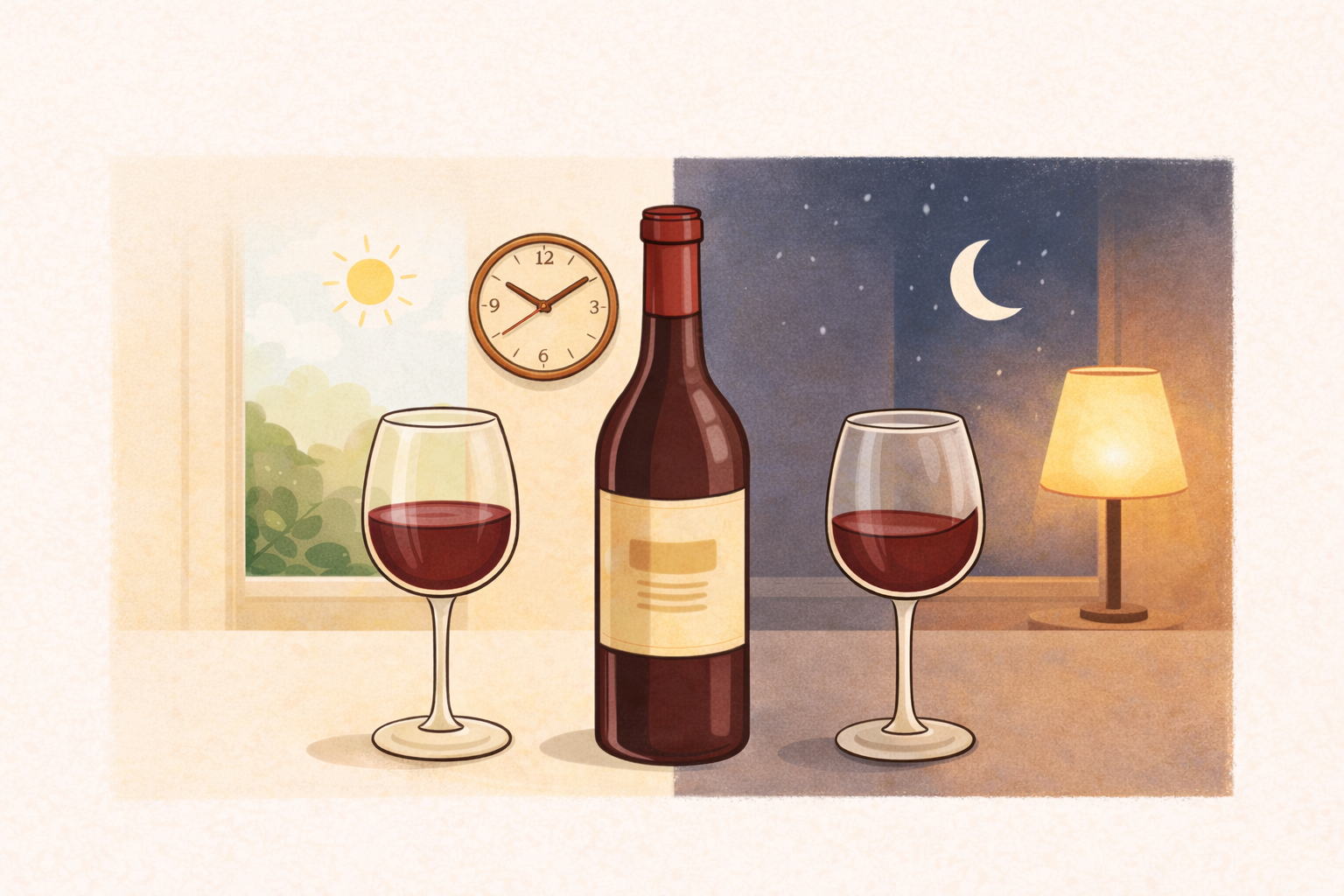
Have you ever opened a bottle you know you like… and felt kind of underwhelmed? Same wine. Same glass. Same room. Totally different experience. It’s tempting to assume something’s wrong with the bottle or worse, with your palate. But this is one of the most normal things in wine. Wine isn’t a fixed experience. It’s a moving target, and you are part of the equation. Let’s talk about why the same wine can feel incredible one night and just “meh” the next—and why that doesn’t mean you’re doing anything wrong.
Your body changes more than the wine does
Wine doesn’t hit a static palate. It hits you, in whatever state you’re in that day. What you ate earlier matters. How hydrated you are matters. Your stress level matters more than most people realize. On days when you’re tired, anxious, or distracted, your senses tend to dull or skew sharp. Alcohol might feel harsher. Acidity might feel more aggressive. Subtle flavors get lost. On calmer days (when you’re relaxed, fed, and present) wine often feels smoother, more connected, more expressive. Same bottle, different receiver. This is why some wines feel “off” after a long workday but sing on a slow weekend afternoon.
Food changes everything (even when you don’t think it will)
Wine never exists in a vacuum. Even if you’re not actively pairing it with food, whatever’s already on your palate affects how it shows up. Salt can soften bitterness and make fruit feel brighter. Fat can smooth tannins and alcohol. Spice can amplify heat and dryness. A wine that feels sharp on its own might feel balanced with dinner. One that felt lush yesterday might feel flat today because your palate is already coated with rich food. If you’ve ever wondered why a wine tasted better halfway through the meal than at the first sip, this is why.
If you want a deeper read on one piece of this puzzle, our post on Acidity in Wine explains why some wines wake up your mouth while others feel heavy.
Mood and attention matter more than people admit
This part sounds soft, but it’s real. If you’re scrolling your phone, half-watching TV, or mentally replaying your day, wine becomes background noise. You’ll notice the loud parts like alcohol, bitterness and sweetness but miss the nuance. When you slow down, even briefly, wines tend to feel more complete. Texture becomes clearer. The finish lasts longer. The wine feels more intentional. This ties closely to how we experience a wine’s finish. On distracted days, finishes feel short and forgettable. On attentive days, they linger. Same wine. Different level of presence.
The bottle itself can change after opening
Here’s the part that actually is about the wine. Once a bottle is opened, oxygen starts interacting with it. Sometimes that’s a good thing. Sometimes it’s not.
On day one, a wine might feel tight or muted
On day two, it might feel softer and more open
On day three, it might feel tired or disjointed
There’s no universal timeline. Some wines improve overnight. Others peak quickly and fade. This is especially noticeable with wines that have higher alcohol or bolder structure, where balance can shift fast. So yes—sometimes the wine really is different. That’s not your imagination.
Your expectations shape the experience
This one’s subtle but powerful. If you’re expecting a wine to be amazing, you’re more forgiving of its rough edges. If you’re already skeptical or had a bad day with it once you’re primed to notice flaws. That doesn’t mean wine tasting is “fake” or all in your head. It just means taste is interpretive. Your brain is always part of the loop. The goal isn’t to eliminate that, it’s to notice it without judging yourself for it.
What this means (and what it doesn’t)
It doesn’t mean your palate is inconsistent. It doesn’t mean you can’t trust your taste. It doesn’t mean wine is random. It means wine is contextual. Every bottle is a conversation between the wine, your body, your environment, and your attention. Some days that conversation clicks. Some days it doesn’t. And that’s okay. If anything, noticing these shifts is a sign that you’re becoming a better wine drinker, not a worse one. You’re paying attention. You’re learning how wine behaves in real life, not in theory. That awareness is exactly what Somm Scribe is built to support, not to give you “right answers,” but to help you understand your own experience with confidence. Wine doesn’t need to be consistent to be meaningful. It just needs to be noticed.
