Learn Wine, One Glass at a Time

Somm Scribe is a practical wine education blog designed to help you taste with confidence. From understanding wine labels and regions to learning how flavor, oak, and structure work together, each guide is built to make wine more approachable — one glass at a time.

How to Order Wine at a Restaurant
Wine Education Brady Peterson Wine Education Brady Peterson

How to Order Wine at a Restaurant

Ordering wine at a restaurant can feel like a test you didn’t study for. The list is long. The descriptions are vague or unfamiliar. Prices climb quickly. And sometimes, the moment you hesitate, it feels like everyone at the table suddenly knows exactly what they want except for you. If that sounds familiar, you’re not alone. Even people who enjoy wine regularly feel this pressure. The good news is that ordering wine at a restaurant doesn’t require confidence, expertise, or the “right” vocabulary. It just requires a simple approach and permission to trust your own preferences.

Read More
How to Choose a Wine You’ll Actually Like
Wine Education Brady Peterson Wine Education Brady Peterson

How to Choose a Wine You’ll Actually Like

Standing in front of a wall of wine can feel overwhelming. Dozens of bottles. Labels covered in words you half-recognize. Prices all over the place. And somehow, everyone else looks like they know exactly what they’re doing. If you’ve ever picked a bottle based on a guess or defaulted to the same wine every time just to avoid thinking, you are not alone. The good news is that choosing a wine you’ll enjoy doesn’t require memorizing regions, grapes, or fancy terminology. It just requires knowing what to pay attention to and what to ignore.

Read More
Tannins vs Oak: What’s the Difference
Wine Education Brady Peterson Wine Education Brady Peterson

Tannins vs Oak: What’s the Difference

If you’ve ever tasted a wine and thought, “This feels dry,” or “This tastes kind of woody,” you’ve already encountered tannins and oak even if you didn’t have names for them yet. They often show up together, especially in red wines, which is why they’re so commonly confused. But tannins and oak are not the same thing, and understanding the difference makes wine much easier to interpret. Once you can tell which one you’re noticing, a lot of wine descriptions suddenly start to make sense.

Read More
How Oak Aging Changes Wine
Wine Education Brady Peterson Wine Education Brady Peterson

How Oak Aging Changes Wine

If you’ve ever seen “oaked” or “unoaked” on a wine label and wondered what that actually means, you’re not alone. Oak aging is one of the most influential parts of winemaking. Some people love oaky wines. Others say they hate them. The good news? Once you understand what oak does to wine, you’ll be able to recognize it easily, decide whether you like it, and choose bottles with way more confidence.

Read More
Why Some Wines Taste Fruity: Even When They Aren’t Sweet
Wine Education Brady Peterson Wine Education Brady Peterson

Why Some Wines Taste Fruity: Even When They Aren’t Sweet

One of the biggest surprises for new wine drinkers is discovering that a wine can taste fruity without actually being sweet. You’ll smell strawberries in a completely dry rosé, ripe peach in a crisp Albariño, or blackberry jam in a Cabernet that has zero sugar in it. So what’s going on? Why do dry wines smell and taste like fruit? The short answer: fruitiness isn’t sweetness. The long answer is what we’ll explore here.

Read More
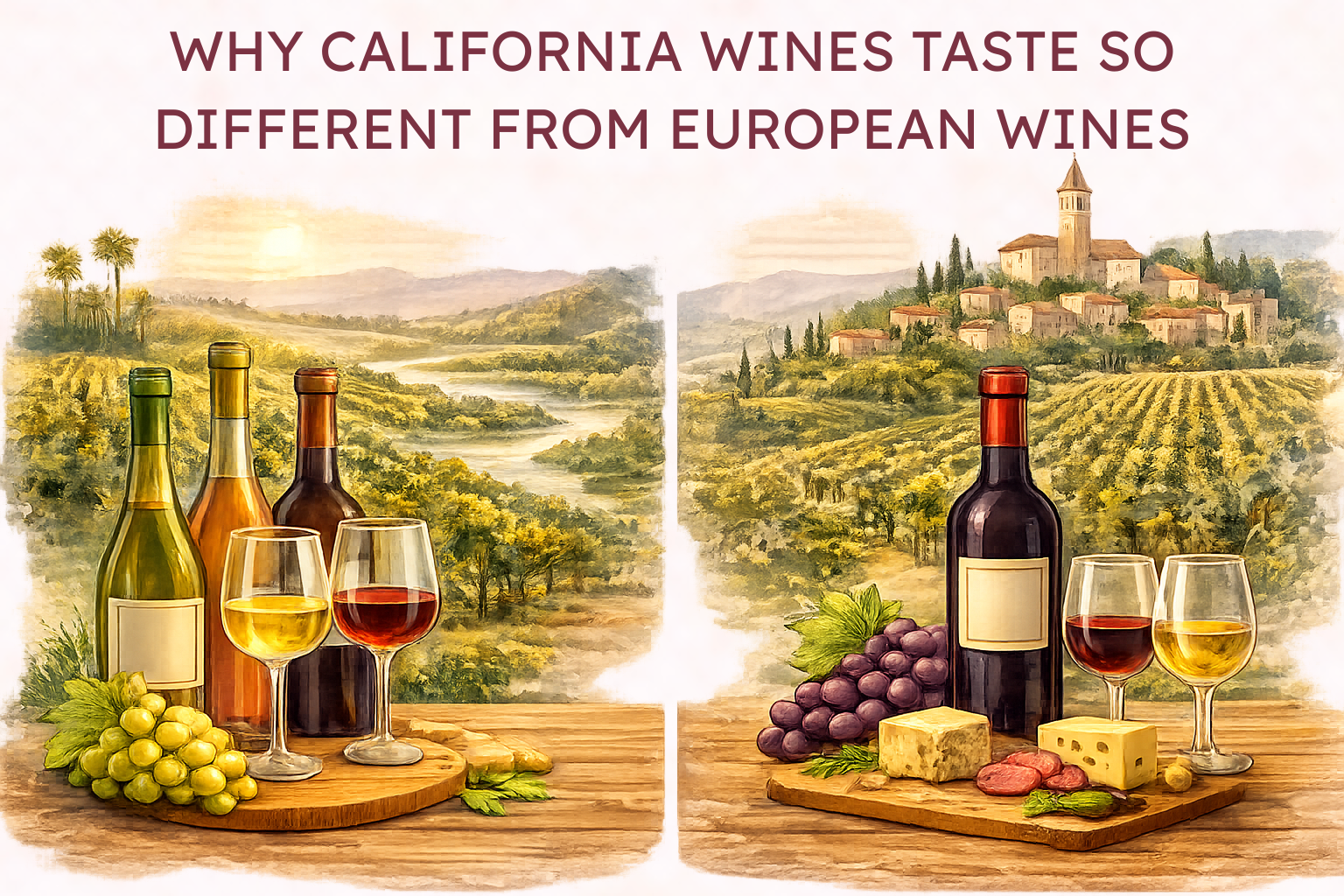
Old World vs New World Wine: What’s the Real Difference?
Wine Education Brady Peterson Wine Education Brady Peterson

Old World vs New World Wine: What’s the Real Difference?

If you’ve ever heard someone describe a wine as Old World or New World and wondered what that actually means, you’re not alone. These terms get thrown around all the time, but beginners rarely get a clear explanation. This guide breaks the concept down giving you everything you need to feel confident when comparing wines from Europe to wines from places like the U.S., Australia, South America, and beyond.

Read More
Wine Body Explained: Light, Medium & Full-Bodied Wines
Wine Education Brady Peterson Wine Education Brady Peterson

Wine Body Explained: Light, Medium & Full-Bodied Wines

When people talk about the “body” of a wine, they’re describing something surprisingly simple: how heavy or full the wine feels in your mouth. It’s the easiest wine concept to feel — and one of the hardest for beginners to describe. This guide walks you through what body really means, what affects it, and how to recognize it immediately when you taste.

Read More
How to Tell If a Wine Is High Quality: Without Being a Snob
Wine Education Brady Peterson Wine Education Brady Peterson

How to Tell If a Wine Is High Quality: Without Being a Snob

People love to talk about “good wine,” but the truth is… most folks don’t actually know what that means. Does expensive wine always equal high quality? (No.) Can a $12 bottle taste fantastic? (Absolutely.) And do you need formal training to know the difference? Not even close. This guide will walk you through the essentials in a simple, friendly way so you can judge quality confidently, without sounding like you’re auditioning for a sommelier exam.

Read More
Wine Sweetness Levels Explained: Bone Dry to Sweet
Wine Education Brady Peterson Wine Education Brady Peterson

Wine Sweetness Levels Explained: Bone Dry to Sweet

Sweetness is one of the first things people notice about wine — yet it’s also one of the most misunderstood. A wine can be labeled “dry” and still taste fruity. Another can contain actual sugar but still feel refreshing. And then there are all the terms like off-dry, Brut, or late harvest, which seem like they belong in a glossary. This guide breaks everything down simply so you can understand what sweetness actually means, how it changes the way a wine tastes, and how to recognize where a wine sits on the spectrum.

Read More
What Makes a Wine “Dry”? (And Why It Matters)
Wine Education Brady Peterson Wine Education Brady Peterson

What Makes a Wine “Dry”? (And Why It Matters)

“Dry wine” is one of the most misunderstood terms in all of wine. Many people think dry means tannic, bitter, or not fruity — but that’s not actually what “dry” means at all. This guide clears it up in plain English so you know exactly what to expect when a wine is described as dry, off-dry, or sweet. When you understand dryness, choosing wine (and logging your tastings in Somm Scribe) becomes way easier.

Read More