
How to Talk to a Sommelier
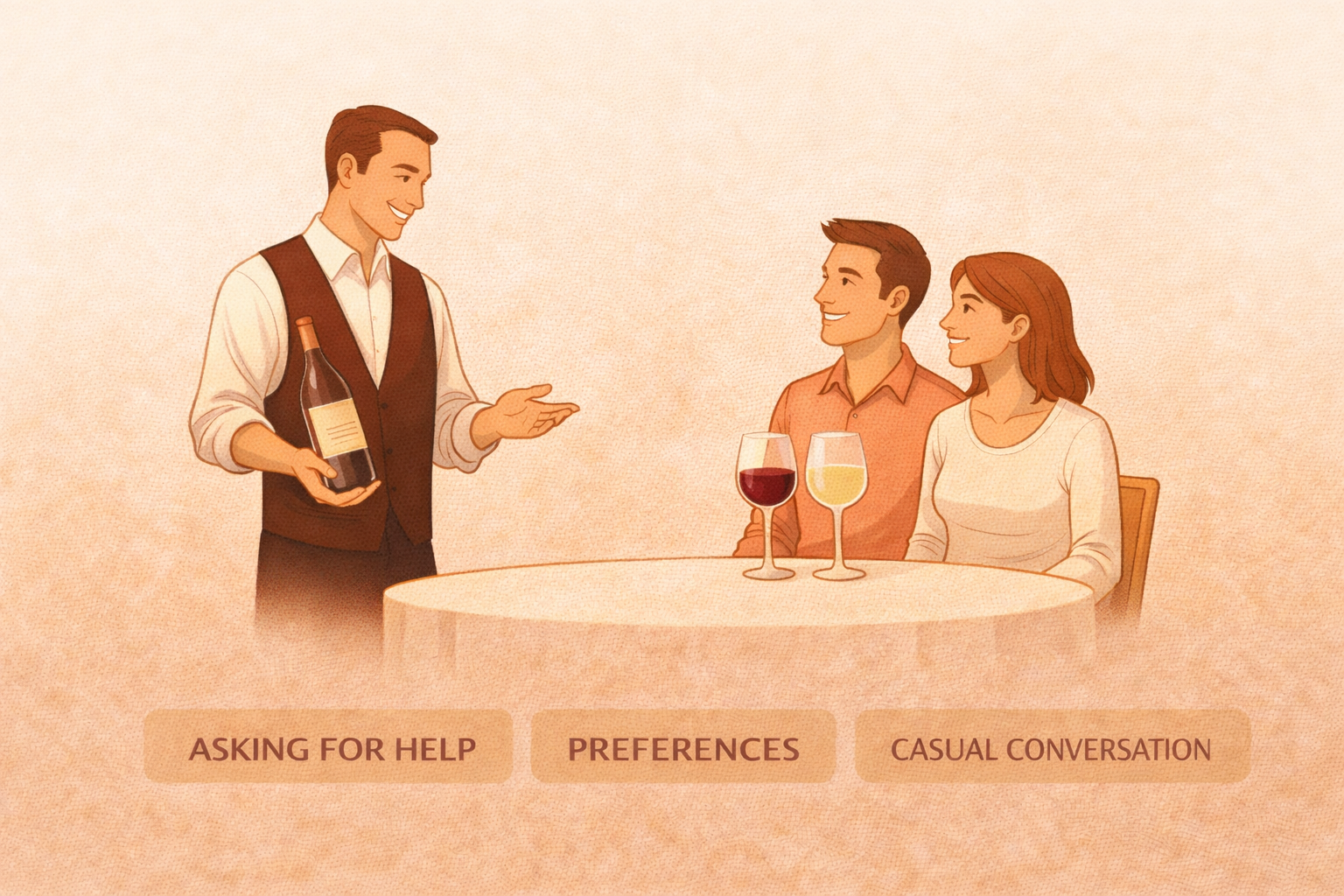
For a lot of people, the hardest part of ordering wine at a restaurant isn’t the price or the wine list — it’s the moment the sommelier walks over. You might worry about saying the wrong thing. Or sounding inexperienced. Or freezing because the list feels unfamiliar and everyone else seems confident. None of that means you’re bad at wine. It just means the setting adds pressure. The good news? Sommeliers aren’t testing you. They’re trying to help you enjoy your meal. And you don’t need fancy language or deep knowledge to have a great conversation with one. Once you understand what they actually want to know, the interaction becomes much simpler and a lot more relaxed.
What Sommeliers Are Really Trying to Figure Out
When a sommelier asks questions, they’re not quizzing you on regions or grapes. They’re narrowing down options based on your taste, not their preferences. At a basic level, they’re trying to answer a few things:
What styles of wine do you generally enjoy?
Are you eating food that will influence the choice?
Are there any strong dislikes they should avoid?
Is this a casual glass or a “this is the highlight of the meal” bottle?
That’s it. You don’t need to know producer names, vintages, or obscure appellations. Describing how you like wine to feel or taste is far more useful than naming something you think sounds impressive.
You Don’t Need Jargon to Describe What You Like
One of the biggest myths about wine is that you need the “right” words to talk about it. In reality, simple descriptions are often the most helpful. Things like:
“I usually like lighter wines.”
“I tend to enjoy richer, smoother reds.”
“I don’t love anything super sharp or aggressive.”
“I like wines that feel easy to drink.”
These kinds of cues give a sommelier immediate direction. If you’ve already read How to Read a Wine List, you know how overwhelming lists can be. Talking to a sommelier is often the shortcut — but only if you speak in terms that reflect your experience, not wine theory.
If you’re unsure what “smooth” or “bold” even means in practice, What Smooth Wine Really Means can help you put words to those instincts. But you don’t need to study first. Your preferences are enough.
What to Avoid Saying
There are a few phrases that can unintentionally make things harder — not wrong, just vague. For example:
“I want something good.”
“I don’t like dry wine” (when what you really mean is harsh or thin).
“Just pick whatever you like.”
Instead of closing the conversation down, give them something to work with. Even a small hint helps. A better version might be:
“I usually like wines that feel smooth and not too sharp.”
“I don’t enjoy wines that feel heavy or bitter.”
“I’m open, but I tend to prefer lighter styles.”
You’re not expected to know exactly what you want — just to share what you don’t.
Food Is Part of the Conversation (Even If You’re Not Sure Yet)
You don’t need to know what you’re ordering to talk about food. Saying “we’re leaning toward seafood” or “probably something richer, like steak or pasta” is enough to shape the recommendation.
Wine changes when food is involved, and sommeliers think in terms of how the two will interact. If you’ve noticed that wine tastes different at dinner than it does at home, you’re already picking up on this instinctively.
Let them do the pairing math. Your job is just to give context.
Confidence Comes From Honesty, Not Expertise
The most confident wine orders rarely come from people who “know everything.” They come from people who are comfortable saying what they like and what they don’t. Sommeliers appreciate clarity more than credentials. A straightforward preference is far more useful than a half-remembered grape name. And if you ever feel stuck, it’s okay to say: “I don’t know much about wine, but I know what I enjoy.” That’s not a weakness. It’s the starting point.
Final Thought
Talking to a sommelier isn’t about proving you belong — you already do. It’s about translating your preferences into a glass that fits the moment.
Once you stop trying to sound like someone else and start describing your own experience, the conversation gets easier. And more often than not, the wine gets better too.
