
Why the Same Grape Can Taste So Different
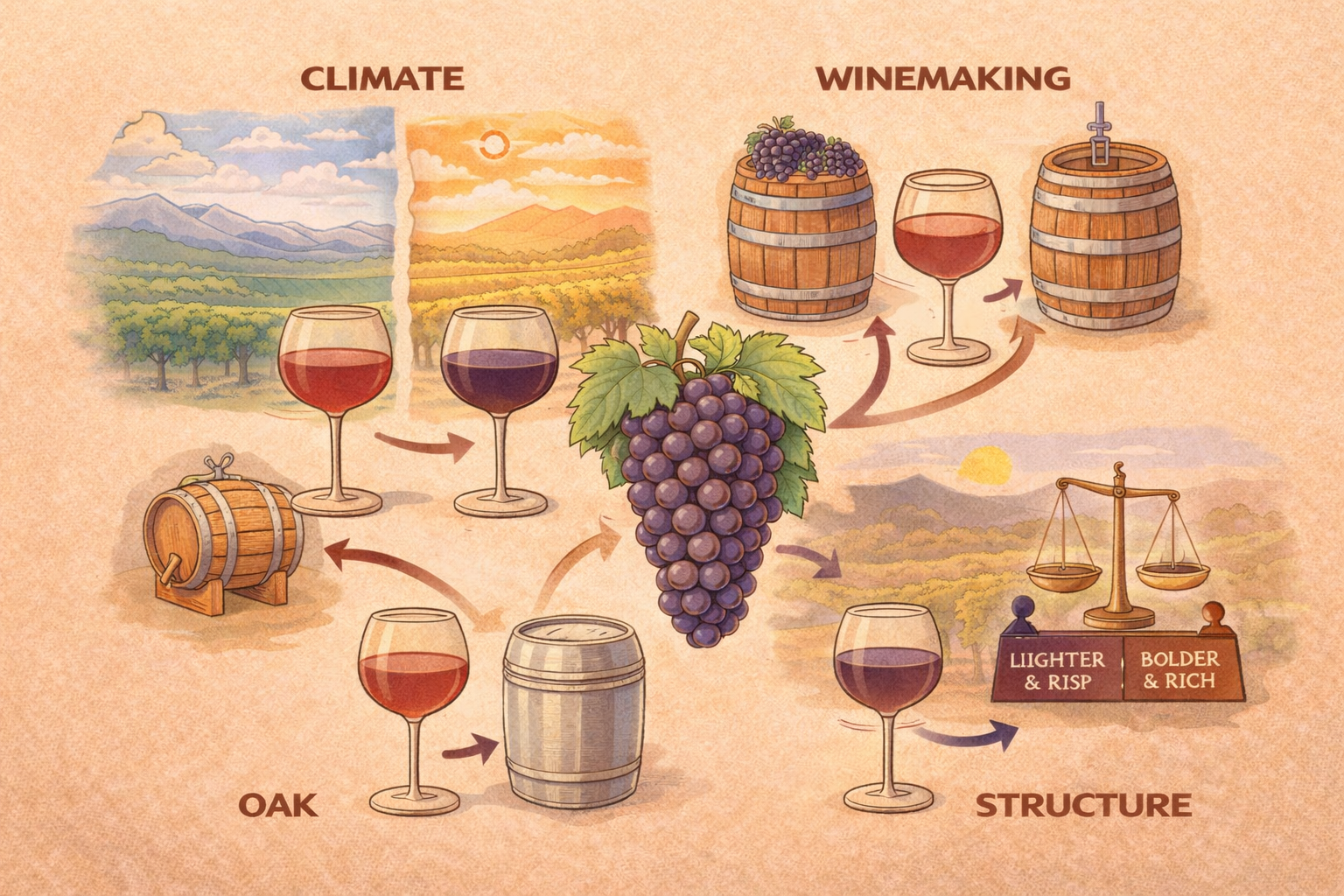
If wine has ever felt inconsistent or confusing, this is usually why. You buy a Pinot Noir you love and the next bottle with the same grape on the label tastes darker, earthier, or heavier than you expected. Same grape. Same color. Completely different experience. That disconnect isn’t your palate failing you. It’s how wine actually works. A grape variety is only the starting point. What happens to that grape, where it’s grown, how it’s handled, and how it’s finished has a massive impact on how the wine ends up tasting. Once you understand this, wine stops feeling unpredictable and starts feeling readable.
Grape ≠ Flavor Guarantee
It’s tempting to think of grapes like ingredients in a recipe. Cabernet tastes like this. Pinot Noir tastes like that. Chardonnay is either buttery or crisp. In reality, grapes are more like raw materials. They carry potential, not destiny. The same grape can produce wines that feel:
bright or dark
light or full
silky or grippy
fresh or rich
Those differences come from four main forces working together: climate, winemaking choices, oak, and structure. You don’t need to memorize them — just learn how to recognize their influence.
Climate Shapes the Starting Point
Where grapes grow matters more than most people realize. Cooler climates tend to produce wines that feel:
lighter
brighter
higher in acidity
more focused on fresh fruit and subtle flavors
Warmer climates usually create wines that feel:
riper
fuller
softer on the palate
more intense or fruit-forward
This is why the same grape can feel delicate in one bottle and bold in another. It’s also one of the biggest differences explored when people talk about Old World vs New World Wine — a helpful framework if you want to understand why wines from different places feel different without memorizing regions.
Winemaking Choices Do the Heavy Lifting
After grapes are harvested, the winemaker’s decisions take over. Choices like:
how ripe the grapes are when picked
how long the juice stays in contact with skins
whether the wine is fermented hot or cool
how long it’s aged before release
All of these shape texture, flavor, and overall feel. Two winemakers using the same grape can intentionally aim for very different results — one prioritizing freshness and elegance, the other depth and richness. Neither is “right.” They’re just different expressions.
Oak Isn’t a Flavor — It’s a Tool
Oak often gets blamed (or praised) for how a wine tastes, but it’s not as simple as “oaky” or “not oaky.” Oak can influence:
texture (making wine feel smoother or rounder)
aroma (vanilla, spice, toast)
structure (how the wine carries weight)
Some wines barely show oak at all. Others lean into it. Many sit somewhere in between. This is one reason a grape like Pinot Noir can feel transparent and light in one bottle, then deeper and more structured in another — even before climate enters the picture.
Structure Is What You Feel, Not What You Taste
Structure is the part of wine you experience physically: body, acidity, tannin, and alcohol. Two wines made from the same grape can share similar flavors but feel completely different in your mouth. One might feel:
smooth and flowing
light and easy
Another might feel:
firmer
more serious
slower and weightier
Understanding structure helps explain why you might respect a wine without actually enjoying it — and why certain styles consistently work better for you than others.
Pinot Noir: Same Grape, Many Personalities
Pinot Noir is a perfect example because it’s especially sensitive to its environment. In one place, Pinot Noir can be:
light-bodied
red-fruited
delicate and aromatic
In another, it can be:
darker
more savory
structured and serious
This is why regions like Burgundy are often referenced — not because they’re “better,” but because they clearly show how place and restraint shape a grape’s character. If you want a deeper look at that style, Burgundy: Style, Structure, and What to Expect is a helpful next step. You don’t need to know every sub-region or producer to appreciate the takeaway: the grape didn’t change — everything around it did.
Why This Actually Helps You Choose Better Wine
Once you stop expecting grapes to behave consistently, choosing wine gets easier. Instead of asking “Do I like this grape?” you start asking “Do I like this style?”. That shift is subtle, but powerful. It’s how people move from feeling unsure to feeling confident without turning wine into homework. And if you’re tracking wines you enjoy, patterns start to emerge naturally. Over time, you’ll notice not just what you like, but why you like it. That’s when wine stops being confusing and starts being fun again.
