
Loire Valley Wine Guide
The Loire Valley doesn’t usually shout for attention. It doesn’t have the prestige weight of Burgundy or the immediate recognition of Napa. And that’s exactly why people tend to fall for it. Loire wines are often described as easy but that doesn’t mean simple or boring. They’re approachable in the best way: fresh, balanced, and naturally suited to food. If you’ve ever wanted a wine that feels at home at the table without demanding too much thought, the Loire is a great place to look. This guide isn’t about memorizing villages or appellations. It’s about understanding how Loire wines tend to feel, so you know when to reach for them and why they work so well.
Where the Loire Fits In (Without the Geography Lesson)
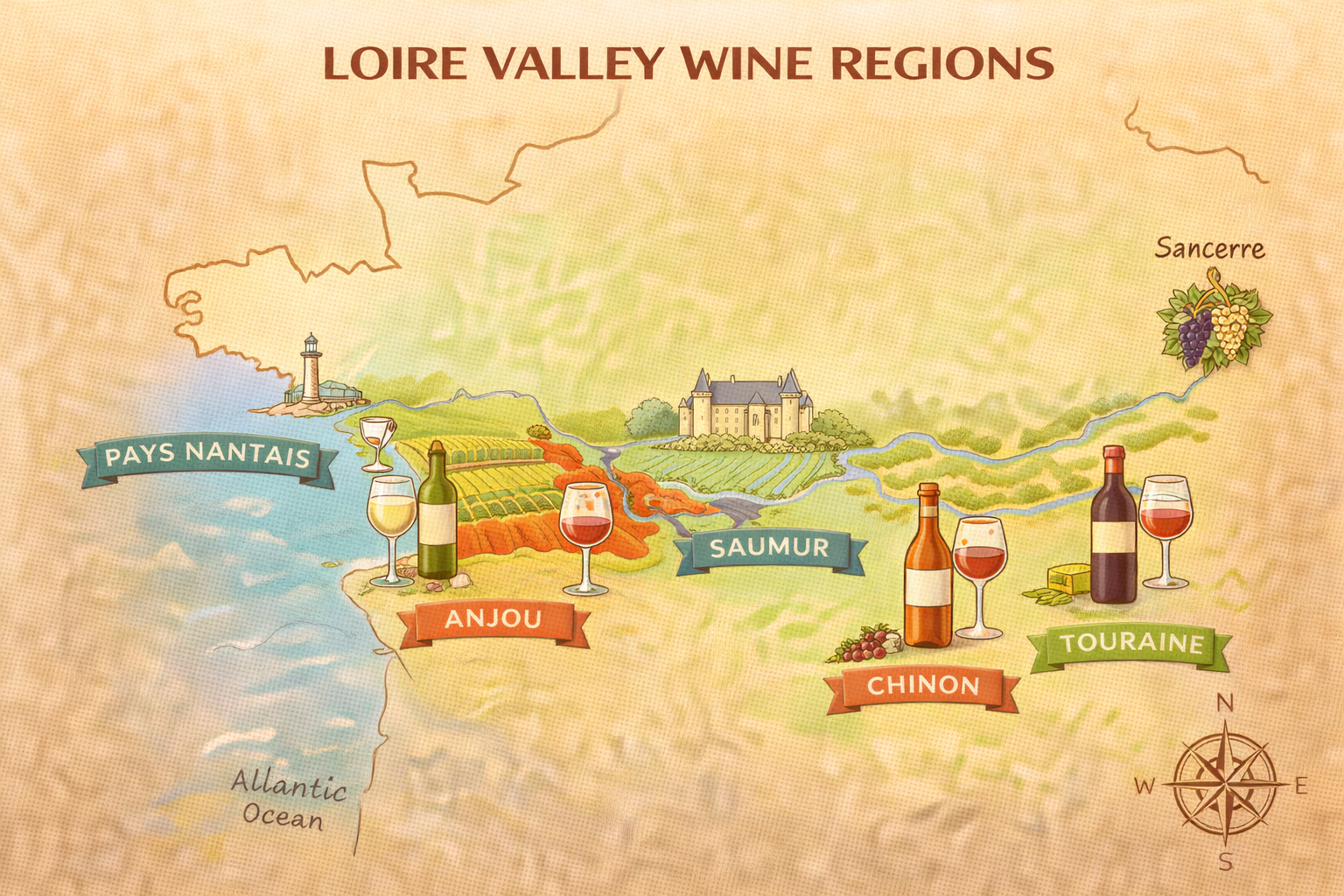
The Loire Valley stretches across France, and because of that, it produces a wide range of styles. But most Loire wines share a few common traits:
They lean lighter rather than heavier.
They emphasize acidity and freshness.
They feel clean, crisp, and refreshing, especially with food.
Instead of richness or power, Loire wines are about balance. They’re wines that don’t overwhelm your palate, they keep things moving. This is one reason they pair so naturally with meals. The structure doesn’t fight the food. It supports it.
Why Loire Wines Feel So “Fresh”
When people describe Loire wines as fresh or bright, they’re usually responding to acidity. Loire wines tend to have a lively, mouth-watering quality that keeps them feeling light on their feet. That freshness does a few important things:
It keeps flavors from feeling heavy or flat.
It makes the wine feel refreshing rather than tiring.
It resets your palate between bites.
If you’ve read about How Food Changes the Way Wine Tastes, this will sound familiar. Acidity helps wine stay present alongside food instead of disappearing or clashing with it. That’s a big reason Loire wines feel so comfortable at the table.
Dry Doesn’t Mean Sharp (Or Boring)
Many Loire wines are technically dry, but they don’t always taste severe or aggressive. That’s because dryness is only one part of the picture.
High acidity can make a wine feel crisp and lively without making it harsh. And in some Loire wines, a small hint of softness or fruit rounds things out just enough to keep the wine feeling friendly.
If “dry wine” has ever sounded intimidating, this is a good region to recalibrate what that word can mean. If you want a refresher, What Makes a Wine “Dry” explains why dryness and drinkability aren’t opposites.
Why Loire Wines Are So Food-Friendly
Loire wines don’t demand center stage. They’re more interested in playing well with what’s on your plate. That makes them especially good for:
Vegetable-forward dishes
Seafood and shellfish
Simple chicken or pork dishes
Cheese boards and casual meals
Because the wines are balanced and lower in weight, they don’t overpower subtle flavors. Instead, they lift them. You don’t need a perfectly planned pairing, Loire wines are forgiving, which makes them great for real-life meals, not just ideal ones.
Grape Varietals Grown in the Region
Red Grape Varietals
The region is primarily known for its red wines, with plantings that favor structure, depth, and aging potential. Common red grape varietals include:
Cabernet Franc – Lighter in body, contributing freshness, herbal notes, and acidity
Gamay - Light-bodied and fruit-forward, known for juicy red berry flavors, low tannins, and vibrant acidity that make it especially approachable and refreshing
Pinot Noir - Elegant and aromatic, typically showing red fruit, subtle earthiness, and silky tannins, with an emphasis on balance over power
Cabernet Sauvignon – Structured and age-worthy, often showing dark fruit, firm tannins, and depth that develops complexity over time
White Grape Varietals
While reds dominate, several white grape varietals are also grown, producing wines that range from crisp and aromatic to fuller-bodied styles:
Chenin Blanc - Highly versatile, offering styles that range from crisp and high-acid to richer and textured, often showing apple, pear, and subtle floral notes
Sauvignon Blanc – Bright and aromatic, often showing citrus, green fruit, and herbaceous notes with refreshing acidity
Melon de Bourgogne - Light-bodied and dry, known for its clean, mineral-driven profile with subtle citrus notes and a crisp, saline finish
Chardonnay – Versatile, with styles ranging from fresh and mineral-driven to rich and oak-influenced, depending on climate and winemaking approach
When to Reach for a Loire Bottle
The Loire is a great choice when you want a wine that:
Feels refreshing rather than heavy
Works across a full meal
Doesn’t require a lot of analysis
Makes food taste better instead of competing with it
If Burgundy feels a little too serious for the moment, or if richer styles sound tiring, the Loire is often the easier answer. It’s a region you can come back to again and again without feeling locked into a single mood or occasion.
The Big Picture
Loire wines don’t rely on power or prestige to make their point. They win people over quietly — through balance, freshness, and how naturally they fit into everyday drinking.
Once you start choosing wine based on how you want it to feel, regions like the Loire stop being mysterious and start being useful. And that’s usually when wine gets a lot more enjoyable.
