
Old World vs New World Wine: What’s the Real Difference?
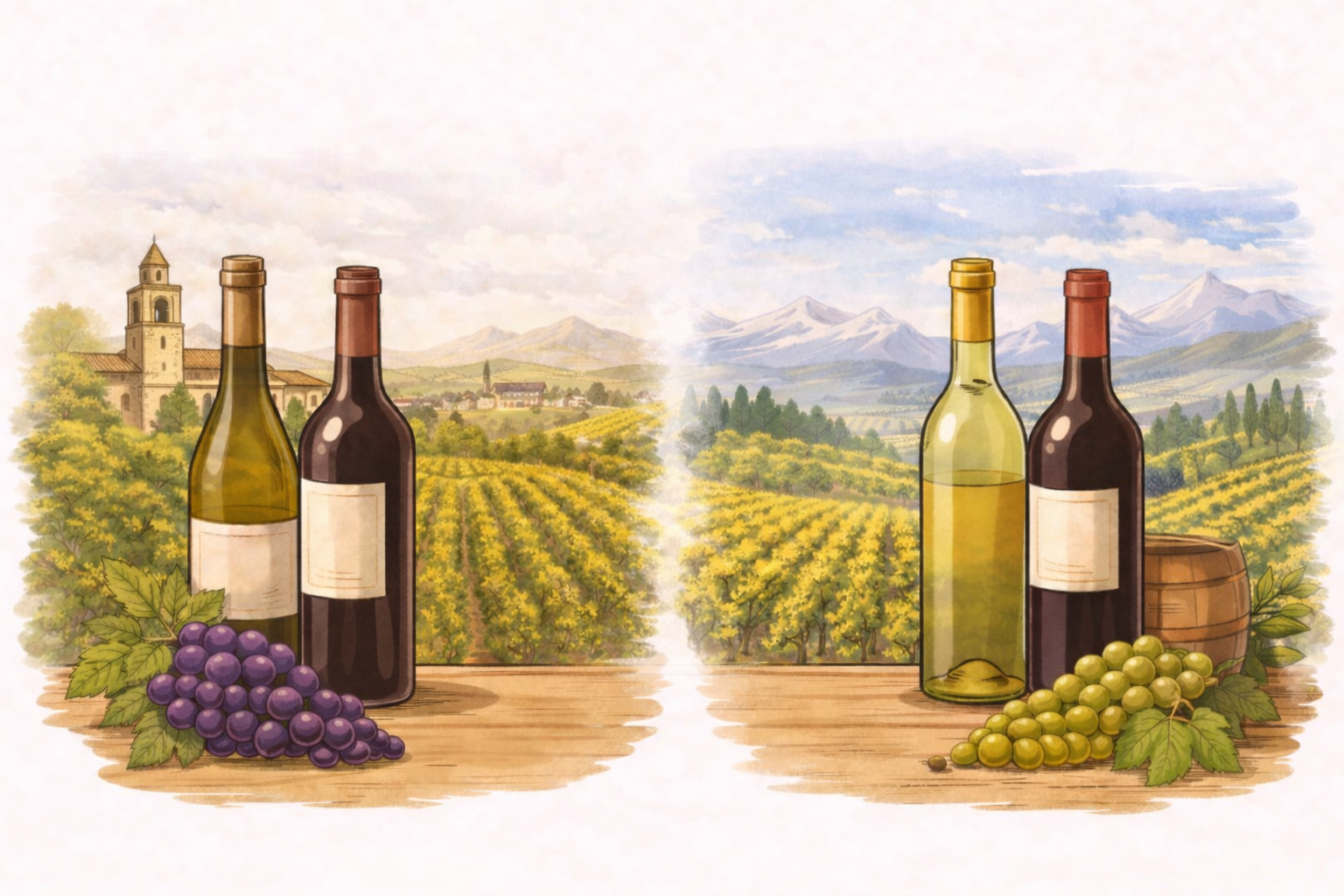
If you’ve ever heard someone describe a wine as Old World or New World and wondered what that actually means, you’re not alone. These terms get thrown around all the time, but beginners rarely get a clear explanation. The good news? The difference is simpler than it sounds — and once you understand it, you’ll instantly make sense of why wines from different regions taste the way they do.
This guide breaks the concept down giving you everything you need to feel confident when comparing wines from Europe to wines from places like the U.S., Australia, South America, and beyond. If you want an even stronger foundation as you read, our post on how to read a wine label pairs perfectly with this topic.
What “Old World” and “New World” Actually Mean
At its core, the distinction is geographic.
Old World wine regions are the traditional, historic winemaking countries of Europe:
France
Italy
Spain
Germany
Portugal
Austria
Greece
These regions have been making wine for centuries and their laws, traditions, and styles evolved slowly over long periods of time. New World wine regions, on the other hand, include countries where wine production is newer (in relative terms):
United States (California, Oregon, Washington)
Australia
New Zealand
Chile
Argentina
South Africa
These regions embraced more modern winemaking techniques from the beginning and tend to have fewer strict rules about what grapes can grow where or how wines must be made.
Old World = tradition. New World = innovation.
But that’s just the starting point — the real differences show up in the glass.
How Old World and New World Wines Taste Different
Here’s the simplest way to understand it:
Old World wines tend to taste:
lighter
earthier
more restrained
higher in acidity
more about “terroir” (place) than fruit
New World wines tend to taste:
riper
fuller-bodied
fruit-forward
higher in alcohol
richer and rounder
These aren’t hard rules — exceptions exist everywhere — but they’re great guidelines to keep in mind. If you want a clearer sense of how body works across these two worlds, our post on wine body explained offers helpful examples you can apply immediately.
Climate Is the Real Reason They Taste Different
While tradition plays a role, the biggest influence on Old vs New World styles is actually climate. Old World regions are generally cooler. Cooler climates preserve acidity and create lighter, more delicate wines. New World regions tend to be warmer. Warm climates produce riper grapes, which mean fuller body, richer fruit flavors, and higher alcohol.
You’ve already seen this in action if you’ve explored our Napa Valley Wine Guide — Napa’s warmth gives Cabernet and Chardonnay a signature richness you don’t often find in Europe. It’s not about better or worse. Just different.
Grapes That Change Drastically Between Old and New World
Some grapes behave dramatically differently depending on where they’re grown.
Chardonnay
Old World (Burgundy): lemon, apple, mineral, high acidity
New World (California): ripe fruit, vanilla, creamier texture
(Our full Chardonnay Guide breaks both styles down in more detail.)
Cabernet Sauvignon
Old World (Bordeaux): herbal notes, firmer tannins, elegant structure
New World (Napa): bold fruit, richer body, smooth tannin profile
If you've read our Cabernet Sauvignon post, you’ve already seen how style shifts with climate.
Pinot Noir
Old World (Burgundy): delicate, earthy, floral
New World (Oregon, California): brighter cherry, juicier, sometimes fuller-bodied
The grape is the same — the expression is completely different.
How to Tell Old World vs New World by Looking at the Label
You don’t need to memorize countries or wine laws. Labels give you clues:
Old World labels often feature:
the region instead of the grape
traditional terminology (AOC, DOCG, DO, etc.)
a less flashy design
smaller alcohol percentages
New World labels commonly show:
the grape name front and center
a more modern, bold design
clear alcohol percentages
familiar terms like “oak aged” or “reserve”
If label-reading still feels intimidating, our guide on how to read a wine label walks you through the important parts in a way that’s easy to remember.
Which Style Will You Prefer?
It depends on your palate, but generally:
You’ll probably love Old World wines if you enjoy:
subtle flavors
earthiness
higher acidity
food-friendly wines
more structure than fruit
You’ll probably love New World wines if you enjoy:
bold fruit flavors
fuller body
richer, rounder textures
a touch of sweetness or warmth
softer tannins
Neither style is “better” — they simply offer different experiences. Exploring both is the fun part.
How Somm Scribe Helps You Compare Old vs New
When you log your tastings in Somm Scribe, the wine’s origin becomes a powerful data point.
Pay attention to:
the flavors you consistently get from Old vs New World wines
whether you prefer lighter structure or richer, fuller wines
how regions shape your tasting impressions
patterns that emerge over time
The “overall impression” field and your flavor notes will quickly reveal which style resonates with your palate. You don’t need any special training — just consistent tasting and mindful observation.
Bottom Line: Old World vs New World Isn’t About Better. It’s About Style.
Old World wines highlight elegance, structure, and the place they come from.
New World wines highlight fruit, richness, and bold expression.
Neither is the “right” choice — they’re simply different paths to understanding wine. And as you taste more, those differences become clear, intuitive, and even exciting.
Exploring both styles is one of the easiest ways to grow your wine confidence — and Somm Scribe helps you track that journey every step of the way.
