
Learn Wine, One Glass at a Time
Practical, beginner friendly wine education to help you taste with confidence. From understanding labels and regions to pairing food and building your palate, we make wine approachable one guide at a time.
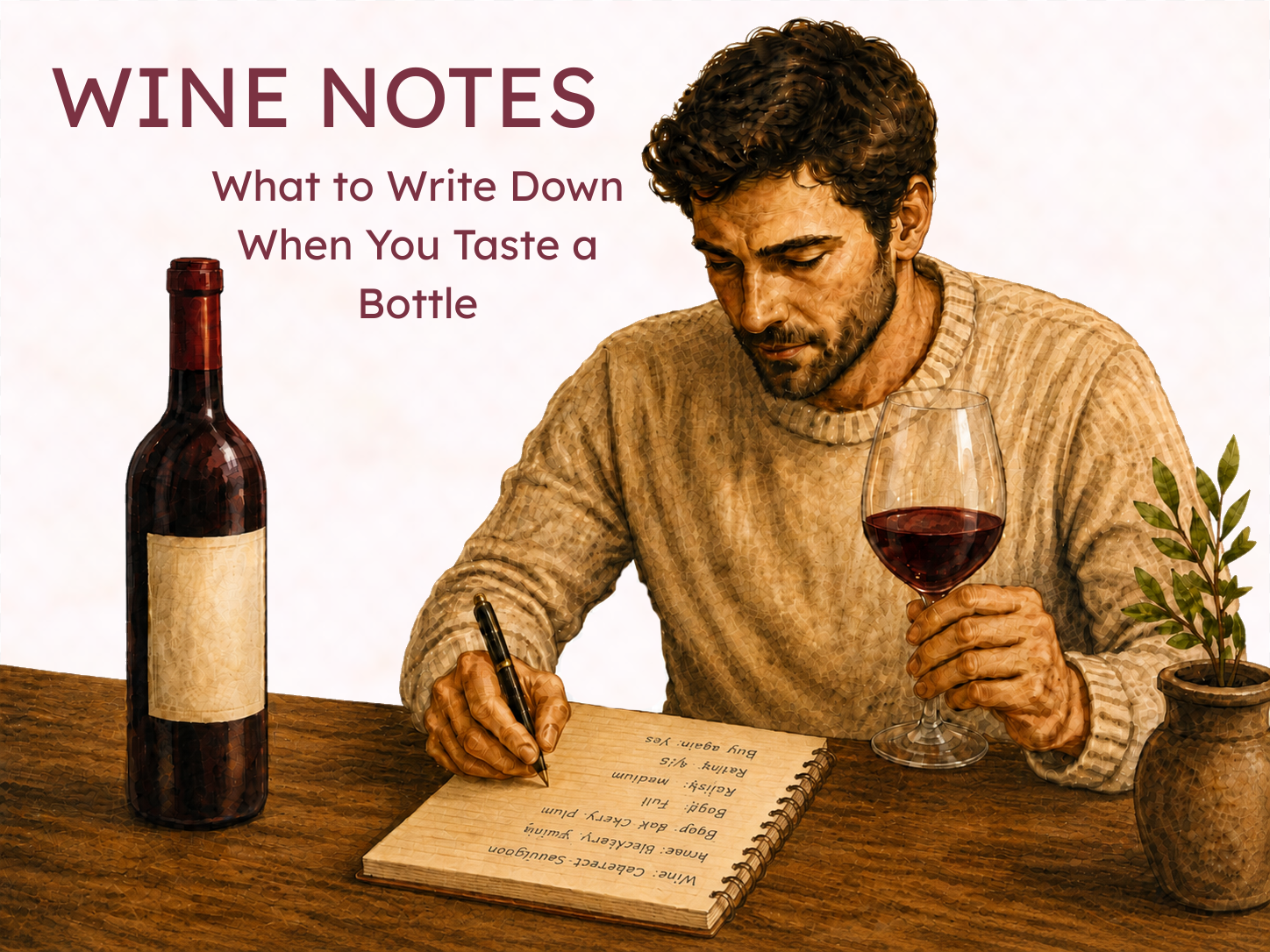
Wine Notes: What to Write Down When You Taste a Bottle
Taking wine notes does not have to be complicated. This beginner-friendly guide explains what to write down when you taste a bottle, including the wine name, grape, aromas, flavors, body, acidity, rating, and whether you would buy it again.
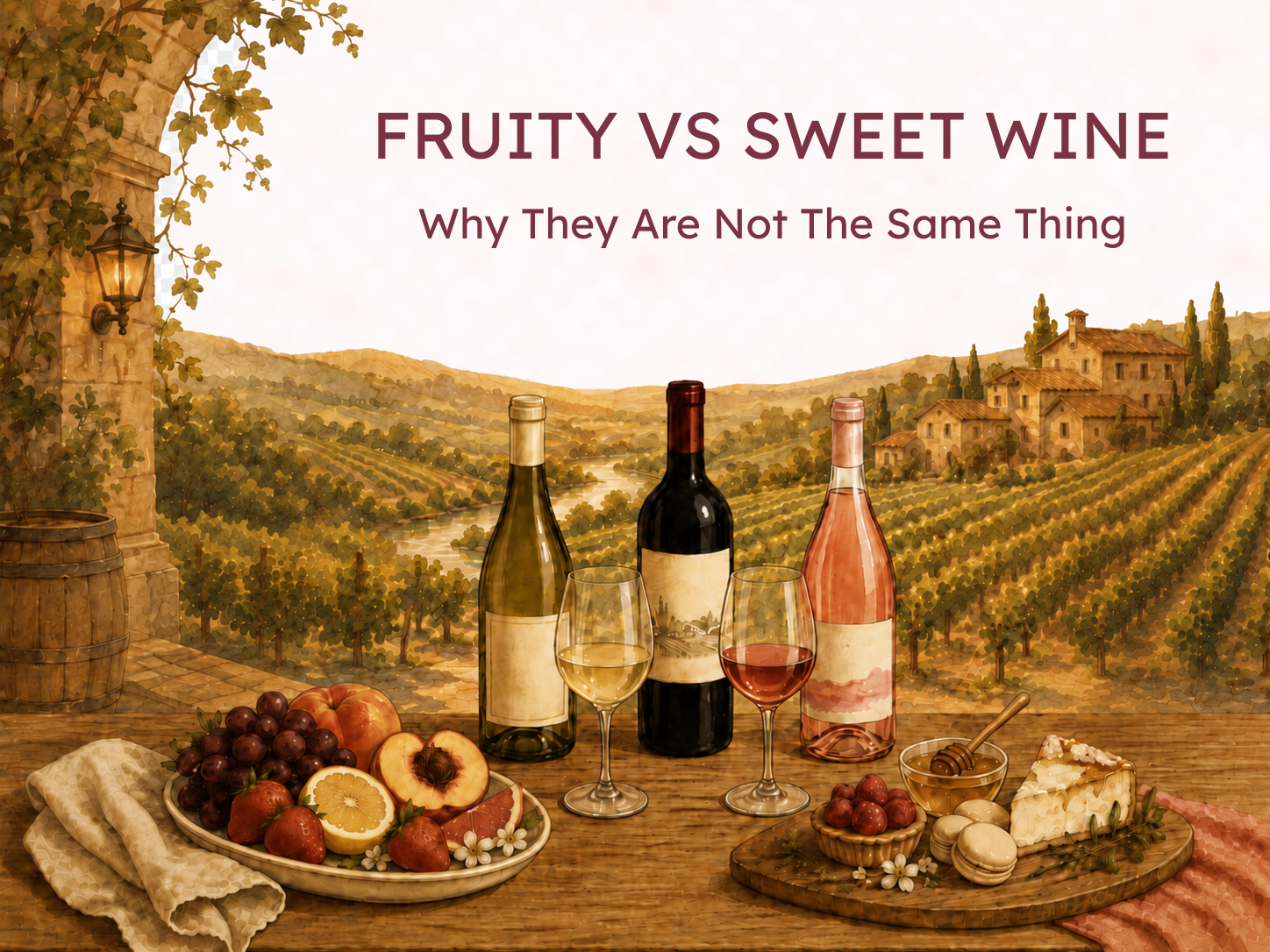
Fruity vs Sweet Wine: Why They Are Not the Same Thing
Fruity wine and sweet wine are often confused, but they describe two different things. Fruity refers to flavors and aromas, while sweet refers to sugar. This beginner-friendly guide explains how a wine can taste like cherries, peaches, citrus, or berries and still be completely dry.
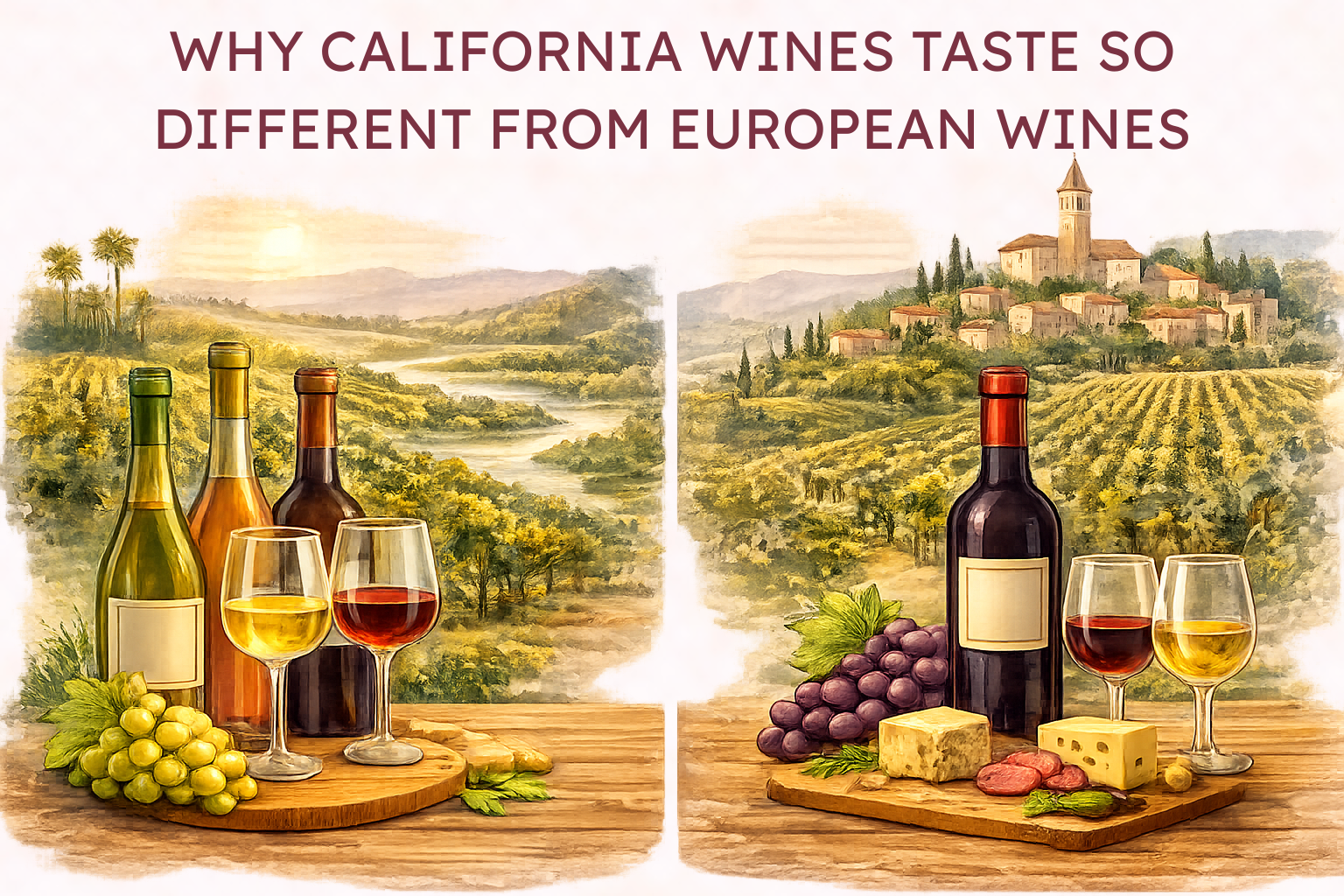
Why California Wines Taste So Different From European Wines
California wines often taste bigger and fruitier than European wine. But why? It comes down to climate, ripeness, and style. Once you understand it, choosing wine becomes much easier.
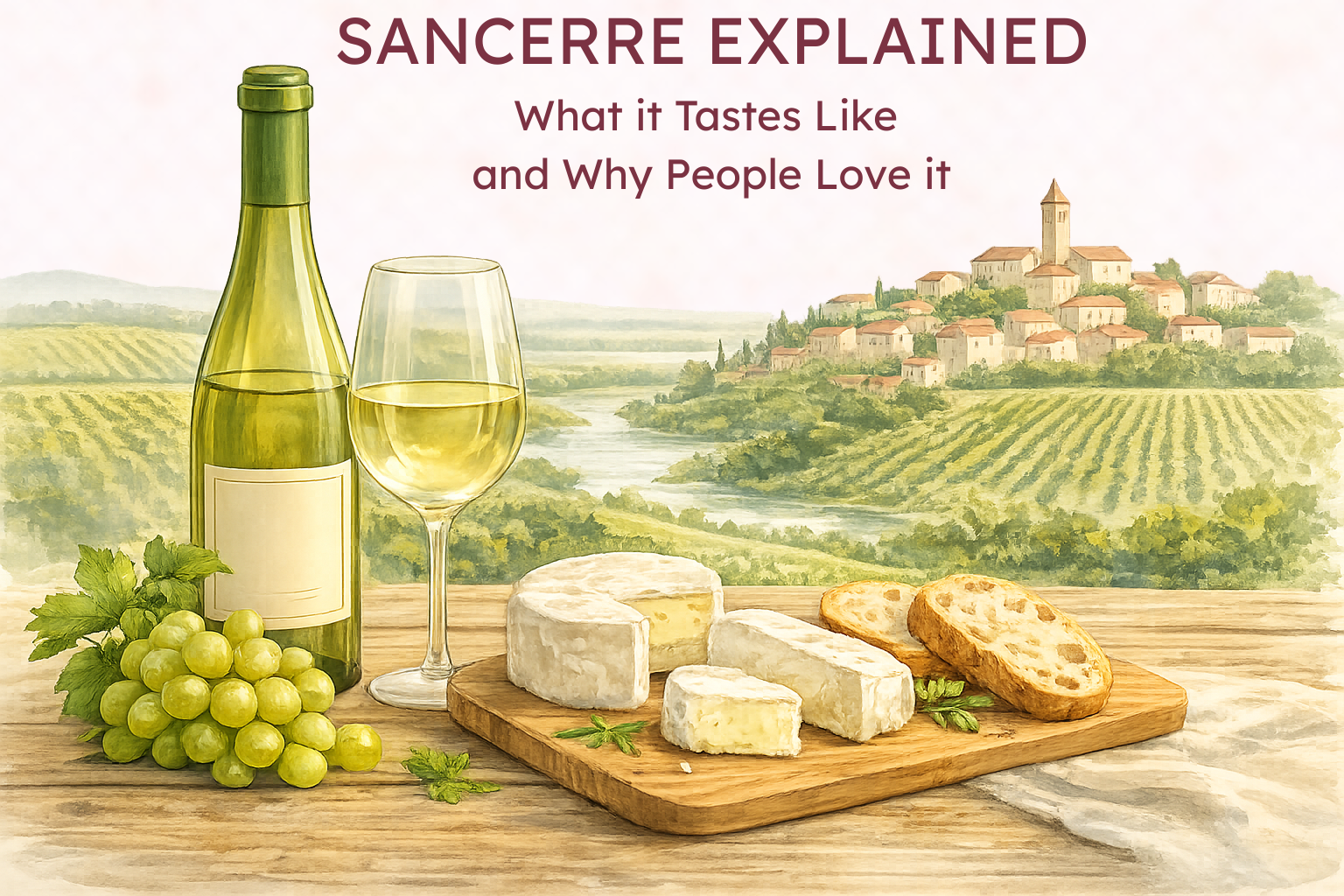
Sancerre Explained: What it Tastes Like and Why People Love it
Sancerre is one of the most popular French white wines, but it doesn’t list the grape on the label. Here’s what it tastes like, why people love it, and how it compares to Sauvignon Blanc from other regions.
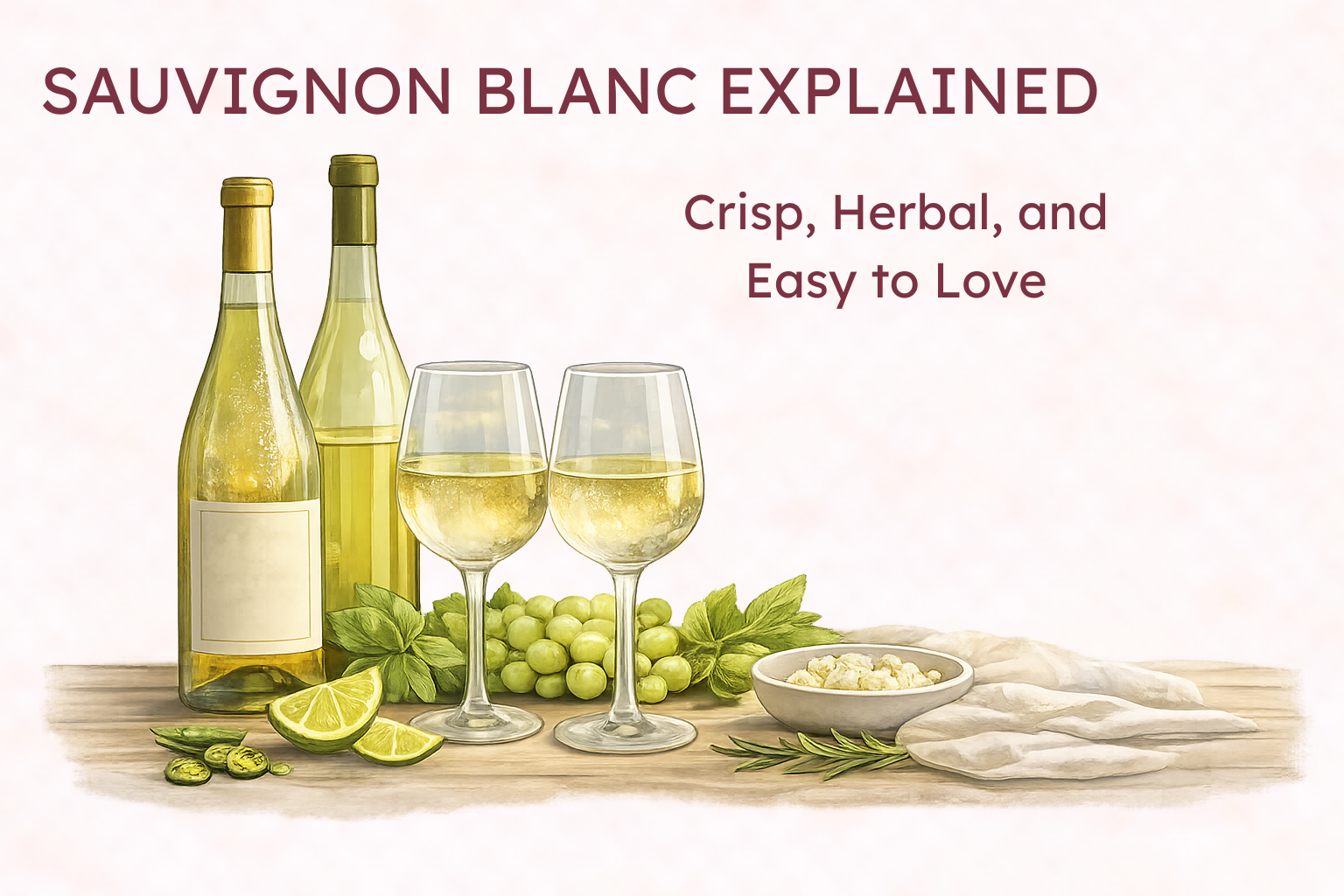
Sauvignon Blanc Explained: Crisp, Herbal, and Easy to Love
Sauvignon Blanc is one of the easiest white wines to recognize once you know what to look for. Here’s what it tastes like, why it can smell herbal or grassy, and how to tell if it’s the kind of white wine you’ll actually enjoy.
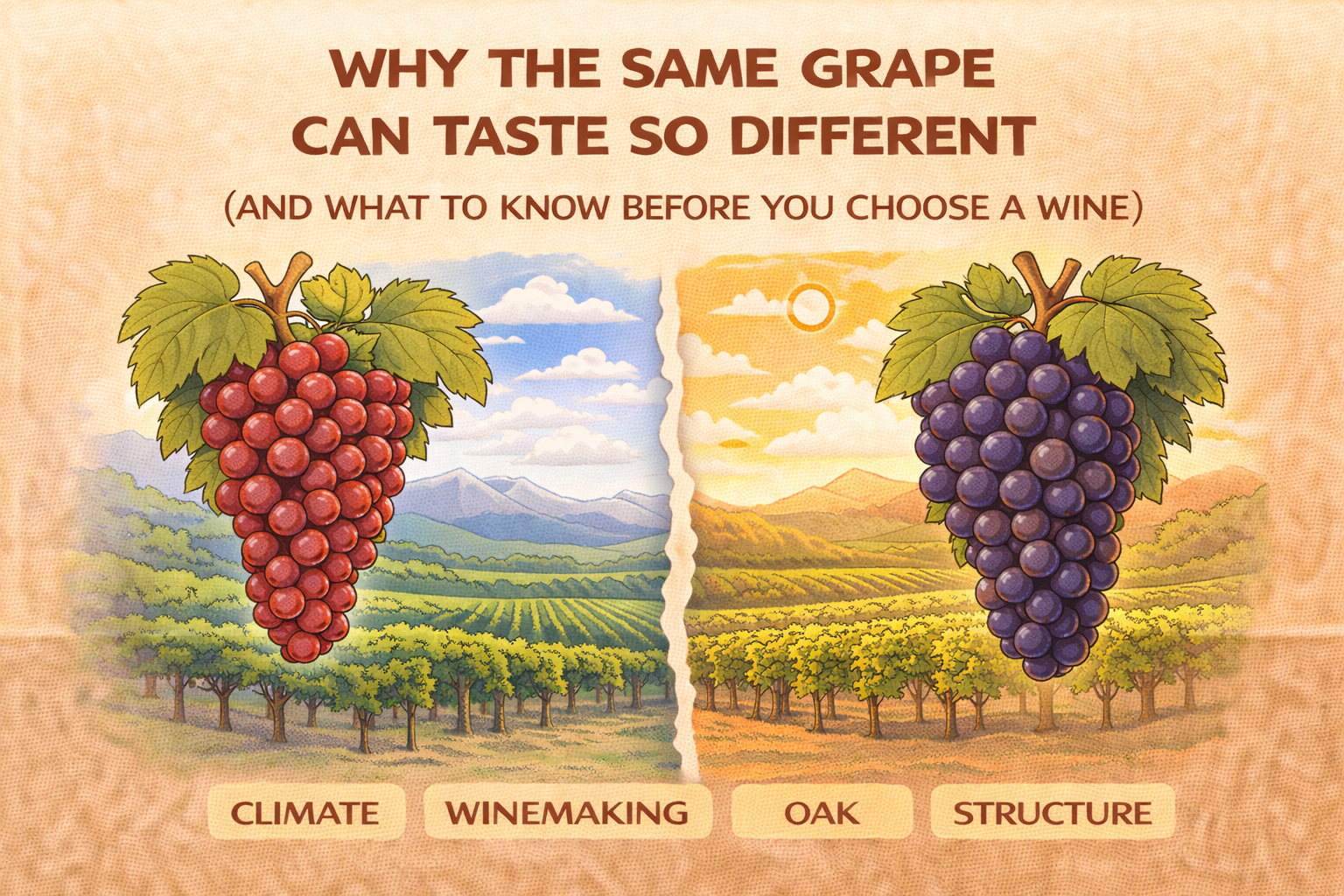
Why the Same Grape Can Taste So Different
If wine has ever felt inconsistent or confusing, this is usually why. You buy a Pinot Noir you love and the next bottle with the same grape on the label tastes darker, earthier, or heavier than you expected. Same grape. Same color. Completely different experience. That disconnect isn’t your palate failing you. It’s how wine actually works. A grape variety is only the starting point. What happens to that grape, where it’s grown, how it’s handled, and how it’s finished has a massive impact on how the wine ends up tasting. Once you understand this, wine stops feeling unpredictable and starts feeling readable.
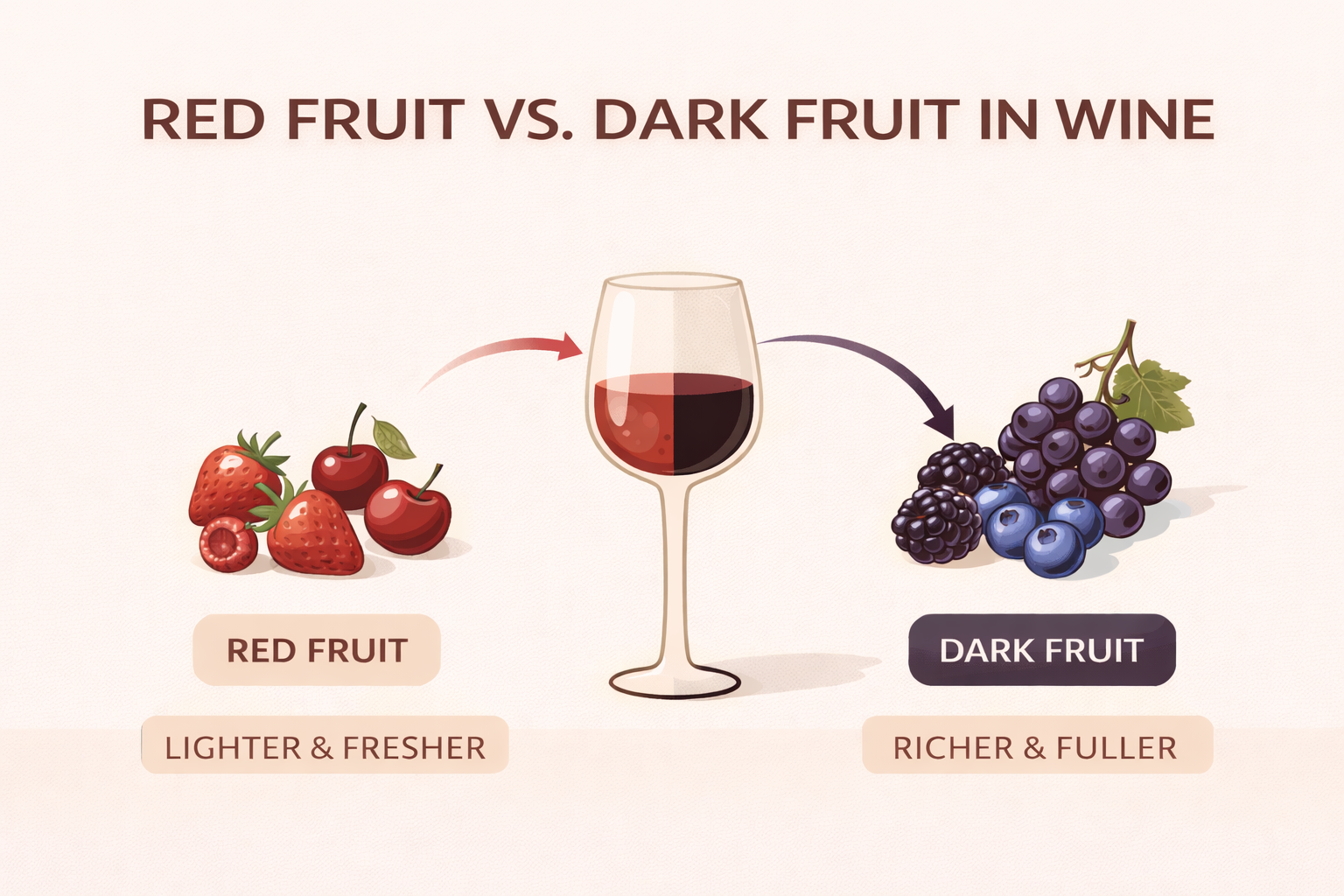
Red Fruit vs. Dark Fruit in Wine
If you’ve ever heard a wine described as red-fruited or dark-fruited and nodded along without being totally sure what that meant, you’re not alone. Those phrases show up everywhere — tasting notes, wine lists, conversations — but they’re rarely explained in a way that feels useful. The good news is this: you don’t need to identify specific fruits or train your nose to tell raspberries from cherries. What matters is understanding what those fruit categories suggest about the wine as a whole. Once you do, these descriptions stop feeling abstract and start helping you choose wines you actually enjoy. Let’s break it down in a way that’s practical, intuitive, and easy to remember
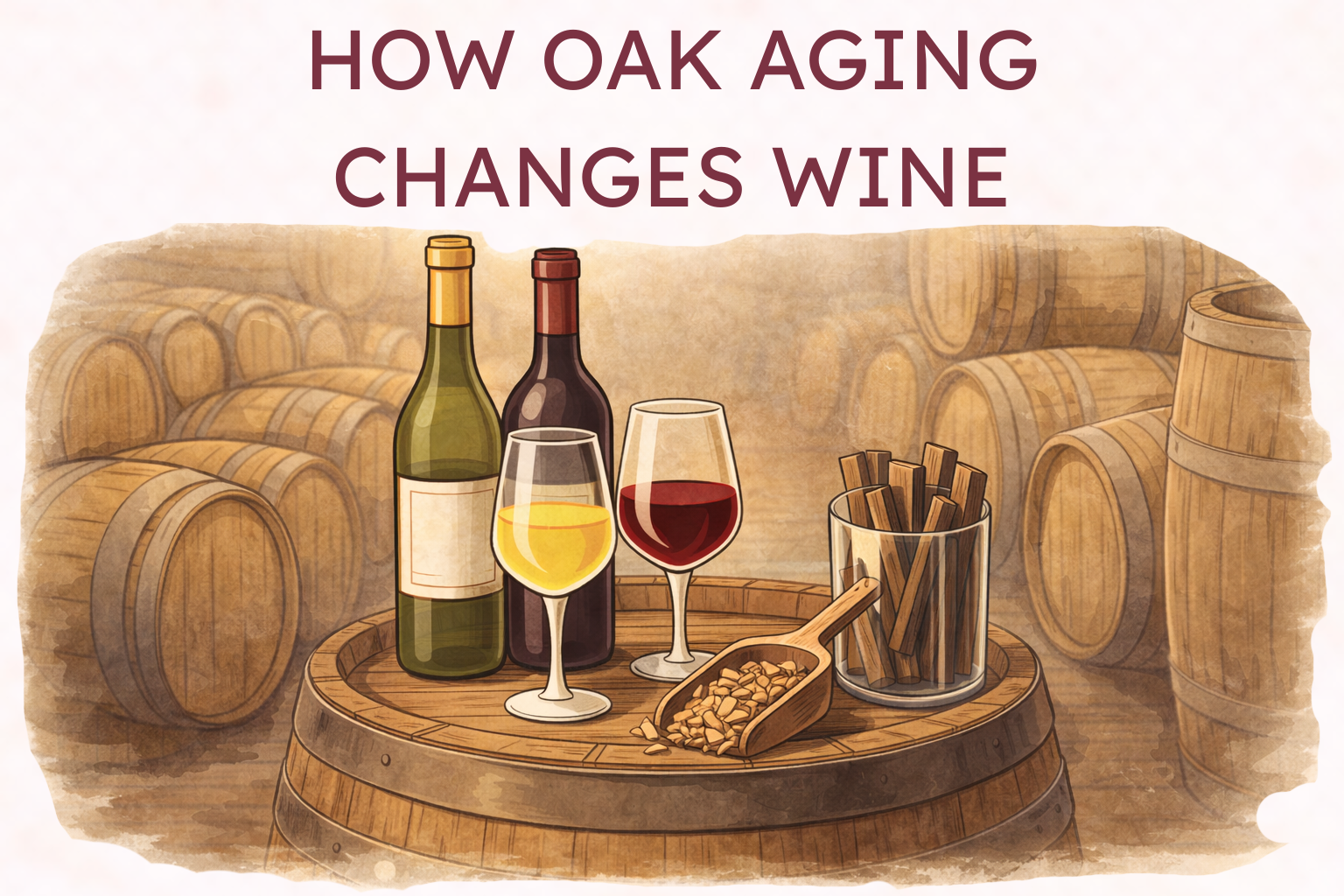
How Oak Aging Changes Wine
If you’ve ever seen “oaked” or “unoaked” on a wine label and wondered what that actually means, you’re not alone. Oak aging is one of the most influential parts of winemaking. Some people love oaky wines. Others say they hate them. The good news? Once you understand what oak does to wine, you’ll be able to recognize it easily, decide whether you like it, and choose bottles with way more confidence.
Discover Your Wine Style
Take our quick quiz to uncover the wines you’ll love based on your tastes, mood, and lifestyle.
Quick & Easy
Takes less than 2 minutes
Personalized Results
Get wine recommendations that match your style
Better Choices, Every Time
Shop and explore with confidence
Not Sure Where to Start?
Essential Guides to help you build confidence with wine.
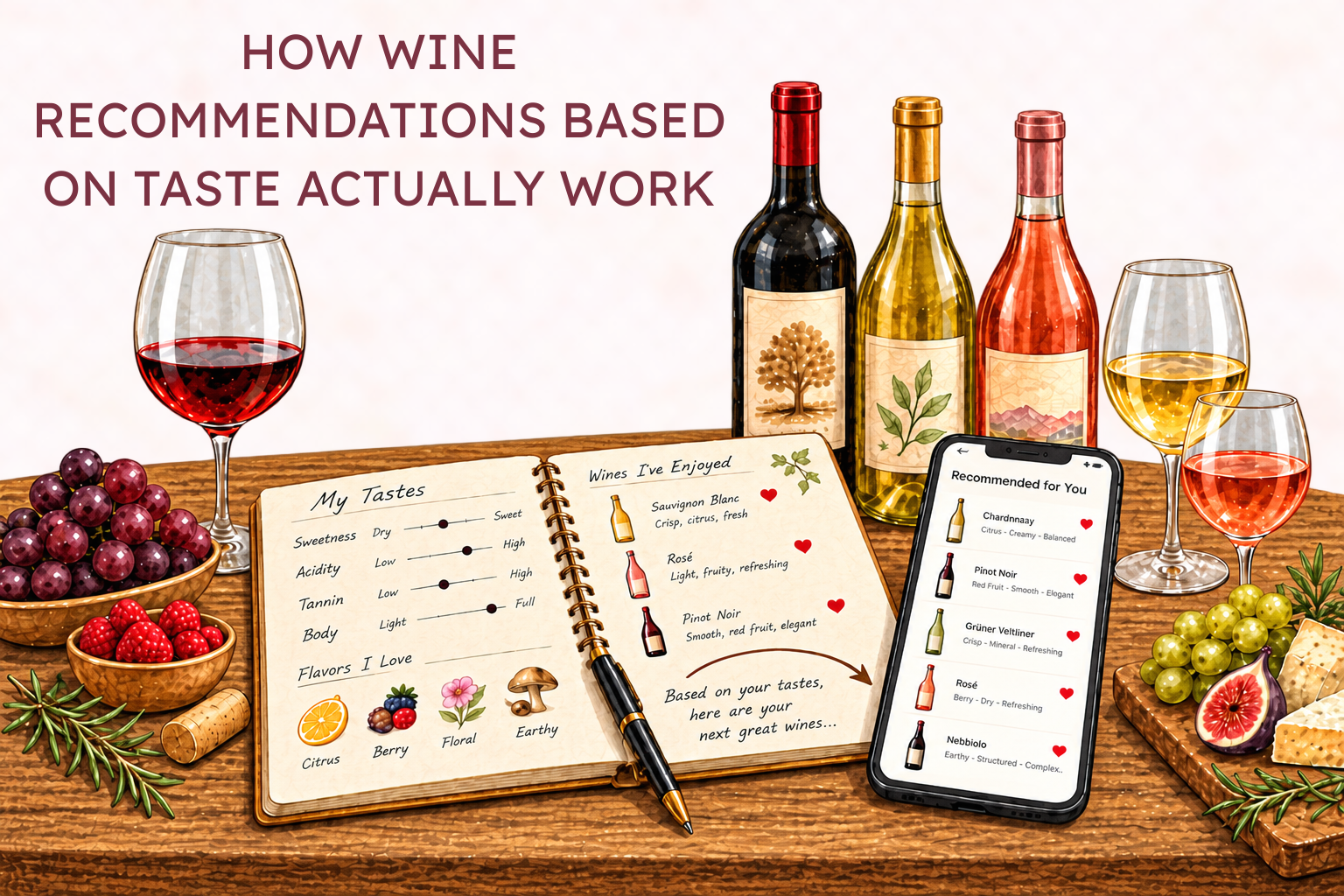
Remember the wines you actually enjoy.
Your free wine journal makes it easy to track what you love, learn from every bottle, and find your perfect pour.