
How Oak Aging Changes Wine
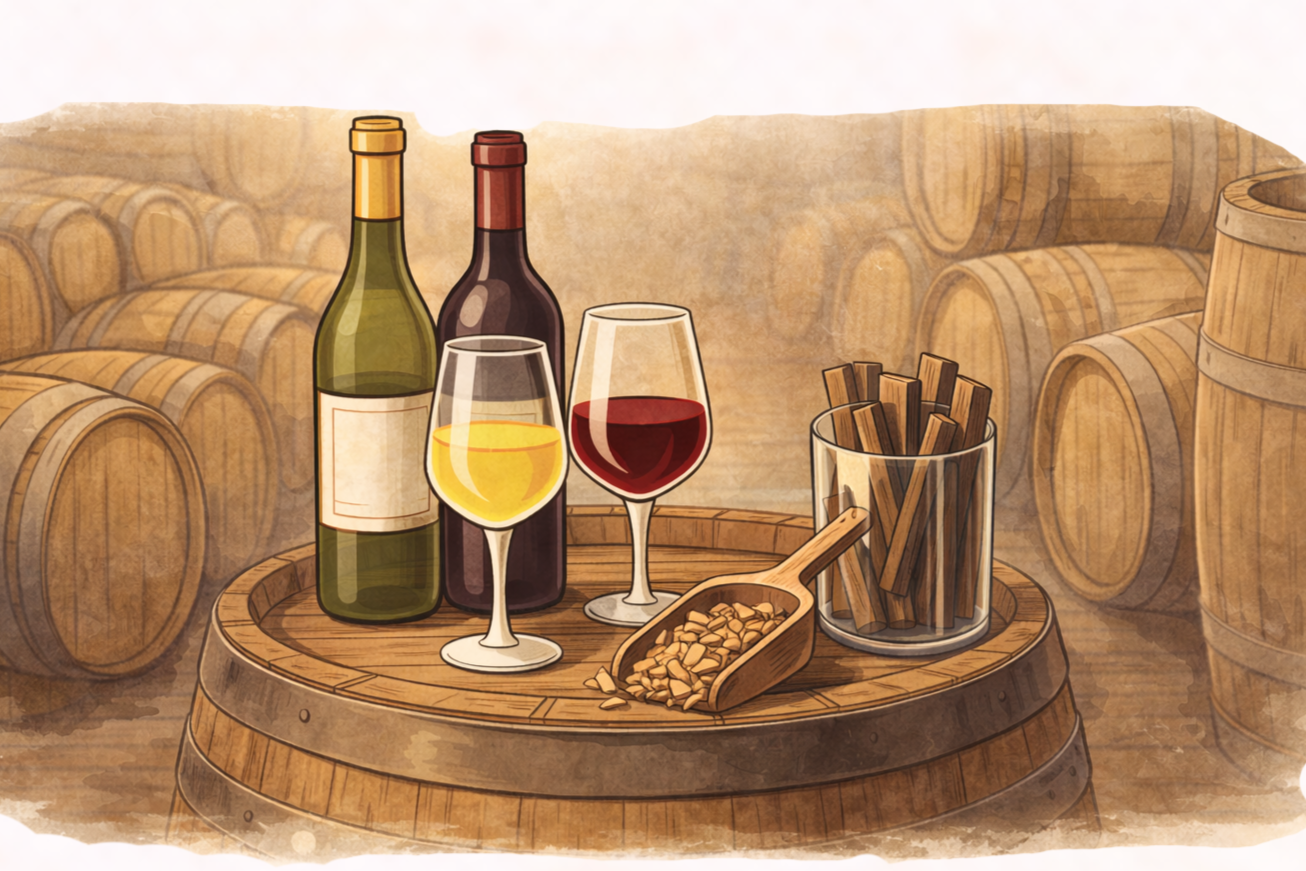
If you’ve ever seen “oaked” or “unoaked” on a wine label and wondered what that actually means, you’re not alone. Oak aging is one of the most influential and most misunderstood parts of winemaking. Some people love oaky wines. Others say they hate them. Most beginners just aren’t sure what they’re tasting. The good news? Once you understand what oak does to wine, you’ll be able to recognize it easily, decide whether you like it, and choose bottles with way more confidence.
What Does “Oak Aging” Actually Mean?
Oak aging simply means that a wine has spent time in contact with oak before it’s bottled.
This contact can:
change the flavor
change the texture
change how bold or soft the wine feels
Oak affects more than just flavor, it also changes how a wine feels as you drink it. If you’re still getting comfortable paying attention to texture, aroma, and structure, our post How to Taste Wine walks through those basics step by step and pairs nicely with this topic.How Oak Changes Wine Flavor
Oak introduces flavors that do not come from grapes themselves. The most common oak-influenced flavors include:
vanilla
baking spice
toast
clove
caramel
smoke
These flavors come from the wood and from how the barrel is treated (lightly toasted vs heavily toasted), not from added ingredients. That’s why an oaked Chardonnay can taste creamy and spiced, while an unoaked Chardonnay tastes crisp and fruit-driven, even though the grape is the same. If you’ve read our Chardonnay guide, you’ve already seen this contrast in action.
How Oak Changes Texture and Mouthfeel
Oak doesn’t just affect flavor, it changes how wine feels. Time in oak can make a wine feel:
rounder
smoother
fuller
softer on the edges
This happens because oak allows tiny amounts of oxygen to interact with the wine, gently softening structure over time. That’s why oak often plays a major role in wine body, especially in fuller-bodied styles. Our post on Wine Body Explained dives deeper into how texture shows up in the glass.
Why Some Wines Are Oaked (And Others Aren’t)
Oak is a tool, not a requirement. Winemakers choose oak when they want to:
add richness
soften tannins
build complexity
create a more polished style
They avoid oak when they want to:
highlight freshness
emphasize pure fruit
keep the wine light and crisp
Neither approach is “better.” It’s about intention. This is especially clear when comparing styles of Cabernet Sauvignon where oak often enhances structure and depth compared to lighter reds or aromatic whites where oak could overwhelm the wine.
French Oak vs American Oak
You’ll sometimes see references to where the oak came from. Here’s the simple takeaway:
French oak tends to add:
subtle spice
toast
structure
elegance
American oak tends to add:
stronger vanilla
coconut
sweetness-like aromas
bold character
Both are legitimate. They just create different styles.
How to Spot Oak on a Wine Label
Labels rarely say “this wine tastes like vanilla,” but they do give clues. Look for terms like:
“barrel aged”
“oak aged”
“aged in French oak”
“sur lie”
“reserve” (sometimes, not always)
Also check:
alcohol level (higher often pairs with oak)
region (warm regions use oak more often)
grape variety
Our guide on How to Read a Wine Label walks through these clues in more detail.
How to Recognize Oak When Tasting
You don’t need training to spot oak, just awareness. Ask yourself:
Do I smell vanilla, spice, toast, or smoke?
Does the wine feel round and smooth rather than sharp?
Does it feel richer than expected for the grape?
If yes, oak likely played a role. As you practice, this becomes second nature especially if you compare an oaked and unoaked version of the same grape side by side.
How Somm Scribe Helps You Understand Oak Over Time
Oak influence becomes clearer when you start noticing patterns. When logging wines in Somm Scribe, pay attention to:
flavor notes beyond fruit (vanilla, spice, toast)
body and texture
how smooth or bold the wine feels
overall impression
Over time, you’ll notice whether you gravitate toward:
bright, unoaked styles
rich, oaked styles
or something in between
That self-awareness is far more valuable than memorizing wine terms.
Bottom Line: Oak Isn’t Good or Bad — It’s a Style Choice
Oak aging doesn’t make a wine better or worse. It makes it different. Some wines shine with oak. Others shine without it. Once you understand what oak does — to flavor, texture, and structure — you can choose wines that actually match your taste, not someone else’s opinion. And that’s the whole point.
