
Tuscany Wine Guide: What to Know, What to Drink & What Makes It Special
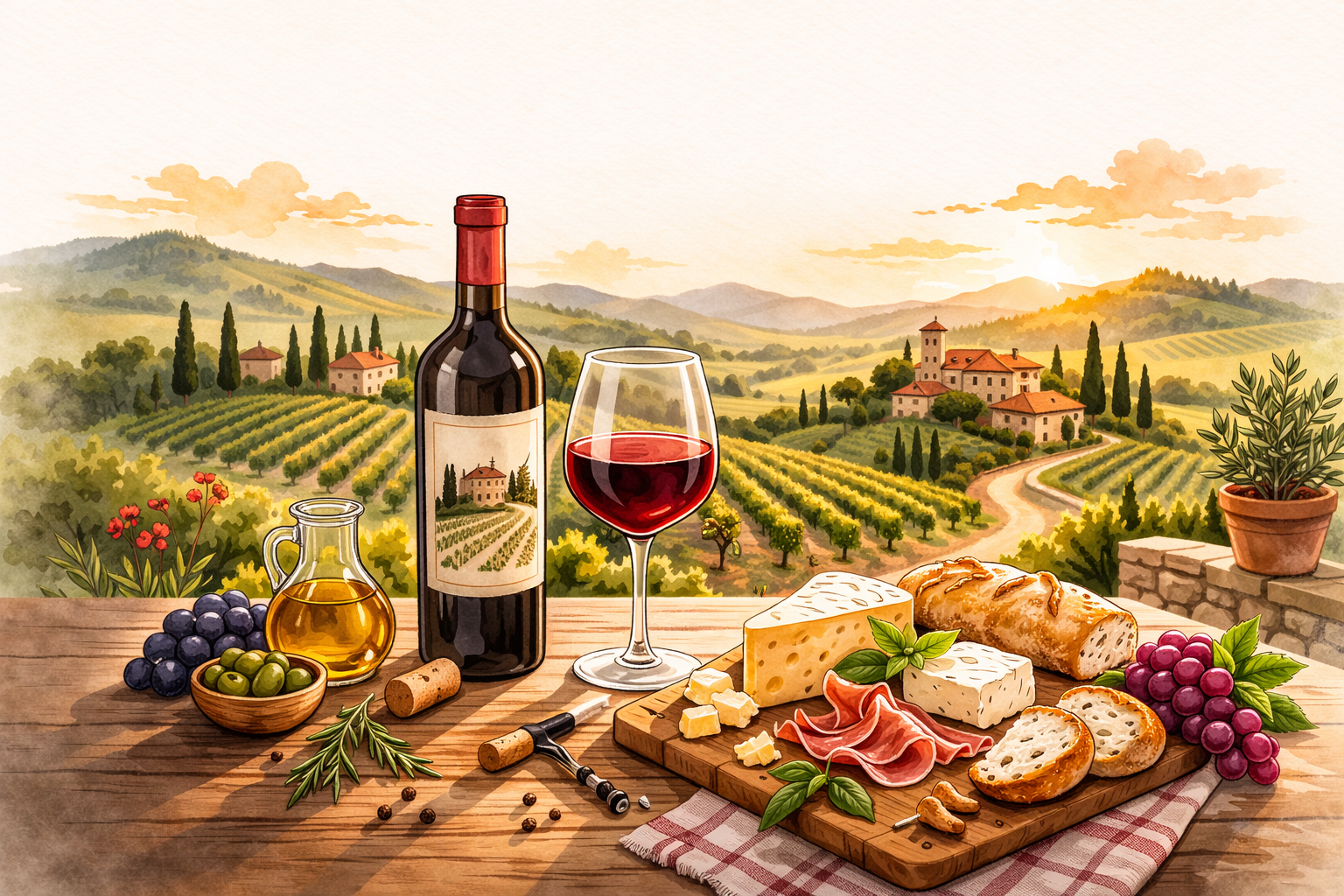
Tuscany is one of those regions people recognize instantly — rolling hills, cypress trees, terracotta rooftops, and of course… Chianti. But behind the postcard landscapes is one of the most important wine regions in the world, producing everything from rustic, food-friendly reds to ultra-polished “Super Tuscans.” The good news? You don’t need to be an expert to understand Tuscany. This guide breaks it down simply and helps you choose bottles with confidence — whether you’re grabbing a weeknight Chianti or exploring something more adventurous.
The Heart of Tuscany: Sangiovese
Nearly all of Tuscany’s famous wines are built on Sangiovese, an expressive grape known for:
bright cherry flavors
lively acidity
soft earthiness
subtle spice
a savory, herbal edge
Beginners often describe it as:
“Kind of like Pinot Noir, but slightly stronger and more rustic.”
But Tuscany isn’t just one style — it’s several interpretations of Sangiovese, each tied to a specific area.
Tuscany’s Key Wine Areas
Here are the regions you’ll see most often on labels — and what they actually mean.
Chianti & Chianti Classico
This is Tuscany’s most recognizable region. Chianti is a broad region producing wines with a range of styles, while Chianti Classico comes from the historic heart of the area and typically offers higher quality, more structure, and brighter, more defined Sangiovese flavors.
What Chianti typically taste like:
red cherry
dried herbs
subtle earth
medium body
vibrant acidity
Chianti Classico (the historic core) is usually:
higher quality
more structured
more refined
The black rooster (“Gallo Nero”) on the neck of the bottle is the giveaway.
Brunello di Montalcino
Brunello is Tuscany’s most powerful expression of Sangiovese.
Think:
deeper color
richer fruit (black cherry, plum)
firmer structure
long aging potential
It’s more intense than Chianti — a special-occasion wine, but incredible when you want to understand what Sangiovese can really do.
Vino Nobile di Montepulciano
Somewhere between Chianti and Brunello in weight.
Often more approachable, less intense than Brunello, but still layered.
Flavors include:
sour cherry
red plum
dried violet
warm spice
A great “step up” wine without the Brunello price tag.
Super Tuscans (Cabernet, Merlot, Sangiovese Blends)
This is where Tuscany gets modern. Super Tuscans were created by winemakers who broke the old rules and started blending traditional Sangiovese with grapes like Cabernet Sauvignon, Merlot and Syrah. These winemakers rejected outdated regulations so they could make higher-quality, more expressive wines using grapes the laws didn’t allow.
The result is:
fuller body
dark fruit
smoother tannins
more richness
If you enjoy New World styles (like Napa Cab or Australian Shiraz), this is Tuscany’s version.
What Tuscan Wines Taste Like (In General)
Even though styles vary, most Tuscan reds share a few traits:
red cherry or red plum fruit
medium body
lively acidity
subtle herbal notes
a savory “Italian” character
tannins ranging from gentle to firm
If you’ve ever had a wine that seemed made for pasta, pizza, or grilled meats — it was probably Sangiovese or a Tuscan blend.
Food Pairings (The Easy Way)
Tuscany = acidity + savory flavors
Food = acidity + savory flavors
So Tuscany’s wines practically pair themselves.
Perfect matches
tomato-based pasta
wood-fired pizza
grilled steak or lamb
roasted vegetables
hard cheeses (Pecorino especially)
The acidity in Sangiovese cuts through richness and brightens food — exactly why it’s a crowd pleaser.
How to Choose a Tuscan Wine
If you're just starting out, Choose Chianti. Light, bright, great with food, and inexpensive. When you want something deeper, go with Chianti Classico or Vino Nobile di Montepulciano. For special occasions, choose Brunello di Montalcino. If you prefer rich, smooth, bold wines; try a Super Tuscan.
How to Log Tuscan Wines in Somm Scribe
Tuscan wines are fantastic for building tasting awareness.
When logging them, pay attention to:
Red fruit: cherry, cranberry, plum
Herbal notes: oregano, thyme, dried herbs
Earthiness: clay, tobacco, dried leaf
Tannin level: gentle → firm
Overall impression: rustic, bright, bold, elegant
Over time, the flavor patterns become very clear — especially if you taste Chianti vs Brunello side-by-side.
Bottom Line: Tuscany Is the Heart of Italian Wine for a Reason
From bright and refreshing Chianti to deep and powerful Brunello, Tuscany showcases how beautifully expressive Sangiovese can be. It’s approachable, food-friendly, and packed with history — but easy to understand once you learn the basics.
Whether you're just starting or branching out, Tuscany is one of the most rewarding wine regions to explore (and to track in Somm Scribe as your taste develops).
