
Learn Wine, One Glass at a Time
Practical, beginner friendly wine education to help you taste with confidence. From understanding labels and regions to pairing food and building your palate, we make wine approachable one guide at a time.
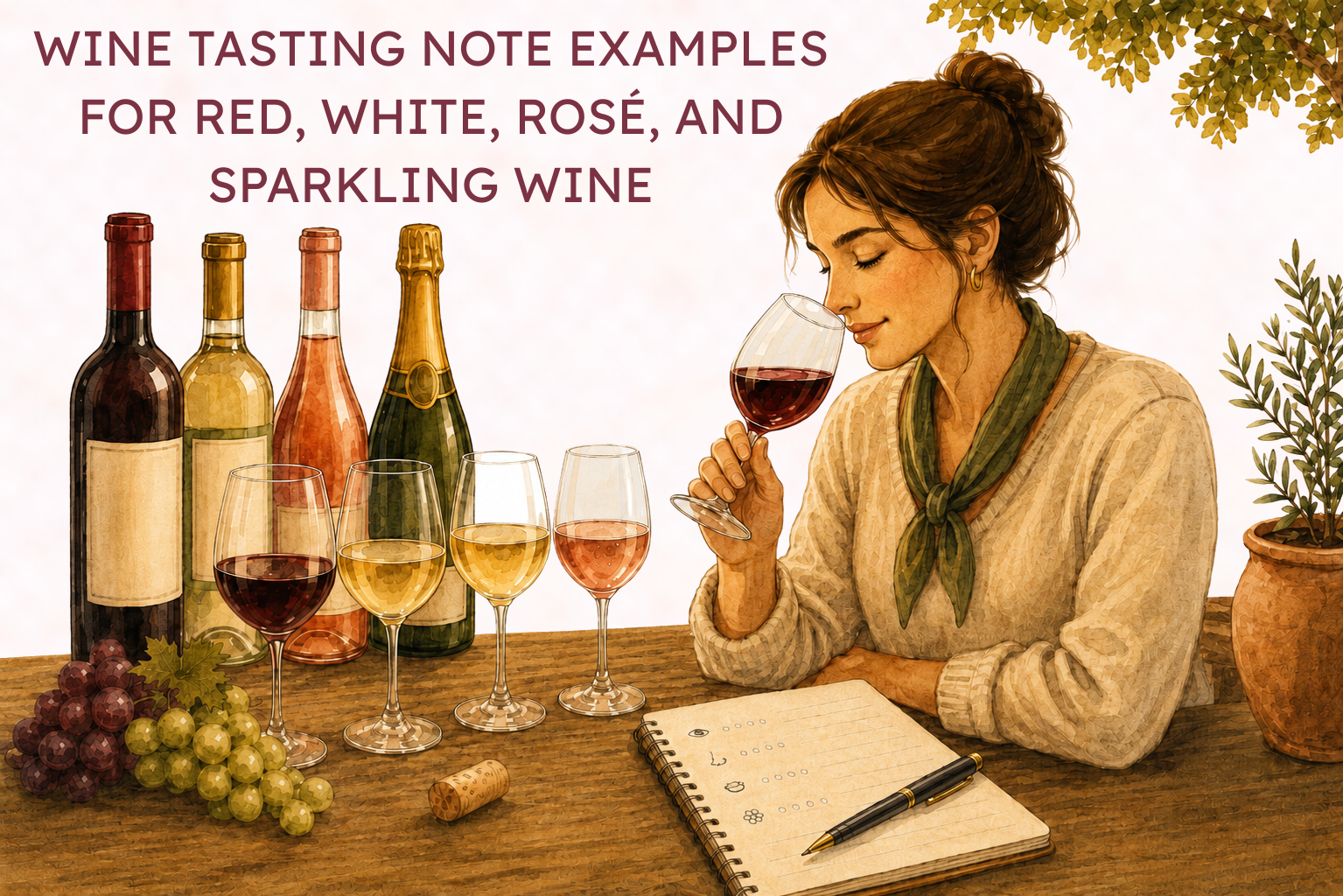
Wine Tasting Note Examples for Red, White, Rosé, and Sparkling Wine
Not sure what a wine tasting note should actually look like? This beginner-friendly guide shares simple examples for red, white, rosé, and sparkling wine so you can see how to describe aromas, flavors, body, acidity, tannin, finish, and your overall impression without sounding overly technical.
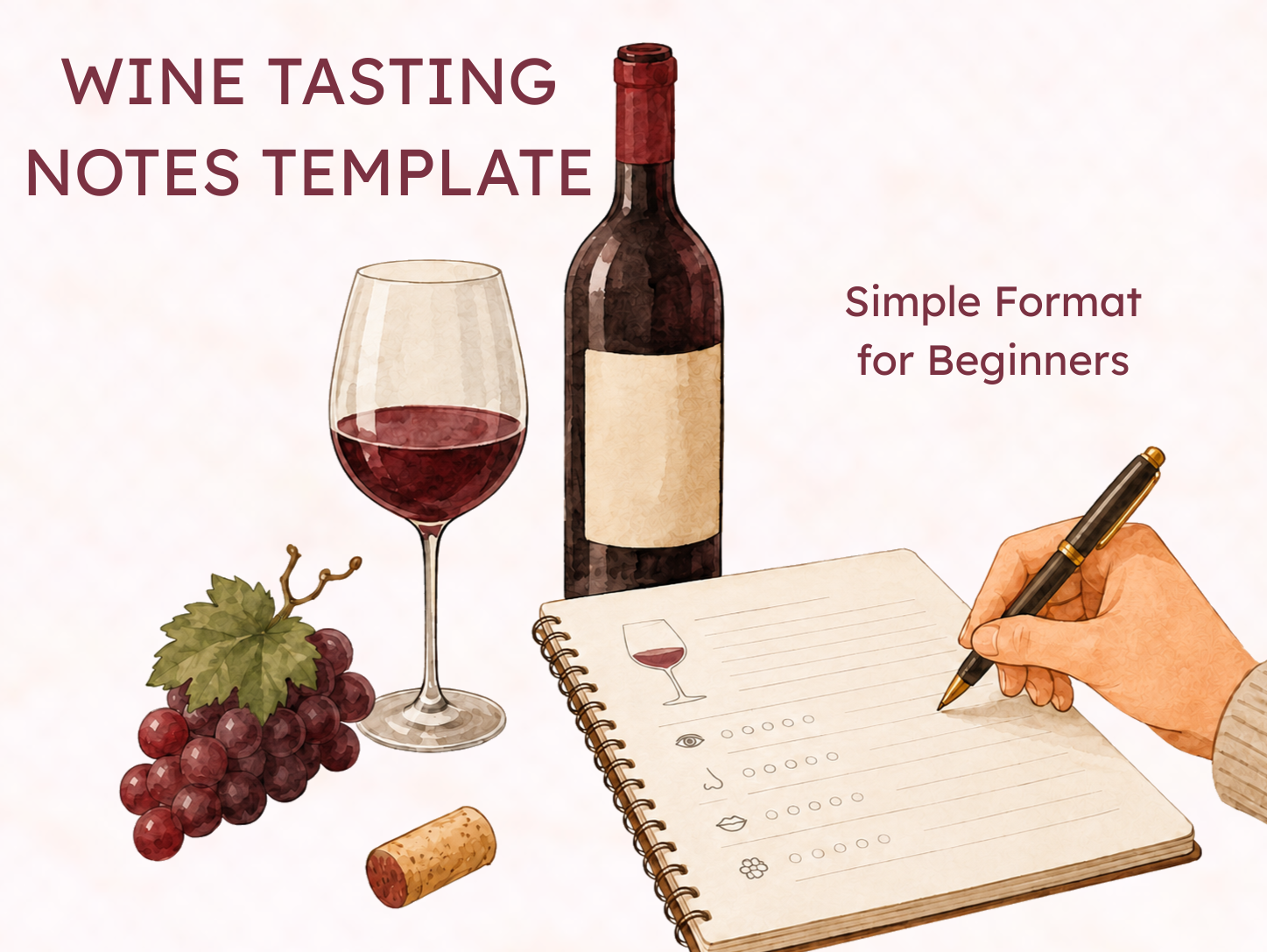
Wine Tasting Notes Template: A Simple Beginner-Friendly Format
Looking for an easy way to take better wine notes? This beginner-friendly wine tasting notes template gives you a simple format for recording the wine info, appearance, aroma, taste, structure, overall impression, rating, and whether you would buy the bottle again. Use the printable version or save your notes digitally with Somm Scribe.

Why the Same Wine Can Taste Better (or Worse) on Different Days
Have you ever opened a bottle you know you like, only for it to taste completely different than you remembered? You’re not imagining it. Wine doesn’t show up the same way every day because you don’t. Your mood, what you’ve eaten, your energy level, even how much attention you’re paying all shape how a wine feels in the moment. Understanding this isn’t about being “better” at wine — it’s about trusting your experience and realizing that wine is always a conversation, not a fixed result.
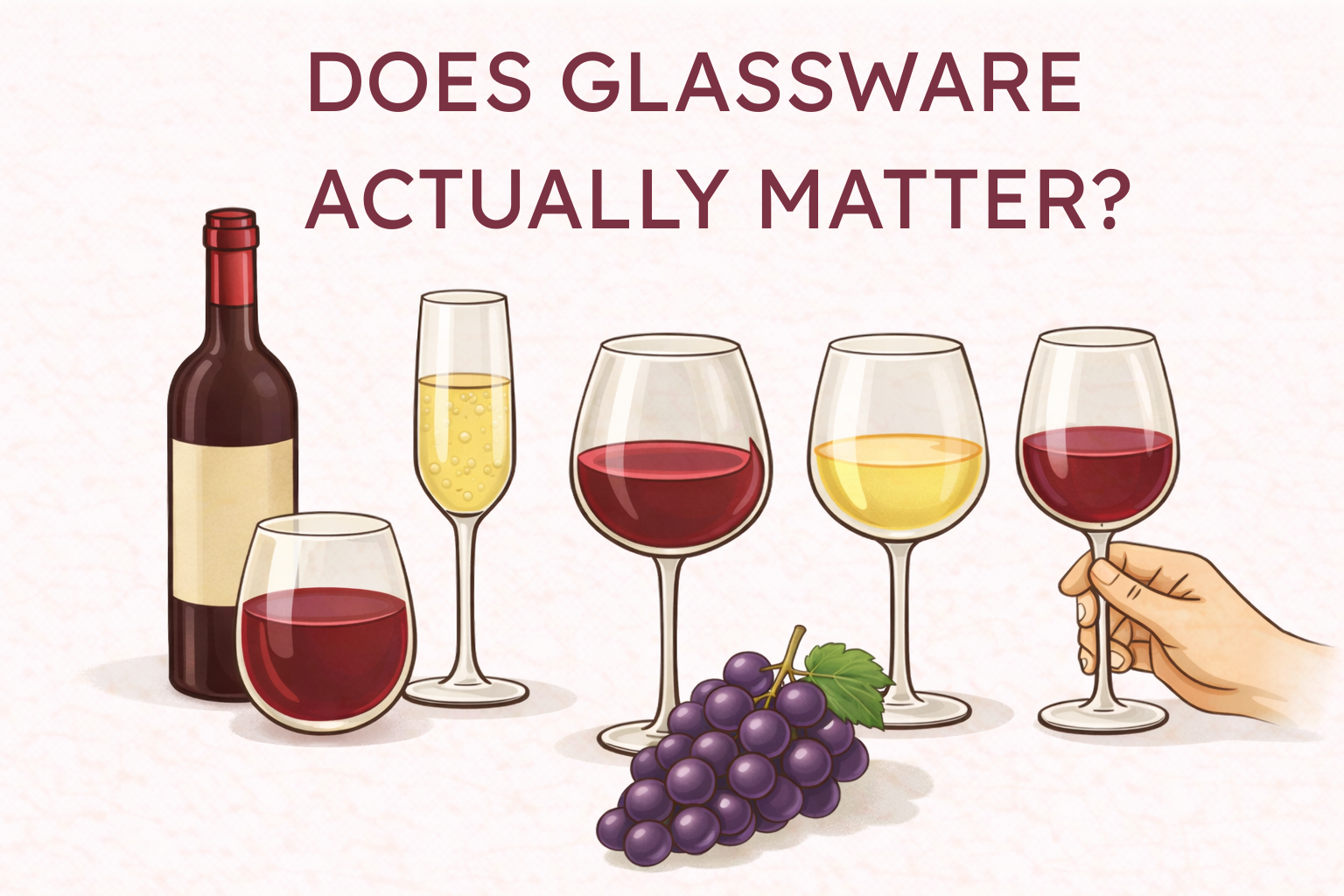
Does Glassware Actually Matter?
Glassware does matter — but not because of strict rules or grape-specific designs. The shape of a wine glass affects how aromas gather, how wine hits your palate, and how it opens as you drink. Understanding this helps you choose glassware that makes wine easier to enjoy, without turning it into another thing you have to get “right.”
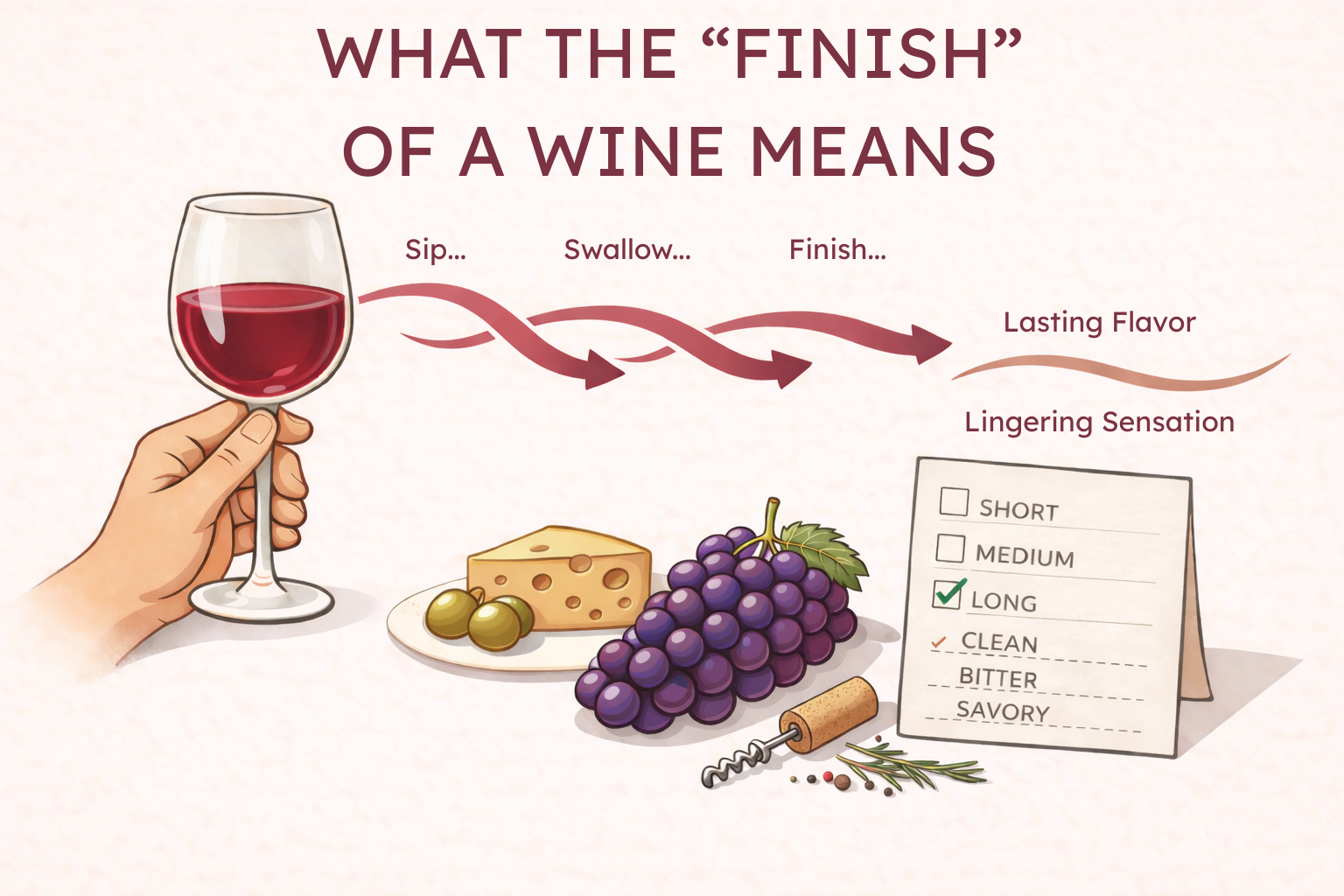
What the “Finish” of a Wine Means
The finish of a wine is what happens after the sip — the flavors, textures, and sensations that linger once the wine is gone. Some wines fade quickly. Others stay with you, changing and unfolding. Understanding finish is one of the easiest ways to tell how a wine is built and why some bottles feel more satisfying than others.
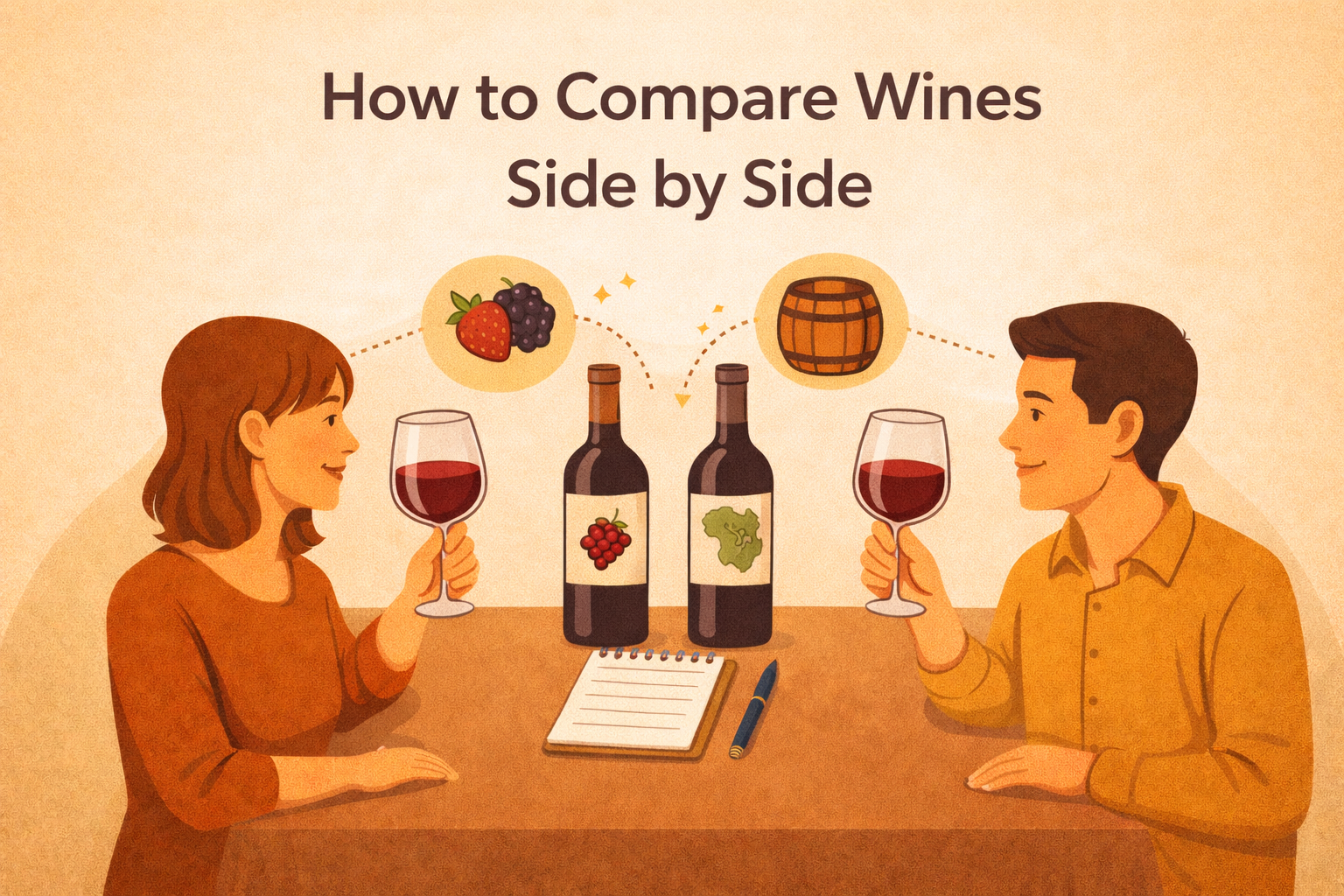
How to Compare Wines Side by Side: And Learn Faster From Each Glass
One of the reasons wine can feel confusing is that we usually experience it in isolation. You open a bottle, pour a glass, decide whether you like it, and move on. A few days or weeks later, you try another wine and hope you remember how the last one tasted. That’s a tough way to learn. Wine becomes much easier to understand when you taste it in comparison. Side-by-side tasting removes a lot of the guesswork and helps your palate notice differences that are easy to miss when you’re only drinking one wine at a time. You don’t need a formal tasting, special glassware, or expert vocabulary. You just need two wines and a little curiosity.
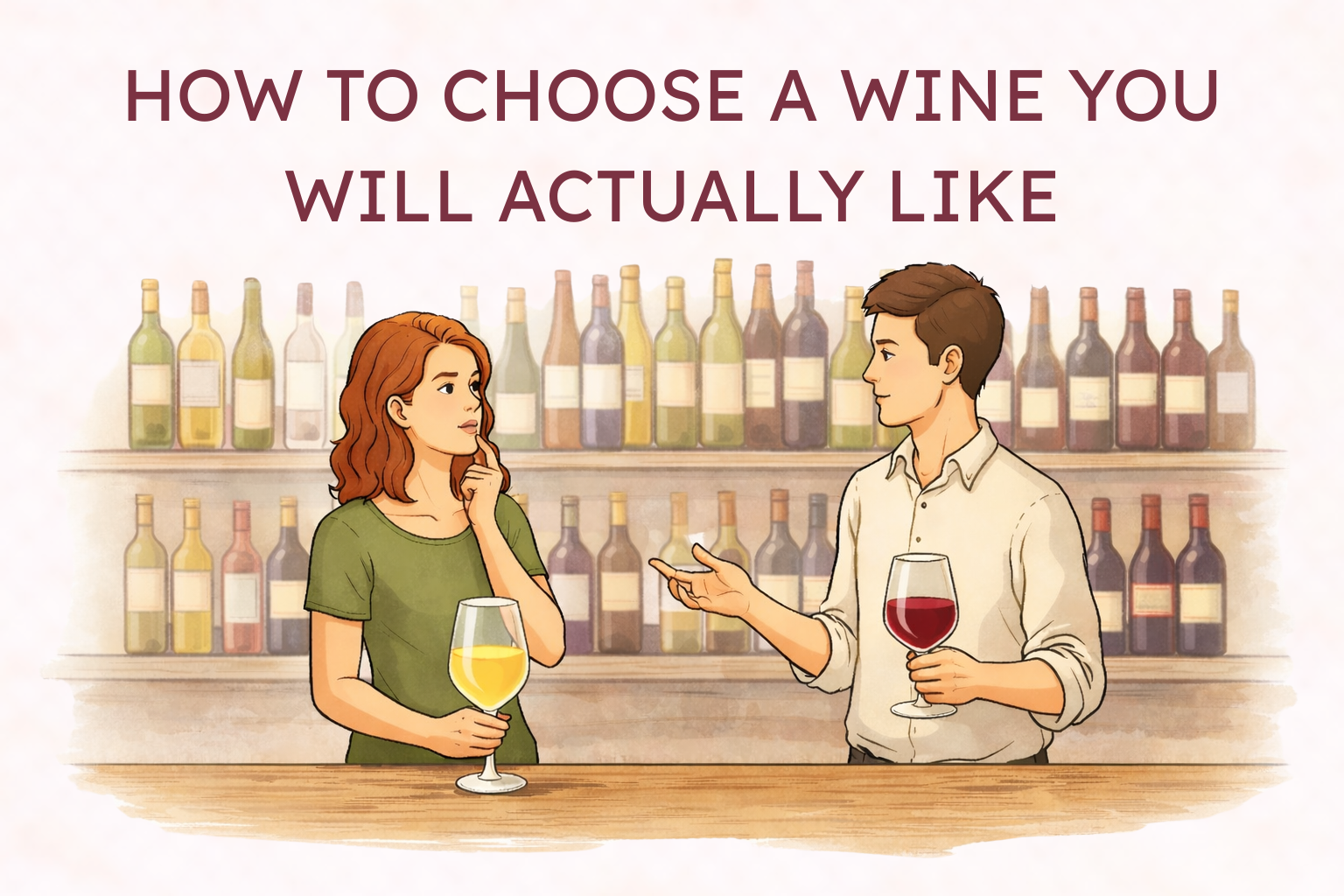
How to Choose a Wine You’ll Actually Like
Standing in front of a wall of wine can feel overwhelming. Dozens of bottles. Labels covered in words you half-recognize. Prices all over the place. And somehow, everyone else looks like they know exactly what they’re doing. If you’ve ever picked a bottle based on a guess or defaulted to the same wine every time just to avoid thinking, you are not alone. The good news is that choosing a wine you’ll enjoy doesn’t require memorizing regions, grapes, or fancy terminology. It just requires knowing what to pay attention to and what to ignore.
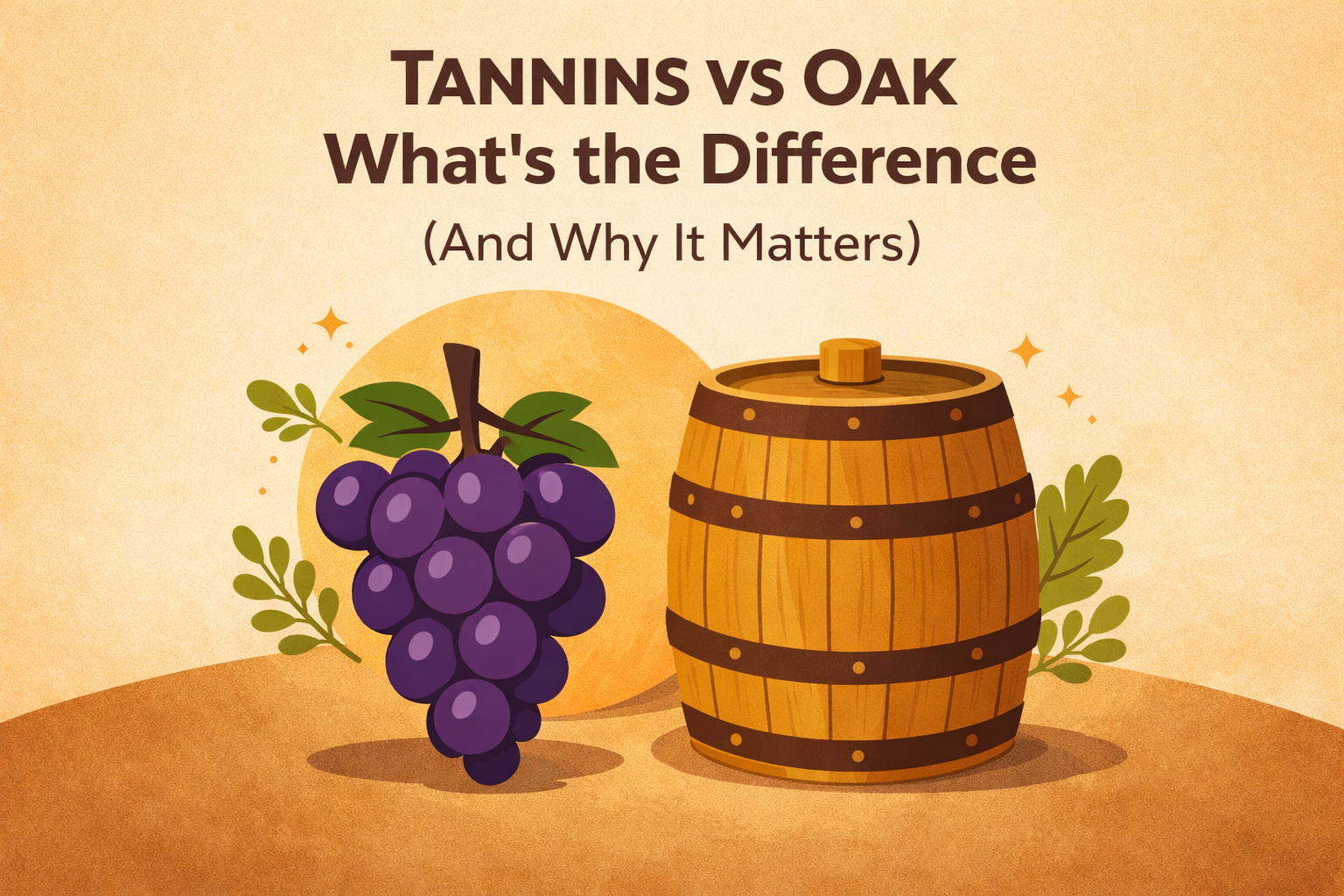
Tannins vs Oak: What’s the Difference
If you’ve ever tasted a wine and thought, “This feels dry,” or “This tastes kind of woody,” you’ve already encountered tannins and oak even if you didn’t have names for them yet. They often show up together, especially in red wines, which is why they’re so commonly confused. But tannins and oak are not the same thing, and understanding the difference makes wine much easier to interpret. Once you can tell which one you’re noticing, a lot of wine descriptions suddenly start to make sense.
Discover Your Wine Style
Take our quick quiz to uncover the wines you’ll love based on your tastes, mood, and lifestyle.
Quick & Easy
Takes less than 2 minutes
Personalized Results
Get wine recommendations that match your style
Better Choices, Every Time
Shop and explore with confidence
Not Sure Where to Start?
Essential Guides to help you build confidence with wine.
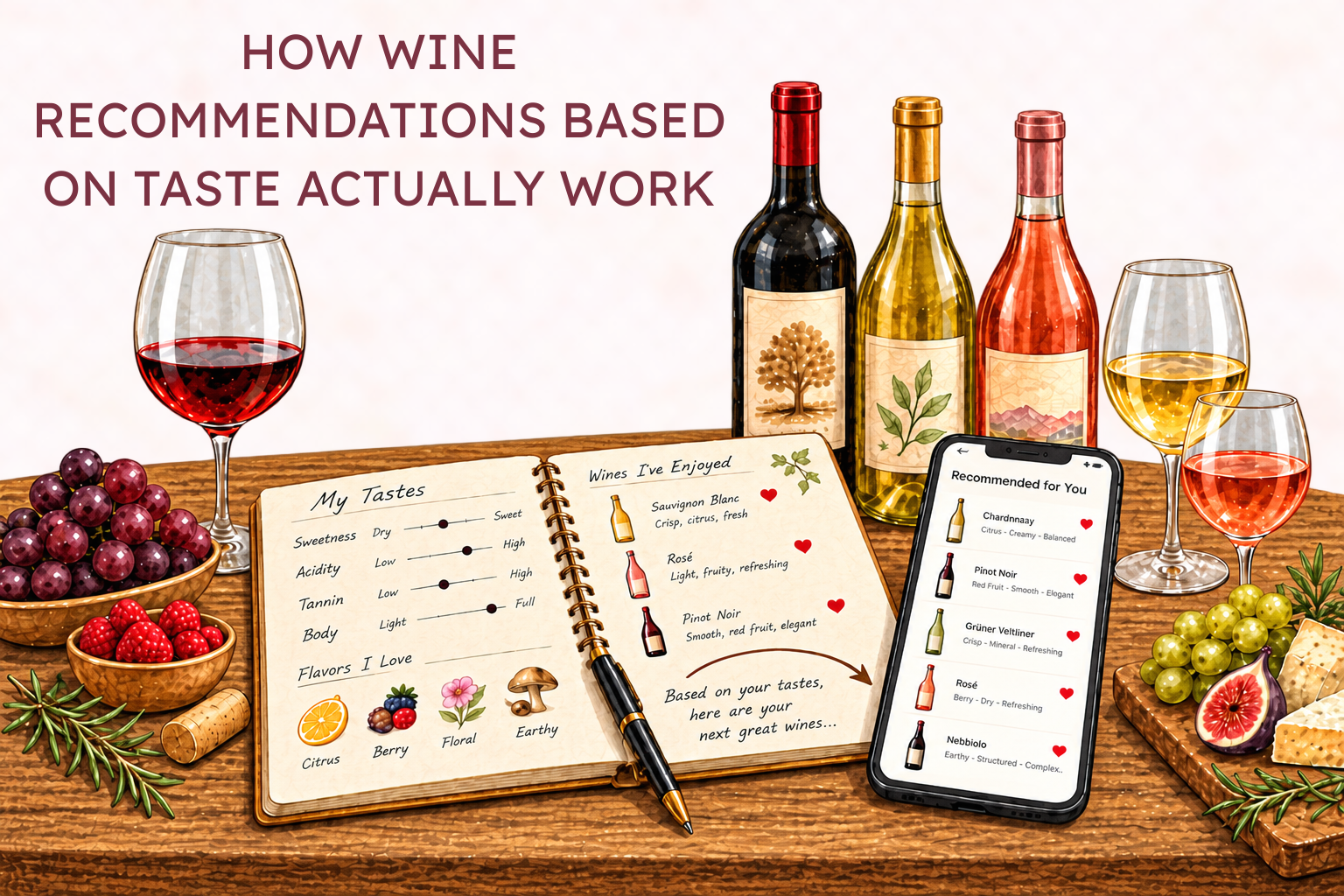
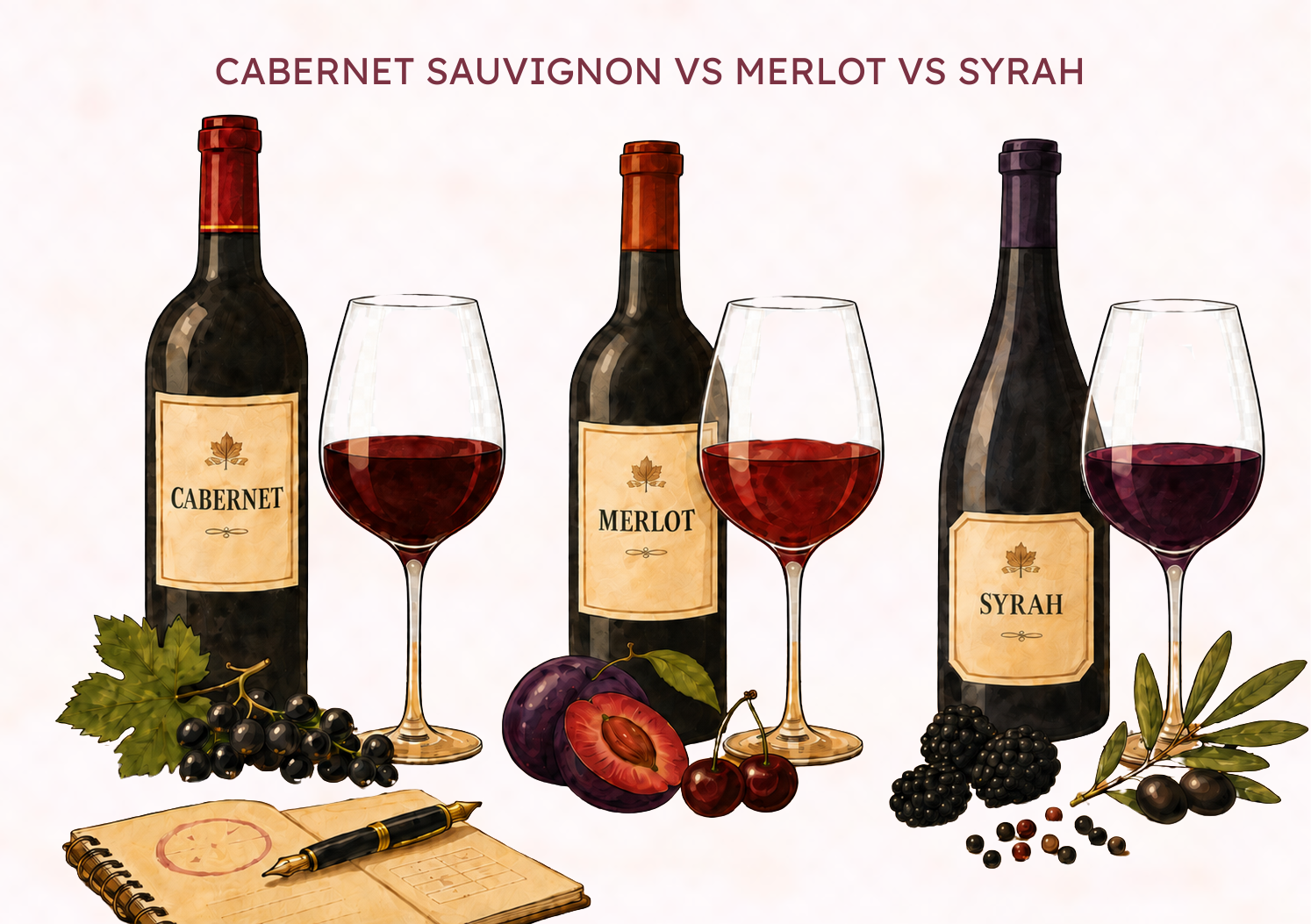
Remember the wines you actually enjoy.
Your free wine journal makes it easy to track what you love, learn from every bottle, and find your perfect pour.