
Wine Sweetness Levels Explained: Bone Dry to Sweet
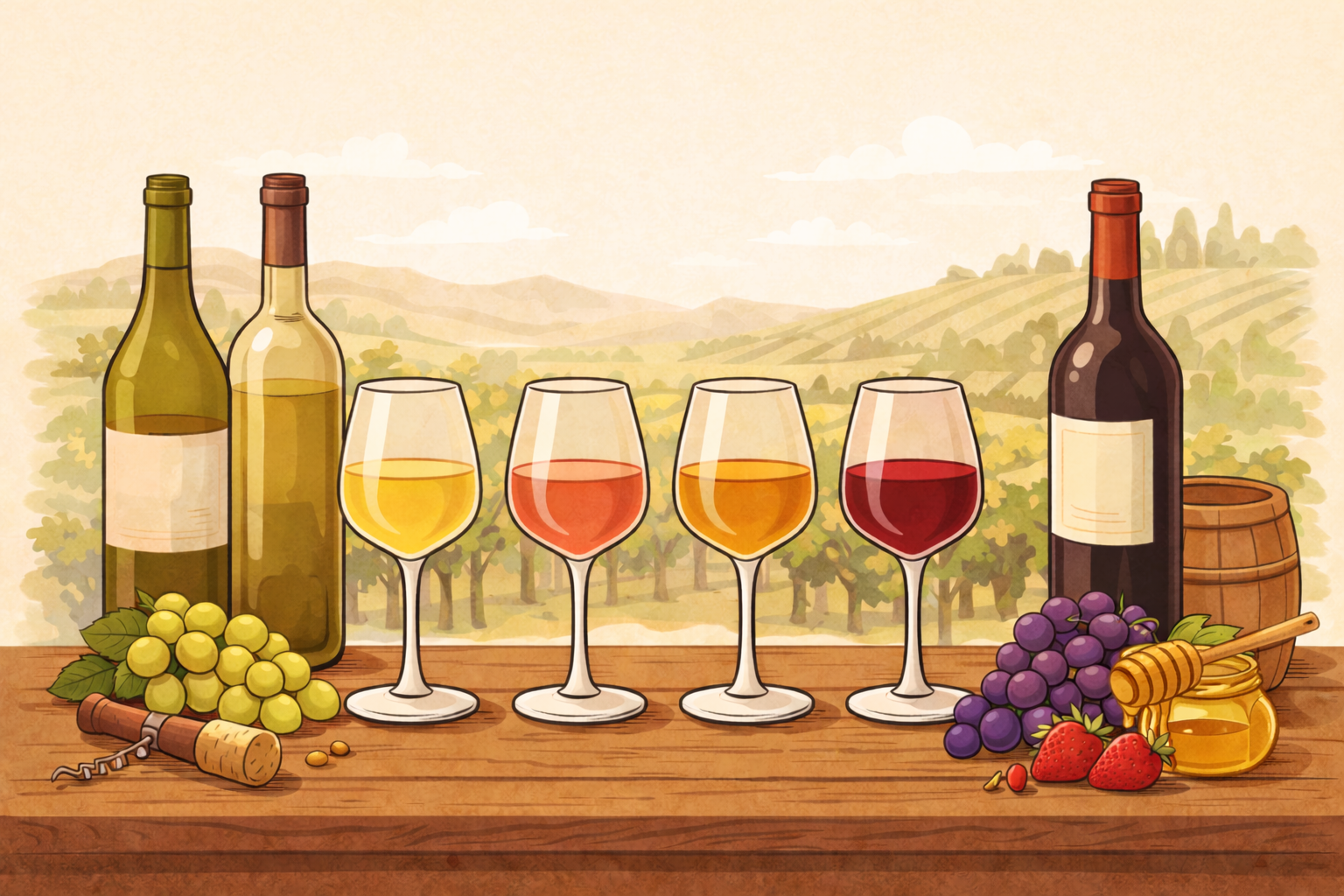
Sweetness is one of the first things people notice about wine — yet it’s also one of the most misunderstood. A wine can be labeled “dry” and still taste fruity. Another can contain actual sugar but still feel refreshing. And then there are all the terms like off-dry, Brut, or late harvest, which seem like they belong in a glossary. This guide breaks everything down simply so you can understand what sweetness actually means, how it changes the way a wine tastes, and how to recognize where a wine sits on the spectrum. If you haven’t yet read our post on What Makes a Wine Dry, that’s a helpful companion.
Trying to figure out what wines you actually like? Somm Scribe helps you save tasting notes, track patterns, and remember bottles worth buying again.
What Sweetness Really Means in Wine
In wine, sweetness comes from residual sugar — grape sugar left over after fermentation. If the yeast consumes all the sugar, the wine is dry. If winemakers intentionally stop fermentation early or blend in sweeter juice, the wine becomes off-dry or sweet.
But here’s the part that often confuses beginners: sweetness is not just about sugar. How sweet a wine feels is shaped by acidity, fruit ripeness, alcohol, and even the aromas.
That’s why tasting is so important. If you want to learn the structure behind sweetness perceptions, our How to Taste Wine guide breaks those building blocks down step-by-step.
The Sweetness Spectrum (Simple, Not Technical)
Wine sweetness exists on a spectrum. You don’t need exact gram-per-liter numbers to understand it — just a sense of how each style tastes.
Bone Dry
Crisp, lean, refreshing. Almost no sugar left.
Examples: Brut Nature Champagne, Assyrtiko, Albariño
Dry
The most common style. Not sweet, though fruitiness may give the impression of sweetness.
Examples: Cabernet Sauvignon, Pinot Noir, Chardonnay, Sauvignon Blanc
(Our guides to Cabernet Sauvignon and Chardonnay give real-world examples of dry styles.)
Off-Dry
A touch of sweetness balancing bright acidity. This category is extremely food-friendly.
Examples: Riesling (certain styles), Chenin Blanc, some rosés
Sweet
Noticeably sweet wines, often juicy, aromatic, or lightly sparkling.
Examples: Moscato, Lambrusco Dolce
Very Sweet / Dessert Wines
Intense sweetness with rich, concentrated flavors.
Examples: Port, Ice Wine, Sauternes
Why Some Dry Wines Taste Sweeter
A wine can be technically dry but still taste sweet-ish — and this is where new wine drinkers often get tripped up. Several factors play tricks on your senses:
Fruit ripeness
Wines from warm climates develop riper, juicier fruit flavors, which your brain translates as sweetness.Oak influence
Flavors like vanilla, caramel, and baking spice can make a dry wine feel sweeter.Lower acidity
Wines with softer acidity taste rounder, less sharp, and often “smoother,” which many interpret as sweetness.Higher alcohol
Alcohol naturally carries a slightly sweet impression and influences mouthfeel.
Understanding these pieces makes it much easier to predict sweetness even before you taste the wine.
Sweetness can be confusing at first. Somm Scribe helps you remember which wines tasted dry, fruity, off-dry, or sweet to you.
Sparkling Wine Sweetness Terms (The Ones Everyone Confuses)
Sparkling wine has its own labeling system, and the terms rarely mean what beginners expect.
For example:
Brut Nature → bone dry
Extra Brut → very dry
Brut → dry
Extra Dry → slightly sweet (yes, really)
Demi-Sec → sweet
The best way to learn these is to taste them side-by-side.
How Sweetness Shapes Food Pairings
Sweetness is one of the most powerful tools in food and wine pairing, especially when used intentionally.
A touch of sweetness cuts through spicy dishes, making off-dry wines ideal for Thai, Indian, and Korean flavors. Sweeter wines flatter desserts, while bone-dry wines cleanse the palate after rich, salty foods. Dry rosé works with almost anything — a great option when you’re not sure what to open.
Pairing is less about rules and more about finding tension or harmony. Over time, your preferences become clear, especially as you log tastings.
How Somm Scribe Helps You Learn Sweetness Naturally
Even without a sweetness field, Somm Scribe gives you the structure to understand sweetness through the elements that shape it:
fruit character (bright vs ripe vs jammy)
body (lighter wines often feel drier)
tannins (can create a drying sensation)
finish (some sweetness lingers differently)
overall impression
These clues tell you everything you need to know about how sweet or dry a wine tastes — no sugar measurements or technical jargon needed. As you taste more wines and record your impressions, your palate becomes sharper. Patterns appear. And the concept of sweetness becomes something you feel, not something you have to memorize.
Sweetness can be confusing at first. Somm Scribe helps you remember which wines tasted dry, fruity, off-dry, or sweet to you.
Build your personal wine memory
Save what you drank, what you noticed, and whether you’d buy it again. Over time, Somm Scribe helps you understand your taste instead of guessing every time you shop.
