
How to Choose a Wine You’ll Actually Like
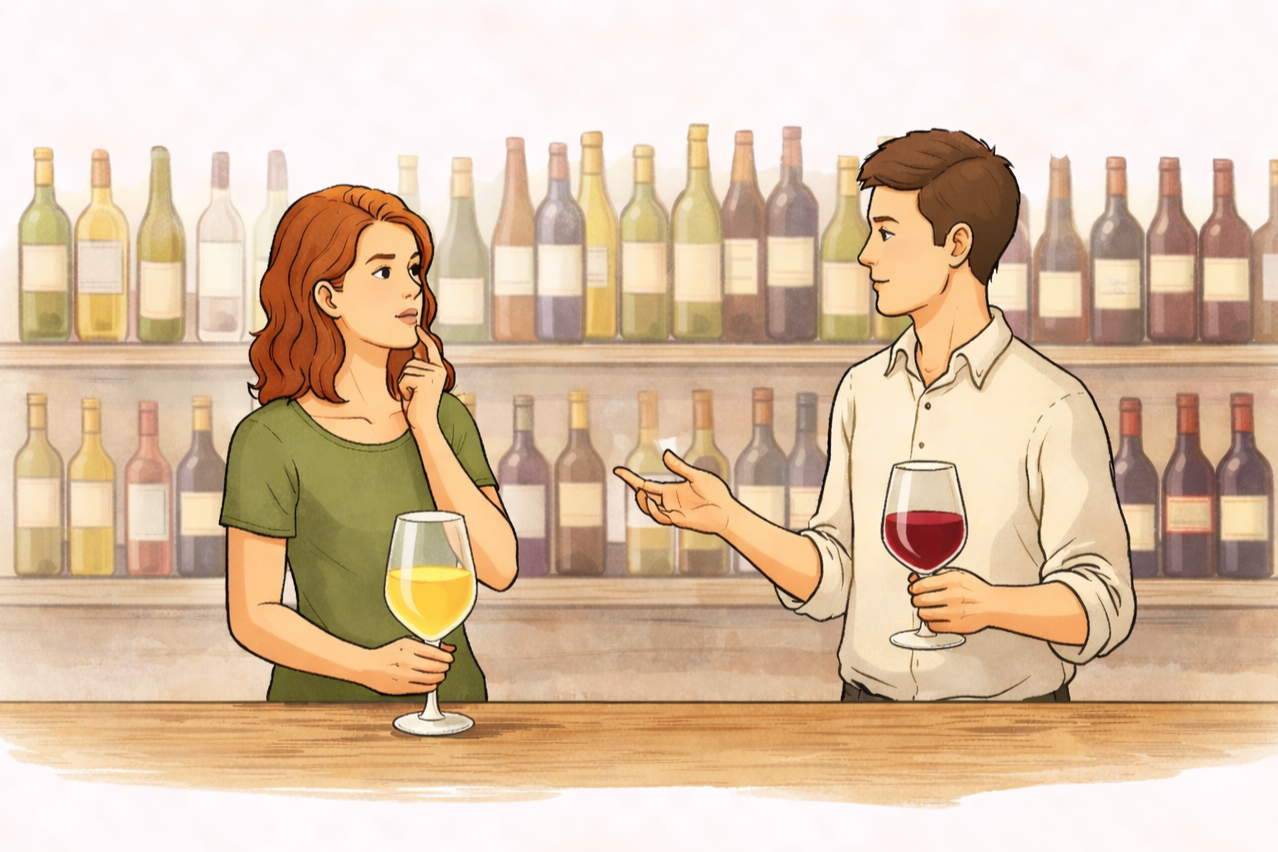
Standing in front of a wall of wine can feel overwhelming. Dozens of bottles. Labels covered in words you half-recognize. Prices all over the place. And somehow, everyone else looks like they know exactly what they’re doing. If you’ve ever picked a bottle based on a guess or defaulted to the same wine every time just to avoid thinking, you are not alone. The good news is that choosing a wine you’ll enjoy doesn’t require memorizing regions, grapes, or fancy terminology. It just requires knowing what to pay attention to and what to ignore.
Start With What You Like, Not What You “Should” Like
One of the biggest mistakes people make is choosing wine based on what they think they’re supposed to enjoy.
That pressure usually comes from somewhere specific. Maybe it’s the price tag, it costs more so it must be better. Maybe it’s the winery’s reputation, a famous region, or a bottle someone ordered confidently at a restaurant once. Sometimes it’s even the label itself: heavy glass, elegant typography, words like reserve or old vines that feel reassuring. None of those things are bad but none of them guarantee you’ll actually like what’s in the glass.
Wine enjoyment isn’t about status, expertise, or picking the “right” bottle. It’s about how the wine tastes to you. That’s why starting with your own preferences matters far more than memorizing grapes or regions. Instead of asking, What should I like? try asking:
Do I usually enjoy brighter, fresher flavors—or richer, deeper ones?
Do I gravitate toward lighter drinks overall, or fuller, more intense ones?
When I’ve enjoyed a wine in the past, what stood out about it?
Those instincts are more reliable than price, hype, or someone else’s opinion. If you’ve been logging wines in Somm Scribe, this becomes even clearer over time. Patterns start to show up naturally—certain styles you return to, flavors you consistently enjoy, others you quietly avoid. And if you haven’t been logging yet, that’s okay too. Simply thinking back to wines you’ve liked (or disliked) is enough to make a better choice the next time you’re standing in front of a shelf. Wine doesn’t reward guessing correctly. It rewards paying attention.
Think in Broad Strokes, Not Specific Flavors
You don’t need to identify exact tasting notes to choose well broader categories are usually far more useful. Rather than asking, “Will this taste like blackberry or cherry?” try asking, “Will this feel lighter or heavier? Brighter or richer?” Framing the question this way keeps wine approachable and helps you avoid overthinking the experience. If you’d like a bit of guidance on those distinctions, Wine Body Explained walks through how weight and texture shape a wine’s overall feel.
Use the Label as a Clue, Not a Test
Wine labels aren’t exams you need to pass. They’re clues. A few things labels can tell you quickly:
the grape (or grapes) used
where the wine is from
sometimes how the wine was made
You don’t need to understand everything on the label. Even recognizing one familiar element can help narrow your choice. If labels still feel intimidating, How to Read a Wine Label walks through what’s actually useful and what you can safely ignore.
Price Is Not a Shortcut to Preference
Higher price doesn’t automatically mean you’ll enjoy a wine more. Price often reflects how a wine was made, not how it will taste to you. Things like smaller production runs, expensive land, longer aging in oak barrels, or a region’s reputation all push prices up — even when the flavor profile isn’t a match for your preferences.
A wine can be impeccably made and still not be your style. It’s also easy to assume that spending more will somehow “unlock” better flavor, especially when you’re still learning. But enjoyment doesn’t scale linearly with price. Once you move past the very bottom shelf, many wines offer excellent balance and character without a premium price tag.
That’s why so many consistently enjoyable bottles live right in the middle of the shelf. When you start choosing wine based on how it feels, how intense it is, or what flavors stand out, price becomes a secondary detail instead of the deciding factor. You end up spending less time second-guessing your choice and far less time feeling disappointed by a bottle you “should” have liked. Learning what you enjoy is more valuable than learning what’s expensive.
Let Past Wines Guide Future Choices
One of the most effective ways to choose wine is to look backward before looking forward. When you notice patterns such as wines you enjoyed versus ones you didn’t, future choices become much easier.
Over time, you might realize you consistently enjoy:
certain styles
certain regions
certain textures
That’s the real skill: learning from your own experience instead of relying on outside opinions.
Final Thought
You don’t need more information to choose wine well. You need a simple framework and permission to trust your own taste. Start with what you like. Pay attention to how a wine feels. Use labels as hints, not hurdles. And let experience do the rest. That’s how you choose a wine you’ll actually enjoy — glass after glass.
