
Cabernet vs Merlot vs Syrah: What’s the Difference?
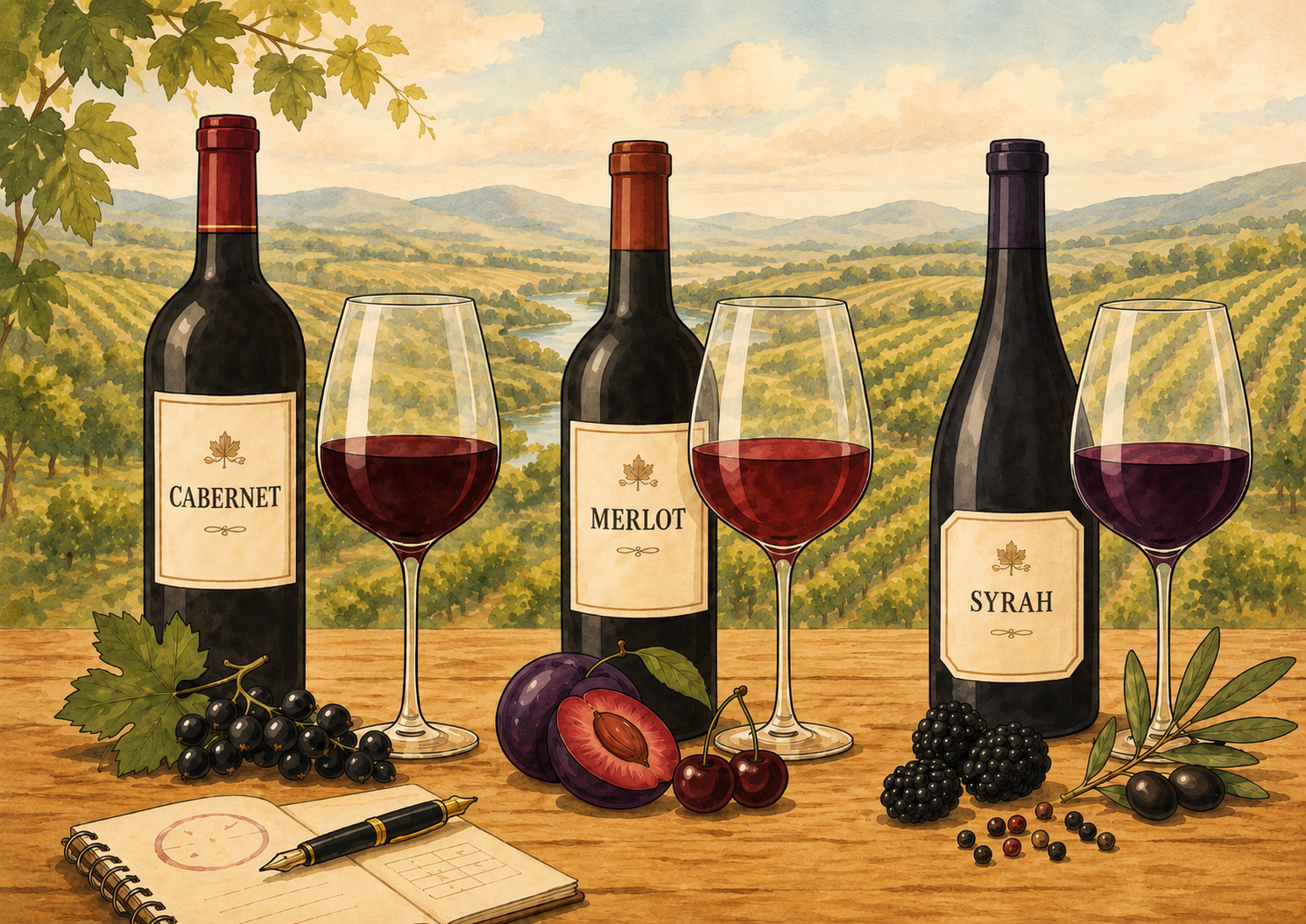
Cabernet Sauvignon, Merlot and Syrah are three popular red wines, but they have some important differences. Cabernet is usually bold and structured with firm tannins. Merlot tends to be smoother and rounder. Syrah is often rich, peppery and savory. All three can be full-bodied, dry and packed with dark fruit flavors, which can make choosing between them confusing. But once you understand how they taste and feel, finding a bottle you'll enjoy becomes much easier. Here's how these three red wines compare and when you might want to choose one over the others.
Cabernet vs Merlot vs Syrah: A Quick Comparison
If you're standing in the wine aisle trying to decide between these grapes, start with the basics.
| Characteristic | Cabernet Sauvignon | Merlot | Syrah |
|---|---|---|---|
| Body | Medium-full to full | Medium to full | Medium-full to full |
| Tannins | Usually high | Usually medium | Medium to high |
| Acidity | Medium to high | Usually medium | Medium to high |
| Common flavors | Blackcurrant, cedar, blackberry | Plum, black cherry, chocolate | Blackberry, black pepper, smoke |
| Overall style | Bold and structured | Smooth and round | Spicy and savory |
| Best food pairings | Steak, lamb, burgers | Pasta, roast chicken, pizza | Barbecue, grilled meats, smoky vegetables |
These are general characteristics rather than strict rules. Where the grapes are grown and how the wine is made can change the final result quite a bit. Still, there's an easy way to remember the difference: Cabernet is structure, Merlot is softness and Syrah is spice.
What Does Each Wine Taste Like?
Cabernet Sauvignon: Bold and Structured
Cabernet Sauvignon is known for its firm tannins and dark fruit flavors. Tannins create that drying, slightly grippy feeling in your mouth, similar to drinking strong black tea. Cabernet often tastes like blackcurrant, blackberry, dark cherry, cedar or tobacco. Wines aged in oak may also develop vanilla or baking spice flavors.
If you enjoy dry, powerful red wines with noticeable structure, Cabernet is a good choice. Its firm tannins also make it a natural pairing for richer foods like steak, lamb and burgers. For a closer look at the grape, read our Cabernet Sauvignon Beginner's Guide.
Merlot: Smooth and Round
Merlot is often described as Cabernet's softer sibling, and that's a useful starting point. It typically has gentler tannins and a rounder texture, making it approachable without necessarily being light. Common flavors include plum, black cherry, raspberry, chocolate and soft baking spice.
Merlot is a good option if you like rich red wines but don't enjoy the drying sensation of Cabernet. It also works with a wide range of foods, including pasta, roast chicken, pizza and mushroom dishes. If you're curious how Merlot compares to something lighter, read Pinot Noir vs Merlot.
Syrah: Dark, Peppery and Savory
Syrah stands out for its spicy and savory flavors. While Cabernet and Merlot often emphasize dark fruit, Syrah can bring black pepper, smoked meat, olive and herbs alongside blackberry and blueberry. You may also see bottles labeled Shiraz. It's the same grape, although the name sometimes hints at the style. French Syrah is often more savory and peppery, while Australian Shiraz frequently has riper fruit and a richer texture.
Syrah is worth trying if you enjoy bold reds but want something different from Cabernet. It's especially good with barbecue, grilled lamb, sausages and smoky vegetables.
Which Wine Should You Choose?
There's no single best choice. What matters is the kind of wine you enjoy and what you're drinking it with. Here are a few situations that might sound familiar.
You like Merlot but want something bolder.
Try Cabernet Sauvignon. You'll often get similar dark fruit flavors with firmer tannins and more structure. A Cabernet-Merlot blend can also be a good middle ground.
You enjoy Cabernet but find it too drying.
Give Merlot a try. It can deliver plenty of richness without the same level of tannic grip.
You like bold reds but want more spice.
Try Syrah. Look for descriptions mentioning black pepper, blackberry, smoke or savory herbs. If you prefer ripe, fruit-forward wines, an Australian Shiraz might be a good place to start.
You're buying wine for dinner.
Cabernet is a classic choice for steak or lamb. Merlot is flexible enough for pasta, roast chicken or pizza. Syrah works particularly well with grilled, smoky or peppery foods. If you're still figuring out whether you prefer smooth, bold, fruity or earthy wines, our guide to Wine Styles Explained can help.
Does the Growing Region Matter?
Absolutely. The grape gives you a starting point, but climate and winemaking can make two bottles taste surprisingly different. A Napa Valley Cabernet often has ripe dark fruit and a full body, while a Cabernet-based Bordeaux may taste more restrained, earthy or herbal.
Merlot from warmer regions tends to be softer and fruitier, while cooler-climate versions can have firmer structure and more noticeable acidity.
Syrah from France's Northern Rhône often emphasizes pepper and savory flavors. Australian Shiraz, particularly from warmer regions, can be richer and more fruit-forward.
This is why you shouldn't judge an entire grape variety based on one bottle. If you try a Cabernet and don't enjoy it, that doesn't necessarily mean you dislike all Cabernet. You might simply prefer a different region or style.
How to Find Out Which Red Wine You Prefer
The easiest way to understand these differences is to taste them yourself. Choose a Cabernet Sauvignon, Merlot and Syrah in a similar price range. Pour a small amount of each and compare them side by side. Pay attention to four things:
Body: Which wine feels the fullest or heaviest in your mouth?
Tannins: Which leaves the strongest drying sensation? Which feels smoothest?
Flavor: Do you prefer dark fruit, softer fruit flavors or peppery and savory notes?
Would you buy it again? Which bottle would you actually want to bring home next time?
You don't need professional tasting notes. Even something as simple as "I liked the Merlot because it was smoother" tells you something useful about your preferences. Over time, those observations help you recognize patterns. Maybe you prefer softer tannins, richer fruit or wines with a little more spice.
Once you know what you enjoy, finding something similar becomes much easier. Our guide to How to Find More Wines Similar to One You Already Like explains how to use those preferences when shopping. You can also learn more about deciding which bottles deserve a repeat purchase in How to Know If a Wine Is Worth Buying Again.
Frequently Asked Questions
Which is smoother, Cabernet or Merlot?
Merlot is usually smoother because it tends to have softer tannins. Cabernet generally feels firmer and more drying, although the specific producer and region can make a difference.
Is Syrah sweeter than Cabernet?
Not usually. Both wines are generally dry. Syrah may taste fruitier in some styles, but fruity flavors don't necessarily mean the wine contains more sugar.
Which is best for beginners?
Merlot is often a good starting point because of its softer tannins, but Cabernet and Syrah can be just as enjoyable. The best choice depends on whether you prefer structured, smooth or spicy red wines.
Final Takeaway
Cabernet Sauvignon, Merlot and Syrah are all worth exploring, but each offers something different. Cabernet is usually bold and structured. Merlot tends to be smoother and rounder. Syrah often brings more peppery and savory flavors. The best way to choose between them isn't to memorize tasting notes. It's to notice what you enjoy and use those preferences when selecting your next bottle.
Remember the Wines You Actually Enjoy
Trying different wines is fun. Remembering which ones you liked months later can be harder. With Somm Scribe, you can save the wines you've tried, record what you liked about them and keep track of which bottles you'd buy again. Over time, those notes help you build a clearer picture of your personal wine taste.
