
Pinot Noir vs Merlot: What’s the Difference?
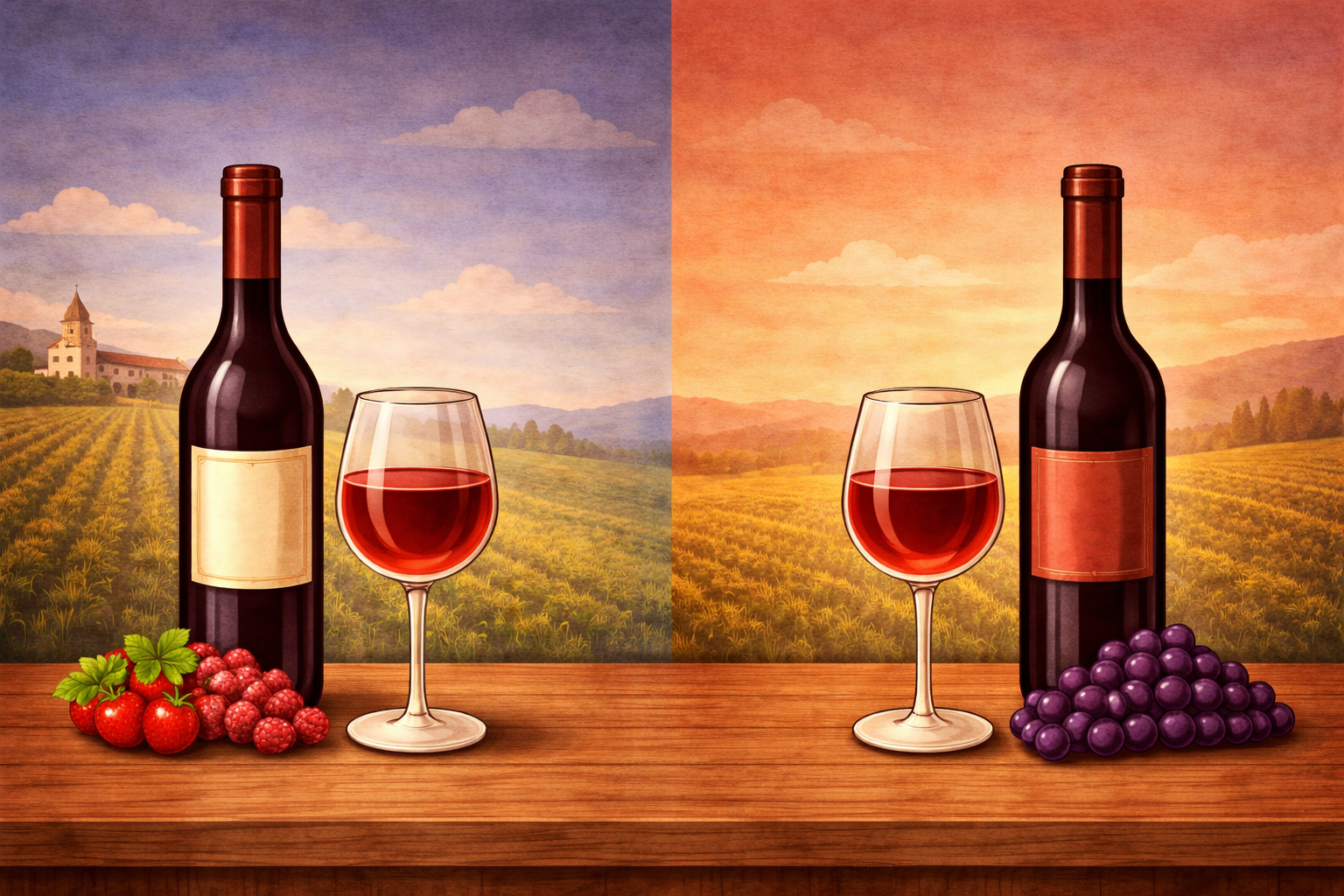
Pinot Noir and Merlot are two of the most widely enjoyed red wines in the world with a smooth, approachable, and full of fruit flavor profile. But they’re also very different in style, structure, and personality. If you’ve ever wondered which one you prefer (or why), this guide breaks down the key differences in an easy, side-by-side format.
At a Glance: Pinot Noir vs. Merlot
Here’s the quick summary:
Pinot Noir
Light-bodied
Higher acidity
Red fruit flavors
Softer tannins
Earthy or floral notes
Merlot
Medium- to full-bodied
Softer acidity
Dark fruit flavors
Smooth, round tannins
Often richer and plusher
If you like lighter, fresher reds → Pinot Noir
If you like smoother, richer reds → Merlot
But there’s more nuance once you taste them side by side.
Flavor Differences
Pinot Noir: Red, Bright, and Aromatic
Pinot Noir leans toward:
Cherry
Raspberry
Cranberry
Strawberry
Rose
Depending on where it’s grown, you may also find the following aromas:
forest floor
dried herbs
mushroom
tea leaf
Its flavors are typically delicate, lifted, and aromatic.
Merlot: Darker, Rounder, and Plush
Merlot usually shows:
Blackberry
Black cherry
Plum
Blueberry
With warmer secondary notes like:
cocoa
vanilla
baking spice
mocha
Its fruit is darker and its texture is richer than Pinot Noir.
Body & Structure
Pinot Noir
Lightest body among major red grapes
Higher acidity → more vibrant, refreshing feel
Low to moderate tannins
Smooth, silky texture
Merlot
Medium to full body
Lower acidity → softer, rounder feel
Moderate tannins
Plush, velvety texture
This structural difference is one of the easiest ways to distinguish them.
Where They’re Grown
Pinot Noir thrives in cool climates, where its thin skins and delicate aromatics shine. Burgundy sets the standard with nuanced red fruit, earth, and floral notes. Oregon’s Willamette Valley offers vibrant, elegant Pinots with bright acidity and subtle spice. Sonoma Coast’s fog yields concentrated yet refined fruit. New Zealand (Central Otago, cooler Marlborough sites) produces ripe red-fruit flavors with vivid acidity and lifted aromatics. Cool conditions preserve Pinot’s freshness, acidity, and perfume.
Merlot thrives in moderate to warm climates, producing plush fruit and soft tannins. On Bordeaux’s Right Bank (Saint-Émilion, Pomerol) it’s silky with plum, black cherry, and earthy complexity. In California it’s riper and jammy with a round, approachable mouthfeel. Washington’s warm summers yield concentrated fruit with structure; Chile’s sunny conditions make bold, fruit-forward, value-driven Merlots. Warmer sites generally amplify Merlot’s richness and dark-fruit character, creating plush, full-bodied, immediately appealing wines.
Food Pairings
Pinot Noir pairs beautifully with salmon, chicken, duck, mushroom dishes, roasted vegetables and soft cheeses. Its bright acidity and delicate tannins make it an excellent match for foods that aren’t too heavy, allowing the wine’s subtle red fruit and earthy nuances to complement rather than overpower the dish.
Merlot pairs well with a range of savory, hearty foods — think burgers, steak tips, pork loin, pizza and pasta with red sauce, and sharp cheddar. Its round, supple profile and soft tannins complement richer flavors and savory textures, making it a versatile choice for meat-forward dishes and tomato-based sauces as well as aged cheeses.
How to Tell Them Apart When Tasting
1. Look at the color
Pinot Noir = light ruby red
Merlot = deeper ruby or garnet
2. Smell the fruit
Pinot = red fruit + floral/herbal
Merlot = dark fruit + chocolate/spice
3. Taste the texture
Pinot = bright, silky, lighter
Merlot = smooth, round, fuller
Once you compare them side by side, the differences become obvious.
Tasting Note Examples
Pinot Noir Tasting Note
Aromas: Cherry, raspberry, rose
Flavors: Red fruit, light spice
Structure: Light body, high acidity, soft tannins
Finish: Smooth and elegant
Merlot Tasting Note
Aromas: Plum, blackberry, vanilla
Flavors: Dark fruit, cocoa
Structure: Medium body, moderate tannins, soft acidity
Finish: Warm and plush
Why a Side-by-Side Tasting Is So Useful
Pinot Noir and Merlot are perfect wines for a comparison flight. Here’s what you’ll learn by tasting them together:
how body levels differ
how acidity changes the experience
how tannins feel
how fruit style shifts from red to dark
which style aligns with your preferences
Somm Scribe makes this even easier by letting you:
log both wines
compare your notes
track your sensory preferences over time
You’ll quickly learn which varietals fit your palate.
Start Exploring Flavor Differences
Both wines offer something unique — and tasting them side by side is one of the most effective ways to understand what you enjoy.
Start logging your Pinot Noir and Merlot tastings at Somm Scribe.
