
How to Pair Wine With Food (Without Memorizing Rules)
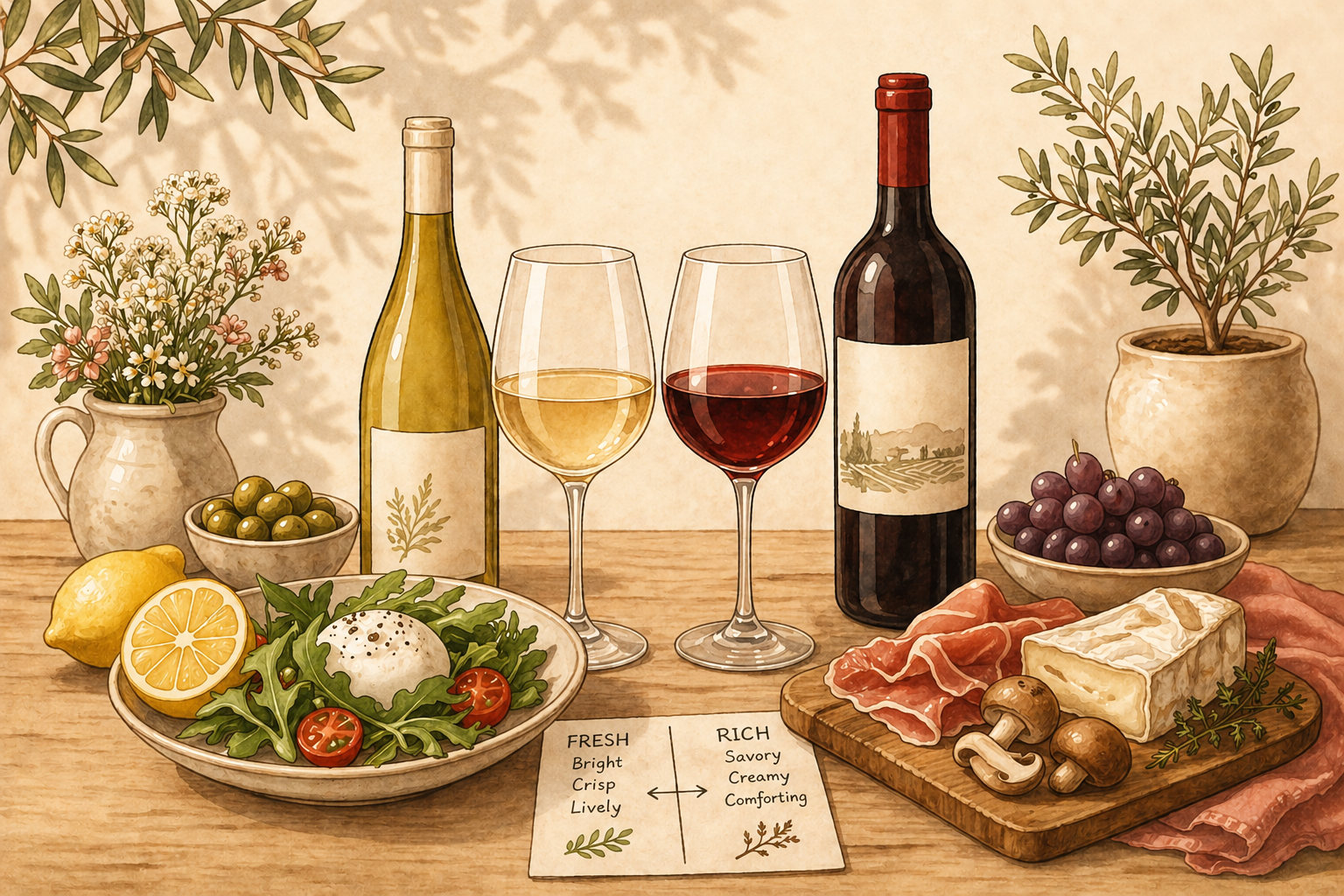
Most wine-and-food advice feels like homework. White with fish. Red with steak. Match the weight. And then a bunch of exceptions that somehow matter just as much. You don’t need any of that. What actually matters is much simpler: food changes the way wine tastes. Once you understand that, pairing stops feeling like a test and starts feeling intuitive. This is a practical way to think about pairing that works whether you’re at a restaurant, cooking at home, or staring at a takeout menu trying to make a quick call.
The Only Idea That Matters: Food Is the Volume Knob
Wine doesn’t change in the bottle but it absolutely changes in your mouth. Food acts like a set of controls
Some things turn up bitterness, heat, or dryness.
Some soften acidity or smooth out tannins.
Some make fruit flavors pop, while others mute them.
Once you start noticing that, everything clicks. You’re no longer trying to “match” random rules, you’re just asking: what is this dish doing to the wine? If you want to go deeper on that idea, this is the foundation: How Food Changes the Way Wine Tastes.
A Simple Pairing Compass
Instead of memorizing pairings, just walk through three quick questions.
1) Does the dish feel fresh or rich?
Start broad. Some foods feel bright and clean: think citrus, herbs, salads, tomatoes, raw seafood, vinaigrettes. Others feel heavier like cream, butter, fried food, roasted meats, mushrooms, anything deeply savory. From there, pairing gets surprisingly straightforward:
Fresh dishes tend to work best with fresh wines.
Rich dishes tend to work best with richer wines.
That one idea alone will get you most of the way there. If you’ve read Fresh vs Rich Wines, this is where that concept becomes useful in real life.
2) What’s actually driving the flavor?
This is where people usually overcomplicate things, but it’s easier than it sounds. Don’t think “chicken” or “fish.” Think about what’s doing the work in the dish. A squeeze of lemon. A buttery sauce. A spicy kick. A salty finish. A sweet glaze. That’s what matters.
Acid (like lemon or tomato) can make wine feel softer and less fruity
Fat (butter, cheese, fried food) can smooth things out—but can also make wines feel dull if they don’t have enough freshness
Heat makes alcohol feel stronger and tannins more aggressive
Salt tends to make wine taste more generous and balanced
Sweetness can make dry wines feel sharper than they actually are
This is where wine structure comes into play, acidity, tannin, alcohol and why those terms actually matter once you start pairing.
3) What role do you want the wine to play?
This is the part no one talks about and it’s where pairing gets personal. Do you want the wine to sit in the background and let the food shine? Or do you want it to stand up and be part of the experience? A lighter, cleaner wine keeps things easy and subtle. A richer or more expressive wine brings more presence to the table. Neither is better. You’re just choosing the mood.
What This Looks Like in Real Life
Once you get used to this, pairing becomes fast. You look at the dish and ask is this fresh or rich? What’s the main driver: acid, fat, heat, salt, or sweet? Do I want the wine to blend in or stand out? From there, the choice usually feels obvious. And when it doesn’t, there are a few styles that almost always work:
Crisp, high-acid whites
Lighter reds with low tannin
Sparkling wine
Those aren’t “safe” in a boring way, they’re just flexible.
A Quick Example
Let’s say you’re ordering tacos. Start with what is going on. Grilled meat, a squeeze of lime, maybe some salsa, maybe a little heat.
So now start to break it down. It leans fresh (lime, herbs, brightness), but has some richness from the meat.
The main drivers are acid (lime) and heat (spice). That tells you a few things right away:
A heavy, high-alcohol red is probably going to feel harsh and overpowering.
You want something that can handle the acidity and won’t fight the spice.
So what works?
A crisp white with good acidity keeps everything feeling bright.
A light red with low tannin won’t clash with the heat.
Sparkling wine works surprisingly well because it cuts through everything.
Now compare that to something like creamy pasta. Totally different situation. That dish is rich, soft, and heavy, with fat as the main driver. Now you want either:
A wine with enough acidity to cut through the richness
A wine with enough texture to match it without disappearing
Same process. Completely different outcome.
The Mistakes That Trip People Up
Most pairing mistakes come from focusing on the wrong thing. Choosing wine by protein instead of how the dish is prepared. Going big and bold with spicy food. Forgetting how much sweetness changes everything. Assuming rich food always needs a heavy wine. In reality, rich food often needs freshness more than weight. That contrast is what makes things feel balanced.
The Shift That Makes This Click
Pairing isn’t about finding the perfect match. It’s about keeping both the food and the wine in balance so neither one overwhelms the other. If you remember one idea, make it this: Start with the overall feel of the dish, then adjust based on what’s driving the flavor. That’s it. Once you think this way, you stop guessing and start predicting how things will taste before you even take a sip. And that’s when wine actually gets fun.
