
How to Build a Go-To Wine Rotation You Actually Enjoy
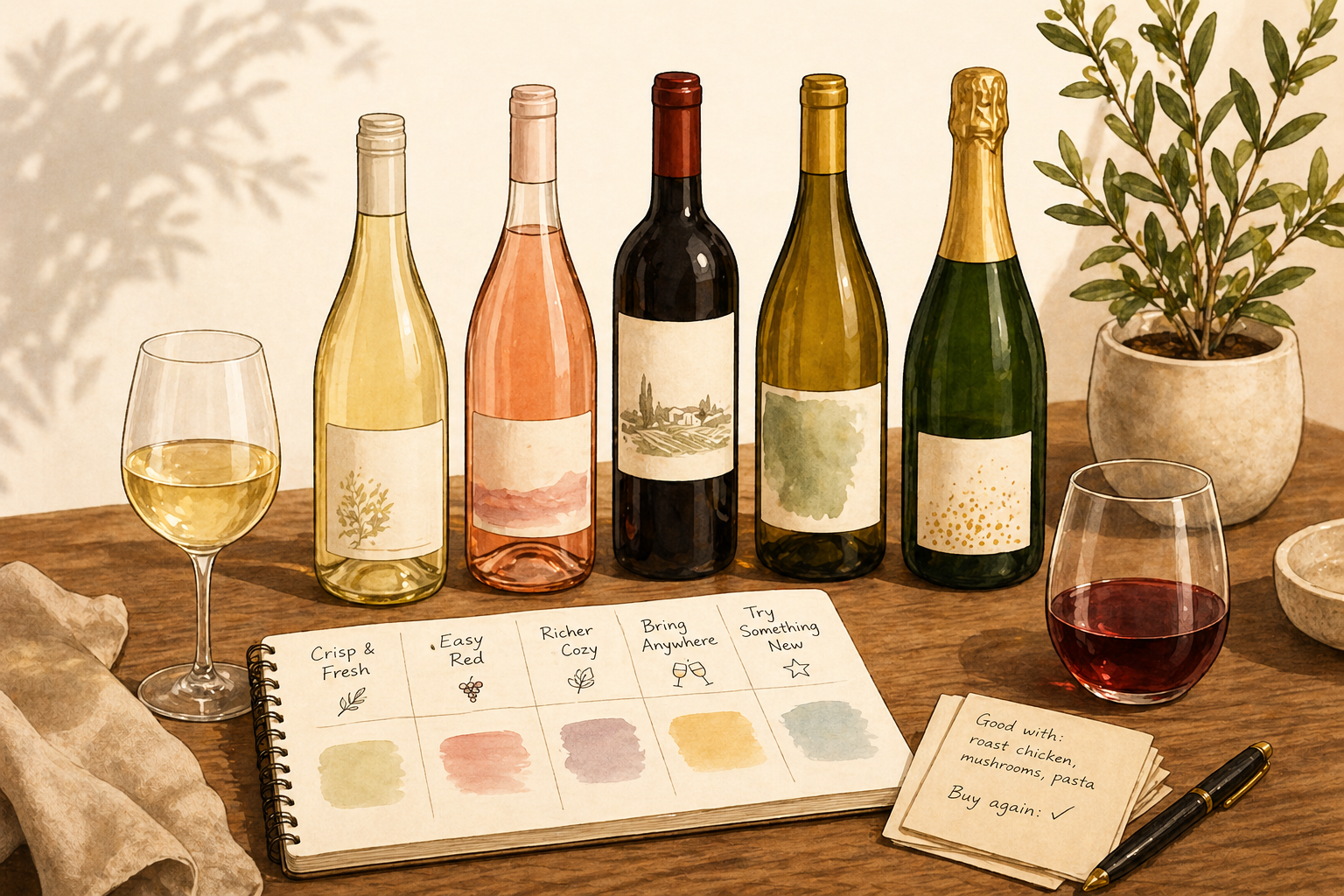
Most people don’t need a better palate. They need a way to stop overthinking every bottle. A go-to wine rotation is just a small set of wines you already enjoy ones you can come back to without guessing, second-guessing, or standing in the store for ten minutes staring at labels. When it works, it does three things:
Makes buying wine easier
Helps you understand your taste faster
Keeps things interesting without feeling random
And the best part is, it doesn’t require a ton of effort to build.
What a Wine Rotation Actually Is
A wine rotation isn’t a collection. It’s not about having the “right” bottles or memorizing regions. It’s just a small set of wines (or wine styles) that cover the situations you actually run into. Think about your real life for a second:
A random weeknight glass
Dinner that needs something easy
A nicer bottle for the weekend
Something safe to bring to someone’s house
That’s it. Instead of choosing from hundreds of options every time, you’re choosing from a handful that already work.
Start With Situations, Not Wines
This is where most people go wrong. They try to build a rotation around grapes or labels instead of moments. It’s way easier if you flip it. Start with a few situations you actually repeat, then match wines to those. For most people, it ends up looking something like:
Something crisp and refreshing
An easy red that works with most food
A slightly richer option for slower dinners
A flexible “bring anywhere” bottle
You don’t need to get this perfect. You just need it to feel familiar.
Build Around What You Already Like
You don’t need to guess here. Just think about a couple wines you’ve enjoyed recently, the ones you’d actually buy again. Now ask a simpler question: What did they feel like?
Light and crisp?
Smooth and easy?
Rich and heavier?
That matters more than the grape name.
If you’ve read How to Choose a Wine You’ll Like, this is where that starts to click you’re recognizing patterns instead of starting from zero every time.
Keep It Small (This Is Where It Works)
A rotation doesn’t need to be big to be useful. In fact, smaller is better. Most people land in a really good place with:
3–5 reliable go-to styles
A couple “upgrade” versions
One slot for trying something new
That’s enough variety to stay interesting, without becoming something you forget to use.
The One Rule That Actually Matters: Leave Room to Explore
This is the piece that keeps your rotation from getting stale. If you only repeat what you already like, nothing changes. If you only experiment, nothing sticks. So you need both. Keep one spot open for something new but keep it grounded. If you like crisp whites, try a different crisp white. If you like light reds, try another in that same lane. That way you’re learning without taking random swings.
Make It Easy to Come Back To
Here’s something people don’t realize until it’s too late: A rotation only works if you can recreate it. Instead of relying on exact bottle names, focus on things that are easier to find again:
The style (dry Riesling, Pinot Noir, Côtes du Rhône)
The region
The general feel of the wine
That way if the exact bottle disappears, your rotation doesn’t.
What This Looks Like in Real Life
Once your rotation is in place, something subtle changes. You walk into a store and you’re not scanning every shelf anymore. You already know the lanes you like. So instead of asking “what should I get?” you’re thinking “do I want something crisp tonight or an easy red?”
It’s a smaller decision. And that’s the whole point. You’re not guessing anymore, you’re choosing between things that already work.
The Shift That Makes This Stick
Wine gets easier when you stop trying to find the right bottle every time. Because there isn’t one. What actually works is having a few wines you trust ones that fit your taste, your routine, and the way you actually drink. That’s what a rotation gives you. It takes wine from something you have to figure out to something you already have a feel for.
And once that clicks, buying wine stops feeling like a decision and starts feeling like a habit.
