
Learn Wine, One Glass at a Time
Practical, beginner friendly wine education to help you taste with confidence. From understanding labels and regions to pairing food and building your palate, we make wine approachable one guide at a time.
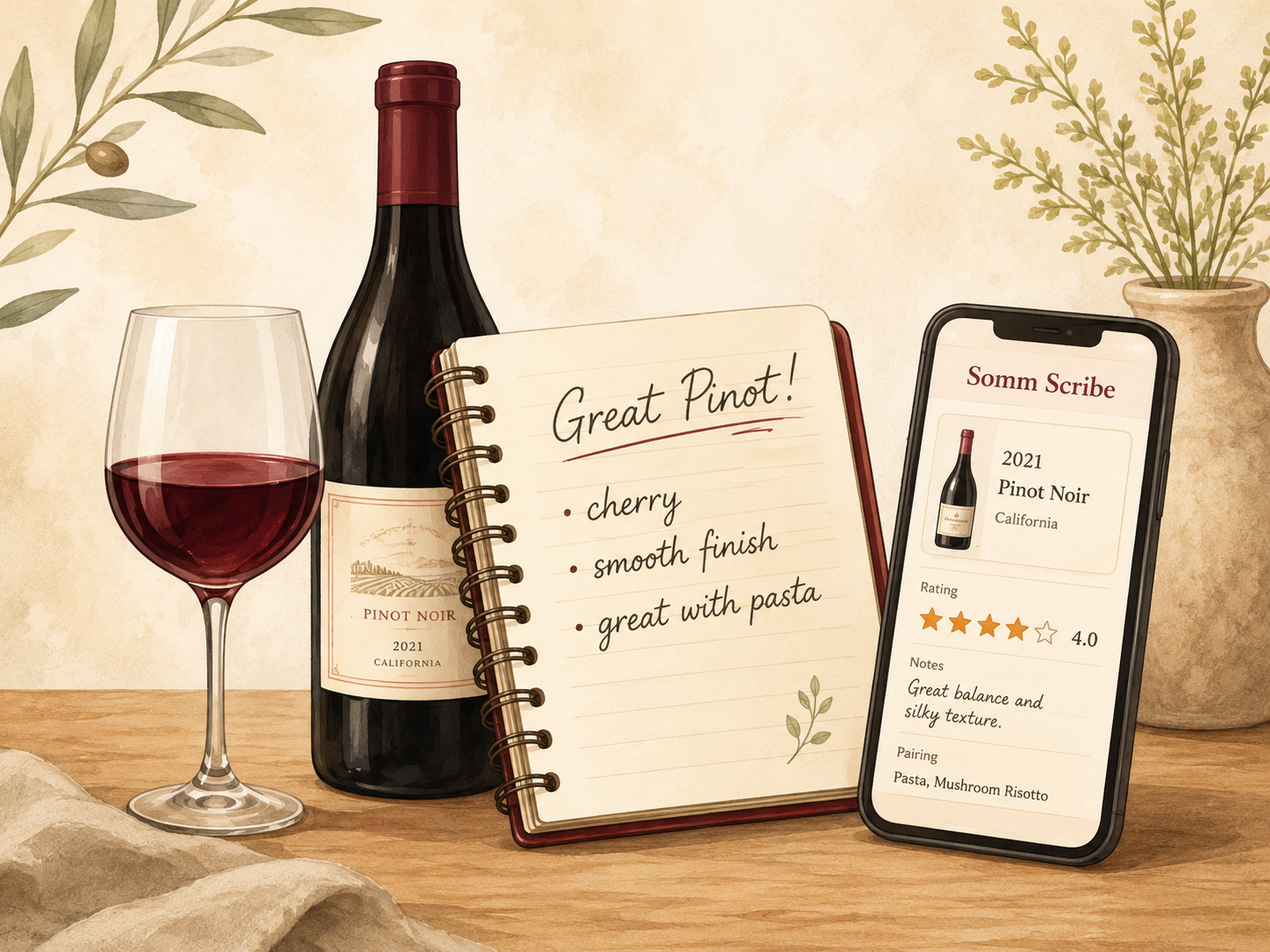
Turn what you learn into wines you remember
Track bottles, notes, ratings, and preferences in your personal wine journal. Somm Scribe helps you learn, remember, and enjoy wine more.
Start Here
Essential Guides to help you build confidence with wine.
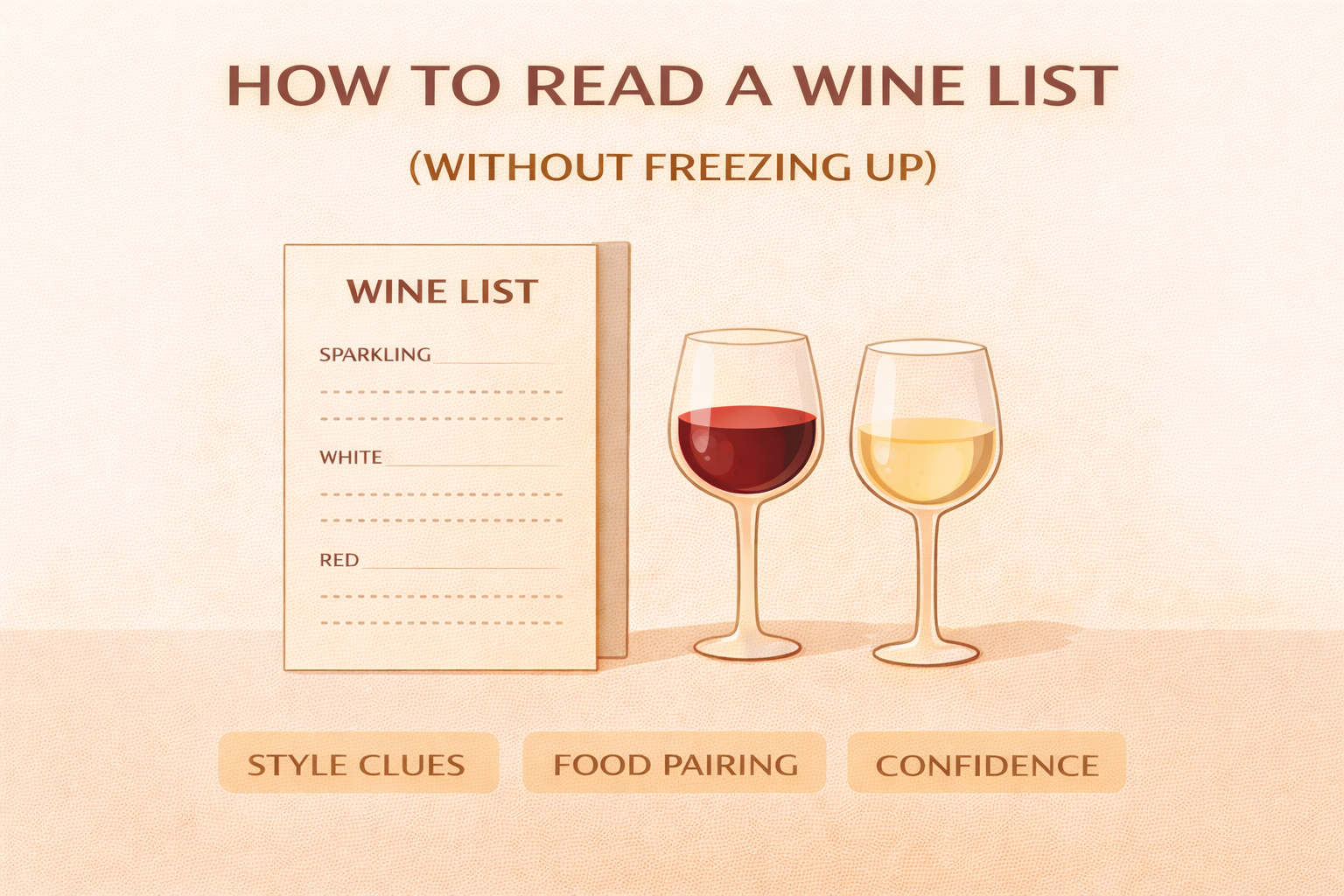
How to Read a Wine List
If you’ve ever opened a wine list and suddenly felt like you were taking a test you didn’t study for, you’re not alone. Wine lists can feel dense, unfamiliar, and oddly high-pressure especially when the table is waiting and the server is standing nearby. But here’s the quiet truth most people don’t realize: you’re not supposed to recognize everything on the page. You’re supposed to recognize your preferences. Once you shift your focus from decoding the list to understanding how it’s organized, ordering wine becomes a lot less intimidating and a lot more enjoyable.
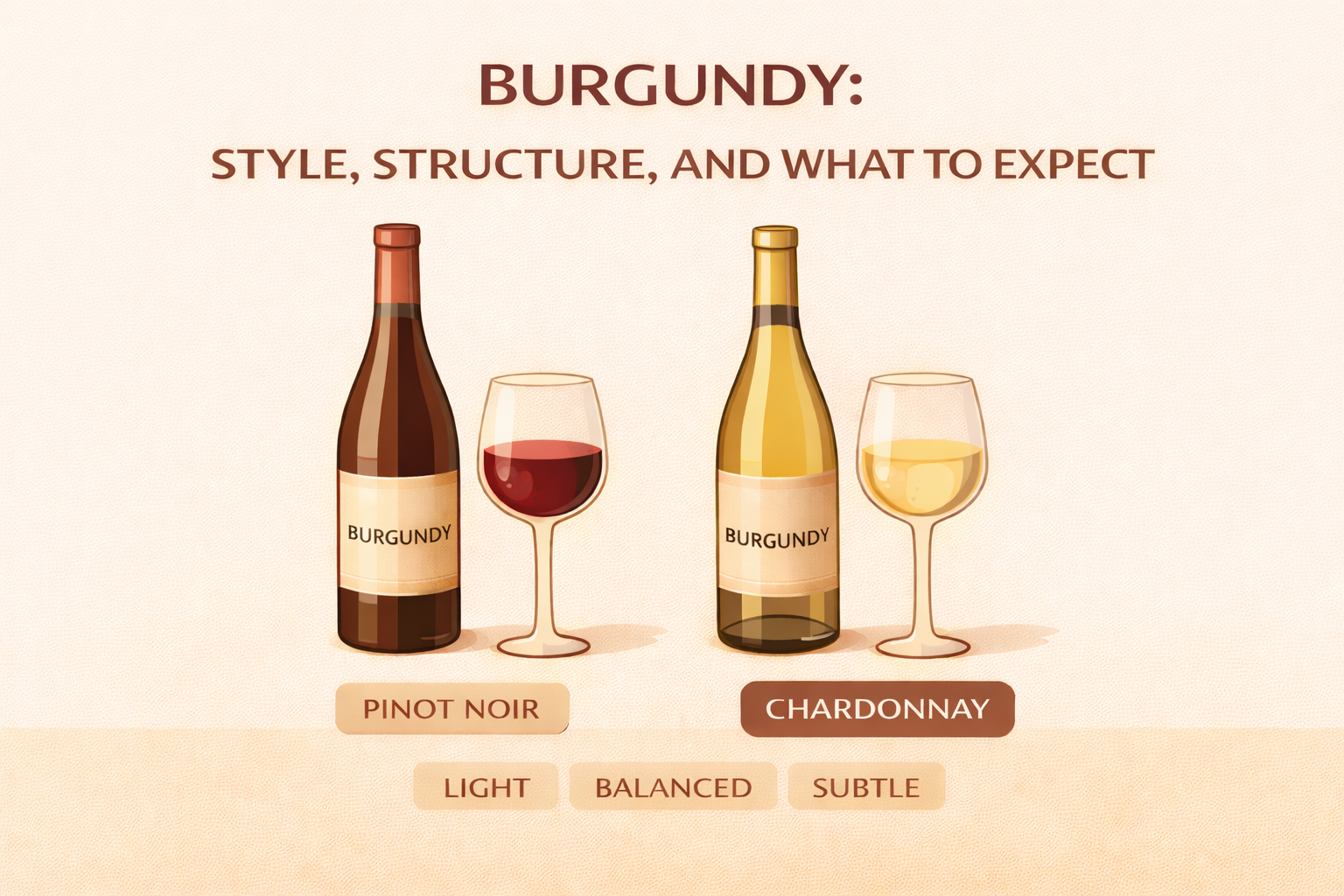
Burgundy: Style, Structure, and What to Expect
Burgundy has a reputation that can feel a little intimidating. The bottles are often expensive. The labels can be cryptic. And people talk about it with a seriousness that makes it seem like you’re supposed to already “get it” before you even open the wine. But at its core, Burgundy isn’t complicated because it’s fancy, it’s complicated because it’s precise. Once you understand what Burgundy is trying to express, the wines start to feel surprisingly intuitive. This guide isn’t about memorizing villages or decoding classifications. It’s about understanding the style of Burgundy so you know what to expect when you pour a glass and whether it’s a style you’ll actually enjoy.
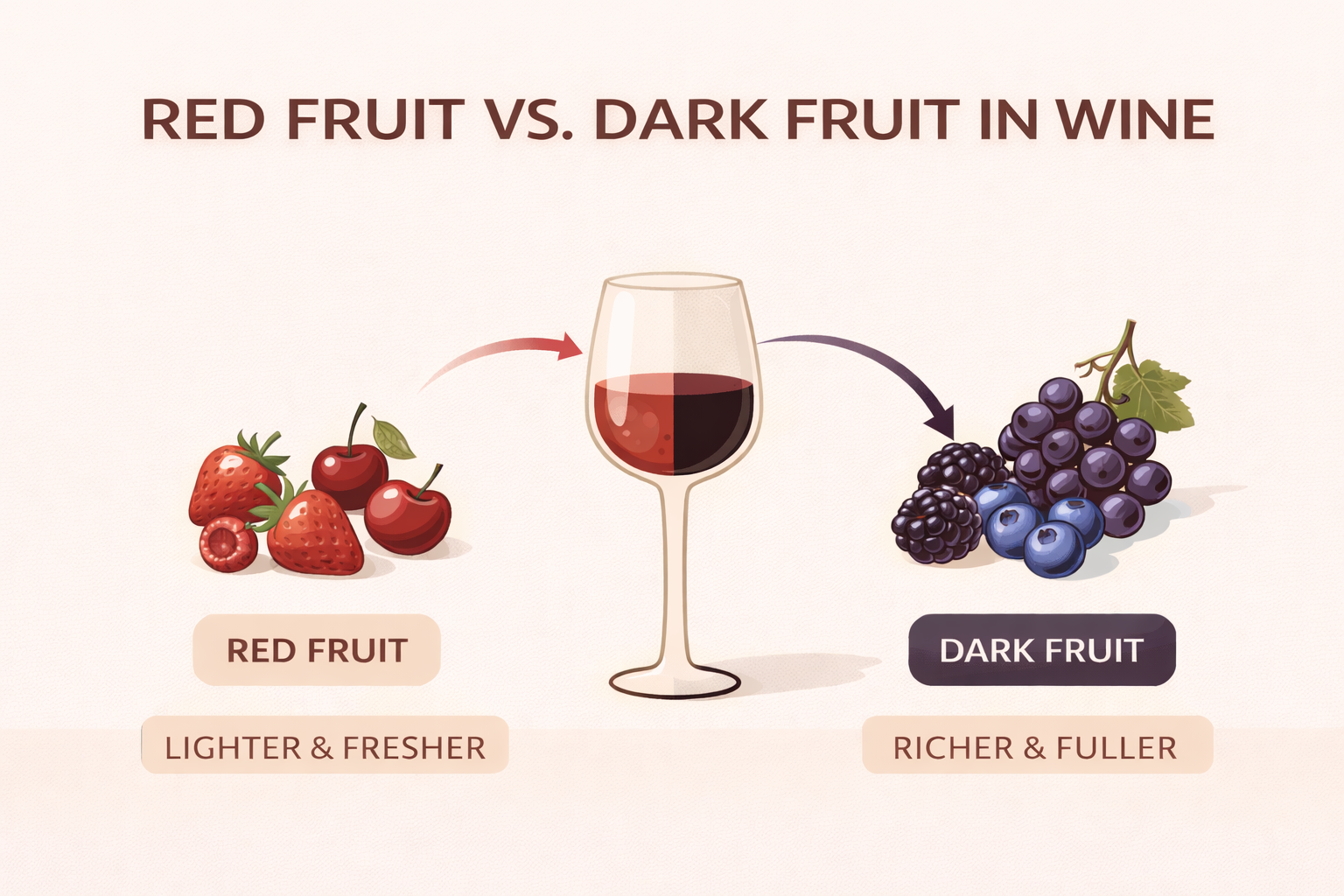
Red Fruit vs. Dark Fruit in Wine
If you’ve ever heard a wine described as red-fruited or dark-fruited and nodded along without being totally sure what that meant, you’re not alone. Those phrases show up everywhere — tasting notes, wine lists, conversations — but they’re rarely explained in a way that feels useful. The good news is this: you don’t need to identify specific fruits or train your nose to tell raspberries from cherries. What matters is understanding what those fruit categories suggest about the wine as a whole. Once you do, these descriptions stop feeling abstract and start helping you choose wines you actually enjoy. Let’s break it down in a way that’s practical, intuitive, and easy to remember
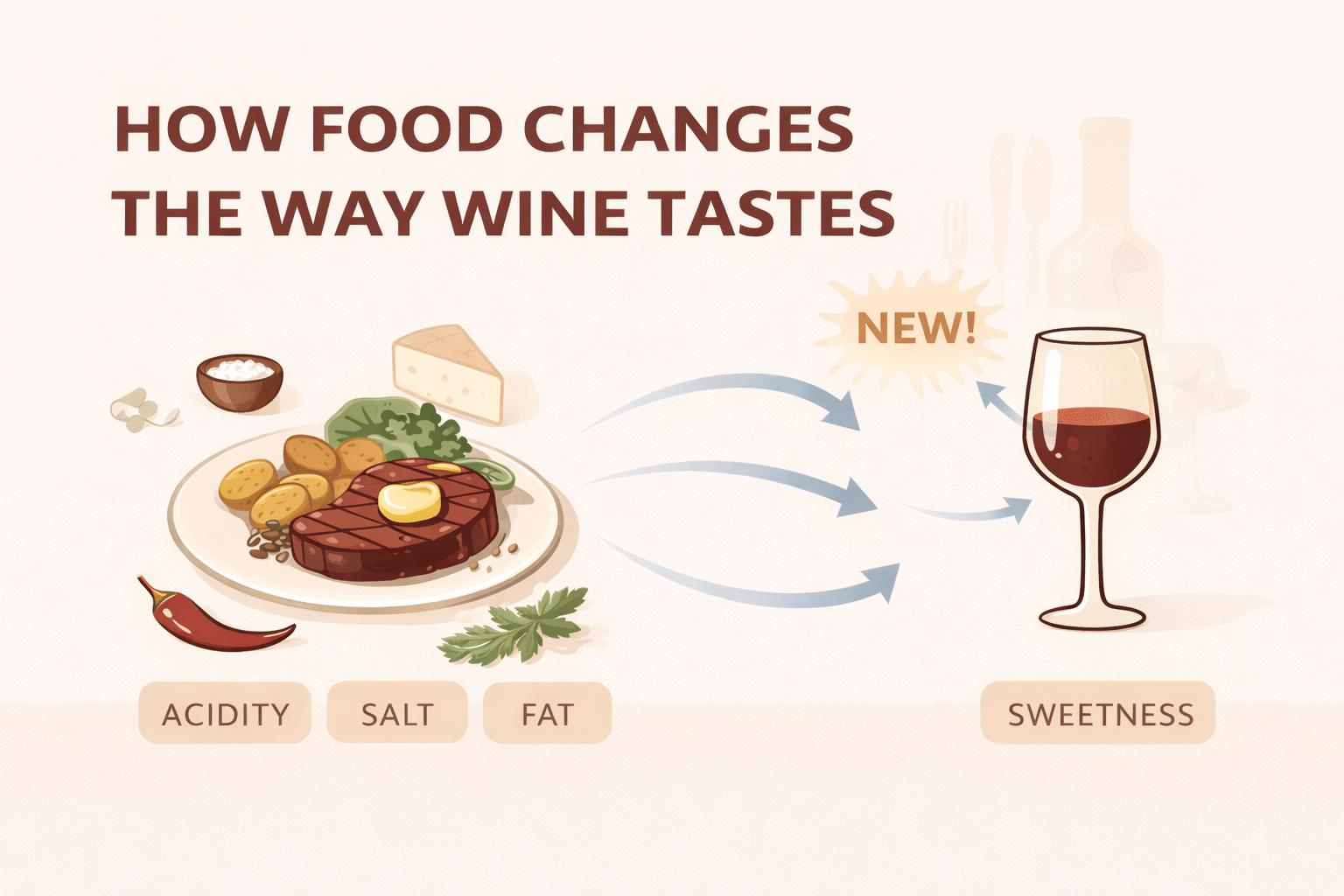
How Food Changes the Way Wine Tastes
If you’ve ever opened a bottle you loved at dinner, then felt a little underwhelmed when you tried it again later, you’re not imagining things. The wine didn’t suddenly lose its charm, it was just missing something. Wine is rarely experienced on its own. Most of the time, it’s part of a larger moment: a meal, a conversation, a setting. What you eat alongside it can quietly change how the wine feels — softening some edges, pulling certain flavors forward, or shifting the balance altogether. Once you start noticing this interaction, wine becomes less mysterious and far more forgiving. Instead of wondering why a bottle feels inconsistent, you begin to see how food is shaping the experience in real time.
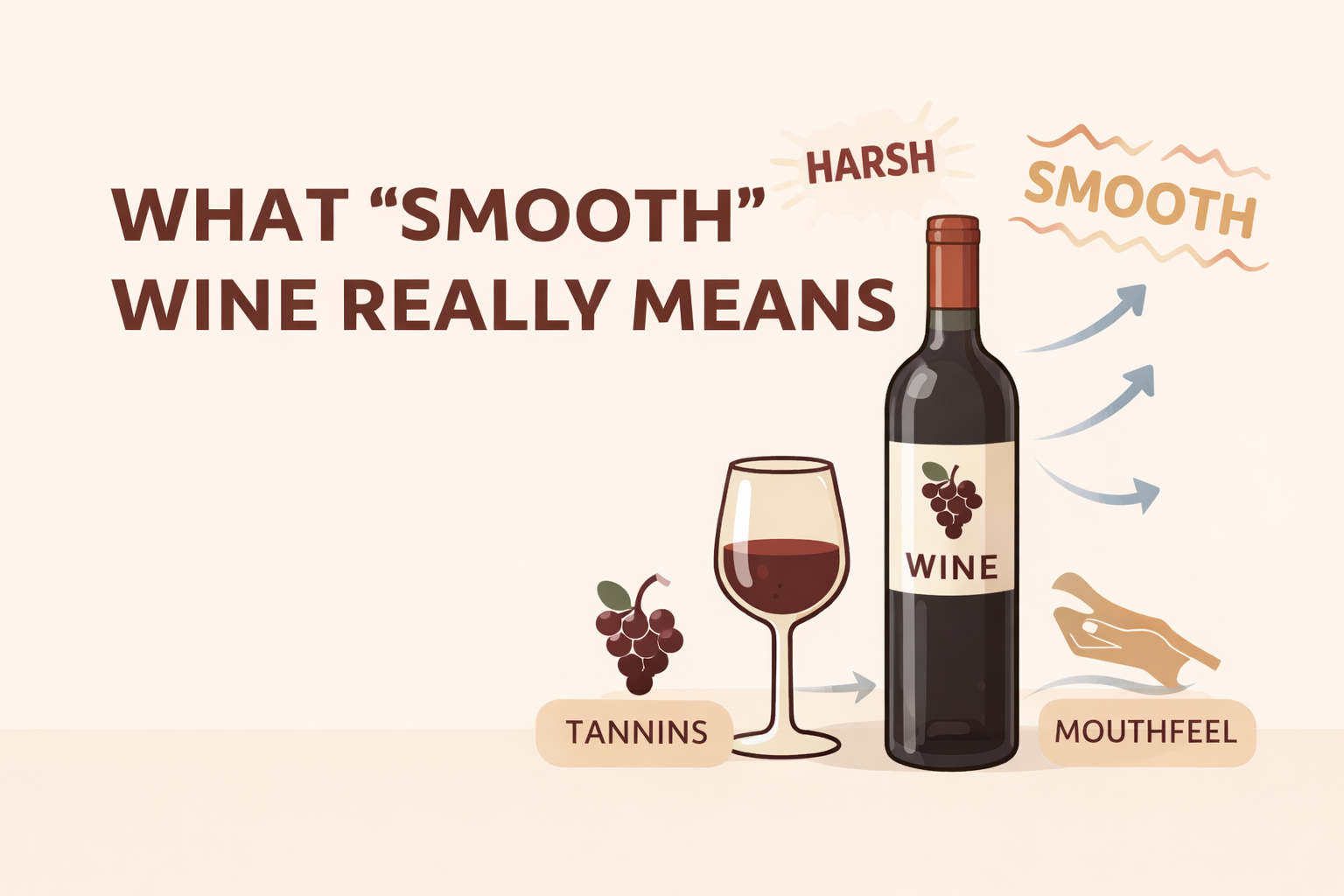
What “Smooth” Wine Really Means
“Smooth” is one of the most common words people use to describe wine and one of the least precise. You’ll hear it at tastings, restaurants, and dinner parties - “I like smooth reds” or “This wine is really smooth”. The problem is that smooth isn’t a technical wine term. It doesn’t appear on labels. And it doesn’t point to a single grape, region, or style. But it does describe a real experience, one that’s worth understanding.
How to Store Opened Wine
Opening a bottle of wine often comes with a quiet question in the back of your mind, How long is this going to be good for? Maybe you only wanted one glass. Maybe you opened two bottles to compare. Or maybe dinner ended earlier than expected and now there’s half a bottle sitting on the counter. The good news is that opened wine doesn’t immediately “go bad.” But it does change — and knowing how and why helps you enjoy it longer without guessing.
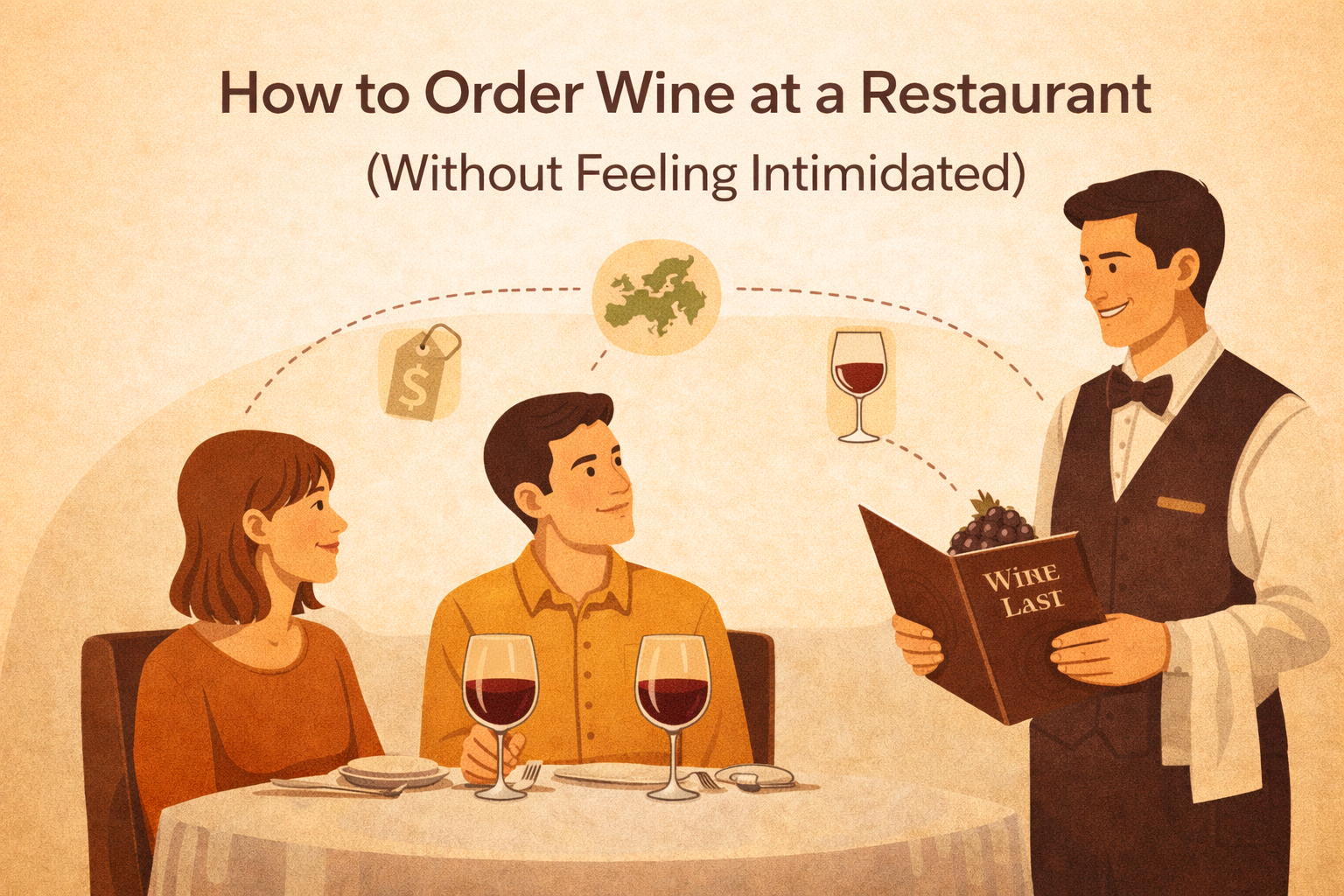
How to Order Wine at a Restaurant
Ordering wine at a restaurant can feel like a test you didn’t study for. The list is long. The descriptions are vague or unfamiliar. Prices climb quickly. And sometimes, the moment you hesitate, it feels like everyone at the table suddenly knows exactly what they want except for you. If that sounds familiar, you’re not alone. Even people who enjoy wine regularly feel this pressure. The good news is that ordering wine at a restaurant doesn’t require confidence, expertise, or the “right” vocabulary. It just requires a simple approach and permission to trust your own preferences.
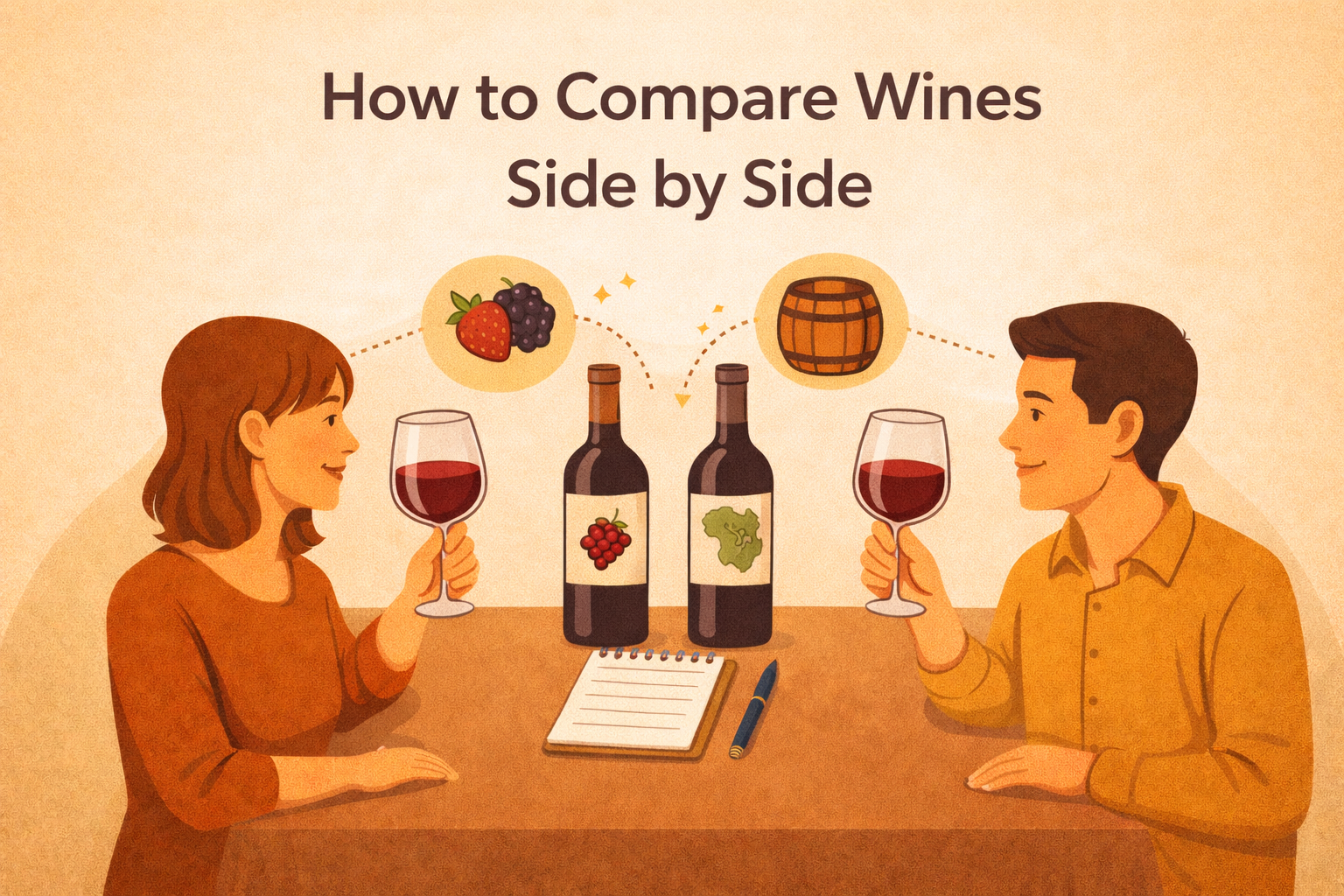
How to Compare Wines Side by Side: And Learn Faster From Each Glass
One of the reasons wine can feel confusing is that we usually experience it in isolation. You open a bottle, pour a glass, decide whether you like it, and move on. A few days or weeks later, you try another wine and hope you remember how the last one tasted. That’s a tough way to learn. Wine becomes much easier to understand when you taste it in comparison. Side-by-side tasting removes a lot of the guesswork and helps your palate notice differences that are easy to miss when you’re only drinking one wine at a time. You don’t need a formal tasting, special glassware, or expert vocabulary. You just need two wines and a little curiosity.
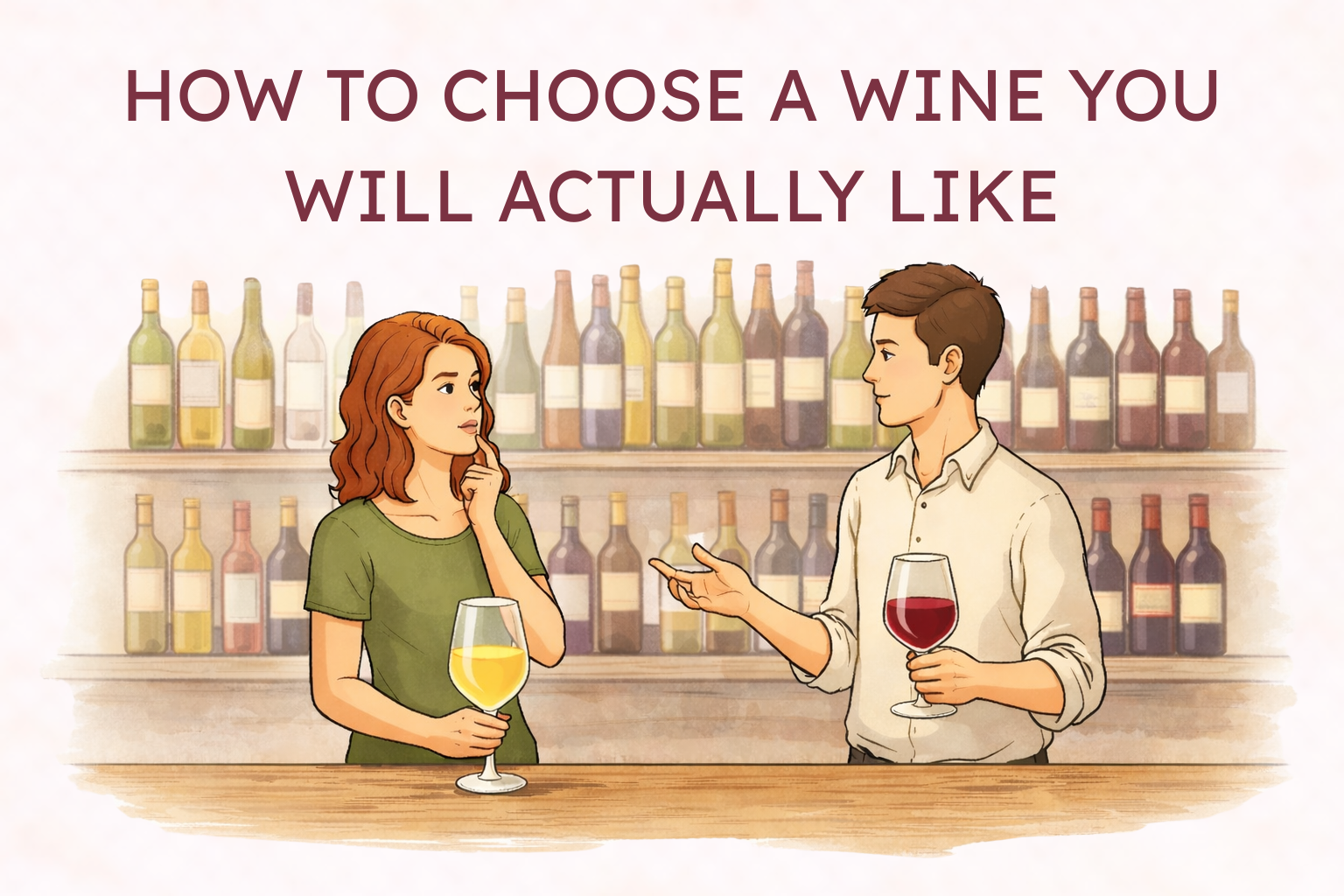
How to Choose a Wine You’ll Actually Like
Standing in front of a wall of wine can feel overwhelming. Dozens of bottles. Labels covered in words you half-recognize. Prices all over the place. And somehow, everyone else looks like they know exactly what they’re doing. If you’ve ever picked a bottle based on a guess or defaulted to the same wine every time just to avoid thinking, you are not alone. The good news is that choosing a wine you’ll enjoy doesn’t require memorizing regions, grapes, or fancy terminology. It just requires knowing what to pay attention to and what to ignore.
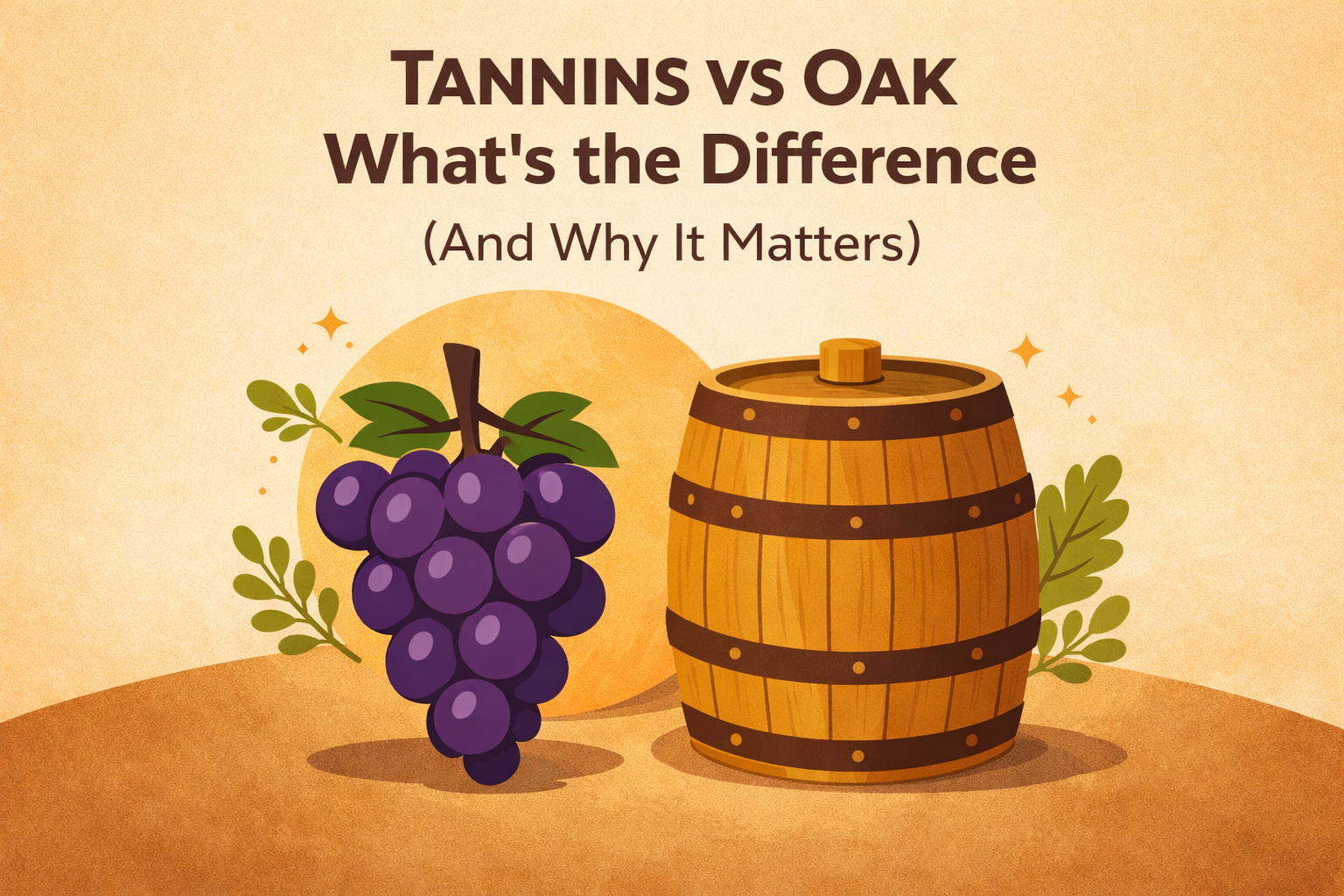
Tannins vs Oak: What’s the Difference
If you’ve ever tasted a wine and thought, “This feels dry,” or “This tastes kind of woody,” you’ve already encountered tannins and oak even if you didn’t have names for them yet. They often show up together, especially in red wines, which is why they’re so commonly confused. But tannins and oak are not the same thing, and understanding the difference makes wine much easier to interpret. Once you can tell which one you’re noticing, a lot of wine descriptions suddenly start to make sense.
Remember the wines you actually enjoy.
Your free wine journal makes it easy to track what you love, learn from every bottle, and find your perfect pour.