
How to Store Opened Wine
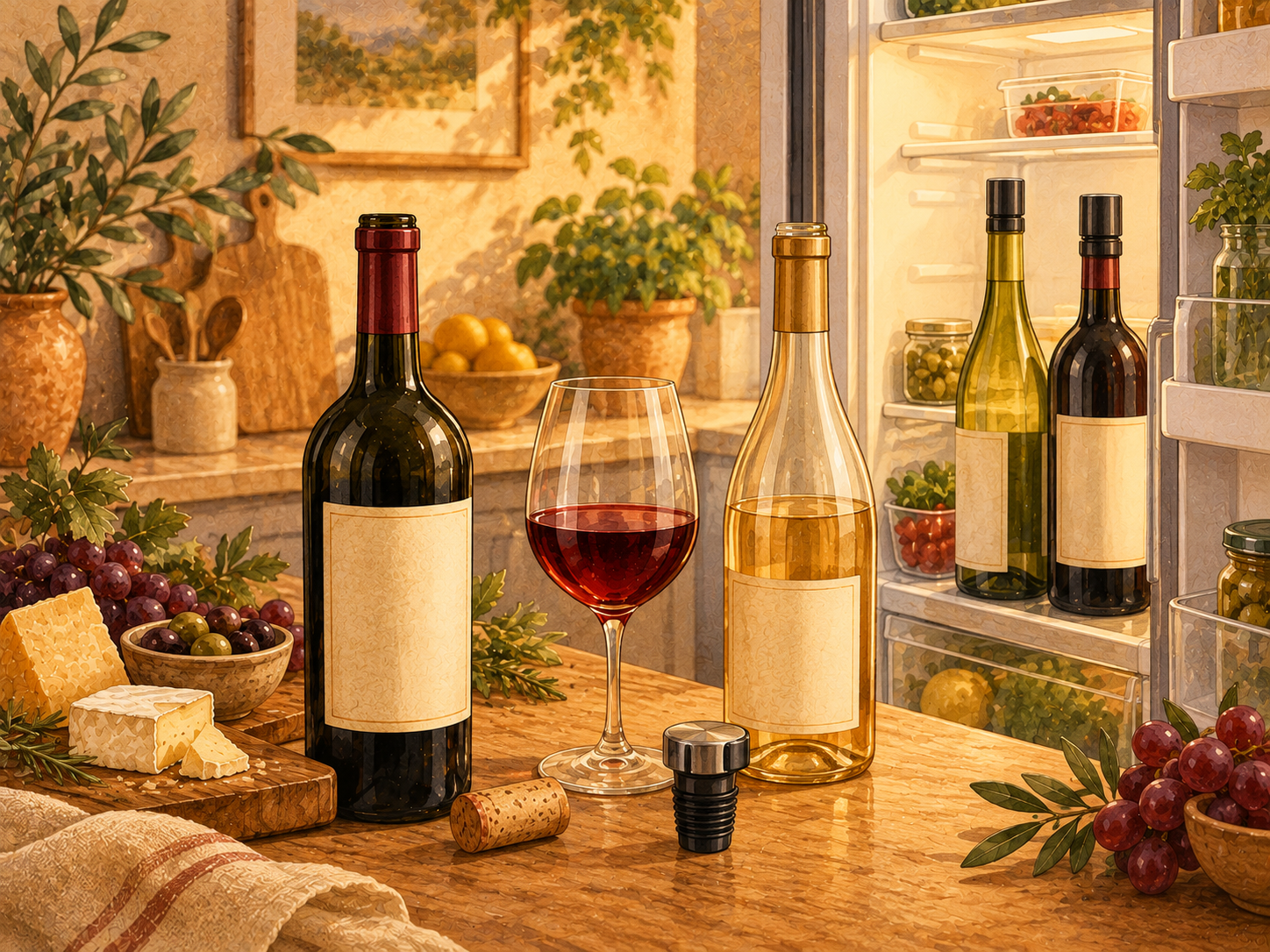
The best way to store opened wine is to reseal the bottle, keep it upright and put it in the refrigerator, even if it's red wine. Most opened red and white wines stay enjoyable for around 3 to 5 days when stored properly, while sparkling wine usually lasts 1 to 3 days with a suitable stopper.
Opening a bottle doesn't mean you need to finish it that night. Maybe you only wanted one glass with dinner or opened a couple of bottles to compare. Whatever the reason, a few simple storage habits can help your wine stay fresh longer. Here's what you need to know.
How Long Does Opened Wine Last?
There's no exact expiration date for opened wine. How long it stays enjoyable depends on the style, how much wine remains in the bottle and how it's stored. As a general guide:
| Wine Type | How Long It Usually Lasts |
|---|---|
| Red wine | 3–5 days |
| Light white wine and rosé | 5–7 days |
| Full-bodied white wine | 3–5 days |
| Sparkling wine | 1–3 days |
| Fortified wine | Often several weeks |
These are approximate freshness windows for properly stored wine, not guaranteed expiration dates. Some bottles fade sooner, while others remain enjoyable longer. For example, a lighter white wine might lose its bright, fresh flavors after a couple of days, while a structured red may still taste good several days later. The important thing is to store the bottle properly and pay attention to how it smells and tastes.
The Best Way to Store Opened Wine
You don't need expensive equipment to keep an opened bottle fresh. A few simple steps make most of the difference.
1. Reseal the Bottle Right Away
Once you're finished pouring, put the cork back in or use a reusable wine stopper. The goal is to limit the amount of oxygen reaching the wine. Leaving a bottle open on the counter overnight exposes it to more air and can cause the flavors to fade faster. You don't need a fancy stopper. The original cork works fine as long as it creates a reasonably tight seal.
2. Refrigerate It, Even If It's Red Wine
This is one of the easiest ways to extend the life of opened wine. Cooler temperatures slow the chemical reactions that cause wine to lose its freshness. That applies to red wine just as much as white or rosé. If you prefer drinking red wine closer to room temperature, simply take it out of the refrigerator and let it warm slightly before pouring. Don't leave an opened red wine on the kitchen counter for several days just because it's traditionally served warmer.
3. Store the Bottle Upright
Unlike unopened bottles that may be stored on their sides for long-term aging, opened wine is generally better kept upright. This reduces the surface area of wine exposed to the air inside the bottle and helps minimize spills. If there's only a small amount left, you can also transfer it into a smaller, clean bottle with an airtight closure. Less air inside the container means less oxygen available to affect the wine.
4. Use a Proper Stopper for Sparkling Wine
Sparkling wine needs a little extra attention because you're trying to preserve both its flavor and its bubbles. Use a sparkling wine stopper designed to create a secure seal on a pressurized bottle, then keep it refrigerated. An ordinary cork or loose-fitting stopper won't do the job as well. Even with proper storage, sparkling wine usually loses its carbonation faster than still wine loses its freshness.
Why Does Opened Wine Go Bad?
Once a bottle is opened, the wine begins interacting with oxygen. A little oxygen can initially help certain wines become more expressive. But continued exposure gradually changes the compounds responsible for their aromas, flavors and freshness. Over time, fruit flavors can fade, the wine may taste flat and eventually it can develop unpleasant sour or vinegar-like notes.
Heat speeds up many of these changes, which is why refrigeration helps. You can't completely stop oxidation once a bottle has been opened, but you can slow it down.
Do Wine Preservers Actually Help?
Wine preservation tools can help, but most casual wine drinkers don't need them. Vacuum stoppers remove some of the air from an opened bottle. They may help slow oxidation, although results vary and they won't keep wine fresh indefinitely. Inert gas preservers work by introducing gases such as argon to reduce the wine's exposure to oxygen. They can be useful if you regularly open expensive bottles or want to enjoy the same wine over several days.
For everyday drinking, however, resealing the bottle and refrigerating it is usually enough. If you only occasionally have leftover wine, there's no reason to spend much money on preservation equipment.
How to Tell If Opened Wine Has Gone Bad
The number of days a bottle has been open is a useful guideline, but your senses can tell you more about its condition. Before pouring another glass, check for a few common signs.
A vinegar-like smell: Sharp, sour aromas can indicate the wine has deteriorated.
Flat or dull flavors: A wine that once tasted fruity and lively may lose its character.
Unexpected color changes: White wines may become noticeably darker or brownish, while reds can develop more brick-colored tones.
Unpleasant flavors: Strong sourness or other unusual flavors can indicate the wine is past its best.
Some changes are more noticeable than others. A wine might simply taste less interesting than it did when first opened. That doesn't always mean it's unsafe, but it may no longer be worth drinking. If you notice mold, unexpected fizz in a still wine or other signs of contamination, discard it rather than tasting it.
Why Proper Wine Storage Matters When You're Learning Wine
Knowing how to store opened wine gives you more flexibility to explore different bottles without feeling like you need to finish them immediately. Maybe you want to compare Cabernet Sauvignon and Merlot over two evenings. Or perhaps you want to revisit a Chardonnay the next day to see whether its flavors have changed.
Both can be useful learning experiences. Our guide to How to Compare Wines Side by Side explains how tasting different bottles together can help you recognize your preferences. It's also worth keeping a few notes about what you enjoyed. You don't need anything complicated. Record the bottle, what stood out and whether you'd buy it again.
If you're not sure where to start, read How to Keep a Wine Journal Without Overthinking It. Over time, those simple observations help you understand which wines you prefer and make more confident choices when shopping.
Final Takeaway
Opened wine doesn't immediately go bad, and storing it properly doesn't require complicated equipment. Reseal the bottle, refrigerate it and keep it upright. For sparkling wine, use a stopper designed to preserve carbonation. Most importantly, remember that storage timelines are guidelines. Pay attention to how the wine smells and tastes rather than assuming every bottle expires after a specific number of days.
Remember the Wines You Enjoy
Whether you're trying a new bottle or returning to one you opened yesterday, keeping track of what you like makes choosing wine easier. With Somm Scribe, you can save the wines you've tried, record tasting notes and remember which bottles you'd buy again.
