
How to Build a Simple Wine Rotation for Weeknights, Dinner, and Guests
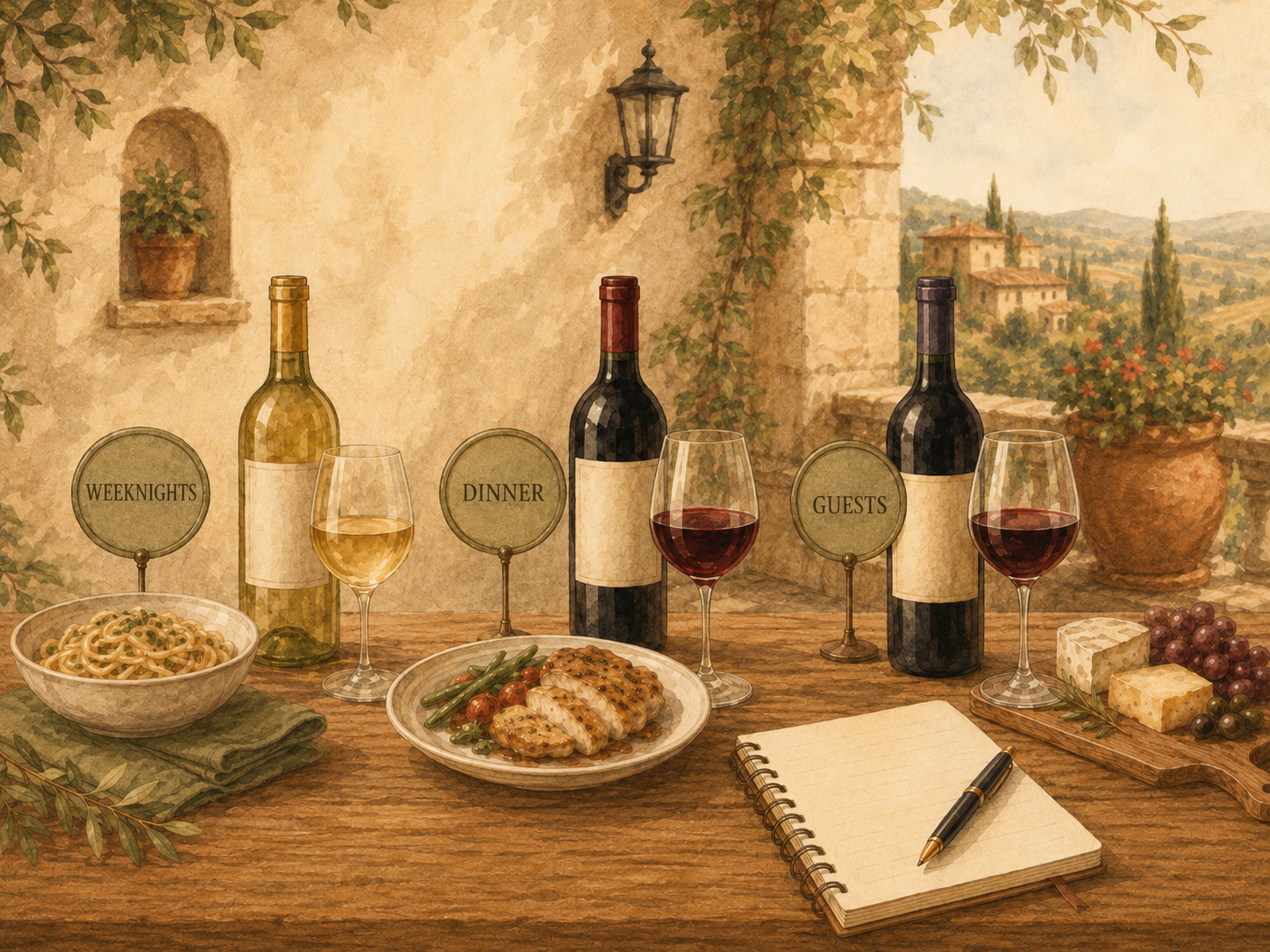
You do not need a wine rack filled with dozens of different bottles to be prepared for whatever the week throws at you. A simple wine rotation can be much more useful with a small group of wines you know you enjoy, each with a clear purpose. One might be your easy weeknight bottle. Another works when dinner is a little more involved. A third is something you feel confident opening when friends come over. The goal is not to have the perfect wine for every situation. It is to make choosing a bottle easier.
If you have already started figuring out which wines consistently work for you, our guide to How to Build a Go-To Wine Rotation is a good place to start. From there, you can organize that rotation around the moments when you actually drink wine.
Start With Three Simple Categories
Instead of thinking about grape varieties, regions or vintages first, start with how you plan to use the wine. A practical rotation can be as simple as:
A weeknight wine you can open without thinking about it
A dinner wine that works well with the foods you cook most often
A guest wine that feels versatile and easy to share
You can absolutely have more than one bottle in each category, but you do not need to start there. Three reliable choices are more useful than twelve random bottles you are never quite sure when to open.
1. Your Weeknight Wine: Easy, Reliable and Not Too Precious
Your weeknight bottle should be the wine equivalent of a dependable dinner recipe. You know what you are getting. You like it. You do not need a special occasion to open it. For many people, that means wines that are fresh, balanced and easy to drink rather than especially intense or complex. Some examples might include:
Sauvignon Blanc or Pinot Grigio if you like crisp whites
Chardonnay if you prefer something a little rounder
Pinot Noir or lighter red blends if you enjoy softer reds
Rosé when you want something refreshing and flexible
Price matters here too. Your everyday wine should ideally sit at a price where opening it on a Tuesday does not feel like a major financial decision. There is no specific amount you need to spend. The important question is whether the wine delivers enough enjoyment for what you paid.
Somm Scribe Tip
When you find a wine that works particularly well as an everyday bottle, record it instead of assuming you will remember it later. Start Your Free Wine Journal and keep track of the bottles you would happily buy again.
2. Your Dinner Wine: Match the Foods You Actually Cook
Your dinner category does not need to cover every possible food pairing. Look at what you cook most often. If your usual dinners involve chicken, pasta, tacos, pizza or grilled vegetables, build your rotation around those foods rather than buying wines for meals you rarely make.
For example:
If you eat a lot of lighter meals:
Sauvignon Blanc, dry Riesling, Pinot Grigio or lighter Chardonnay can give you plenty of flexibility.
If pasta and pizza show up regularly:
Sangiovese, Barbera or medium-bodied red blends are useful bottles to have around.
If you cook burgers, steak or richer dishes:
Cabernet Sauvignon, Syrah or another fuller-bodied red might earn a permanent place in the rotation.
You do not need to memorize traditional pairing rules to do this well. Think about the weight and intensity of the meal, then choose a wine that feels roughly similar.
Our guide to How to Pair Wine With Food walks through that approach without turning dinner into a chemistry experiment.
3. Your Guest Wine: Versatility Beats Showing Off
When friends or family come over, there can be a temptation to buy something impressive. Usually, versatile is more useful than impressive. Unless you already know what everyone likes, choose wines that are approachable and work across different foods and preferences. For whites, that might mean:
Sauvignon Blanc
Pinot Grigio
Chardonnay that is not heavily oaked
Dry or slightly off-dry Riesling
For reds, consider:
Pinot Noir
Merlot
Grenache-based blends
Medium-bodied red blends
These styles tend to be easier to serve across appetizers, dinner and casual sipping. If you are planning something more formal, How to Choose a Wine for a Dinner Party covers how much wine to buy, how much variety you need and how to make the decision easier.
Your Rotation Does Not Have to Be Three Specific Bottles
Think of these categories as jobs rather than permanent bottle assignments. Maybe your weeknight category contains two crisp whites and one lighter red. Your dinner category could include a Chardonnay and Cabernet Sauvignon. Your guest category might simply be whichever Pinot Noir has proven popular every time you serve it. That flexibility is the point. You are creating a shortlist of bottles or styles you trust. As you try more wines, you can replace bottles that are merely fine with bottles you genuinely look forward to drinking.
Use Wine Styles to Fill the Gaps
If you know you need another wine in your rotation but are not sure what grape to buy, thinking in terms of style can make the decision much easier. For example, you might realize:
“I already have a bold red. What I really need is something lighter and fresher.”
That gives you a much better starting point than wandering through the wine aisle comparing unfamiliar labels. Understanding the difference between light, crisp, smooth and bold wines can help you identify what your rotation is missing. Our guide to Wine Styles Explained breaks those categories down in beginner-friendly terms.
A Sample Five-Bottle Rotation
You could easily build a useful rotation with only five wines:
Weeknight white: Sauvignon Blanc - Fresh, inexpensive and easy to open with a simple meal.
Weeknight red: Pinot Noir - Lighter and flexible enough for pizza, chicken or just a glass on its own.
Dinner white: Chardonnay - Useful with chicken, seafood, pasta and richer dishes.
Dinner red: Cabernet Sauvignon - A dependable option for burgers, steak and heavier meals.
Guest bottle: A versatile red blend - Approachable enough for different preferences and easy to serve with a variety of foods.
Your version may look completely different. You might prefer Riesling over Sauvignon Blanc or Merlot over Cabernet Sauvignon. That is exactly how it should work.
Pay Attention to What Actually Gets Replaced
One of the easiest ways to improve your rotation is to watch which bottles disappear and get purchased again. If you constantly replace the same Sauvignon Blanc, that bottle has earned its place. If a supposedly great Cabernet has been sitting untouched for six months, maybe it has not. Your wine rotation should reflect your real habits, not the collection you think you are supposed to have.
Build Your Rotation From Wines You Already Love
Somm Scribe helps you remember what you tried, what you liked and which bottles are worth buying again. Instead of starting from scratch every time you shop for wine, you can gradually build a rotation based on your own tasting history.
Final Sip
A good wine rotation is not about stocking every grape variety or being prepared for every possible meal. It is about removing unnecessary decisions. Have something easy for weeknights. Keep a couple of bottles that work with the foods you regularly cook. Add one or two versatile options you feel comfortable serving to guests.
Then adjust the rotation as you discover what you actually enjoy. Over time, buying wine becomes less about guessing and more about choosing from bottles and styles you already know work for you.
