
How to Find Wines You’ll Actually Like
You do not need to know grapes, regions or wine terminology. Start with wines you already enjoy and use a few simple taste signals to choose better bottles with more confidence.
Choosing wine gets easier when you stop guessing
Start with what you liked
Use wines you already enjoyed as your starting point.

Notice a few patterns
Light or bold, crisp or soft, dry or sweet.
Use those patterns next time
Look for wines with similar characteristics instead of choosing randomly.
You only need a few clues
A handful of simple taste signals can help you find wines you’ll enjoy.
Light vs Full
Lighter and more delicate or richer and fuller.
Crisp vs Soft
Bright and refreshing or rounder and smoother.
Dry vs Sweet
Less sweetness or more sweetness.
Fruity vs Earthy
Fruits and floral notes or herbs, earth and spice.

Smooth vs Tannic
Silky and smooth or more structured and dying.

Your wine journal becomes your memory
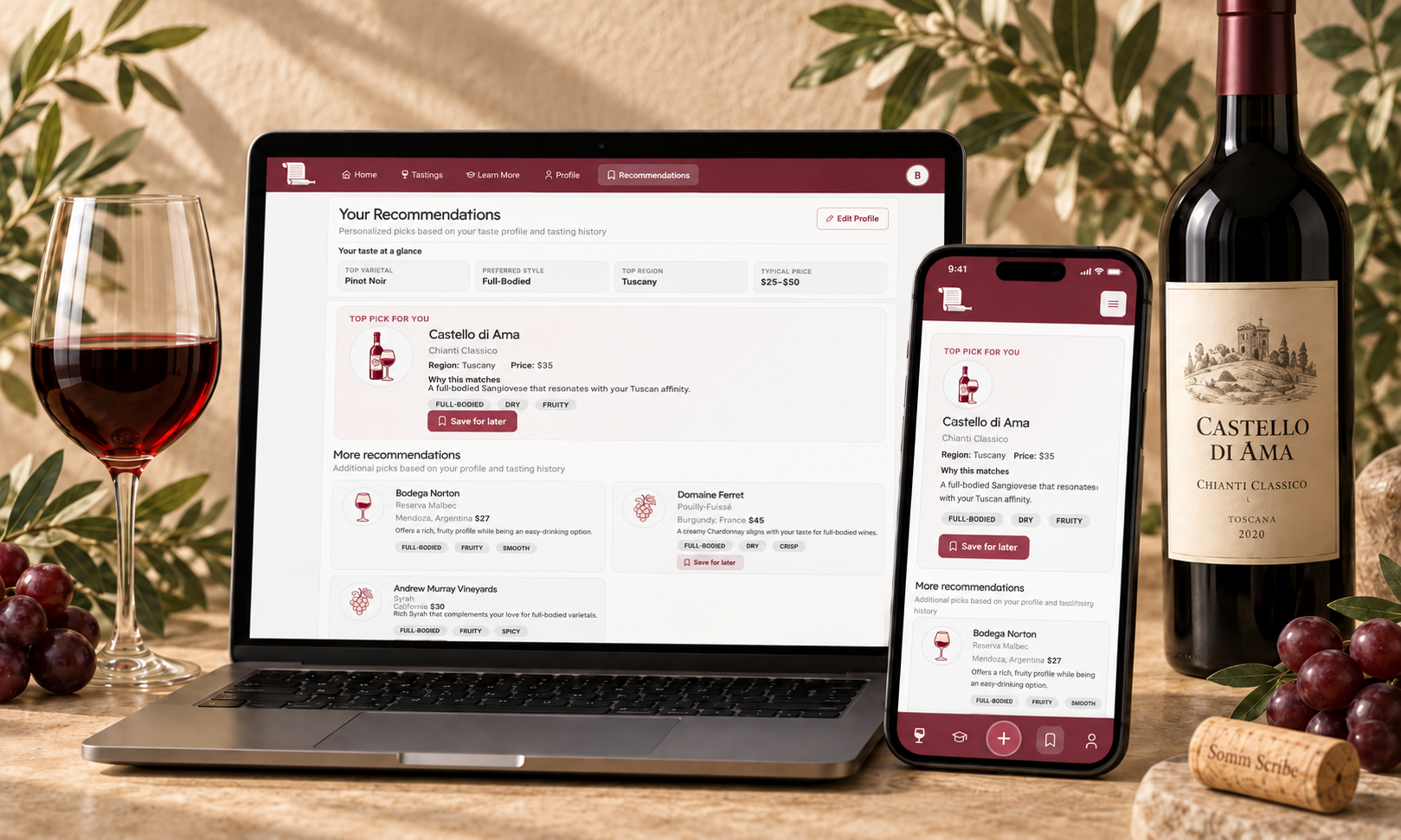
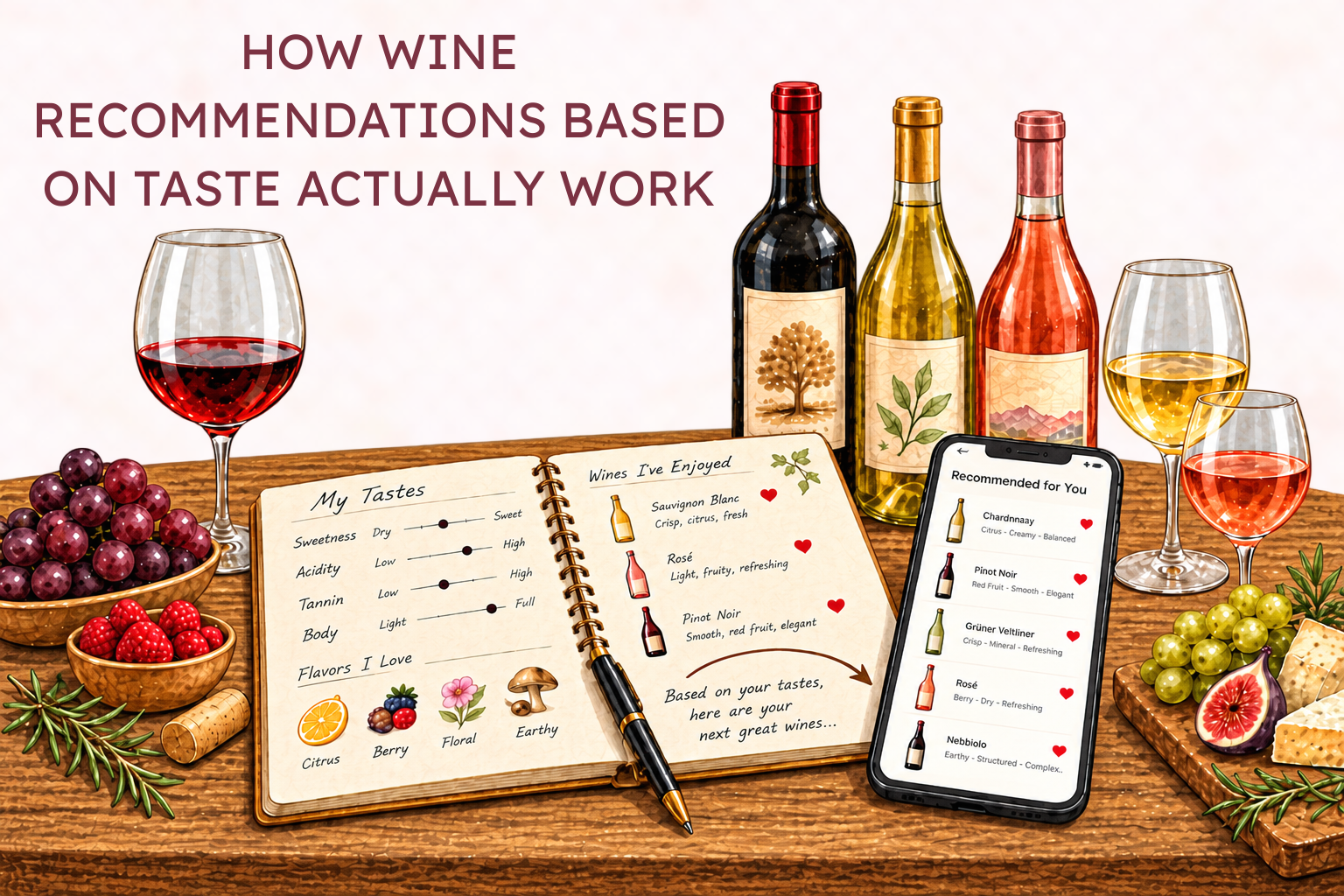
Every tasting you save helps you build a clearer picture of your taste. Over time, Somm Scribe spots patterns and suggests wines you’re more likely to enjoy.
Save the bottle and your notes
Mark Would Buy Again
Spot patterns over time
Get more useful recommendations
The best wine is not always the best wine for you
High ratings, critic scores and best-seller lists can be helpful, but they reflect what other people like. Your taste is unique.
A better choice starts with your own preferences. When you focus on what you actually enjoy, you’ll find wines that fit you, not just what’s popular.
| Generic advice | Taste-based discovery |
|---|---|
| Critic score | Your taste |
| Popular bottles | Similar style |
| Optimizes for popularity | Optimizes for fit |
| Best seller | Better match for you |

A simple way to choose your next bottle
Follow a simple process to go from what you enjoy to your next great bottle.
1. Think of a wine you liked
Any wine you’ve enjoyed recently.
2. Identify what you liked
A few simple taste characteristics.
3. Use style before labels
Focus on taste, not just grapes or regions
4. Compare similar wines
Explore recommendations with a similar style.
5. Remember whether you’d buy if again
Save your notes to improve recommendations over time.
Keep learning with beginner friendly guides

Frequently Asked Questions
-
Start with wines you already remember enjoying and look for a few simple patterns. Pay attention to things like light vs. full-bodied, crisp vs. soft, dry vs. sweet, fruity vs. earthy and smooth vs. tannic. You do not need to identify everything at once. Even one or two preferences can make your next choice easier.
-
No. You can make better wine choices using simple descriptions like light, bold, crisp, smooth, fruity or dry. Wine terminology can be helpful later, but it is not required to start understanding your own taste.
-
Start by comparing different styles and noticing which one you would rather drink again. Try a crisp white next to a richer white or a lighter red next to a fuller red. Each comparison gives you another clue about your preferences.
-
Yes. A wine journal helps you remember which bottles you liked, what you liked about them and whether you would buy them again. Over time, that history makes it easier to spot patterns in the grapes, regions and styles you consistently enjoy.
-
Ratings can be useful, but they reflect someone else’s opinion. A highly rated wine may still be a poor match for your taste. Your own preferences are usually more useful when deciding whether a wine is likely to be right for you.
-
Identify what you liked about the wine first. Then look for bottles with a similar body, acidity, sweetness, tannin or flavor profile. You can also explore nearby grapes, regions or styles instead of buying the exact same wine every time.
-
There is no fixed number. You can start learning from your first few bottles. The important part is paying attention to what you enjoyed and recording it so you can compare future wines against those experiences.
-
Yes. Your taste can change as you try more wines, different foods and different styles. That is why it helps to keep tracking what you enjoy instead of treating your preferences as permanent.

Start remember the wines you actually enjoy
Track the wines you drink, spot patterns over time and build confidence with every bottle.