
Personalized Wine Recommendations Based on Your Taste
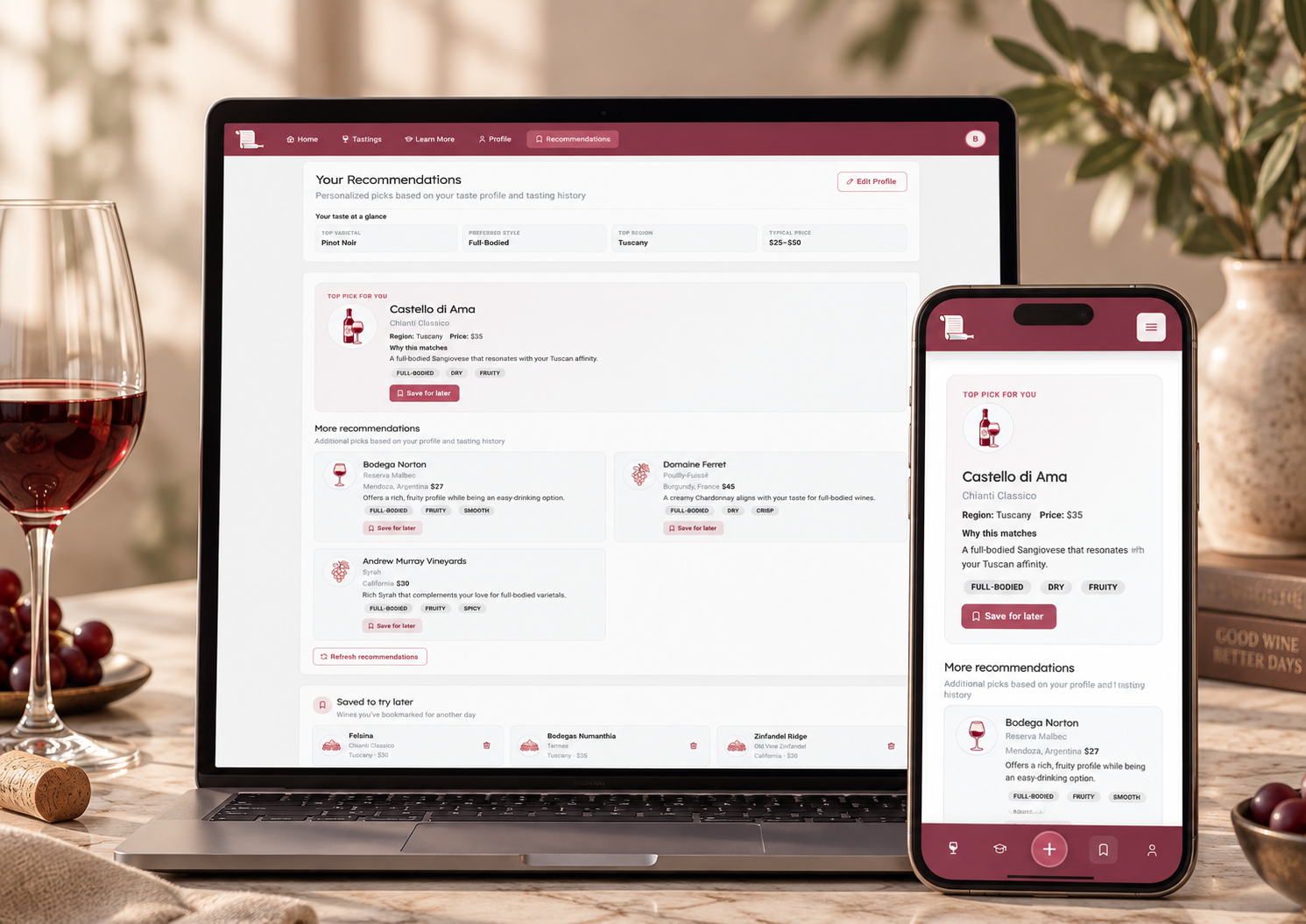
Finding a wine you’ll love shouldn’t mean relying on someone else’s rating. Somm Scribe helps you build a picture of your own taste from the wines you actually drink, so future recommendations can reflect what you enjoy, not just what’s popular.
The Best Wine Isn’t Always the Best Wine for You
High ratings, critic scores and bestseller lists can be helpful, but they reflect what other people like. Your taste is unique. A highly rated Cabernet might be perfect for some, but if you prefer lighter, brighter reds, it probably isn’t the right fit.
Personalized recommendations start with a different question: What do you actually enjoy drinking?

What Makes a Wine Recommendation Personal?
A useful recommendation looks at more than a star rating. Somm Scribe considers the key characteristics that shape your taste
Sweetness
Dry, off-dry or sweet

Acidity
Crisp and bright or softer and rounder
Tannin
Soft and smooth or structured and drying

Body
Light, medium or full
Flavors & Aromas
Fruits, herbs, oak, earth, spice and more
Your Tasting History
The wines you’ve already enjoyed
How Personalized Wine Recommendations Work
A simple process that gets smarter over time.
1. Track what you drink
Save the bottle, rating and details that matter to you.

2. Notice what you like
Patterns emerge across styles, grapes, regions and tasting notes.

3. Build your taste profile
Somm Scribe uses your preferences and tasting history to understand your taste.
4. Get personalized recommendations
Discover wines that fit your taste, not just what’s popular.
5. Keep tasting
Your taste evolves and recommendations get better over time.

Your Wine Journal Can Become Your Taste Profile
Every tasting you save answers a small question about your taste. Over time, those observations add up and reveal patterns, like:
You consistently prefer crisp whites
You like fruit-forward reds but dislike heavy tannin
You enjoy Chardonnay when it isn’t heavily oaked
You tend to enjoy wines from certain regions
You care more about “would I buy it again?” than critic scores
Personalized vs. “Best Wine” Lists
They answer different questions.
| Generic wine recommendation | Personalized recommendation |
|---|---|
| “This wine has a 4.4 rating.” | “This wine matches your taste.” |
| Based on other people’s preferences | Based on your preferences |
| Optimizes for popularity | Optimizes for fit |
| Treats everyone similarly | Learns from your individual taste |
| Often starts with scores | Starts with your tasting history |
| Tells you what’s good | Helps you find what may be good for you |
Good wine is subjective. The best recommendation is the one that fits you.

What If You Don’t Know Your Preferences Yet?
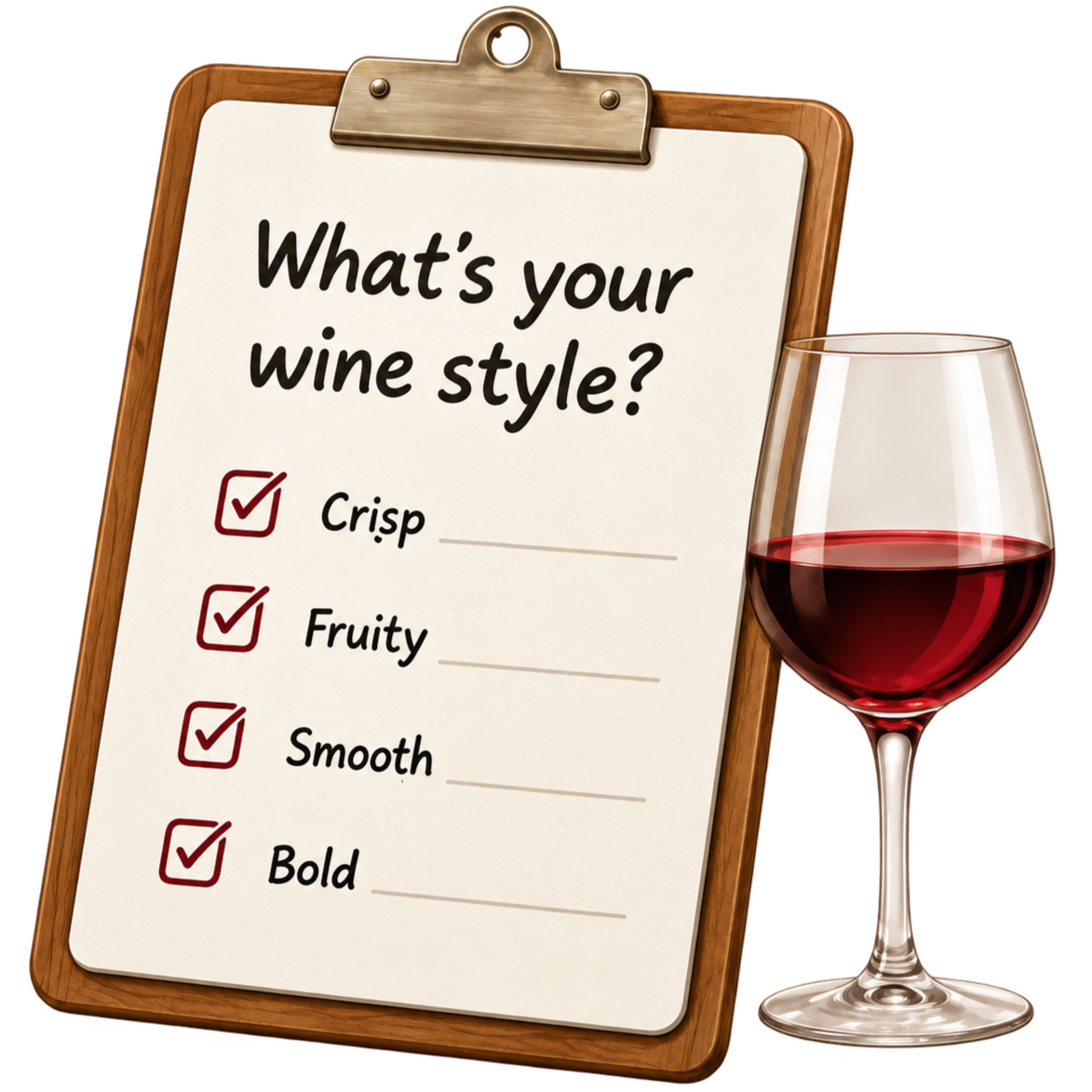
You don’t need a tasting history to start. Somm Scribe’s Wine Style Quiz can give you a starting point based on the styles and experiences you already know you enjoy.
Your Taste Can Change
Your preferences can evolve as you try new wines, discover new regions and gain experience. Somm Scribe learns with you, so your recommendations stay relevant, whether you’re exploring new styles or rediscovering old favorites
Frequently Asked Questions
-
Personalized wine recommendations are suggestions based on your own tastes instead of just popularity or critic scores. They can use things like the wines you’ve enjoyed, your preferred styles, sweetness, acidity, tannin, body, flavors and tasting history to suggest bottles that are more likely to fit what you personally enjoy.
-
A wine app can look for patterns in the bottles you rate, save and review over time. If you consistently enjoy certain grapes, regions, styles or flavor profiles, those preferences can be used to make future recommendations more relevant to you.
-
No. You do not need to know formal wine vocabulary. Simple feedback like whether you liked a wine, whether you would buy it again and whether it felt fruity, crisp, smooth, bold or sweet can still provide useful signals about your taste.
-
They answer a different question. Wine ratings tell you how a group of people or a critic evaluated a bottle. Personalized recommendations try to answer a more useful question for everyday drinkers: how likely are you to enjoy this wine based on your own preferences?
-
Some of the most useful signals include wines you’ve already enjoyed, your ratings, preferred grapes, regions and styles, plus characteristics like sweetness, acidity, tannin, body, aromas and flavors. The more relevant tasting history you build, the clearer your preferences can become.
-
Yes. Your preferences can change as you try new grapes, regions and styles. A useful wine taste profile should evolve with you rather than locking you into the same kinds of wines forever.
-
That’s completely fine. Start by trying different wines and paying attention to simple things like whether you enjoyed them and whether you would buy them again. Somm Scribe’s Wine Style Quiz can also help give you a starting point while you build more tasting history.
-
There is no single number that works for everyone. Even a few tastings can begin to reveal useful patterns, but recommendations generally become more informative as you track more wines and give the app more information about what you like and dislike.

Better Wine Recommendations Start With Your Own Taste
You don’t need to memorize grapes, regions or critic scores to make better wine choices. Start by remembering what you drink and paying attention to what you enjoy. The clearer your taste becomes, the more useful your next recommendation can be.
Track your first bottles for free and start building a clearer picture of what you like.