
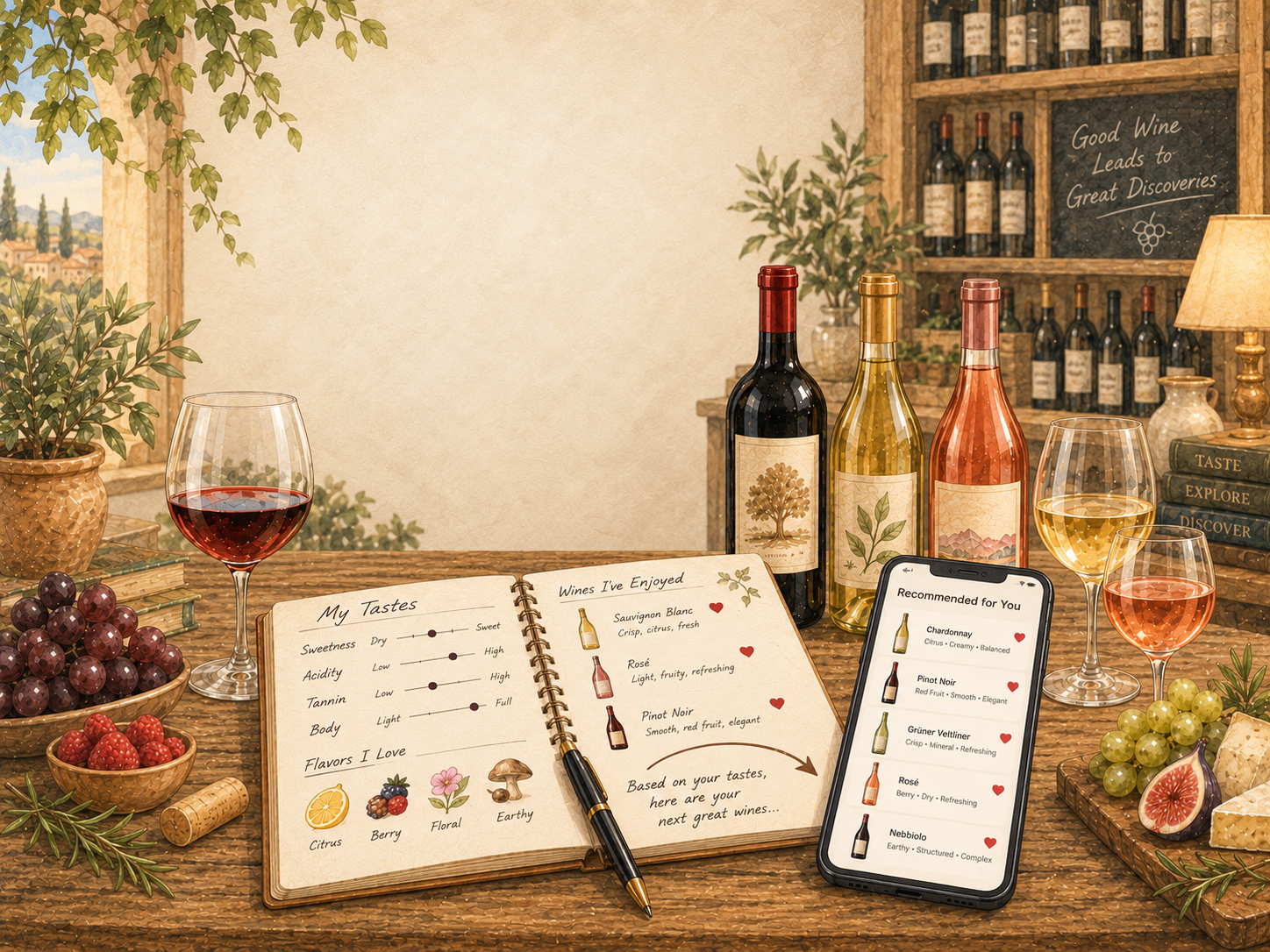
“Recommended for you” can mean a lot of different things. Sometimes it means a wine is popular. Sometimes it means people who bought one bottle also bought another. Sometimes it is based almost entirely on ratings. But a wine recommendation that is genuinely based on your taste should go deeper than that. It should look at the patterns in the wines you enjoy, the characteristics you tend to prefer and the reasons certain bottles work for you. That is what makes a recommendation personal instead of simply popular.
What Does “Based on Your Taste” Actually Mean?
Your taste in wine is not just whether you like red or white. It is a combination of smaller preferences that start to form a pattern over time.You might consistently prefer wines that are:
Dry rather than sweet
Bright and acidic
Lower in tannin
Medium-bodied
Fruit-forward
Earthy or savory
Light and refreshing
Rich and full-bodied
You may also notice that you repeatedly enjoy certain grapes, regions or wine styles. None of those preferences tells the whole story on its own. Together, though, they can create a useful picture of what you are likely to enjoy next. If you are still figuring out those patterns, The Beginner’s Guide to Building Your Wine Taste Profile is a good place to start.
Sweetness Is Only One Part of the Picture
Sweetness is one of the easiest wine characteristics to notice, but it is also easy to confuse with fruitiness. A wine can taste strongly of peach, berries or tropical fruit while still being completely dry. That distinction matters. Someone who likes fruity wines may not necessarily want a sweet wine. They may simply enjoy wines with ripe, expressive fruit flavors. A useful recommendation should try to understand that difference instead of treating “fruity” and “sweet” as the same preference.
Acidity Can Tell You a Lot About What You Like
Acidity gives wine much of its freshness and brightness. Higher-acid wines often feel crisp, lively and refreshing. Lower-acid wines can feel softer or rounder. If you regularly enjoy wines like Sauvignon Blanc, Albariño or dry Riesling, acidity may be one of the reasons. If you prefer richer Chardonnay or softer reds, you may enjoy wines where acidity feels less prominent. You do not need to know the exact acidity level of every bottle you drink. Simply noticing whether a wine feels crisp, sharp, soft or rounded can help identify a pattern.
Tannin Matters, Especially With Red Wine
Tannin creates the drying or gripping sensation you sometimes feel after taking a sip of red wine. Some people love that structure. Others find heavily tannic wines too intense. Cabernet Sauvignon and Nebbiolo often have more noticeable tannin, while wines like Pinot Noir or Gamay generally feel softer. That means two people can both say they “like red wine” while wanting completely different recommendations.
One might want something bold and structured. The other might want something lighter and smoother. That difference is exactly the kind of information a taste-based recommendation should account for.
Body Helps Connect Different Wines
Body describes how heavy or substantial a wine feels in your mouth. Some wines feel light and delicate. Others feel rich and full. This can be especially useful when finding new wines because you may enjoy a similar level of body even when the grape or region changes. For example, if you like lighter Pinot Noir, you may also enjoy certain styles of Gamay or Grenache.
If you consistently prefer fuller wines, you may be happier exploring Cabernet Sauvignon, Syrah or richer styles of Chardonnay. Understanding body can make it easier to branch out without feeling like you are choosing completely at random. For a broader look at these differences, Wine Styles Explained breaks down the major styles and how they tend to taste.
Flavor Preferences Add Another Layer
The flavors you notice in wine can also reveal useful patterns. You may repeatedly enjoy wines with flavors like:
Cherry
Blackberry
Plum
Citrus
Peach
Tropical fruit
Vanilla
Baking spice
Herbs
Earthy or savory notes
Floral aromas
No single flavor guarantees that you will like a wine. But when several preferences keep appearing together, they become much more useful. Maybe you consistently enjoy medium-bodied red wines with red fruit and softer tannins. Or maybe you prefer crisp white wines with citrus, herbal flavors and high acidity. Those combinations say far more about your taste than simply knowing that you like “red wine” or “white wine.” What Your Favorite Wine Says About Your Taste is a useful way to start identifying some of those patterns from bottles you already know you enjoy.
Wines You Already Like Are Some of the Best Clues
One of the strongest signals for a future recommendation is simple, What wines have you already liked? If you love a particular bottle, there is usually a reason. Maybe it was the grape. Maybe it was the balance of acidity and fruit. Maybe it was smooth and low in tannin. Maybe it had exactly the kind of body you tend to enjoy.
Once you identify those characteristics, you can look for other wines that share them. That does not mean finding an exact copy. A good recommendation can introduce you to something new while still keeping enough familiar characteristics to make it a reasonable fit. That is the idea behind How to Find More Wines Similar to One You Already Like.
Why Ratings Alone Are Weak Personalization Signals
Ratings are useful, but they leave out a lot of context. Imagine you give two different wines four stars. You may have liked the first because it was light, crisp and easy to drink. You may have liked the second because it was rich, bold and perfect with dinner. The rating is identical. The experience was not.
You might also give a wine a high score because it was interesting or well made while still deciding you would never buy it again. That is why ratings alone are not enough to understand your taste. Questions like the following can often provide more useful information than another number on a five-point scale.
Would you buy this again?
What did you like about it?
Was anything too strong?
Was it too sweet or too dry?
Did you like the body?
Which flavors stood out?
Better Recommendations Come From Patterns Over Time
You do not need to create a perfect wine profile before recommendations can become useful. You just need to start paying attention. Each wine you try adds another small piece of information. Over time, you may realize that you consistently prefer higher acidity, softer tannins or certain fruit flavors. You may discover that the wines you buy again have more in common than you expected. Those patterns are what make personalization possible. The goal is not to put you into a rigid category. It is to understand enough about what you tend to enjoy that the next bottle feels less like a guess.
Start Tracking What You Actually Like
Somm Scribe is built around a simple idea: the more you understand about the wines you enjoy, the easier it becomes to make better choices later. By keeping track of the wines you try, what you liked, what you did not and whether you would buy them again, you can gradually build a clearer picture of your own taste. That history can make future wine recommendations far more useful than relying on ratings alone.
Start your free wine journal with Somm Scribe and begin tracking the wines you actually enjoy.
