
How to Describe the Kind of Wine You Like Without Knowing Wine Terms
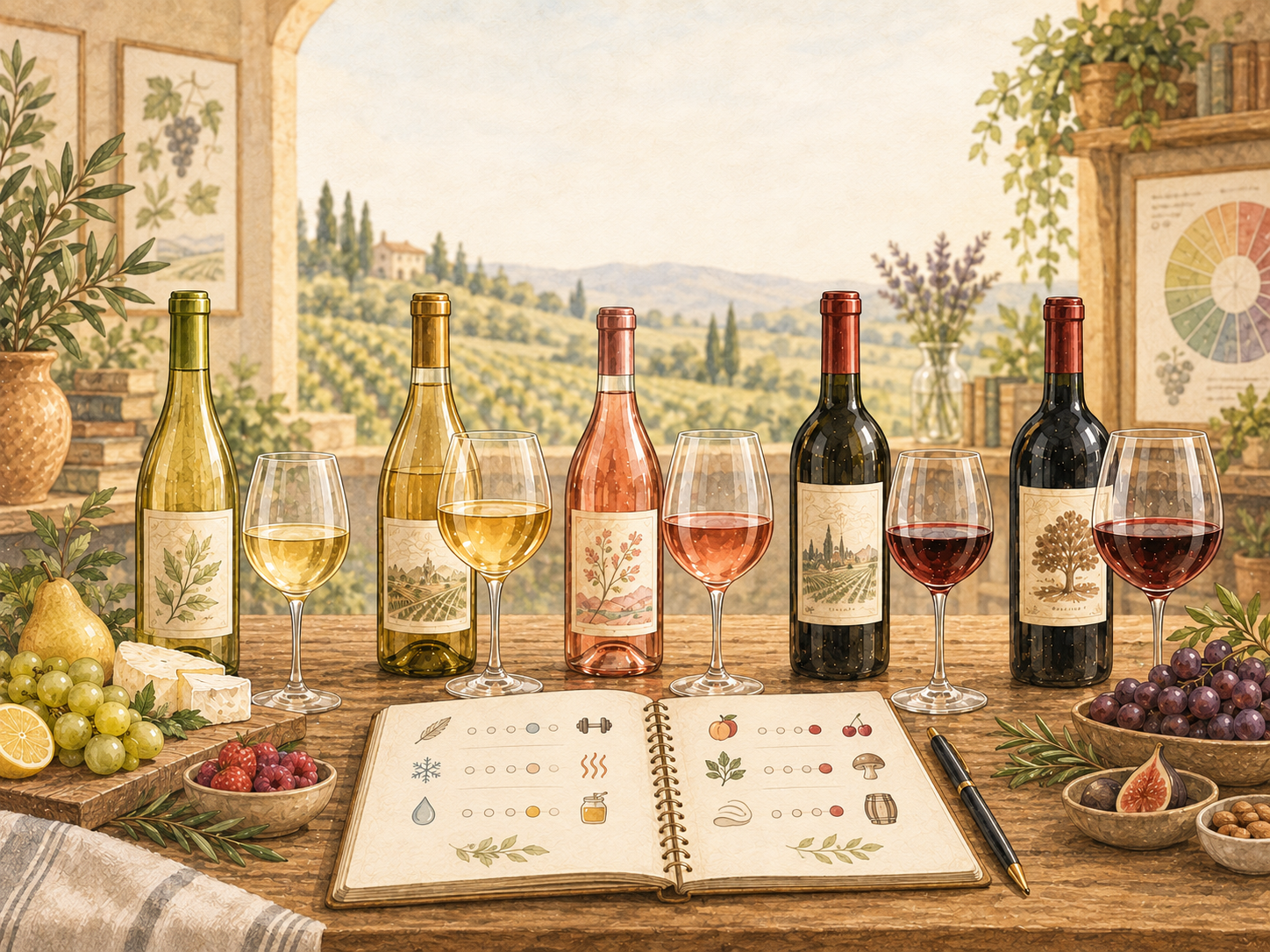
You do not need to know wine vocabulary to describe the kind of wine you like. If you can say things like:
“I like lighter reds”
“I want something crisp”
“I don't like really dry wines”
“I want a red that feels smooth instead of bitter”
…you are already describing your wine preferences in a useful way. The trick is learning how those everyday descriptions connect to a few basic characteristics of wine. Instead of trying to memorize grapes, regions or tasting terminology, start with five simple comparisons:
Light vs. full-bodied
Crisp vs. soft
Dry vs. sweet
Fruity vs. earthy
Smooth vs. tannic
Once you can describe where your preferences fall on those spectrums, it becomes much easier to explain what you like to a wine shop employee, search for another bottle or ask an AI wine recommendation tool for something that actually fits your taste. And over time, those simple descriptions can become the foundation of your own wine taste profile.
You Do Not Need to Know the “Right” Wine Words
Wine can sometimes feel like it has its own language. Someone might describe a bottle as having high acidity, medium tannin, a full body and notes of blackberry and cedar. That information can be useful once you understand it. But if you are just trying to find something you enjoy drinking, you do not need to start there.
You might describe that same wine more naturally: “It tastes rich and fruity, but it has a little dryness at the end.” That description is not wrong. In many cases, it is actually more useful because it captures what you noticed and whether you enjoyed it. The goal is not to sound knowledgeable about wine. The goal is to describe your preferences consistently enough that you can find more wines you like.
Start With Light vs. Full-Bodied
One of the easiest things to notice about wine is how heavy it feels when you drink it. Think about the difference between skim milk and whole milk. Neither is better, but they feel different in your mouth. Wine works the same way.
A light-bodied wine usually feels:
Delicate
Easy-drinking
Less heavy in your mouth
Refreshing
A full-bodied wine tends to feel:
Rich
Dense
Powerful
Heavier in your mouth
You do not have to decide that you only like one or the other. You might discover that you prefer light reds but richer white wines. Or you might want lighter wines during the summer and fuller wines with dinner during the winter. A useful description could simply be: “I usually like reds that feel lighter and aren't too heavy.” That is already enough information to start narrowing down your choices.
Crisp vs. Soft
You may hear someone describe a white wine as crisp. Usually, what you are noticing is acidity. Higher-acid wines can taste bright, refreshing or mouthwatering. Think about the sensation you get from biting into a tart apple or squeezing lemon into sparkling water. You might describe these wines as:
Crisp
Fresh
Bright
Zippy
Refreshing
Tart
On the other end, some wines feel softer and rounder. You might describe those as:
Smooth
Soft
Creamy
Mellow
Round
Neither is automatically better. Someone who loves Sauvignon Blanc may gravitate toward wines that feel especially crisp and refreshing. Someone who enjoys richer styles of Chardonnay may prefer something softer and rounder. If you consistently find yourself saying “I love wines that taste really fresh and crisp,” that is an important part of your taste profile.
Dry vs. Sweet
This is one of the most useful preferences to figure out because it can quickly eliminate wines you probably will not enjoy. A dry wine has little noticeable sweetness. A sweet wine has more noticeable residual sugar. But there is an important complication: fruity does not necessarily mean sweet.
A completely dry wine can taste strongly of peaches, berries, cherries or tropical fruit while containing very little sugar. That is why instead of saying “I don't like fruity wines,” you might actually mean “I don't like wines that taste sweet.”
Or the opposite might be true. Maybe you enjoy a little sweetness and find extremely dry wines less appealing. Useful descriptions include:
“I like wine mostly dry, but not bone dry.”
“I prefer wines with a little sweetness.”
“I don't want anything noticeably sweet.”
Those are all perfectly useful ways to explain what you want.
Fruity vs. Earthy
Fruit flavors are some of the easiest characteristics to recognize in wine. You may notice flavors that remind you of:
Cherry
Strawberry
Blackberry
Peach
Apple
Citrus
Plum
Tropical fruit
You do not have to correctly identify the exact fruit. If a wine simply tastes “really fruity” to you, write that down. Other wines may lean toward flavors that feel less fruit-focused. You might describe them as:
Earthy
Herbal
Savory
Smoky
Spicy
Woody
Some people love wines packed with ripe fruit. Others enjoy wines that feel more savory and earthy. Many people like a combination. Instead of worrying about whether you correctly identified blackcurrant or blackberry, focus on the broader preference. “I usually like reds that taste more fruity than earthy.” That tells you far more about your taste than correctly naming one aroma.
If you want to understand where some of these flavors come from, our guide to Wine Styles Explained can help connect these characteristics to common wine styles.
Smooth vs. Tannic
If you drink red wine, this is another extremely useful distinction. Have you ever taken a sip of red wine and noticed that your mouth suddenly feels dry? That sensation often comes from tannins. Tannins can make wine feel:
Drying
Grippy
Firm
Rough
Structured
People sometimes describe highly tannic wine as bitter, although bitterness and tannin are technically different sensations. A wine with fewer noticeable tannins may feel:
Smooth
Soft
Silky
Easy to drink
So when someone says “I like smooth red wine,” they may actually be saying that they prefer reds with softer tannins. That is useful information. You do not need to replace the word smooth with low tannin every time you talk about wine. Simply understanding the connection helps you make better choices.
Combine the Descriptions
Individual preferences become much more useful when you start combining them. For example, “I like lighter red wines that are fruity, smooth and dry.” That tells us quite a lot.
Or:
“I like white wines that are crisp, dry and citrusy.” Again, that is already a surprisingly useful description.
Another person might say: “I like richer reds with lots of dark fruit, but I don't like when they make my mouth feel really dry.” You do not need a sommelier vocabulary to understand the preference behind that sentence.
Instead of trying to identify your favorite grape immediately, try completing this sentence: I usually like wines that are _____, _____ and _____. Those three words can become the beginning of your wine taste profile.
Use Wines You Already Like as Evidence
Describing your preferences becomes easier when you stop treating it like a personality test. You do not have to decide whether you are officially a crisp wine person or a full-bodied wine person. Look at wines you already enjoyed instead. For each one, ask:
Did it feel light or full?
Did it feel crisp or soft?
Was it dry or noticeably sweet?
Did it taste more fruity or earthy?
If it was red, did it feel smooth or drying?
Then look for patterns. Maybe four of the last five wines you loved were dry, fruity and medium-bodied. That is far more useful than simply knowing that you gave all of them four stars. Our guide to The Beginner’s Guide to Building Your Wine Taste Profile walks through how to turn those patterns into a clearer picture of what you enjoy.
Ratings Alone Do Not Explain Your Taste
Knowing that you rated a wine 4.5 out of 5 is useful. But it does not tell you why you liked it. Two wines could receive the exact same rating for completely different reasons. You might love one Sauvignon Blanc because it was crisp and refreshing, while loving a Cabernet Sauvignon because it was rich and packed with dark fruit.
The rating captures your overall reaction. The descriptions capture your preference. That distinction becomes particularly important when you are trying to get personalized wine recommendations. The more you know about why you liked a bottle, the easier it becomes to identify other wines with similar characteristics. If you want to see how those preferences can turn into actual recommendations, read Personalized Wine Recommendations Based on Your Taste.
You Can Use Everyday Language When Asking for Wine Recommendations
You also do not need to translate everything into formal terminology before asking someone for help. Imagine walking into a wine shop and saying: “I want a red around $20. I usually like wines that taste really fruity and smooth. I don't want anything super heavy or really drying.” That is a good request.
The same idea applies when using AI. Instead of asking: “What red wine should I buy?” try: “I want a dry red wine that is medium-bodied, fruity and smooth. I don't like really tannic reds. What styles should I look for?”
The second question gives the recommendation far more information to work with. You can also use a specific wine as your starting point: “I really liked this Pinot Noir because it was light, fruity and smooth. What else should I try?” As your descriptions become more specific, your recommendations can become more useful too.
Turn Simple Descriptions Into a Taste Profile
Your taste profile does not need to be complicated. You can start with something as simple as:
Body: Usually light to medium
Acidity: Prefer crisp wines
Sweetness: Mostly dry
Flavor: Fruit-forward
Tannin: Prefer smooth reds
That is already a usable profile. Then keep updating it as you try more wine. You might discover that you like higher tannins when you are eating steak. Or that you enjoy richer whites much more than you expected. Or that you like earthy flavors in Pinot Noir but prefer fruitier Cabernet. Your taste profile should change as you learn more about what you enjoy.
You Are Trying to Understand Your Taste, Not Pass a Wine Test
There is no prize for correctly identifying every tasting note in a glass of wine. What matters is knowing whether you liked it and understanding a little more about why. Start with simple comparisons:
Light or full?
Crisp or soft?
Dry or sweet?
Fruity or earthy?
Smooth or tannic?
You do not even need an answer for every category. Notice what stands out, write it down and compare it with the next wine you try. Over time, those simple observations start turning into patterns. Those patterns become your taste profile.
And your taste profile makes it much easier to answer the question that actually matters: What wine should I try next?
Start tracking your wines with Somm Scribe and turn “I know what I like when I taste it” into a better understanding of what you actually enjoy.
Somm Scribe is designed to help you keep track of the wines you try, what you liked about them and the preferences that start appearing over time. Instead of remembering every bottle or learning wine terminology all at once, you can build your taste profile one glass at a time.
