
Why Your Wine Rating Alone Doesn’t Tell You What to Buy Next
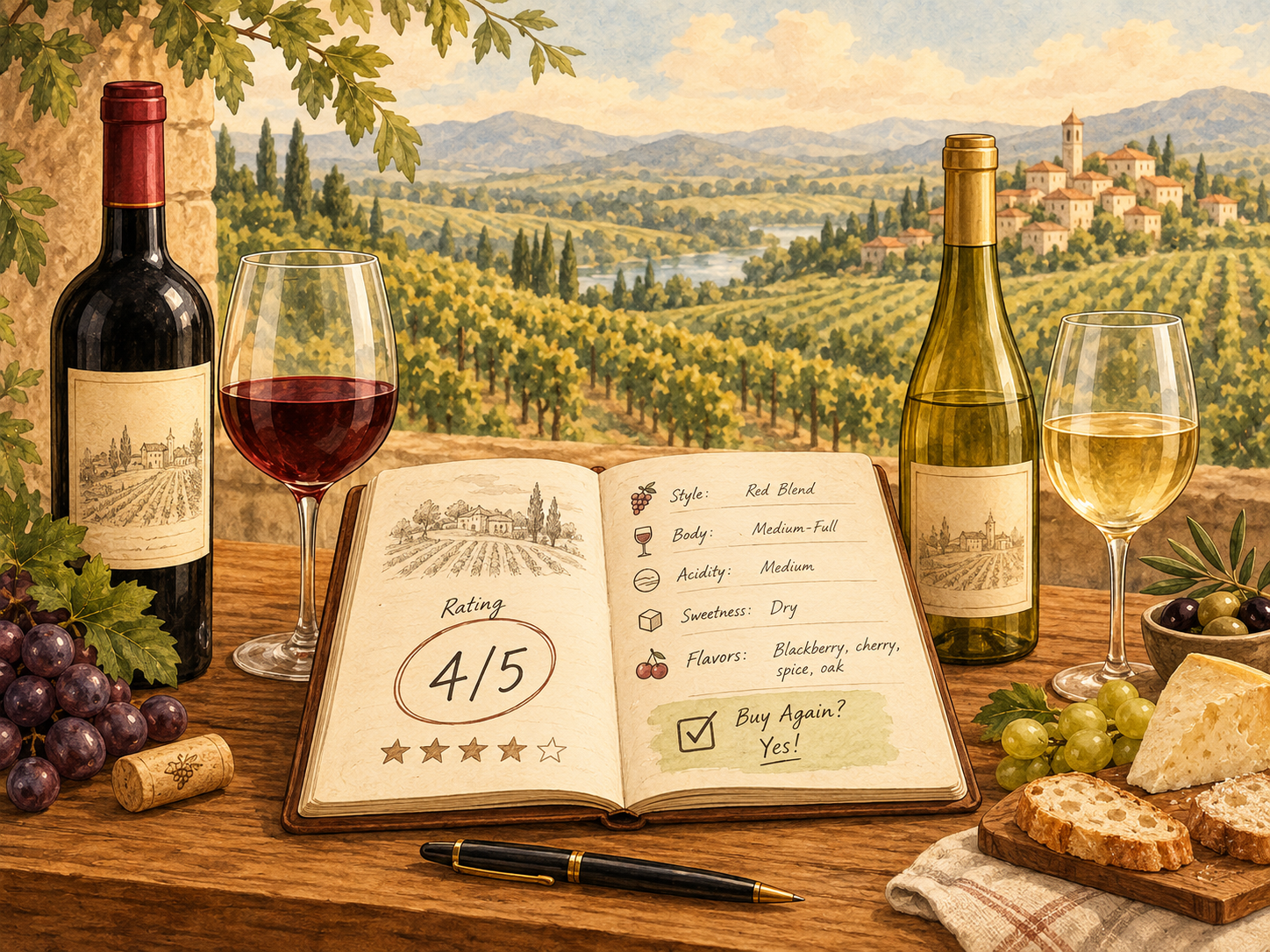
Giving a wine a rating feels useful. You finish a bottle, decide it was pretty good and give it a 4 out of 5. But a few months later, that rating may not tell you much. Why did you give it a 4? Was it rich and smooth? Bright and crisp? Fruity but not too sweet? Did you enjoy the first glass but get tired of it by the end? Would you actually spend your money on another bottle? A wine rating tells you how much you liked a wine overall. It usually does not tell you what you liked about it. And if your goal is to find more wines you will enjoy, that second question matters much more. The most useful wine record combines your rating with a few simple details about the wine's style, body, acidity, sweetness and flavors plus one especially practical question: Would you buy it again? That combination gives you much more useful information the next time you are deciding what to drink.
Why Wine Ratings Are Useful But Limited
There is nothing wrong with rating wine. A simple five-star or five-point scale gives you an easy way to compare bottles and remember your overall impression. Maybe your scale looks something like:
5 out of 5 — loved it
4 out of 5 — really liked it
3 out of 5 — good, but nothing special
2 out of 5 — probably would not choose it again
1 out of 5 — definitely not for me
That is useful information. The problem is that ratings compress an entire tasting experience into one number. Two completely different wines might both receive a 4 out of 5 even though you enjoyed them for completely different reasons. You might give a Sauvignon Blanc a 4 because it was light, crisp and refreshing. You might also give a Cabernet Sauvignon a 4 because it was full-bodied, dark-fruited and smooth.
The rating is the same. Your preferences are not. That distinction becomes important when you try to answer a question like: What wine should I buy next?
A 4 out of 5 Doesn't Tell You Why You Liked the Wine
Imagine looking back through your wine journal and seeing five wines rated 4/5. At first glance, they all look equally useful as recommendations. But now imagine you recorded a little more information.
One was:
Medium-bodied
Dry
High acidity
Citrusy
Fresh
Crisp
Another was:
Full-bodied
Dry
Moderate acidity
Dark-fruited'
Oaky
Smooth
Another was:
Light-bodied
Slightly sweet
Low tannin
Red-fruited
Easy-drinking
Now you have something much more useful than three identical ratings. You can start noticing patterns. Maybe you consistently enjoy wines with higher acidity. Maybe you prefer medium-bodied wines over very heavy ones. Maybe you like fruit-forward reds but dislike strong tannins. Those patterns are what help turn individual bottles into a usable picture of your taste. If you are just getting started, a Wine Tasting Notes Template can help you capture these details without turning every glass into homework.
The Details That Make a Wine Rating More Useful
You do not need to record dozens of technical details about every bottle. A few simple observations can dramatically improve how useful your wine history becomes.
Style
Start with the broad character of the wine. Was it light and refreshing? Rich and powerful? Fruit-forward? Earthy? Bright and crisp? Soft and smooth? These descriptions are often more useful than knowing the exact grape or region because they describe what the wine actually felt like to you.
Body
Body describes how heavy or substantial a wine feels in your mouth. Think of the difference between skim milk and whole milk. A light-bodied wine tends to feel delicate and easy-drinking. A full-bodied wine feels richer and heavier. If you consistently rate medium-bodied wines highly, for example, that tells you something your ratings alone cannot.
Acidity
Acidity gives wine freshness and brightness. Higher-acid wines often taste crisp, lively or refreshing. Lower-acid wines can feel softer and rounder. You may discover that many of the wines you love share a similar acidity level even if they come from completely different grapes or regions.
Sweetness
Even a simple distinction between dry, slightly sweet and sweet can be valuable. Someone who repeatedly enjoys slightly sweet whites may get very different recommendations from someone who strongly prefers bone-dry wines.
Flavor Impressions
You do not need to identify twelve different aromas. Broad impressions are enough. Maybe you notice:
citrus
tropical fruit
red fruit
dark fruit
vanilla
spice
herbs
earth
oak
Over time, repeated flavor preferences become useful signals. If you are unsure what you are supposed to record, What Is a Tasting Note? explains how tasting notes can be much simpler than they sound.
Then Ask the Most Practical Question: Would You Buy It Again?
There is another piece of information that a numerical rating often misses entirely.
Would you actually buy the wine again?
You might give a wine a 4 out of 5 because it was interesting, well made or enjoyable with a particular meal. But maybe it cost $45 and you did not like it enough to spend $45 on it again. Or maybe you rated a simple $14 bottle only 3.5 out of 5, but it was easy to drink, worked perfectly with dinner and you would happily keep a few bottles around.
Which wine is more useful when deciding what to buy next?
Probably the second one. That is why Somm Scribe includes a “Would you buy it again?” field when you record a tasting. It captures something a rating cannot, whether the wine actually earned a place in your future buying decisions. A wine can be objectively interesting without becoming one of your wines.
Your Rating and Your Repurchase Decision Can Disagree
Some of the most useful information comes when these two signals do not match. Consider these examples.
4.5 out of 5 — Would not buy again
Maybe the wine was excellent, but too expensive. Maybe it was impressive for one glass but too heavy to drink regularly. Maybe you enjoyed trying it but would rather explore something different next time.
Now compare that with:
3.5 out of 5 — Would buy again
Maybe it was not the most complex wine you have ever tasted. But it was affordable, easy to drink and exactly what you wanted on a Tuesday night. That second bottle may actually tell you more about your real-world wine preferences. This is also why How to Know If a Wine Is Worth Buying Again can be a more useful question than simply asking whether a wine was "good."
Ratings Become More Valuable When You Add Context
The goal is not to stop rating wine. It is to make the rating more meaningful. Instead of recording 4 out of 5, record something closer to:
Rating: 4 out of 5
Body: Medium
Acidity: High
Sweetness: Dry
Flavor: Citrus, green apple, herbs
Overall impression: Crisp and refreshing
Would buy again: Yes
Now you have a useful description of what worked. After several tastings, patterns begin to appear. You may notice that wines you would buy again tend to be:
dry rather than sweet
medium-bodied rather than full-bodied
higher in acidity
fruit-forward without being overly jammy
softer in tannin
Those patterns can help you make much better buying decisions than simply knowing that you gave ten different wines four stars.
This Is Also What Makes Personalized Wine Recommendations Better
Good personalization needs more than a list of ratings. If two people both rate the same Cabernet Sauvignon 4 out of 5, they may still have completely different reasons for liking it. One person might love its dark fruit and full body.
The other might like the oak and smooth texture but wish it had less tannin. A recommendation system that only sees 4 out of 5 treats those preferences as identical. They are not. The more useful signals include:
wines you have enjoyed
body preferences
sweetness preferences
acidity preferences
tannin preferences
flavor patterns
styles you repeatedly choose
wines you would actually purchase again
Together, those details create a much clearer picture of your taste. That is the idea behind How to Find More Wines Similar to Ones You Already Like recommendations become more useful when they are based on what you actually enjoy rather than ratings alone.
You Don't Need to Turn Every Bottle Into a Science Experiment
There is an easy trap here. Once you realize more information is useful, you may feel like you need to record everything. Your tasting journal only needs enough information to help your future self. A simple entry might contain:
Rating: 4
Style: Light and crisp
Flavor: Citrus and green apple
Would buy again: Yes
That takes less than a minute to record. But months later, it tells you considerably more than a lone four-star rating. You are not trying to write a professional wine review. You are building a record of your own preferences.
Build a Wine History That Actually Helps You Choose
Ratings are a useful starting point. They just should not be the entire story. A 4 out of 5 tells you that you enjoyed a wine. Recording the wine's style, body, acidity, sweetness and flavor impressions helps explain why.
And asking “Would you buy it again?” connects all of that information to the decision that ultimately matters when you are standing in front of the wine shelf again. Over time, those small details turn a collection of wine ratings into something much more useful. A picture of what you actually like.
Start building your taste profile with Somm Scribe.
Record the wines you try, capture what you liked and keep track of which bottles are actually worth buying again.
