
How to Know If a Wine Is Worth Buying Again
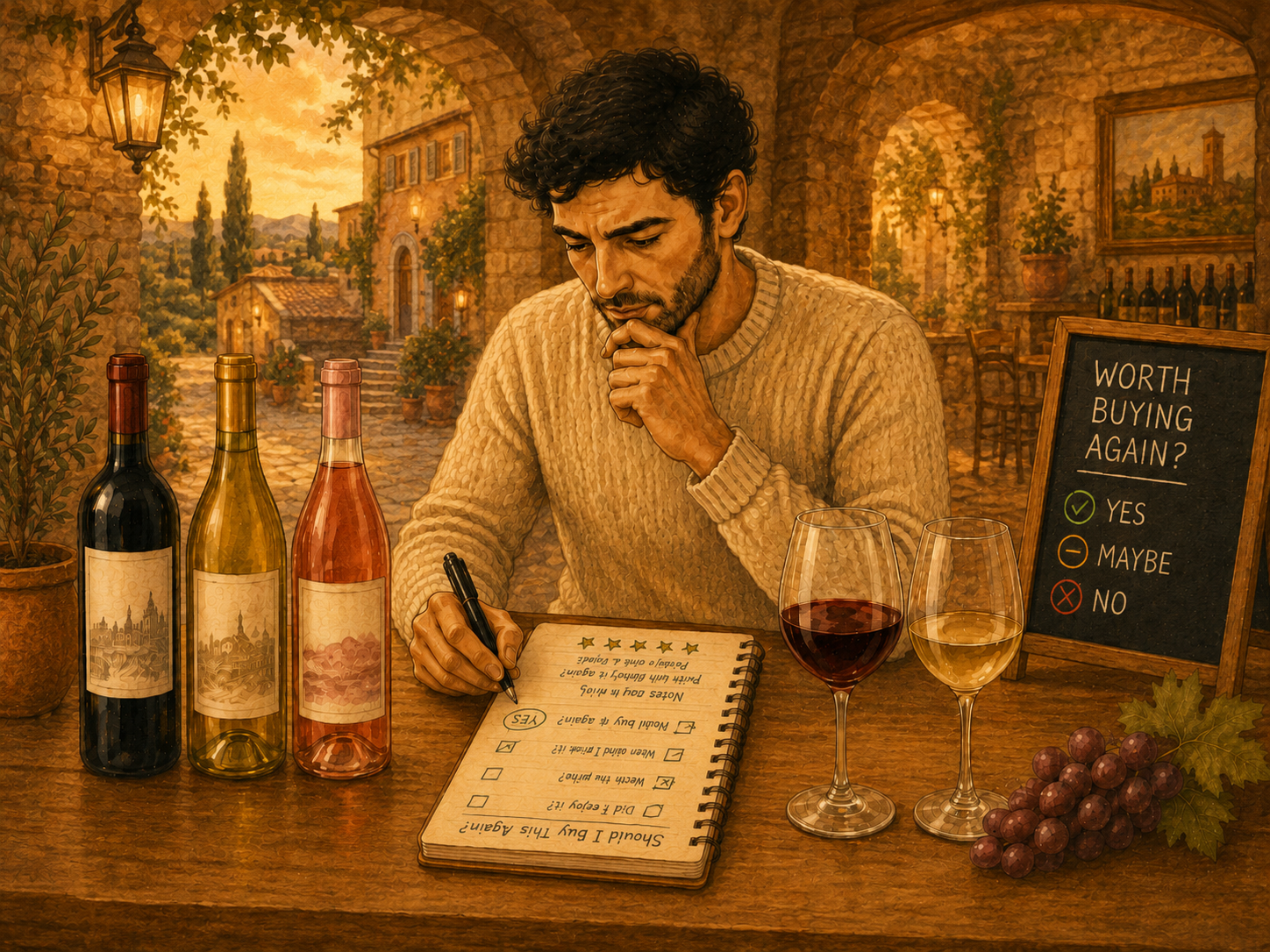
You finish a bottle and think, That was pretty good. But was it good enough to buy again? That is a surprisingly useful question to ask. You do not need to decide whether a wine deserves 92 points or whether a critic would approve. You just need to figure out whether you would be happy spending your money on it another time.
The best wines to buy again are not necessarily the most impressive ones. They are the bottles you genuinely enjoy, reach for easily and feel good about buying. Here is how to figure out which wines deserve a repeat purchase.
Start With the Simplest Question: Did You Actually Enjoy It?
Before worrying about grape varieties, regions or tasting terminology, ask yourself, “Would I be excited to drink this wine again?” Not:
“Could I drink it again?”
“Was it technically good?”
Would you actually want another bottle? That distinction matters. You might recognize that a wine is well-made while also realizing you did not particularly enjoy drinking it. On the other hand, a simple $15 bottle might disappear quickly because it is exactly your kind of wine. When you are building your own wine preferences, your enjoyment matters more than somebody else's score.
Keep Track of the Wines You'd Drink Again
Somm Scribe makes it easy to record what you drank, what you liked and whether a bottle deserves another spot in your cart.
Think About Why You Liked It
Once you know you enjoyed a wine, try to identify one or two reasons why. Maybe it was:
Crisp and refreshing
Smooth with very little bitterness
Fruity without tasting sweet
Rich and full-bodied
Easy to drink with dinner
Interesting enough to sip on its own
You do not need a long tasting note. In fact, something as simple as “smooth, dark fruit, not too dry — definitely buy again” can be far more useful six months later than a technically perfect description you barely understand. If you are not sure what is worth recording, our guide to Wine Notes: What to Write Down When You Taste a Bottle walks through the details that are actually useful.
Ask Whether It Was Worth the Price
Enjoyment is only part of the equation. A wine can taste great but still leave you thinking,That was good, but I wouldn't pay $35 for it again.
That is useful information. Think about whether the experience matched what you paid.
Would you buy it again at the same price?
Would you only grab it on sale?
Would you happily pay a little more for it?
There is no universal price where wine suddenly becomes "worth it." A $12 bottle you love can be a much better purchase for you than a $50 bottle you merely appreciate. If you want to understand that relationship a little better, read Price vs Quality in Wine.
Consider When You Would Actually Drink It
Some wines are delicious but difficult to find a reason to buy again. Others naturally fit into your life. Maybe you find a Sauvignon Blanc that becomes your summer patio wine. A Cabernet might become your steak-night bottle. A lighter red might be something you keep around for pizza or casual dinners.
That matters because repeat purchases are how you eventually create a dependable collection of wines you already know you enjoy. We talk more about that in How to Build a Go-To Wine Rotation. Your goal is not to drink the same five wines forever. It is to develop a few reliable options while continuing to try new things.
Pay Attention to How You Feel the Second Time
One great experience does not always mean you have found a favorite. Wine can taste different depending on the food you are eating, your mood, the temperature of the wine and even what you drank immediately beforehand. That is why buying a wine a second time can be incredibly useful.
If you enjoy it again in a completely different setting, you have learned something important: you probably genuinely like that style of wine. You can also compare your notes from each bottle. Maybe you notice that both times you described it as:
Smooth
Cherry-forward
Medium-bodied
Low in bitterness
Easy to drink
Now you are learning more than whether you like one particular bottle. You are learning why you like it.
Your Wine History Gets More Useful Over Time
Instead of trying to remember whether you liked a bottle months ago, keep your tasting history in one place and start spotting the patterns behind your favorite wines.
Give It a Simple Buy-Again Rating
You do not need an elaborate 100-point scoring system. Try something simpler:
Yes — Buy Again
You would happily purchase another bottle at roughly the same price.
Maybe — Right Situation or Price
You liked it, but you would probably only buy it for a certain meal, occasion or sale price.
No — Try Something Else
It was not bad. You would just rather spend that money exploring another bottle.
That simple decision is often much easier to remember and much more useful when you are standing in the wine aisle later. A printable tasting sheet can work well for this, but a digital journal makes it much easier to search through previous bottles and compare what you liked over time. If you are deciding between the two, check out Printable Wine Tasting Sheet vs Digital Wine Journal.
A Wine Does Not Have to Be Amazing to Be Worth Buying Again
This might be the most important part. Your repeat-buy wines do not all need to be special-occasion bottles. Sometimes the most useful wine you discover is simply:
“This is $16, I really like it and I know I can serve it with dinner.”
That is a successful wine purchase. Over time, tracking those bottles creates your own personal shortcut through the wine aisle. Instead of starting from scratch every time, you begin to know which grapes, styles, regions and producers tend to work for you. And when you do decide to experiment with something new, you have a much better starting point.
Final Sip
Knowing whether a wine is worth buying again does not require professional tasting skills. Ask yourself:
Did I genuinely enjoy drinking it?
What specifically did I like about it?
Was it worth what I paid?
Can I imagine when I would drink it again?
Would I be happy seeing another bottle of it in my wine rack?
If the answer is yes, write it down. Because six months from now, when you are staring at hundreds of bottles in the wine aisle, “I know I liked this one” is a lot more useful than trying to remember what you drank last winter.
Stop Guessing Which Wines You Liked
Somm Scribe helps you remember the wines worth buying again, keep track of what you enjoyed and discover patterns in your personal taste over time.
