
Wine Notes: What to Write Down When You Taste a Bottle
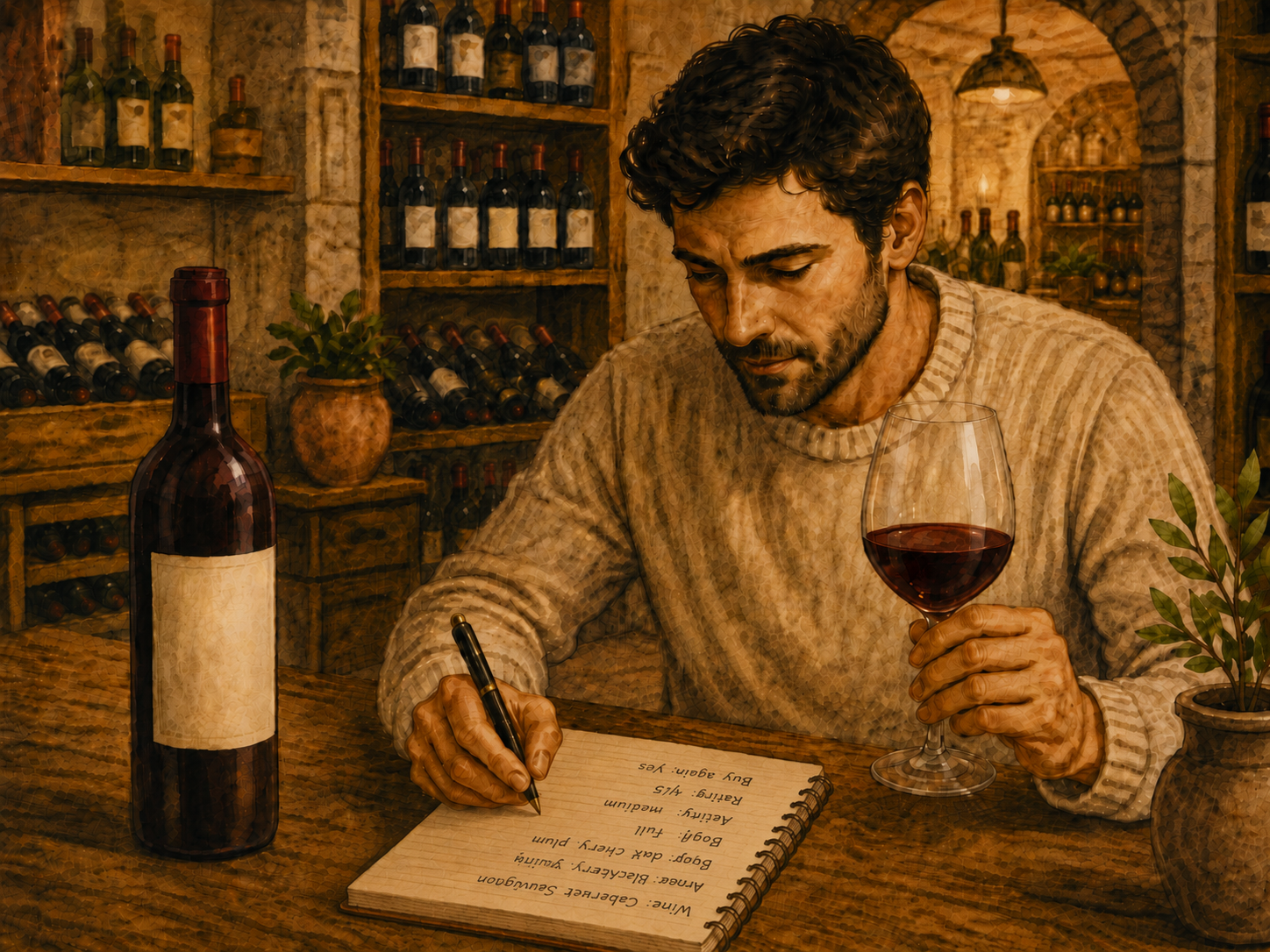
Taking wine notes sounds more serious than it needs to be. You do not need to write like a sommelier. You do not need to identify every aroma perfectly. And you definitely do not need to turn every glass of wine into homework. Good wine notes are simple. They help you remember what you drank, what it tasted like, and whether you would buy it again.
If you have ever stood in a wine aisle thinking, “I know I had a wine like this before, but I cannot remember what it was,” wine notes solve that problem. They give you a record of your own taste, not someone else’s opinion. This guide walks through exactly what to write down when you taste a bottle, especially if you are just getting started.
Why Taking Wine Notes Helps
Most people think they will remember a wine they liked. Then a few weeks later, they remember almost nothing. Maybe they remember it was red. Maybe it had a cool label. Maybe they bought it at a restaurant or picked it up from a certain store. But the actual details disappear quickly.
Wine notes help you keep track of the things that matter: The name of the bottle, the grape, where it came from, what it smelled like, what it tasted like, how it felt, and whether it is worth buying again.Over time, those notes become useful. You start seeing patterns. Maybe you keep liking crisp white wines. Maybe you enjoy bold reds but not ones with too much oak. Maybe you love fruity flavors but do not actually want sweet wine.
Wine notes help you learn your own preferences. If you want a more structured version, you can also use a Wine Tasting Notes Template as a guide while you taste. If you like writing things down by hand, download our free wine tasting note template and use it with your next bottle.
Basic Information First
Name
Start with the most obvious detail: the wine name. This is the part you will need later if you want to find the bottle again. Write down the producer, the bottle name, and the vintage if it has one.
For example:
Josh Cellars Cabernet Sauvignon 2022
Kim Crawford Sauvignon Blanc 2023
La Crema Sonoma Coast Chardonnay 2022
You do not need to overthink this. Just write enough detail that you could search for it, ask for it at a wine shop, or recognize it on a shelf. If the label is confusing, take a photo of the bottle. That alone can save you a lot of frustration later.
Varietal
Next, write down the grape or wine type. This might be Cabernet Sauvignon, Pinot Noir, Chardonnay, Sauvignon Blanc, Riesling, Malbec, Merlot, Rosé, Prosecco, Champagne, or a blend. This matters because the grape is one of the biggest clues about what style of wine you tend to enjoy. If you keep rating Sauvignon Blanc highly, that tells you something. If you keep disliking heavily oaked Chardonnay, that tells you something too. You do not need to know every grape variety. Just write down what the bottle gives you. If it says “red blend” and does not list the grapes, write “red blend.” That is still useful.
Region or Country
After the grape, write down where the wine is from. This could be broad, like California, France, Italy, Spain, Chile, Argentina, or New Zealand. Or it could be more specific, like Napa Valley, Sonoma, Willamette Valley, Bordeaux, Rioja, or Marlborough.
The region can affect the style of the wine. A Sauvignon Blanc from New Zealand may taste very different from one from California. A Pinot Noir from Oregon may feel different from one from Burgundy. You do not need to memorize regions right away. Just capture the information so you can notice patterns later.
Price and Where You Bought it
Write down what you paid for the bottle. This is one of the most practical parts of a wine note. A wine might be good, but was it good for $12? Was it worth $35? Would you buy it again at that price? Price gives your rating context. For example, a $14 bottle that you really enjoy might become a go-to weeknight wine. A $45 bottle that tastes just okay might not be worth repeating.
Add the wine shop, grocery store, restaurant, winery, or online retailer where you found the bottle. If you love the wine, you will want to know where to get it again. If you bought it at a restaurant, it may also help you remember the meal or occasion.
This can be simple:
Bought at Total Wine
Had at dinner downtown
Picked up from local wine shop
Tasted at winery
The more practical your notes are, the more likely you are to use them.
Color and Smell Next
Appearance is optional, but it can be helpful. Write down the color in plain language. For white wine, that might be pale yellow, golden, or straw-colored. For red wine, that might be ruby, purple, garnet, or deep red. For rosé, it might be pale pink, salmon, or bright pink.
You do not need to get technical. The goal is simply to notice the wine before smelling or tasting it. For beginners, appearance is usually less important than aroma, flavor, structure, and whether you liked the bottle. So keep this section short.
Aromas are what you smell before you taste the wine. This is where wine notes can feel intimidating, but they do not have to be. You are not trying to impress anyone. You are just writing down what the wine reminds you of.
Common aroma notes include:
Citrus
Apple
Pear
Peach
Cherry
Blackberry
Vanilla
Oak
Pepper
Herbs
Flowers
Butter
Earth
Leather
Tobacco
If you smell lemon, write lemon. If you smell cherry, write cherry. If you smell something but cannot name it, write that too. You can say, “smells fruity,” “smells fresh,” “smells spicy,” or “smells like vanilla.” That is a perfectly useful tasting note. If smelling wine feels confusing, read How to Smell Wine for a simple beginner approach.
Prefer not to keep track of paper notes? Start your free Somm Scribe wine journal and save every bottle, rating, flavor note, and “buy again” decision in one place.
Flavors and Structure
Flavors are what you notice when you actually taste the wine. Sometimes the flavors match the aromas. Sometimes they do not. A wine might smell like cherry but taste more like plum. A white wine might smell like citrus but taste more like green apple. Write down the main flavors you notice first.
For example:
Lemon, green apple, and grapefruit
Cherry, raspberry, and a little spice
Blackberry, vanilla, and oak
Peach, honey, and citrus
Dark fruit, pepper, and smoke
You do not need a long list. Two or three flavor notes are enough. If all you can write is “fruity,” “dry,” “smooth,” or “bold,” that is still a starting point. Your notes will get more specific the more you practice.
Body
Body describes how heavy or light the wine feels in your mouth. A light-bodied wine feels thin, crisp, or refreshing. A full-bodied wine feels heavier, richer, or more powerful. Medium-bodied wines sit somewhere in the middle. Think about milk as a comparison. Skim milk feels light. Whole milk feels richer. Cream feels heavy. Wine body works in a similar way.
Examples:
Light body: crisp, refreshing, easy to drink
Medium body: balanced, not too light or too heavy
Full body: rich, bold, powerful, mouth-filling
Body is especially helpful because it often connects directly to preference. Some people love light, fresh wines. Others want big, full-bodied wines.
Acidity
Acidity is what makes wine taste fresh, bright, tart, or crisp. If a wine makes your mouth water, it probably has noticeable acidity. Sauvignon Blanc, Riesling, Pinot Grigio, and many sparkling wines often have higher acidity. You can write this simply:
Low acidity
Medium acidity
High acidity
Or:
Fresh and crisp
Tart but refreshing
Too sharp for me
Flat and not very lively
Acidity is one of the most useful things to track because it affects how refreshing a wine feels and how well it pairs with food. If you want to understand how acidity compares with other major wine traits, read Acidity vs Tannin vs Alcohol.
Tannin
Tannin mostly matters in red wine. It is the dry, grippy feeling you get on your tongue, gums, or cheeks. Cabernet Sauvignon, Nebbiolo, Syrah, and some Malbecs can have noticeable tannin. Pinot Noir and Gamay usually have less. You can describe tannin in simple terms:
Low tannin
Medium tannin
High tannin
Smooth
Drying
Grippy
Rough
Firm
If a red wine makes your mouth feel dry, that is probably tannin. If it feels soft and easy to drink, the tannin may be lower or smoother. For beginners, tannin is worth tracking because it can make or break whether you enjoy a red wine.
Alcohol
Alcohol affects how warm, bold, or heavy a wine feels. You do not need to analyze it deeply. Just notice whether the wine feels balanced or whether the alcohol stands out. You might write:
Balanced
Warm finish
A little hot
Too strong for me
Smooth despite higher alcohol
Some bold reds can feel powerful because of higher alcohol. Some lighter wines feel easier to drink because the alcohol is lower. These three traits shape the structure of a wine more than most beginners realize.
Sweetness
Sweetness is how much sugar you perceive in the wine. A wine can be fruity without being sweet, so do not assume fruit flavor always means sugar. A dry wine can taste like ripe berries, peach, or tropical fruit and still have little to no noticeable sweetness. For notes, keep it simple:
Dry
Off-dry
Slightly sweet
Sweet
Very sweet
If you are unsure, write what it tastes like to you. Over time, you will get better at separating fruitiness from actual sweetness.
Your Final Thoughts
Finish
The finish is what you notice after swallowing or spitting the wine. Does the flavor disappear quickly? Does it linger? Does it end with fruit, oak, spice, bitterness, heat, or freshness? You can write:
Short finish
Medium finish
Long finish
Clean finish
Bitter finish
Warm finish
Fruity finish
Dry finish
You do not need to make this complicated. Just pay attention to what is left behind after the sip.
Rating
Add a simple rating so you can compare wines later. A 1 to 5 scale works well for beginners:
1 = Did not like it
2 = Not for me
3 = Fine or decent
4 = Really liked it
5 = Loved it
You can use a 10-point scale if you want more detail, but most people do not need that when starting out. The key is consistency. Your rating should reflect your personal enjoyment, not what you think a wine expert would say. A wine can be simple and still deserve a high rating if you enjoyed it and would buy it again.
Would You Buy It Again?
This might be the most important question in the entire note. At the end, write yes, no, or maybe. Then add one sentence explaining why. For example:
Yes — great value and easy to drink.
No — too oaky for me.
Maybe — good, but only with food.
Yes — perfect crisp white for summer.
No — too dry and bitter.
This turns your tasting note into something practical. The next time you are shopping, you are not starting from scratch. You already know what worked.
A Simple Wine Notes Example
Here is what a beginner-friendly wine note might look like:
Wine: Kim Crawford Sauvignon Blanc 2023
Grape: Sauvignon Blanc
Region: Marlborough, New Zealand
Price: $16
Bought at: Local wine shop
Appearance: Pale yellow
Aromas: Grapefruit, lime, green apple, fresh herbs
Flavors: Citrus, tart apple, tropical fruit
Body: Light
Acidity: High
Tannin: None
Alcohol: Balanced
Sweetness: Dry
Finish: Crisp and refreshing
Rating: 4 out of 5
Would buy again: Yes
That is a useful note. It is simple, but it gives you enough information to remember the wine and decide whether to buy it again.
What If You Do Not Know What to Write?
Start with what you notice. Do not force fake tasting notes. If you do not smell “wet stone,” “black currant,” or “forest floor,” do not write those things.
Write what is obvious to you:
This smells fruity.
This tastes sharp.
This feels smooth.
This is too bitter.
This is easy to drink.
This reminds me of lemon.
This tastes better with food.
Those are real notes. They are more useful than copying language from the back label. The more wines you taste, the more specific your notes will become.
The Best Wine Notes Are Personal
The best wine notes are not the longest or most technical. They are the ones that help you answer a simple question later: Did I like this wine, and would I buy it again? That is what matters.
You can always add more detail as you learn. But when you are starting out, focus on the basics: wine name, grape, region, price, aromas, flavors, body, acidity, tannin, alcohol, rating, and whether you would buy it again. That is enough to build a useful wine memory.
And over time, your notes will show you what your taste actually looks like.
Start Tracking the Wines You Actually Like
Want to remember which bottles are worth buying again? Start your free Somm Scribe wine journal and keep simple notes on every wine you taste.
