
How to Keep a Wine Journal Without Overthinking It
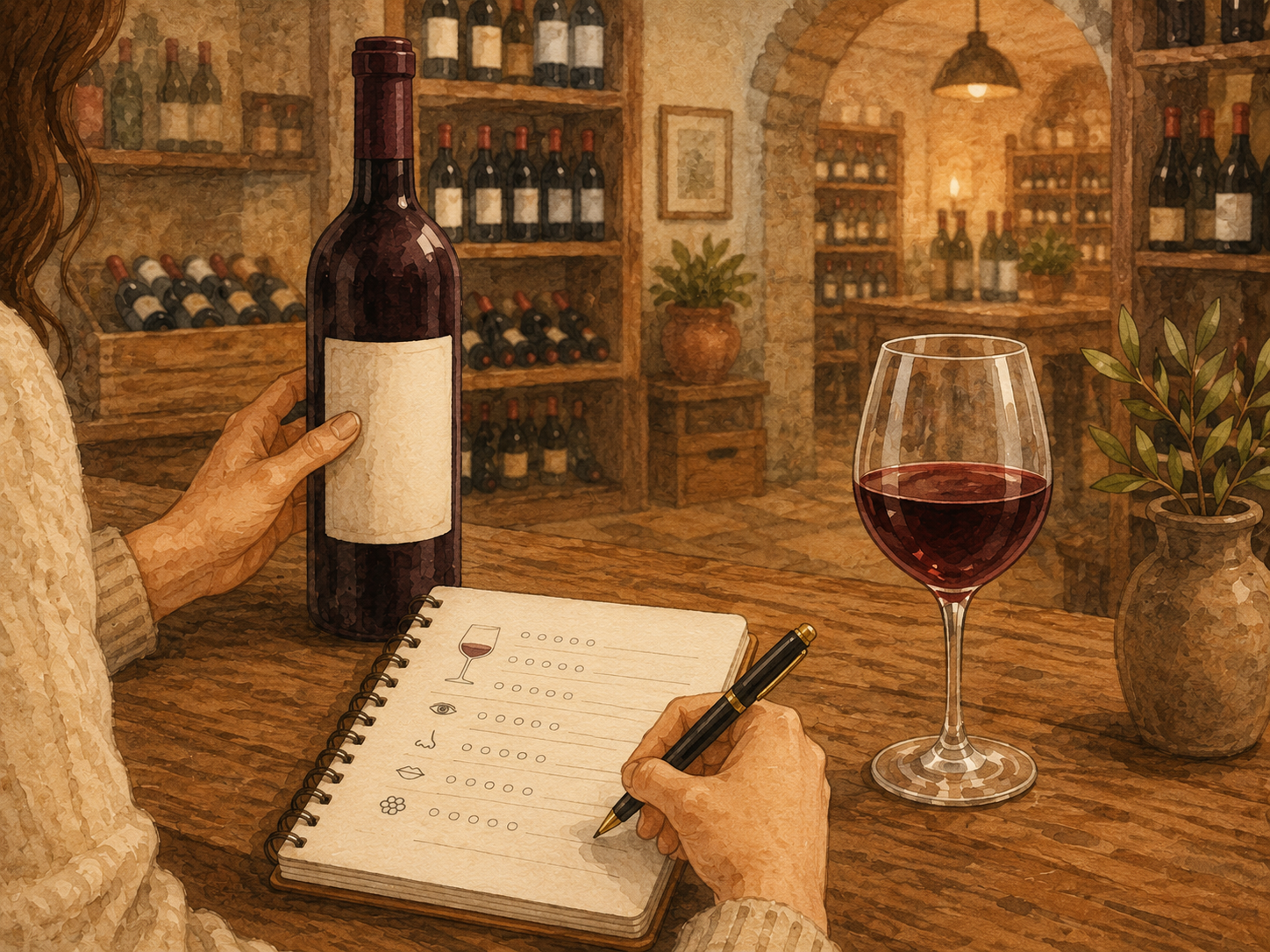
Keeping a wine journal sounds more formal than it actually needs to be. A lot of people hear “wine journal” and picture detailed tasting notes, technical terms, perfect descriptions, and a level of wine knowledge they do not have yet. That can make the whole thing feel intimidating before you even start.
But a wine journal does not have to be complicated. It does not need to sound professional. It does not need to include every aroma, flavor, region, grape, producer, vintage, and food pairing. At its simplest, a wine journal is just a way to remember what you drank, what you thought of it, and whether you would buy it again. If you have ever picked up a bottle and thought, “I had something like this before, but I cannot remember if I liked it,” then a wine journal is for you.
Want an easy place to save your own wine notes? Somm Scribe helps you track what you drink, what you notice, and whether you’d buy it again.
Why Wine Journaling Feels Harder Than It Is
Wine can feel intimidating because the language around it is often formal. People describe wine with words like tannic, structured, mineral, expressive, balanced, earthy, or age-worthy. Those words can be useful, but they are not required when you are just trying to figure out your own taste. The biggest mistake beginners make is thinking their wine notes have to sound like a sommelier wrote them. They do not. Your notes only need to be useful to you.
A simple note like “smooth red, not too heavy, would buy again” is better than a technical note you never write because you are worried about getting it wrong.The goal is not to judge the wine perfectly. The goal is to build a personal record of what you enjoy.
What to Write Down in a Wine Journal
You do not need to write a full review every time you drink wine. Start with the basics:
Wine name
Grape or style
Region, if you know it
Price
Where you bought it
What it tasted like to you
Whether you would buy it again
That is enough to make your wine journal useful. I If you want a little more structure, you can use a simple Wine Tasting Notes Template. A template gives you a repeatable format so you are not staring at a blank page wondering what to write A template gives you a repeatable format so you are not staring at a blank page wondering what to write. But even then, you do not need to fill out every field every time. Some wines may only need a quick sentence. Others may deserve more detail because you really liked them, really disliked them, or want to understand them better..
The best wine journal is the one you will actually use. If you prefer a pen and paper solution, we provided a free downloadable template to get you going.
Use Everyday Language
You do not have to describe wine in technical terms. Use words you would actually say. Instead of trying to write: “This wine displays moderate acidity, soft tannins, and notes of red cherry, baking spice, and forest floor.” You could write: “Light red wine. Smooth, a little fruity, not too dry. Easy to drink. I liked it.”
That is a good wine note. It tells you what matters. You can always learn more detailed wine language over time, but you do not need to start there. If you want examples of what simple notes can look like, check out these Wine Tasting Notes Examples. They can help you see that a tasting note does not need to be long or complicated to be useful.
Focus on the Questions That Matter Most
When you are new to wine journaling, do not try to capture everything. Focus on a few questions:
Did I like this wine?
Would I buy it again?
What did it remind me of?
Was it light, crisp, smooth, rich, bold, dry, sweet, fruity, or oaky?
What would I drink this with?
Those questions are more useful than forcing yourself to identify five aromas or guess the exact grape. A wine journal should help you make better buying decisions. If your notes help you avoid bottles you did not enjoy and find more bottles you do enjoy, then it is working.
Keep Notes Short
A good wine journal entry can be one sentence. Here are a few examples:
“Crisp white wine, citrusy and refreshing. Good for summer.”
“Too oaky for me. Not bad, but I would not buy it again.”
“Smooth red, medium body, easy to drink with dinner.”
“Loved this one. Fruity but still dry. Buy again.”
“Good wine, but too bold for what I usually like.”
Those notes are not fancy, but they are clear. The shorter your notes are, the more likely you are to keep the habit going. You can always add more detail later if you feel like it.
Do Not Worry About Being Right
Wine tasting is personal. Two people can drink the same wine and notice different things. One person may taste cherry. Another may taste raspberry. Someone else may just say it tastes fruity. That does not mean anyone is wrong. Your wine journal is not a test. You are not trying to prove that you know wine. You are trying to understand your own preferences.
If a wine tastes sweet to you, write that down. If it tastes dry, write that down. If it tastes “kind of sharp” or “too heavy,” write that down too. Your words matter more than perfect wine vocabulary. Over time, your notes will become more specific because you will start noticing patterns.
Look for Patterns Over Time
The real value of a wine journal comes after you have logged several wines. One note is helpful. Ten notes are much more useful. You may start to notice that you usually like Sauvignon Blanc, Pinot Noir, dry rosé, or Spanish reds. You may realize you prefer crisp wines over rich wines, or smooth reds over bold reds. You may find that you do not like heavy oak, high alcohol, or very tannic wines.
That is when wine journaling becomes powerful. Instead of buying random bottles and hoping for the best, you can start building a go-to wine rotation. This is a short list of reliable wines or styles you know you enjoy, so choosing a bottle gets easier. Your journal becomes a shortcut. It helps you remember what worked, what did not, and what is worth trying next.
Take a Photo of the Bottle
One of the easiest ways to keep a wine journal is to take a photo of the bottle. You do not need to manually type every detail if you do not want to. A photo helps you remember the label, producer, vintage, and design. Then you can add a quick note about whether you liked it. For example: “Loved this. Crisp, citrusy, not too sweet. Buy again.” Photos are especially helpful because wine labels can be hard to remember. You may recognize the bottle later even if you forget the name.
Rate Wines in a Way That Makes Sense to You
You do not need a complicated rating system. A simple 1 to 5 scale works well:
1 = Did not like it
2 = Not for me
3 = Good enough
4 = Really liked it
5 = Loved it
You can also skip numbers entirely and use simple labels:
Would buy again
Maybe
Would not buy again
For beginners, “would I buy this again?” is often more useful than a score. A wine could be technically good and still not be something you want to drink again. Your journal should reflect your taste, not someone else’s opinion.
Do Not Journal Every Wine Perfectly
You do not have to write a complete note every time you drink wine. Some wines only need a quick entry. Some do not need one at all. The habit should feel helpful, not like homework. A realistic approach is to journal wines when:
You bought a new bottle
You really liked something
You really disliked something
You want to remember a restaurant wine
You are trying to compare similar styles
You are building your go-to list
This keeps wine journaling practical and low-pressure. You can use Somm Scribe to track your wines and start spotting the styles you come back to most.
Start With “Like” and “Dislike”
If you are not sure what to write, start with what you liked or disliked. That might sound too simple, but it is actually the foundation of learning wine. You could write:
“I liked that it was smooth.”
“I liked the fruitiness.”
“I did not like how bitter it tasted.”
“I liked that it was refreshing.”
“I did not like the strong oak flavor.”
“I liked that it was not too sweet.”
These small reactions help you build a personal wine vocabulary. Eventually, you will start connecting those reactions to specific wine traits. You may learn that “refreshing” often means higher acidity. You may learn that “bitter” could be tannin. You may learn that “warm” or “strong” may be alcohol. But you do not need to know all of that on day one. Just start with what you notice.
Compare Similar Wines
One of the easiest ways to learn from your journal is to compare similar wines. Try two Sauvignon Blancs from different regions. Try a Pinot Noir and a Cabernet Sauvignon. Try an unoaked Chardonnay next to a richer, oaked Chardonnay. Try a dry Riesling next to a sweeter Riesling. You do not have to make it formal. Just write what stood out.
Which one tasted fresher?
Which one felt smoother?
Which one was easier to drink?
Which one would you buy again?
Comparing wines makes your preferences easier to spot. It also helps you figure out what wine you like without relying only on labels, ratings, or recommendations.
Keep It Honest
Your wine journal is for you, so be honest. You do not have to like famous wines. You do not have to dislike inexpensive wines. You do not have to pretend to enjoy something just because it is considered “good.” If you like a $12 bottle more than a $45 bottle, write that down. If a popular wine tastes too heavy, too sweet, too dry, or too sharp to you, write that down too. The point is not to develop the “correct” taste. The point is to understand your taste. That is what makes wine less intimidating.
A Simple Wine Journal Entry Formula
If you want an easy formula, use this:
I drank [wine name or style]. It tasted [simple description]. I [liked it / did not like it / might buy it again] because [reason].
Here are a few examples:
“I drank a Sauvignon Blanc from New Zealand. It tasted crisp, citrusy, and refreshing. I liked it because it was easy to drink and not too sweet.”
“I drank a Cabernet Sauvignon from California. It tasted bold, dry, and a little oaky. I liked it with steak, but probably would not drink it on its own.”
“I drank a Pinot Noir from Oregon. It tasted light, smooth, and fruity. I would buy it again because it was easy to drink with dinner.”
“I drank a Chardonnay. It tasted creamy and buttery. It was okay, but I prefer fresher white wines.”
The Bottom Line
Keeping a wine journal does not have to be formal, technical, or time-consuming. You do not need perfect tasting notes. You do not need fancy wine vocabulary. You do not need to write a full review every time you open a bottle. Just start small. Write down the wine, a few words about how it tasted, and whether you would buy it again.
Over time, those simple notes will help you understand your preferences, avoid wines you do not enjoy, and build more confidence when choosing your next bottle. The best wine journal is not the most detailed one. It is the one you actually keep. Ready to make wine easier to remember? Start your free Somm Scribe wine journal and keep simple notes on every bottle you try.
