
Printable Wine Tasting Sheet vs Digital Wine Journal: Which One Should You Use?
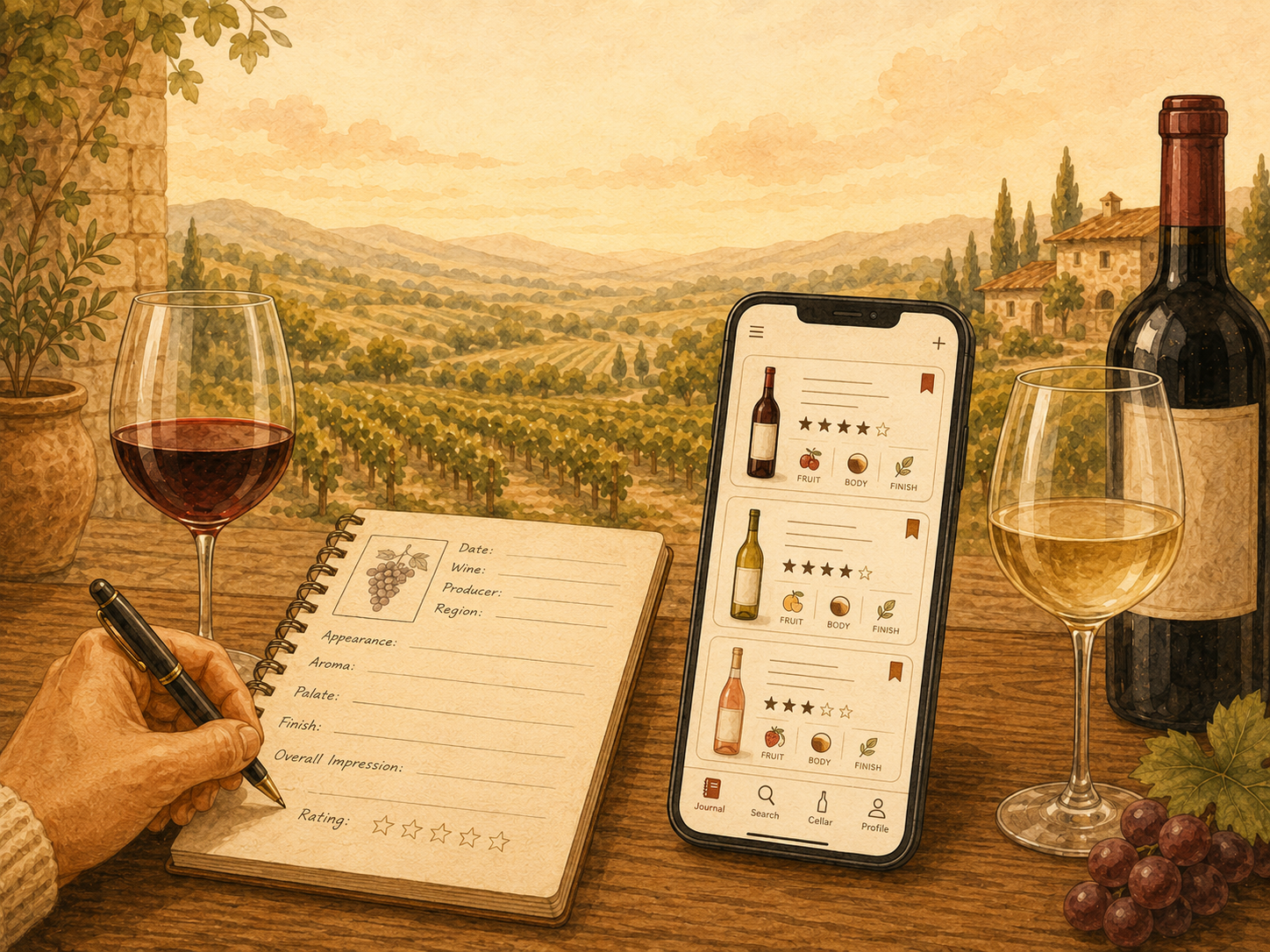
If you are trying to get better at wine, writing things down is one of the simplest habits you can build. You do not need to be a sommelier. You do not need perfect tasting notes. You just need a way to remember what you drank, what you noticed, and whether you would buy it again. That usually leads to one question: should you use a printable wine tasting sheet or a digital wine journal?
The honest answer is that both can work. A printable tasting sheet is simple, low-pressure, and easy to use at the table. A digital wine journal is better for remembering bottles, searching past wines, tracking preferences, and spotting patterns over time. If you are just getting started, a printable wine tasting sheet can be a great first step. But if your goal is to actually learn your taste and stop forgetting wines you liked, a digital wine journal is usually the better long-term tool.
Want to start with paper? Download the free wine tasting sheet.
Use this simple printable template to write down the wine name, aromas, flavors, rating, and whether you’d buy it again.
What Is a Printable Wine Tasting Sheet?
A printable wine tasting sheet is a paper form you use to record notes about a bottle of wine. It usually includes fields for the wine name, grape, region, vintage, aromas, flavors, body, acidity, tannin, rating, and whether you would buy it again. The biggest benefit is simplicity. You print it out, pour a glass, and write down what you notice.
If you are new to tasting notes, this can make the process feel less intimidating because the sheet tells you what to pay attention to. Instead of staring at a blank page, you have prompts that guide you through the wine. A good printable sheet is especially useful if you are hosting a tasting night, comparing a few bottles side by side, or learning the basic structure of a tasting note. If you want a simple starting point, the Wine Tasting Notes Template is a helpful guide because it breaks down the main sections beginners should track.
What Is a Digital Wine Journal?
A digital wine journal is an app or online tool that helps you save tasting notes on your phone, tablet, or computer. Instead of filling out a paper sheet, you log the bottle digitally and can return to it later. The main advantage is that your notes become searchable and organized. You can look up wines by name, grape, region, rating, price, purchase location, or whether you would buy them again.
That matters because wine memory fades quickly. You might remember that you liked a Cabernet last month, but not the producer, region, price, or where you bought it. A digital journal gives you a better chance of finding that bottle again. A digital wine journal is also better for seeing patterns. Over time, you may notice that you often enjoy crisp white wines, lighter reds, Washington Cabernet, Oregon Pinot Noir, or bottles under a certain price point. Those patterns are hard to see when your notes are scattered across paper sheets, notebooks, photos, and random phone notes.
Printable Wine Tasting Sheets Are Great for Getting Started
Printable sheets are useful because they remove friction. You do not have to download anything, create an account, or learn a new system. You can print a few pages and start immediately. They also work well when you want a slower, more intentional tasting experience. Writing by hand can make you pause and think about what you are smelling and tasting. For beginners, that can be valuable.
A printable sheet can also make wine tasting feel more approachable. The prompts help you focus on the basics: what the wine looks like, what it smells like, what it tastes like, how it feels, and whether you liked it. If you are still learning what to write, start with simple observations. You do not need fancy wine vocabulary. Write things like “smells like cherry,” “tastes tart,” “feels smooth,” “too dry for me,” or “would buy again.” The goal is not to impress anyone. The goal is to create a useful record for yourself. For a deeper breakdown of what belongs in a note, read Wine Notes: What to Write Down When You Taste a Bottle. It explains the practical details that are actually worth recording.
Where Printable Sheets Start to Fall Short
The biggest downside of printable wine tasting sheets is that they are easy to lose and hard to search. A single sheet works fine in the moment. But after you taste 10, 20, or 50 wines, paper becomes harder to manage. You might have notes in a binder, on loose pages, in a drawer, or mixed with other paperwork. Even if you keep them organized, finding one specific bottle later can be annoying.
Printable sheets also make it harder to compare wines over time. You can flip through pages manually, but you cannot quickly filter by grape, rating, price, region, or “would buy again.” That becomes a problem when you are standing in a wine shop trying to remember what you liked last time. You do not want to dig through a folder of tasting sheets. You want the answer in seconds. Paper also does not help much with pattern recognition. You might have all the information written down, but unless you regularly review your notes, the patterns stay hidden.
Digital Wine Journals Are Better for Remembering Wine
The biggest reason to use a digital wine journal is memory. Most people forget wine details quickly. You may remember that a bottle was “really good,” but not the producer, vintage, grape, store, price, or why you liked it. That makes it hard to buy the wine again or find similar bottles. A digital journal solves this by keeping your notes in one place. You can save the bottle name, varietal, region, rating, price, purchase location, food pairing, photo, and personal reaction. Later, you can search instead of guessing.
This is where a tool like Somm Scribe becomes more useful than a printable tasting sheet. It is not just about writing a note. It is about building a personal wine memory system. The more wines you log, the more useful your journal becomes. You start to build a record of what you actually like, not what you think you are supposed to like.
Ready for a wine journal you can actually search later?
Somm Scribe helps you save your tasting notes, remember bottles you liked, and spot patterns in your wine preferences over time.
Digital Wine Journals Make Searching Easier
Search is one of the clearest advantages of digital tracking. With a printable sheet, you have to remember where the note is. With a digital journal, you can search for the bottle, grape, region, tag, rating, or other details.
That matters in real life. For example, you might want to find:
The red wine you liked at dinner last month.
The Sauvignon Blanc you bought from a specific store.
The under-$25 bottle you rated highly.
The Pinot Noir you wanted to buy again.
The wines you marked as good for summer.
The bottles that paired well with steak, pasta, seafood, or pizza.
This is where paper starts to feel limited. It can capture information, but it does not make that information easy to reuse. A digital journal turns your notes into something practical. You are not just recording wine for the sake of recording wine. You are creating a tool that helps you make better buying decisions.
Digital Wine Journals Help You Spot Patterns
One of the best parts of keeping wine notes is learning your preferences over time. At first, your notes may feel random. You liked one red wine, disliked another, enjoyed a crisp white, and felt unsure about a bold bottle. But once you track enough wines, patterns start to show up. You may notice that you tend to like wines with higher acidity. Or that you prefer medium-bodied reds over big, heavy reds. Or that you keep rating Italian reds higher than California reds. Or that you love Sauvignon Blanc from New Zealand but not every Sauvignon Blanc in general.
These patterns are hard to see from memory alone. A printable sheet can help you record individual bottles, but a digital journal makes it easier to organize those notes and review them later. That is the difference between collecting notes and actually learning from them. This is also where Somm Scribe fits naturally. The goal is not just to store tasting notes. The goal is to help you understand your taste so you can build confidence buying wine.
Printable Sheets Are Better for Tastings and One-Off Events
Printable wine tasting sheets still have a place. They work especially well for wine tasting parties, classes, date nights, or side-by-side comparisons. If you are tasting four wines with friends, paper sheets can be fun and easy. Everyone can write notes without needing to download an app.
They also help when you want to slow down. There is something useful about writing by hand and paying closer attention to what is in the glass. So this is not about saying printable sheets are bad. They are not. They are a good beginner tool, especially when you are learning how to structure a note. But they are not the best long-term system if you want to remember your wines, search past bottles, and understand your preferences.
Digital Wine Journals Are Better for Long-Term Tracking
If you only taste wine occasionally, a printable sheet may be enough. But if you are starting to buy wine more often, try new bottles, visit wine shops, or build a personal go-to list, digital tracking becomes much more valuable.
A digital journal helps you answer questions like:
What wines do I actually buy again?
What grapes do I rate highest?
Which regions do I keep enjoying?
What price range gives me the best value?
Which bottles disappointed me?
What should I bring to dinner?
What should I keep stocked at home?
That last question is important. Over time, your notes can help you build a reliable wine rotation. Instead of buying random bottles every time, you can keep a short list of wines you trust for weeknight dinners, hosting, gifts, summer nights, holidays, or special occasions. If that sounds useful, read How to Build a Go-To Wine Rotation. It explains how to turn your favorite bottles into a practical list you can rely on.
Which One Should Beginners Use?
If you are brand new to wine notes, start with whatever feels easiest. If a printable sheet helps you get started, use one. The most important thing is building the habit of noticing and recording what matters. You can always move to a digital journal later. But if you already know that you want to remember bottles, search your notes, and keep everything organized, start digitally from the beginning. You will save yourself the work of trying to transfer paper notes later.
A good beginner approach is to keep your notes simple. Do not try to write a professional tasting note. Just capture the basics:
Wine name.
Grape or style.
Region.
Aromas.
Flavors.
Body.
Acidity.
Tannin.
Rating.
Would you buy it again?
Any food pairing or occasion.
That is enough to make your notes useful. If you tend to overthink tasting notes, read How to Keep a Wine Journal Without Overthinking It. The main idea is that your wine journal should help you, not make wine feel like homework.
The Best Option: Use Printable Sheets to Learn, Then Go Digital
A printable wine tasting sheet is a great learning tool. It teaches you what to look for and gives you a simple structure. But once you understand the basics, a digital wine journal gives you more long-term value. Think of the printable sheet as training wheels. It helps you learn the parts of a tasting note. But the digital journal is what helps you remember, search, compare, and improve over time. That is especially true if you want wine to feel less random. The goal is not just to say, “I liked this bottle.” The goal is to understand why you liked it and how to find more wines like it.
Why Somm Scribe Works Better Than a Printable Sheet
Somm Scribe is built for people who want to get better at wine without making it complicated. A printable sheet can help you record a single tasting. Somm Scribe helps you build a personal wine history. Instead of losing paper notes or forgetting bottles, you can keep your wines organized in one place. You can record what you tasted, what you noticed, what you liked, and whether you would buy it again. Over time, that gives you a clearer picture of your preferences.
The real value is not just saving notes. It is being able to use them later. When you are at a wine shop, planning dinner, buying a gift, or trying to remember a bottle from last month, your journal becomes useful. You can look back at what worked, avoid what did not, and make better choices without starting from scratch every time. That is hard to do with a stack of printable tasting sheets.
Final Sip
Printable wine tasting sheets are helpful, especially when you are just starting out. They are simple, approachable, and great for learning what to write down. But if you want your notes to become more useful over time, a digital wine journal is the better choice. It helps you remember bottles, search your history, track what you like, and spot patterns that would be easy to miss on paper.
Start simple. Write down what you taste, what you like, and whether you would buy the wine again. Then give yourself a system that helps those notes actually work for you. If your goal is to stop forgetting good bottles and start understanding your taste, Somm Scribe is built for that.
Start simple. Keep better wine notes.
Download the printable tasting sheet if you want a quick paper option, or start tracking digitally with Somm Scribe when you’re ready to remember, search, and build your personal wine history.
