
Acidity vs Tannin vs Alcohol: How Wine Structure Really Works
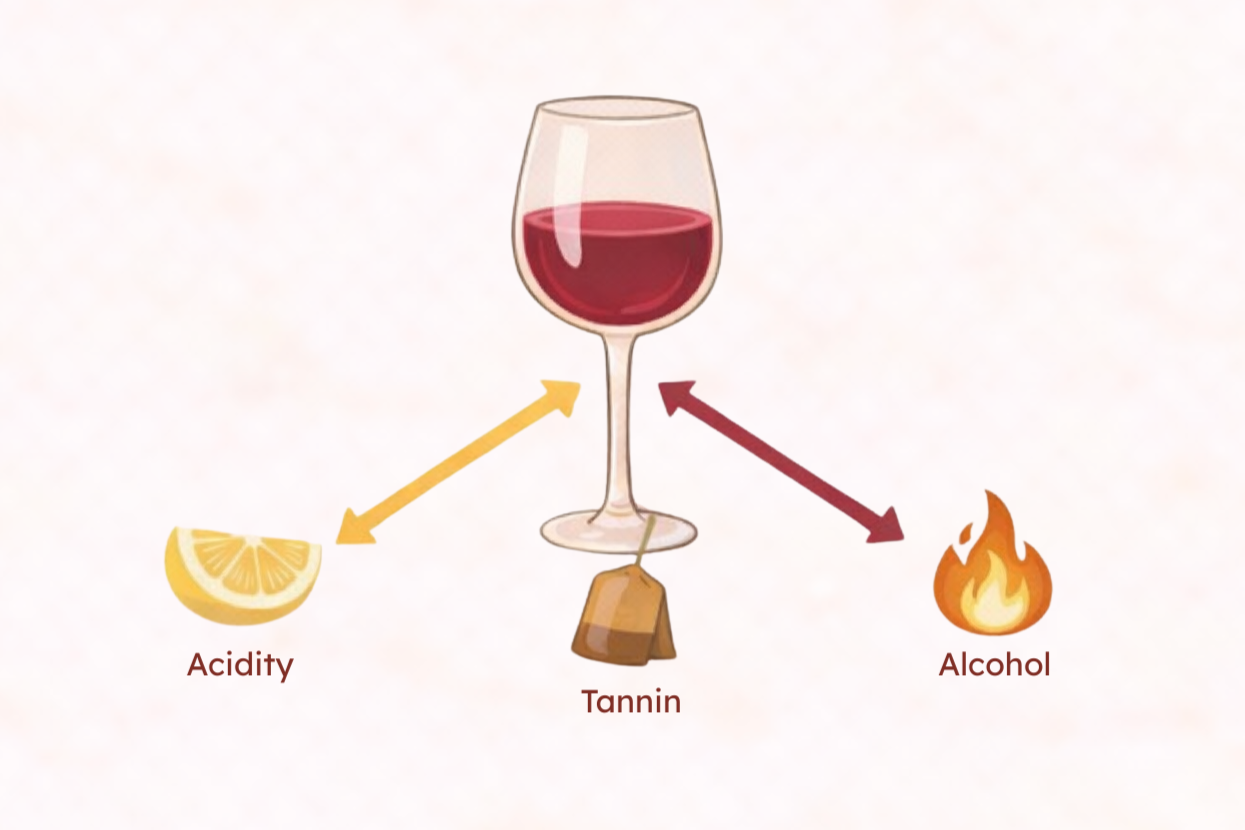
Wine “structure” can sound like a sommelier-only word. But it’s really just the set of physical sensations that hold a wine together—what makes it feel crisp or plush, light or powerful, refreshing or mouth-drying. If flavor is what you taste (cherry, lemon, vanilla), structure is how the wine behaves in your mouth. And the three big pillars of structure (acidity, tannin, and alcohol) are the easiest way to understand why one red feels silky and another feels grippy, or why one white feels zippy while another feels broad and warm.
Trying to figure out what wines you actually like? Somm Scribe helps you save tasting notes, track patterns, and remember bottles worth buying again.
Wine structure is the “feel,” not the flavor
A quick mental model: structure is the frame, flavor is the painting. Two wines can taste like “red berries,” but feel completely different. One might feel bright and refreshing because of higher acidity, another drying and firm because of more tannin, and another warming and weighty because of higher alcohol. Structure is also what makes wine pair well with food, because it interacts directly with fat, salt, acid, protein, and heat often more than flavor notes do.
Acidity: the “lift” that keeps wine refreshing
Acidity is what makes your mouth water. It’s the same physical reaction you get from biting into a lemon wedge or sipping tart lemonade.
What acidity feels like:
Juicy, crisp, zippy, refreshing
A “snap” along the sides of your tongue
A clean, thirst-quenching finish
What acidity does in wine
Keeps flavors bright instead of flat
Makes wine feel lighter and more energetic
Helps wine pair with rich or creamy foods by cutting through fat
A simple home test: after a sip, notice whether you salivate more. That physical response is acidity doing its job. Common misconception: acidity isn’t sourness in the same way citrus juice is sour. In balanced wine, acidity reads as freshness and lift not harshness.
Tannin: the “grip” and shape (mostly in reds)
Tannin is the drying, slightly rough sensation that can make your gums feel squeaky similar to very strong black tea or the skin of a walnut. Tannin comes primarily from grape skins and seeds (especially in red wines), though oak aging can also add a tannin-like structure.
What tannin feels like
Drying, chalky, grippy
Firmer “edges” around the fruit
A longer, more structured finish
What tannin does in wine
Gives red wine its backbone
Helps wines age over time
Pairs well with protein and fat (like steak or hard cheeses), which soften the grip
A simple home test: take a sip of a tannic red, then rub your tongue across your front teeth. If they feel less slippery than before, you’re feeling tannin. Common misconception: “tannic” doesn’t mean strong or high-alcohol. It specifically means mouth-drying structure.
Alcohol: the “weight” and warmth
Alcohol is the least talked-about part of wine structure, but once you know what to look for, it’s easy to feel.
What alcohol feels like
Warmth in the throat or chest
A fuller, heavier body
Sometimes a faintly sweet impression, even in dry wine
What alcohol does in wine
Adds body and richness
Carries aromas and intensity
Can make a wine feel “hot” if it’s out of balance
A simple home test is to focus on the finish. If the aftertaste feels warming like a soft glow, alcohol is integrated. If it feels burny compared to the fruit and acidity, alcohol may be sticking out. Common misconception: high alcohol isn’t automatically bad. In many styles, it’s part of the intended shape—especially when balanced by acidity, tannin, and fruit concentration.
Once you start noticing acidity, tannin, and alcohol, you can track which structures you actually enjoy instead of guessing every time you buy wine.
How structure works together: balance is the point
A wine feels balanced when none of the three pillars dominates.
Think of structure like a three-legged stool:
Acidity keeps the wine lively
Tannin gives it form and grip
Alcohol gives it weight and warmth
If one leg is too long, the stool wobbles.
When structure is out of balance, people often describe wines as:
Flabby or flat: low acidity makes the wine feel heavy and dull
Astringent or harsh: tannin dominates and dries out the palate
Hot: alcohol overwhelms fruit and freshness
These aren’t flavor problems—they’re structure problems.
Real-world examples you can picture when buying wine
Instead of memorizing grapes, it helps to think about how structure typically shows up. If you want something crisp and refreshing, wines known for higher acidity (like many cool-climate whites or dry sparkling wines) tend to feel bright and lift food. If you’re after smooth, easygoing reds, lower-tannin styles or wines described as soft and supple will feel less drying. And if you want something bold, warming, and plush, riper-climate reds and richer styles often bring more alcohol weight and intensity. Your palate is still the best guide. Two wines made from the same grape can feel completely different depending on climate, ripeness, and winemaking choices.
How to taste structure in 30 seconds
Next time you taste a wine, run through this quick check:
First impression: Do you salivate? (Acidity)
Mid-palate: Does it feel drying or grippy? (Tannin)
Finish: Do you feel warmth and weight? (Alcohol)
That’s it. You’re reading structure like a pro—no flashcards required.
Why structure matters more than tasting notes
Tasting notes can be fun, but structure is what helps you order confidently at restaurants, pair wine with food without overthinking, and buy more intelligently based on how you want the wine to feel. If you’ve ever said “I like wines that are smooth” or “I don’t like anything too sharp,” you were already talking about structure, you just didn’t need the vocabulary yet.
A practical way to use this with Somm Scribe
If you’re using Somm Scribe to learn wine without getting overwhelmed, structure is one of the most useful shortcut frameworks to lean on. Instead of chasing perfect flavor descriptions, you can focus on how you want the wine to feel—bright, grippy, or warming—and let that guide your next bottle or restaurant pick.
Once you start noticing acidity, tannin, and alcohol, you can track which structures you actually enjoy instead of guessing every time you buy wine.
