
What Balance in Wine Means: And How to Taste It
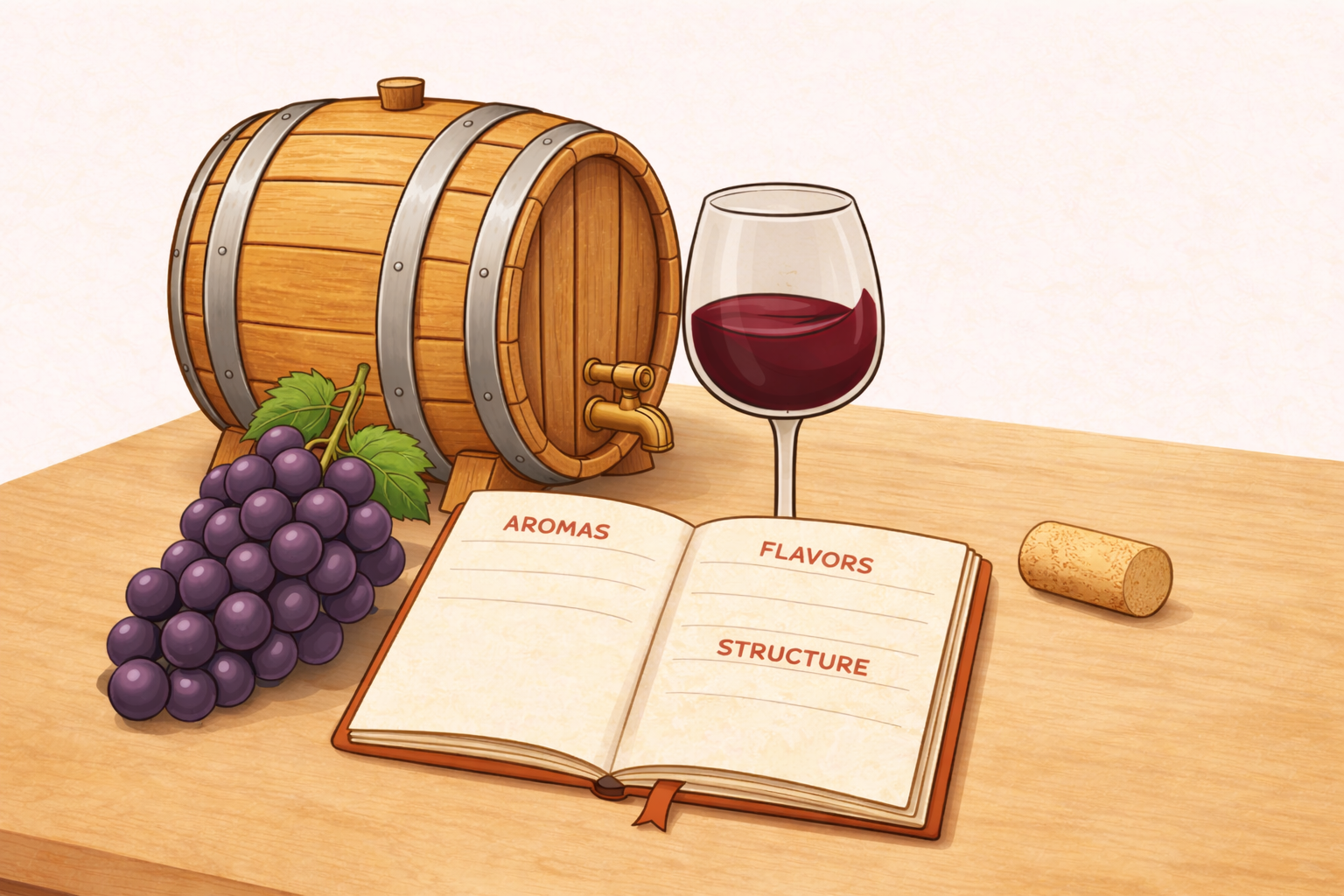
“Balanced” is one of those wine words that sounds fancy… until you realize it’s basically the same idea as balanced food. A good taco isn’t “all lime.” A good curry isn’t “all heat.” A good cookie isn’t “all sugar.” Balanced wine works the same way: no single element dominates the whole experience. That’s it. That’s the secret. But to actually taste balance (instead of just nodding along), you need to know what elements are competing for the spotlight.
The 5 things that usually throw a wine out of balance
Most wines feel “off” for one (or more) of these reasons:
1. Acidity
This is the “lift” in wine. It makes wine feel fresh, mouthwatering, crisp.Too much: sharp, sour, “squeezed lemon” energy. Too little: flat, heavy, kind of sleepy.
2. Tannin (mostly in reds)
This is grip/dryness—like strong black tea drying your gums. Too much: sandpapery, aggressive, bitter. Too little (for the style): can feel watery or overly sweet-fruited.
3. Alcohol
Alcohol adds weight and warmth. Too much: hot, burning, “boozy,” spicy in the throat. Too little (for the style): can feel thin or underpowered.
4. Fruit and sweetness
Fruit flavor isn’t the same as sweetness, but they often travel together in your brain. Too much fruit/sweetness: jammy, syrupy, “grape juice-ish.” Too little fruit (for the style): sour, austere, hollow.
5. Oak (when it’s there)
Oak can add vanilla, toast, smoke, and extra structure. Too much: wood shop, marshmallow, bitter char. Too little isn’t usually a problem—it just means a cleaner style.
Balance is when these elements support each other instead of fighting.
What balance actually feels like in your mouth
A balanced wine usually has this vibe:
You can name 1–2 obvious traits (crisp, smooth, juicy, structured)… but nothing feels like it’s yelling.
The wine feels complete from first sip to finish.
When you swallow, you don’t immediately think “ugh, too ___.” You think “yeah… that works.”
Unbalanced wine is louder:
Too sharp: acidity sticks out and everything else feels thin.
Too hot: alcohol warms your throat and covers the flavors.
Too drying: tannins scrape your mouth and the fruit can’t keep up.
Too sweet/jammy: fruit feels heavy and the wine loses definition.
If you’ve read our structure post, this is the next step: structure explains the parts; balance explains whether the parts fit together. (If you haven’t yet, start here: Acidity vs Tannin vs Alcohol: How Wine Structure Really Works.)
How to taste balance in 60 seconds (a simple method)
You don’t need a tasting grid. Use this quick sequence:
Step 1: Take a normal sip, then pause.
Don’t analyze during the sip. Just get the first impression.
Step 2: Ask one question: “What’s the loudest thing?”
Not “what flavors do I get?” Just: what dominates the sensation? Examples:
“This is super mouthwatering” → acidity loud
“My gums feel dry” → tannin loud
“I feel warmth in my throat” → alcohol loud
“This tastes kind of sweet/jammy” → fruit/sweetness loud
“I taste vanilla/toast more than fruit” → oak loud
Step 3: Ask the follow-up: ”Does anything push back?”
This is the balance test.
If acidity is loud, do you also have fruit weight to carry it?
If tannin is loud, do you also have enough fruit to keep it from feeling bitter?
If alcohol is loud, do you also have enough acidity/structure to keep it from feeling hot?
If fruit is loud, do you also have acidity or tannin to keep it from feeling syrupy?
Balance is basically tension + support.
The easiest “practice drill” (and it actually works)
Do this once and your palate levels up. Pour two wines side by side:
one that’s lighter and higher-acid (Sauvignon Blanc, Pinot Grigio, dry Riesling, Pinot Noir)
one that’s richer and softer (Chardonnay, Grenache, Malbec, many big Cab blends)
Taste them back-to-back and ask:
Which one feels more “put together”?
Which one has a part that sticks out?
You’ll start noticing stuff like:
“This one is tasty but feels kind of hot.”
“This one is bright but feels a bit thin.”
“This one is drying but the fruit catches it.”
That’s you tasting balance.
Does a “balanced” wine mean you’ll like it?
Not always.
Balance is about harmony, not personal preference. A wine can be technically balanced and still not match your taste. You might love sharp, zippy, high-acid wines even if they feel a little edgy. Or you might gravitate toward plush, rich wines that are a bit soft around the edges.
Balance doesn’t mean “the best wine.” It simply means nothing feels out of place. It’s the wine where all the parts work together and nothing feels broken, even if your palate prefers something louder, brighter, or bolder.
How aging connects to balance (the simple version)
Many wines feel a little disjointed when they’re young. The tannins can seem grippy, the oak can sit on top of the fruit, or the acidity can feel sharp. It’s not necessarily a flaw, the parts just haven’t settled into each other yet.
With time, those elements can integrate. Tannins soften, oak blends more smoothly into the fruit, and acidity feels less piercing and more supportive. Instead of tasting separate pieces, the wine starts to feel cohesive and complete. That’s why some wines become more balanced as they age—but only if they had enough structure to begin with. Aging doesn’t fix a weak foundation; it refines a strong one. (We break this down further in Does Wine Get Better With Age?)
A buying shortcut: how to spot balance without overthinking
If you’re scanning shelves and want better odds:
Avoid labels that scream one trait: “ULTRA SMOOTH!” “MEGA BOLD!” “SUPER SWEET!”
Look for style cues like fresh, bright, medium-bodied, elegant, balanced (when used modestly)
If the alcohol is very high (say, 15%+), expect warmth unless it’s a style built to carry it
And honestly. the best shortcut is tracking what you liked and why. That’s how your palate gets consistent.
The one sentence definition to remember
Balance is when acidity, tannin, alcohol, fruit, and oak feel proportionate—so nothing sticks out and the wine feels complete.
That’s the whole game.
