
Why Some Wines Feel Smooth and Others Feel Sharp
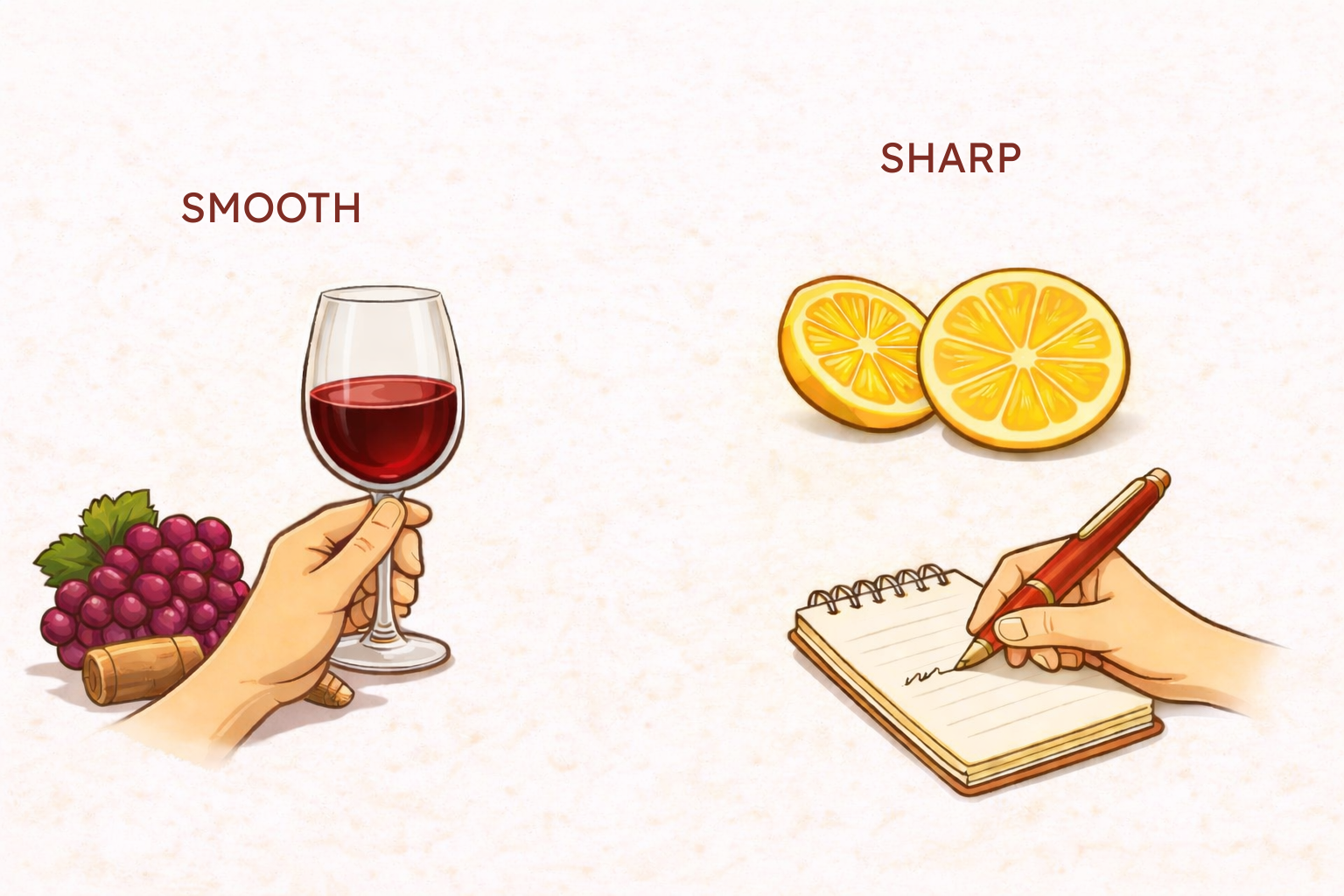
Most people don’t describe wine in technical terms. They don’t say, “The tannin structure is assertive.” They say, “This is really smooth,” or “That one’s kind of sharp.” And that’s not wrong. It’s honest. Those words are your brain’s shortcut for describing physical sensations. Before you ever identify cherry, vanilla, or citrus, your mouth has already decided whether the wine feels comfortable or intense. “Smooth” usually means rounded and easy. “Sharp” usually means bright, pointed, or edgy. Neither word is technical, but both are useful.
The goal isn’t to replace those instincts with fancy vocabulary. It’s to understand what’s creating those sensations so you can predict them before you buy the bottle. Once you know why a wine feels smooth or sharp, you’re not guessing anymore — you’re choosing.
What “Sharp” Usually Means
So what actually creates that sharp feeling? Most of the time, it comes down to acidity. Acidity is what makes your mouth water. It gives wine lift, freshness, and energy. When it’s working in harmony with fruit and body, it makes a wine feel lively. But when acidity stands out more than the rest of the structure can support, the wine can feel tart, lean, or angular.
Sharp doesn’t mean bad. In fact, many of the most refreshing, food-friendly wines are high in acidity. Sauvignon Blanc, dry Riesling, Pinot Grigio, and cooler-climate Pinot Noir often lean this way. If you’ve read Acidity vs Tannin vs Alcohol: How Wine Structure Really Works, this is simply acidity taking the lead in the overall structure. The key question isn’t “Is this acidic?” It’s “Does the acidity feel supported?”
What “Smooth” Usually Means
Smooth usually points to softer tannins, moderate acidity, or both. Tannins are what create dryness — that light gripping sensation on your gums, similar to strong black tea. When tannins are gentle and acidity isn’t poking at the edges, wine tends to feel round, plush, and easy to drink.
Fruit-forward wines with softer structure often register as smooth because nothing feels tense. This is common in styles like Merlot, Malbec, Grenache, and many New World Cabernet blends.
But here’s the important nuance: smooth doesn’t automatically mean balanced. A wine can feel smooth because it’s soft and fruit-heavy, yet still lack freshness or structure. That can make it enjoyable at first, then a little flat after a few sips. If you want to understand that distinction more clearly, it helps to revisit What Balance in Wine Means (And How to Taste It) because smooth and balanced aren’t always the same thing.
Tannin vs. Oak: The Common Mix-Up
Sometimes when people describe a wine as harsh, what they’re reacting to is oak, not tannin. Tannins create dryness and structure. Oak contributes flavors like vanilla, toast, smoke, and sometimes a touch of bitterness.
A heavily oaked wine can feel sharp or slightly bitter even if the tannins themselves aren’t extreme. That’s why it’s helpful to separate the two. We unpack that difference more clearly in Tannins vs Oak, because they’re often confused.
Don’t Forget Alcohol
Alcohol plays a bigger role than most people realize. Higher alcohol can create warmth in your throat and a spicy or “hot” sensation. If that warmth stands out more than the fruit and acidity, the wine can feel sharp or unrefined.
This is why some big, high-alcohol reds feel aggressive even when their tannins are relatively soft. It’s not just about dryness — it’s about overall balance.
Why the Same Wine Feels Different to Different People
Two main factors shape how you experience texture: context and preference. Context matters because wine with food often feels smoother. Fat and protein can soften the perception of tannin and acidity, making a wine that seemed sharp on its own feel more integrated at the table.
Preference matters because your palate has tendencies. If you love high-acid wines, you’ll likely describe them as refreshing rather than sharp. If you prefer softer styles, that same wine might feel tense. A wine can be structurally balanced and still feel sharp to you personally — and that’s completely okay.
A Simple 30-Second Test
Next time you taste a wine, pause and check in with your mouth.
Is your mouth watering a lot? That’s acidity.
Do your gums feel dry? That’s tannin.
Do you notice warmth in your throat? That’s alcohol.
Does the wine feel round and fruit-heavy? That’s softer structure.
Then ask one final question: does that sensation feel integrated, or is it sticking out? That single question moves you from “smooth vs. sharp” to understanding why.
The Takeaway
Smooth and sharp aren’t random. Sharp usually means acidity or alcohol is leading the experience. Smooth usually means tannins and acidity are softer. Neither is automatically better. The real goal isn’t chasing “smooth.” It’s recognizing what you enjoy — and knowing how to find it again with confidence.
