
Price vs Quality in Wine: What You’re Actually Paying For
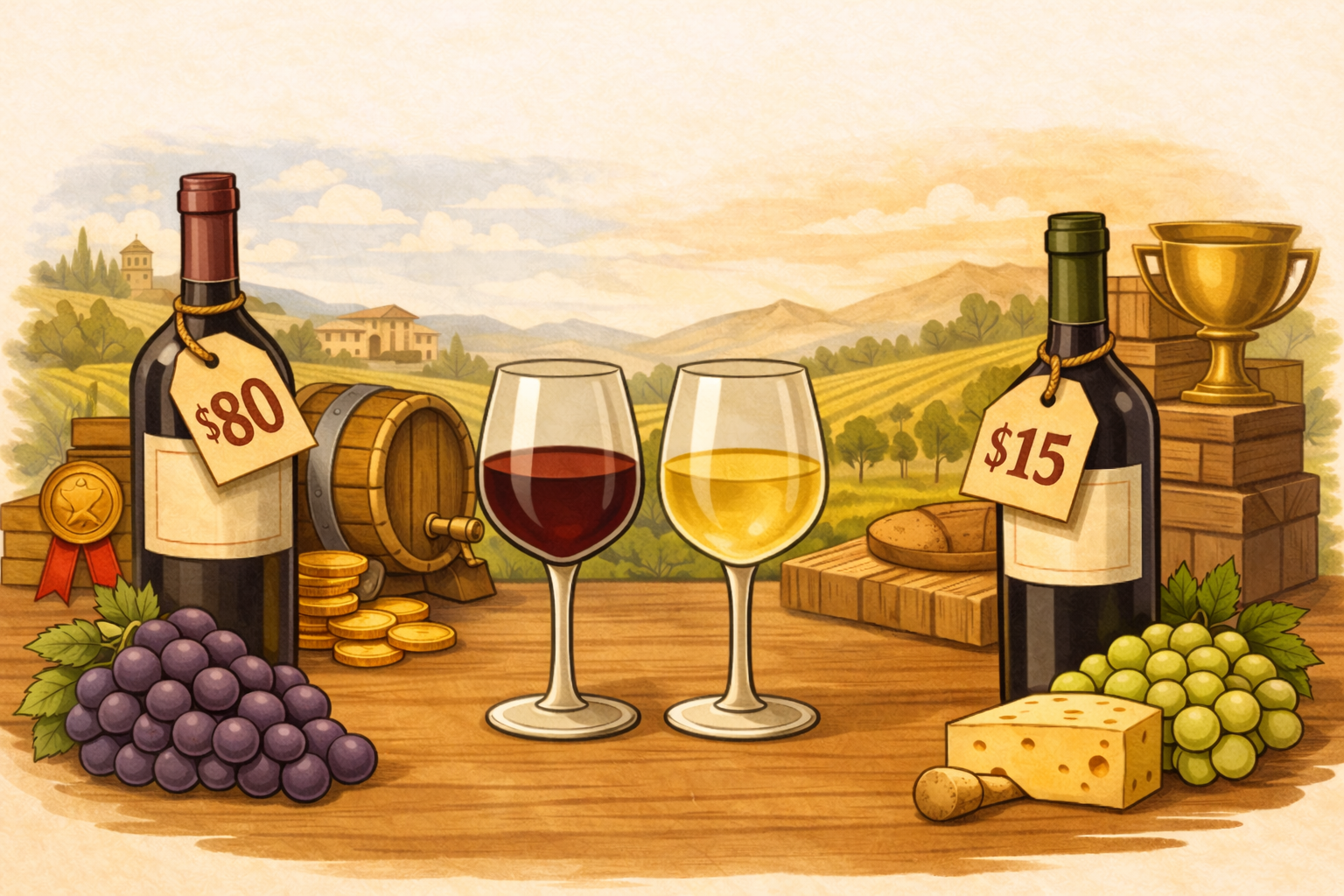
A lot of people assume expensive wine must be better wine. Sometimes it is. A lot of times, it is not. Price can reflect quality, but it can also reflect reputation, rarity, production costs, import layers, packaging, and marketing. That is why a $20 bottle can be a great buy, and a $60 bottle can still leave you wondering what exactly you paid for. If you are trying to buy wine more confidently, it helps to separate price from quality. They overlap, but they are not the same thing.
Price and quality are related, but they are not identical
Wine pricing is messy because you are not just paying for what is in the glass. You are also paying for things around the wine. That might include where it was grown, how it was made, how much of it exists, how famous the producer is, how expensive it is to import, and how the bottle is positioned in the market.
That does not mean price is meaningless. Higher-quality wine often does cost more to produce. Better farming, lower yields, more careful winemaking, longer aging, and smaller production runs usually are not cheap. But price alone does not guarantee that a wine will taste better to you. It definitely does not guarantee that it will feel more enjoyable, more balanced, or more memorable. That is the trap. People often think they are paying only for taste, when in reality they may be paying for a much wider mix of factors.
What you might actually be paying for
Sometimes you are paying for genuine craftsmanship. A producer may farm carefully, pick fruit at the right time, sort grapes by hand, age the wine longer, and make smaller, more deliberate choices throughout the process. Those things can improve balance, texture, complexity, and overall quality. Sometimes you are paying for place.
Certain regions carry more prestige, and that prestige raises prices. A wine from a famous part of Burgundy, Napa Valley, or Champagne may cost more partly because the land is expensive and demand is high. That does not automatically make every bottle from those places worth the premium for every drinker. Sometimes you are paying for scarcity.
Small-production wines usually cost more because there is simply less of them. Limited supply can push prices up even when the style itself is not dramatically better than a more available alternative. Sometimes you are paying for age and storage. Wines that are meant to age require time, space, and capital. If a producer or retailer has stored a bottle for years before it gets to you, that can become part of the price.
And sometimes, bluntly, you are paying for branding. A heavy bottle, elegant label, luxury positioning, or famous name can all influence price. None of those things necessarily tell you what the wine will taste like once it is in your glass.
When higher price really can mean higher quality
There are absolutely times when spending more gets you something real. A better wine often feels more complete. The fruit tastes more precise. The acidity, tannin, alcohol, and texture feel more integrated. Nothing sticks out awkwardly. The wine may not scream for attention, but it feels composed. That is usually where quality shows itself. Not in flashy flavors. Not in sheer power. Not in the prestige of the bottle.
In balance, structure, length, and how clearly the wine expresses itself. If you want to go deeper on that, read How to Tell If a Wine Is High Quality. It breaks down what quality actually looks like in the glass, which is far more useful than assuming a higher shelf price equals a better experience.
Why cheaper wine is not automatically bad
Affordable wine is not fake wine. It is not automatically low quality. And it is definitely not something beginners need to “graduate” out of. There are plenty of well-made, enjoyable bottles at modest prices. Large producers can sometimes make solid wine efficiently. Lesser-known regions can offer great value because they do not carry the same prestige markup. Some wines are simply made to be fresh, easy, and drinkable rather than profound.
Not every bottle needs to be layered, age-worthy, or intellectually impressive. Sometimes a wine does exactly what it should do: it tastes good, works with dinner, and makes you want another glass. That is not failure. That is success. If most of your shopping happens at a grocery store, Grocery Store Wine: How to Pick is a good next read. It helps you spot wines with a better chance of delivering value without overthinking every shelf.
Why expensive wine can still disappoint
This is the part people do not always say out loud: an expensive wine can be very good and still not be the right wine for you. Maybe it is structured, earthy, subtle, and built for slow appreciation, while you actually prefer fruit-forward, softer, more immediate styles. That does not mean your palate is wrong. It means preference still matters.
Expensive wine can also disappoint because expectations get inflated. Once a bottle crosses a certain price point, people expect revelation. Sometimes what they get instead is a wine that is more restrained, more nuanced, or simply less obvious than they imagined. That does not make it bad. But it does mean price can create pressure that changes the experience.
A better question than “Is it worth the price?”
Instead of asking whether a wine is objectively worth the money, ask something more useful: What am I paying for, and do I care about those things?
Maybe you do care about old vines, traditional winemaking, site expression, or cellar aging. Great. Then the price may make sense to you. Maybe you mostly care that the wine tastes balanced, enjoyable, and right for the occasion. Also great. Then a less expensive bottle may be the smarter buy. The point is not to avoid expensive wine. The point is to understand the reason behind the price so you can decide whether that reason matters to you.
The best way to learn this is by comparing wines directly
One of the fastest ways to understand price versus quality is to taste wines side by side. Try two bottles made from the same grape or from a similar style, but at different price points. Pay attention to how they differ in balance, texture, intensity, finish, and overall clarity. You may notice that the more expensive wine feels more polished. You may also notice that the less expensive one is just more fun to drink.
That kind of comparison teaches more than price tags ever will. If you want a simple framework for doing that, read Compare Wines Side by Side. It helps you notice what is actually changing from one bottle to another, instead of just assuming the pricier wine wins because it costs more.
The bigger picture
Price can tell you something about wine, but it does not tell you everything. Sometimes it reflects real quality. Sometimes it reflects reputation, rarity, or production choices. Sometimes it reflects branding and market positioning more than what ends up in your glass. The goal is not to become cynical about expensive wine or blindly loyal to cheap wine. It is to get better at seeing what the price is really pointing to. Because once you understand that, you stop shopping based on assumptions and start choosing bottles with a lot more confidence.
Start building your own palate
The best way to figure out what is worth paying for is to track what you actually enjoy. That is where Somm Scribe comes in. Use it to log wines, compare bottles, notice patterns in what you like, and build confidence without the snobbery. Sign up for Somm Scribe and start turning “I think I liked that one” into real wine memory.
