
Bordeaux Wine Explained for Beginners
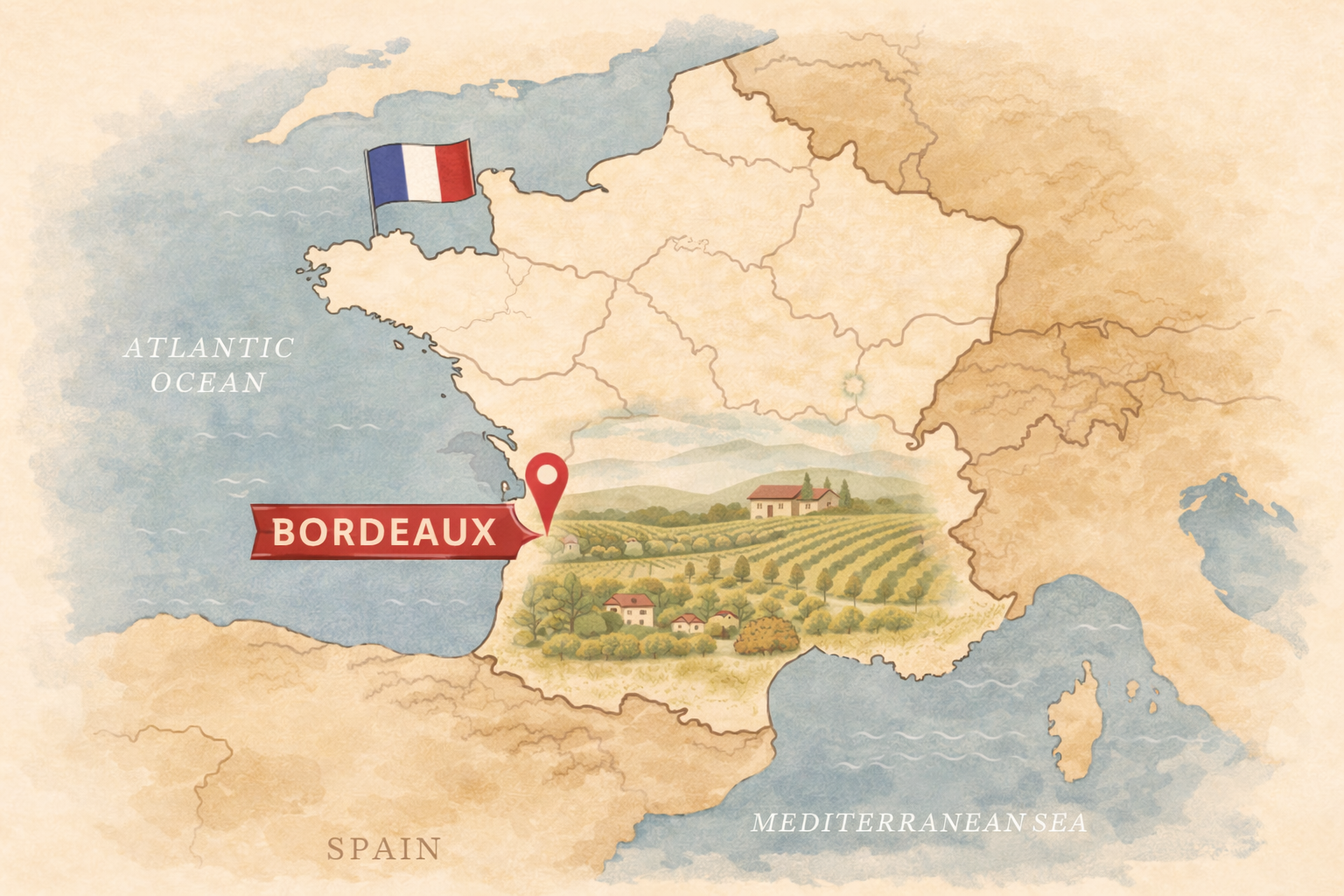
Walk into a wine shop and you’ll almost always see a section labeled Bordeaux. For beginners, it can feel confusing. Bottles rarely list the grape on the label, the regions are unfamiliar, and the wines range from everyday drinking bottles to some of the most expensive wines in the world. But the core idea behind Bordeaux wine is actually simple. Bordeaux wines are usually blends of a few classic grapes, and the balance between those grapes shapes the wine’s style, structure, and aging potential. Once you understand the basic building blocks, Bordeaux becomes much easier to navigate. Let’s break it down.
What Bordeaux Wine Actually Is
Bordeaux is a wine region in southwestern France. Instead of labeling wines by grape variety, most Bordeaux wines are labeled by place. That means the bottle might say Bordeaux, Margaux, Pauillac, or Saint-Émilion instead of listing grapes like Cabernet Sauvignon or Merlot. Behind the scenes though, most Bordeaux wines are built from the same small group of grapes. The most important red grapes in Bordeaux are:
Cabernet Sauvignon
Merlot
Cabernet Franc
Smaller amounts of Petit Verdot and Malbec may also appear in blends. Each grape contributes something different to the final wine, which is why blending is such a core part of Bordeaux’s identity. If you want to understand Cabernet Sauvignon specifically, the guide Cabernet Sauvignon Beginner’s Guide explains how that grape behaves on its own and why it plays such a major role in Bordeaux blends.
Why Bordeaux Wines Are Blends
Blending is one of the defining traditions of Bordeaux wine. Instead of focusing on a single grape variety, winemakers combine several grapes to create balance and complexity in the final wine. This approach didn’t start as a stylistic experiment. It developed over centuries as a practical response to the region’s climate and growing conditions.
Bordeaux sits close to the Atlantic Ocean, which gives the region a relatively mild but unpredictable climate. Some years are warm and dry. Other years bring rain during critical parts of the growing season. Because different grape varieties ripen at different times and respond differently to weather, relying on just one grape could make the outcome of a vintage far less predictable.
Blending gave winemakers a way to manage that uncertainty. If one grape struggled in a particular year, another might perform better. By combining varieties, producers could create wines that remained balanced and consistent even when nature didn’t cooperate perfectly. Over time, a small group of grapes proved especially well suited to the region. Today, most red Bordeaux wines are built from a combination of Cabernet Sauvignon, Merlot, and Cabernet Franc, sometimes with smaller amounts of Petit Verdot or Malbec.
Roles of Each Grape
Cabernet Sauvignon provides structure, firm tannins, and dark fruit flavors. Merlot contributes softness, roundness, and plush fruit. Cabernet Franc often adds aromatic lift, bringing subtle herbal notes, red fruit, and freshness. When these pieces come together, the result is a wine that feels layered and balanced rather than dominated by a single flavor profile.
This balance is also one reason Bordeaux wines often age well. The combination of tannin, acidity, and fruit gives the wine a structural backbone that can evolve slowly over time. If you’re curious how aging works more broadly, the guide Does Wine Get Better With Age? walks through what actually changes inside the bottle as a wine matures.
Left Bank vs Right Bank: The Two Classic Bordeaux Styles
When people talk about Bordeaux, you’ll often hear the terms Left Bank and Right Bank. These refer to the sides of the rivers that cut through the region (primarily the Garonne and Dordogne) and they help explain why Bordeaux wines can taste so different from one another. Those rivers divide Bordeaux into two major stylistic zones. The differences come down to soil, grape choice, and overall structure.
Cabernet-Dominant Bordeaux (Left Bank)
The Left Bank of Bordeaux is where Cabernet Sauvignon tends to dominate blends. Gravelly soils in this part of the region drain water well and retain heat, which helps Cabernet Sauvignon ripen properly. Because Cabernet Sauvignon has thicker skins and naturally higher tannins, these wines usually feel more structured and firm. Left Bank Bordeaux often shows flavors like blackcurrant, dark berries, cedar, tobacco, and sometimes a subtle graphite or pencil-lead character.
The tannins tend to be more noticeable when the wine is young. That structure is one reason many Left Bank Bordeaux wines are known for their ability to age gracefully for many years, slowly softening and developing more complex flavors over time.
Merlot-Dominant Bordeaux (Right Bank)
Across the rivers, the Right Bank tells a slightly different story. Here the soils contain more clay, which favors Merlot. Merlot ripens earlier than Cabernet Sauvignon and generally produces wines with softer tannins and a rounder texture. Right Bank Bordeaux wines often lean toward flavors like plum, red berries, and sometimes chocolate or earthy notes. The overall impression is usually smoother and more approachable, especially when the wine is young.
Because the tannins are softer, many Right Bank wines can be enjoyed earlier in their life compared to Cabernet-heavy wines. That doesn’t mean they can’t age (some absolutely do) but the experience tends to be softer and more immediately expressive.
Two Styles, Same Philosophy
While the Left Bank and Right Bank produce different styles, they share the same core idea that defines Bordeaux: balance through blending. Cabernet Sauvignon, Merlot, and Cabernet Franc each bring something different to the wine. The final blend is meant to create harmony between fruit, structure, and freshness.
This balance between tannin, acidity, and alcohol is what gives Bordeaux its signature shape and longevity. If you’d like a deeper look at how those elements work together, the guide Acidity vs Tannin vs Alcohol explains how wine structure affects the way a wine feels on your palate. In the end, neither the Left Bank nor the Right Bank is inherently better. They simply offer two different expressions of Bordeaux, each shaped by its soil, grapes, and tradition.
What Bordeaux Usually Tastes Like
While every bottle is different, many Bordeaux wines share a recognizable flavor profile. Common flavors include dark berries, plum, cassis, cedar, tobacco, herbs, and sometimes earthy notes like leather or graphite. Some Bordeaux wines also develop subtle hints of baking spice, cocoa, or dried fruit as they age. These secondary flavors often come from time spent in oak barrels and from the slow evolution of the wine in the bottle.
Texture is just as important as flavor. Bordeaux wines often feel structured and balanced, with tannins that give the wine shape rather than softness alone. Instead of feeling plush or juicy, many Bordeaux wines have a firmer frame that holds the fruit in place. That structure is part of what makes Bordeaux distinctive. The balance between fruit, tannin, and acidity creates a wine that can feel composed and layered rather than immediately fruit-forward. This structural backbone is also one of the reasons Bordeaux wines have such a strong reputation for aging. Over time, those firm tannins soften and the flavors become more integrated, revealing deeper savory and earthy notes.
The Bigger Picture
Bordeaux may sound complicated at first, but the core idea is straightforward. Most Bordeaux wines are blends built from a few classic grapes. The balance between Cabernet Sauvignon, Merlot, and Cabernet Franc determines whether the wine feels structured, soft, powerful, or approachable. Once you recognize that pattern, Bordeaux stops feeling mysterious and starts feeling predictable in a good way. And that’s the real goal of learning about wine: not memorizing regions or classifications, but building enough intuition that you can look at a bottle and have a reasonable idea of what’s inside.
