
Oak in White Wine: When It Helps and When It Hurts
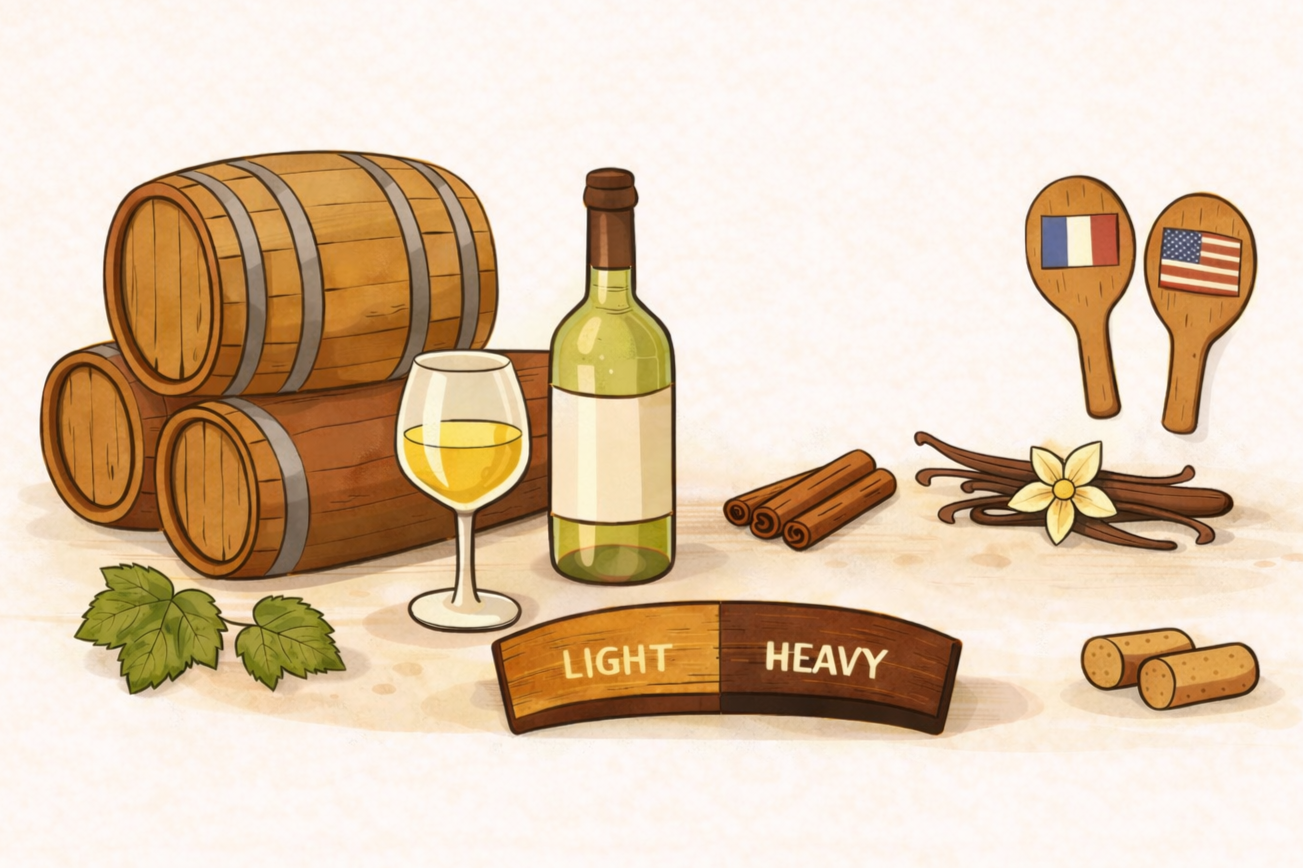
Oak can make a white wine feel luxurious or exhausting. Sometimes it adds warmth and depth that makes a wine feel complete. Other times it smothers freshness and leaves you wishing for a squeeze of lemon. If you’ve ever said, “I don’t like oaky wine,” what you probably meant was: I don’t like oak when it’s out of balance. Let’s unpack what oak actually does and how to tell when it’s helping instead of hurting.
What Oak Really Changes
When white wine ages in oak barrels, three major things happen:
First, the wine is exposed to small amounts of oxygen over time. Barrels are slightly porous, which allows slow, controlled oxygen contact. This softens sharp acidity and can make a wine feel rounder.
Second, the wood itself contributes compounds that affect flavor and aroma. Depending on the barrel and how it’s made, you might notice vanilla, baking spice, toast, caramel, smoke, or even subtle coconut.
Third, oak can influence texture. Wines aged in barrel often feel broader, sometimes creamier, sometimes slightly more structured.
If you want a deeper dive into the mechanics, read How Oak Aging Changes Wine. It breaks down the science behind the transformation. But the short version? Oak adds layers. Whether those layers improve the wine depends on what was there to begin with.
Not All Oak Is the Same
A brand-new barrel gives off more flavor. An older barrel that has been used several times to age wine (often called “neutral oak”) has already given up most of its wood compounds. It still allows gentle oxygen exposure, but without strong vanilla or toast flavors.
So a wine can be “barrel-aged” and barely taste oaky at all.
Toast Level Matters
Barrels are heated inside before use. The level of toasting changes the flavor profile.
Light toast: more subtle spice and wood notes
Medium toast: vanilla and baking spice
Heavy toast: smoke, caramel, coffee-like notes
This is often why some wines feel balanced and others feel aggressively smoky or sweet-smelling.
French vs American Oak
Different forests produce different wood grain structures.
French oak tends to be more subtle and spice-driven.
American oak often gives stronger vanilla and coconut notes.
Neither is superior. They just create different expressions.
Oak vs Creaminess: A Common Confusion
Many people associate “buttery” white wine with oak. But butter flavors usually come from malolactic fermentation, not the barrel itself. Malolactic fermentation converts sharper malic acid (think green apple) into softer lactic acid (think milk). That’s where buttery and creamy notes come from. Oak can enhance that richness, but it isn’t the sole cause. This is also where structure comes into play. If you want clarity on how oak relates to tannins and structure, our post on Tannins vs Oak clears up what comes from grapes and what comes from wood.
When Oak Helps
Oak works beautifully when it supports a wine’s natural strengths. It tends to shine when:
The grape has enough body and fruit to carry added richness
The wine still maintains fresh acidity underneath
The oak flavors feel integrated, not separate
Warm-climate Chardonnay is the classic example. It has enough weight and fruit intensity to absorb oak and still feel harmonious. If you want to see how dramatically Chardonnay can shift styles, read Chardonnay Flavor & Styles, it’s the best case study for oak’s impact. When oak helps, you don’t think “this tastes like wood”, you think “this feels complete.”
When Oak Hurts
Oak becomes a problem when it overwhelms freshness. White wine often shines because of brightness like citrus, green apple, mineral notes, etc. Heavy oak can mute that energy and replace it with sweetness or smoke. It can also introduce drying wood tannins. Yes, white wines can have tannin, just not in the same way reds do. When oak tannin combines with high toast levels, the wine can feel slightly bitter or drying on the finish.
And sometimes oak is used to compensate for thin base wine. When there isn’t enough fruit concentration, oak stands out even more. That’s when people decide they “hate oaky wine.” Often, they just hate imbalance.
How to Tell If Oak Is Working
Next time you taste a white wine with oak, ask yourself:
Do the flavors feel integrated, or separate?
Does the texture feel rounded in a pleasant way?
Is the freshness still there underneath?
If the answer is yes, oak is helping. If the wine feels heavy, drying, or dominated by vanilla and smoke, it’s probably too much for your palate. And that’s okay. Preference isn’t ignorance. It’s information.
The Bigger Picture
Oak isn’t good or bad. It’s a tool. Used thoughtfully, it adds dimension, texture, and age-worthiness. Used aggressively, it masks character and tires the palate. The goal isn’t to memorize which wines are oaked. It’s to notice how oak changes the experience and decide what you enjoy. The next time you taste a white wine and think, This feels creamy, or This feels sharp, you’ll know why.
The more you pay attention to that shift, the more confident your choices become. And when you start writing those observations down, patterns emerge. That’s where Somm Scribe can help — giving you a simple place to track what you like (and what you don’t) so every bottle gets easier to choose.
