
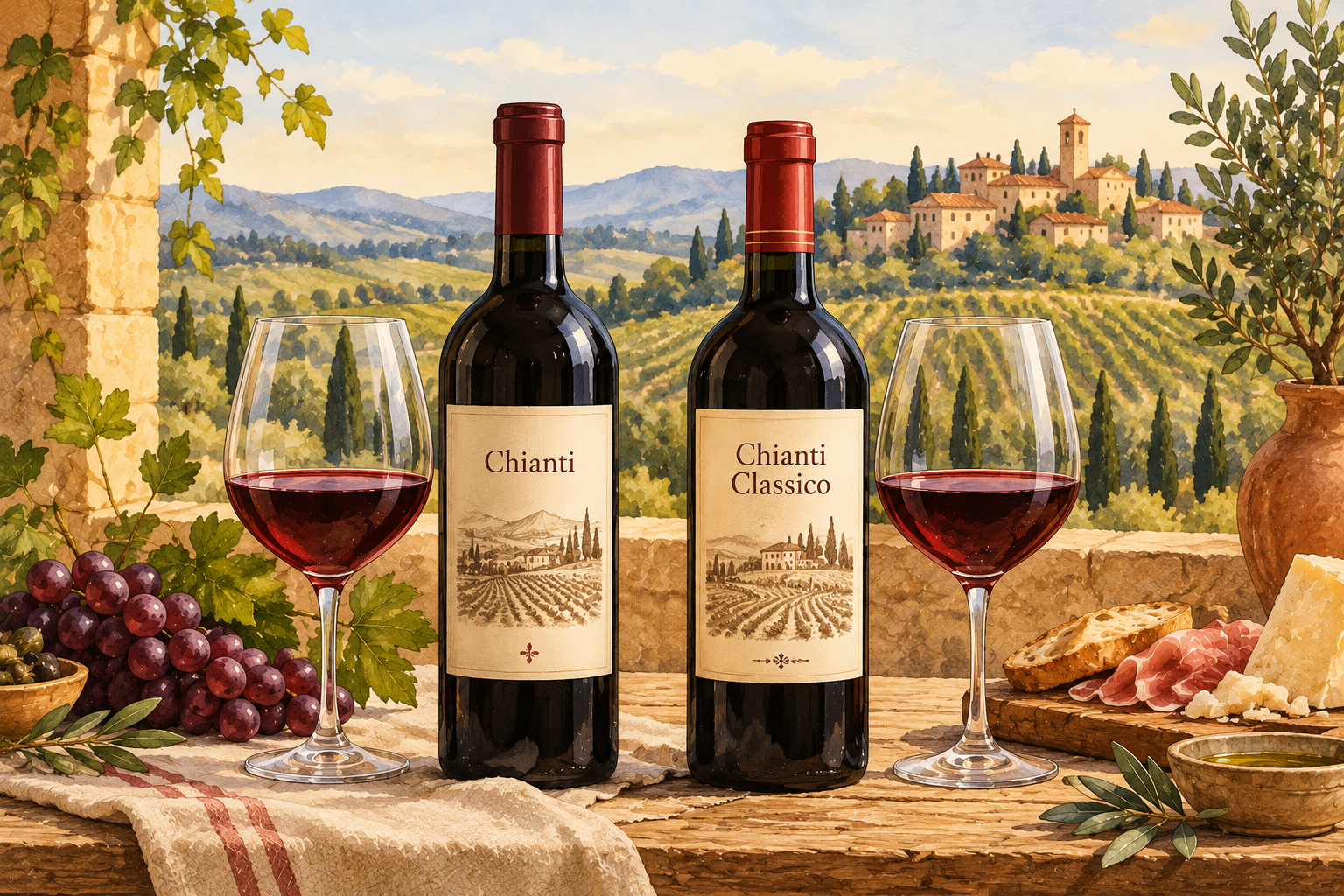
Two wines from Tuscany, one shared grape, and a few important differences that can help you choose the right bottle. If you've ever stood in a wine shop comparing a bottle of Chianti with one labeled Chianti Classico, you might have wondered whether they're essentially the same wine. Both come from Tuscany, both are closely associated with Sangiovese grapes and both can be excellent choices for dinner.
But Chianti and Chianti Classico are not interchangeable wine labels. They come from different officially defined production areas, follow different regulations, and can offer somewhat different drinking experiences. The simplest distinction is that Chianti Classico comes from the historic Chianti production area between Florence and Siena, while Chianti comes from other designated areas of Tuscany. Chianti Classico also has its own production standards and recognizable black rooster symbol.
Does that make Chianti Classico better? Not necessarily. Understanding the differences can help you choose a wine based on your taste, budget, and what you're planning to eat.
Chianti vs. Chianti Classico at a Glance
| Chianti | Chianti Classico |
|---|---|
| Region: Designated Chianti production zones across Tuscany | Region: Historic Chianti territory between Florence and Siena |
| Classification: DOCG | Classification: Separate DOCG |
| Primary grape: At least 70% Sangiovese | Primary grape: At least 80% Sangiovese |
| Label: Chianti DOCG, sometimes with a subzone name | Label: Chianti Classico DOCG, typically with the black rooster emblem |
| Typical style: Often fresh, fruity, and approachable | Typical style: Often more structured, savory, and complex |
| Best for: Casual dinners, everyday drinking, and value-focused buying | Best for: Hearty meals, exploring regional character, and potentially aging |
| Price: Often more affordable | Price: Often higher, depending on producer and bottling |
These are general tendencies, not guarantees. A carefully made Chianti can be more complex than a basic Chianti Classico, and some Chianti Classico wines are remarkably approachable when young.
Why Are Chianti and Chianti Classico Different?
The distinction begins with geography and history. Chianti has been associated with wine production for centuries, but as its popularity grew, the official Chianti production area expanded beyond the original historic territory. Today, Chianti DOCG includes several production zones across Tuscany, including well-known subzones such as Colli Senesi, Colli Fiorentini, and Rufina.
Chianti Classico DOCG, meanwhile, is produced within the historic Chianti area between Florence and Siena. It operates under its own appellation rules. The word Classico refers to that historic production territory. It isn't simply a marketing term meaning premium, reserve, or better quality. For a broader look at the region and its wines, explore our Tuscany Wine Guide.
What Does the Black Rooster on Chianti Classico Mean?
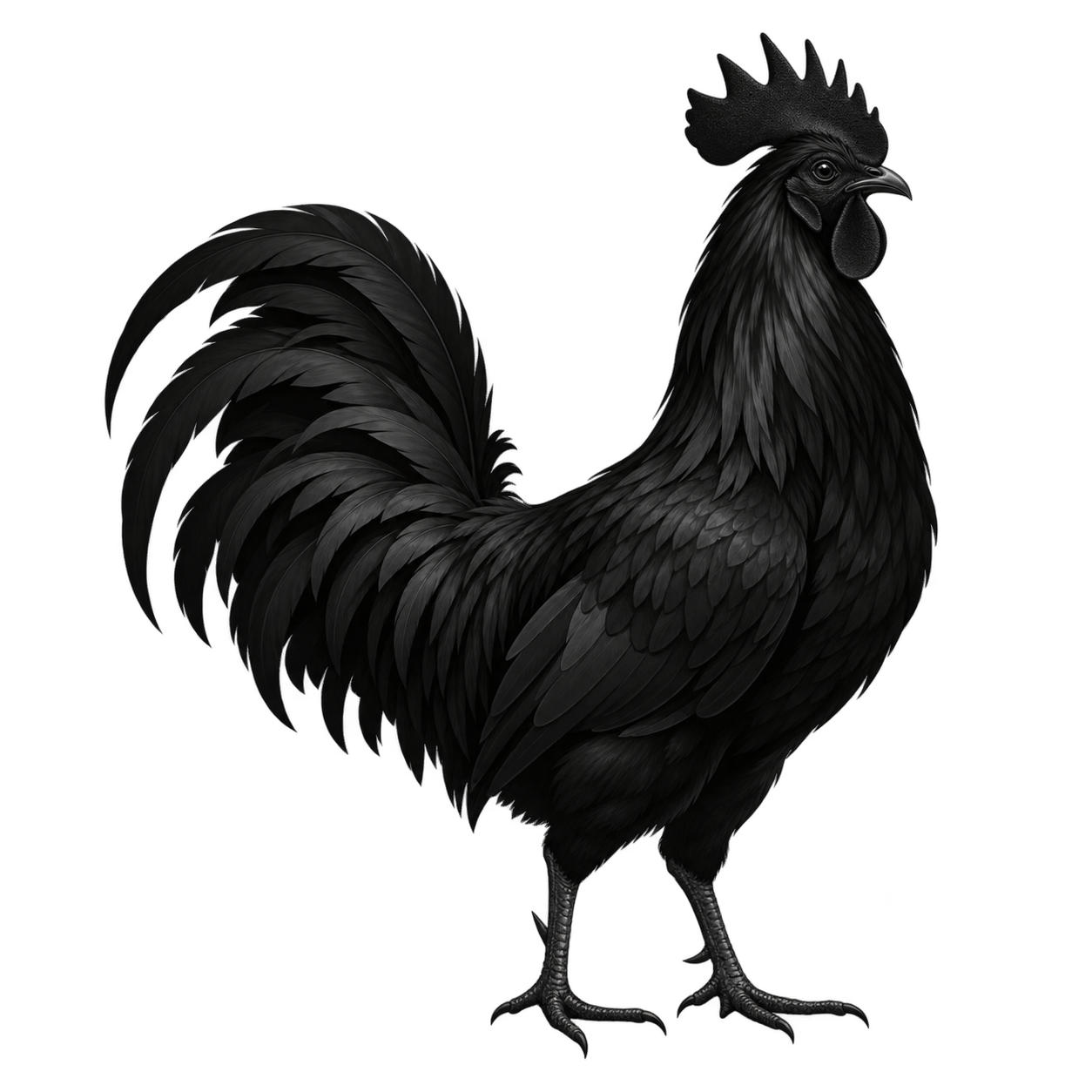
The black rooster, known as the Gallo Nero, is the historic symbol of Chianti Classico. It represents the wine's geographic identity and is the registered trademark of the Consorzio Vino Chianti Classico, the organization responsible for protecting and promoting the appellation.
When shopping, look for the words Chianti Classico DOCG and the black rooster symbol. A bottle labeled simply Chianti DOCG is not Chianti Classico, even if both wines are made primarily from Sangiovese. One important detail: the black rooster identifies the Chianti Classico appellation. It does not mean that the bottle has received a higher tasting score or that it will automatically suit your preferences better.
Do Chianti and Chianti Classico Taste Different?
Both wines are built around Sangiovese, a grape known for lively acidity, red-fruit flavors, and noticeable tannins. However, differences in vineyard location, grape composition, winemaking, and aging can influence the final result.
What Does Chianti Typically Taste Like?
Many Chianti wines emphasize freshness and easy drinkability. Common characteristics include:
Red cherry, raspberry, and other bright red-fruit flavors
Lively acidity that works well with tomato-based dishes
Light-to-medium or medium body
Moderate tannins, depending on the wine
Occasional herbal, floral, or earthy notes
A young Chianti can be an appealing choice when you want a red wine that doesn't feel especially heavy.
What Does Chianti Classico Typically Taste Like?
Chianti Classico often shows a more structured expression of Sangiovese, although styles vary considerably among producers. You might notice:
Tart cherry, plum, and dried red-fruit flavors
Herbal, earthy, or savory notes
Medium to full body
Firm or pronounced tannins
Bright acidity and a lingering finish
Some examples also develop leather, tobacco, or spice notes with age. The biggest misconception is that Chianti Classico is always smoother or less acidic. Both wines can have substantial acidity, and Chianti Classico may actually feel firmer because of its tannin structure.
If you're unfamiliar with how Sangiovese contributes to these flavors, our Sangiovese Explained guide is a useful starting point.
Is Chianti Classico Better Than Chianti?
No. Chianti Classico has different geographic boundaries and production requirements, but those facts alone don't establish that every bottle is better. A well-made Chianti from a respected producer may be more enjoyable than a Chianti Classico that doesn't match your preferences.
The important questions are what you enjoy in red wine, what you're eating, and how much you want to spend. If you prefer a fresh, fruit-forward red wine for a casual dinner, a straightforward Chianti may be exactly what you're looking for.
If you enjoy more pronounced tannins, savory flavors, or wines that evolve with food and time, Chianti Classico is worth exploring. Price can be a useful clue about a wine's positioning, but it isn't a reliable substitute for knowing what you like.
Which Should You Buy? Four Practical Scenarios
You're making spaghetti with tomato sauce.
Start with Chianti DOCG. Its bright acidity can complement tomato sauce, and you don't necessarily need a more expensive bottle for a weeknight meal.
You're serving steak or a rich meat dish.
Consider Chianti Classico, particularly a structured example. Its tannins and savory character can work beautifully with grilled beef or slow-cooked meat.
You're exploring Italian red wine for the first time.
Try a standard Chianti and a Chianti Classico side by side. Comparing them is more informative than assuming one represents an upgrade over the other.
You're buying a bottle for a special dinner.
Explore Chianti Classico Riserva or Gran Selezione if you enjoy more developed or concentrated styles. Check the producer and vintage rather than choosing solely by classification.
What Foods Pair Best With Each Wine?
Both Chianti and Chianti Classico are particularly food-friendly because Sangiovese's acidity helps balance rich dishes. Chianti works well with pizza, pasta with tomato sauce, roasted vegetables, and moderately rich Italian dishes.
Chianti Classico is often a good match for grilled meats, mushroom dishes, aged cheeses, and heartier Tuscan recipes.
There is plenty of overlap. You can absolutely serve Chianti Classico with pizza or Chianti with steak. For more approachable pairing ideas, see our Easy Food and Wine Pairings.
How to Remember Which One You Actually Prefer
Instead of deciding that Chianti Classico is automatically your favorite because it costs more, compare the two wines based on your own experience. After trying each bottle, write down the producer and wine name, whether it was Chianti or Chianti Classico, the flavors you noticed, how the acidity and tannins felt, and whether you would buy it again.
You don't need elaborate tasting notes. A simple observation such as "bright cherry, refreshing, great with pasta" can be more useful for your next purchase than a numerical rating alone.
Over time, these observations can reveal whether you consistently prefer fresher, fruit-forward styles or more structured, savory reds.
Keep track of the wines you actually enjoy.
Somm Scribe helps you save tasting notes, remember your favorites, and build a clearer picture of your personal wine preferences. Your next favorite bottle starts with remembering the last one.
Frequently Asked Questions
-
In a broad historical and geographic sense, both belong to the Chianti wine tradition. Legally, however, Chianti Classico DOCG and Chianti DOCG are separate appellations with different production territories and regulations.
-
No. Both are typically dry red wines. Fruitiness can sometimes create an impression of sweetness, but that doesn't mean a wine contains significantly more residual sugar.
-
Riserva is an additional aging designation within Chianti Classico DOCG. It requires at least 24 months of aging, including a minimum of three months in bottle, before release. Regular Chianti Classico has a shorter minimum maturation period.
-
Some Chianti Classico wines, especially structured Riserva and Gran Selezione bottlings, can develop beautifully with age. But aging potential depends on the individual wine, producer, vintage, and storage conditions.
-
It can be, particularly if you enjoy its style or want to explore a specific producer. But if an affordable Chianti consistently delivers the flavors you enjoy, there's no reason to spend more simply for the Classico designation.
The Bottom Line
Chianti and Chianti Classico share Tuscany, Sangiovese, and a long winemaking history, but they are distinct appellations. Chianti often offers fresh, approachable red wines that are excellent for everyday meals. Chianti Classico can offer more structure and savory complexity, along with its own historic identity and production standards.
Neither name guarantees that you'll prefer what's inside the bottle. The better wine is the one that suits your taste, your meal, and your budget. For more background on choosing bottles across the region, read Chianti Explained.
