
Sangiovese Explained: Flavor, Acidity, and What to Expect
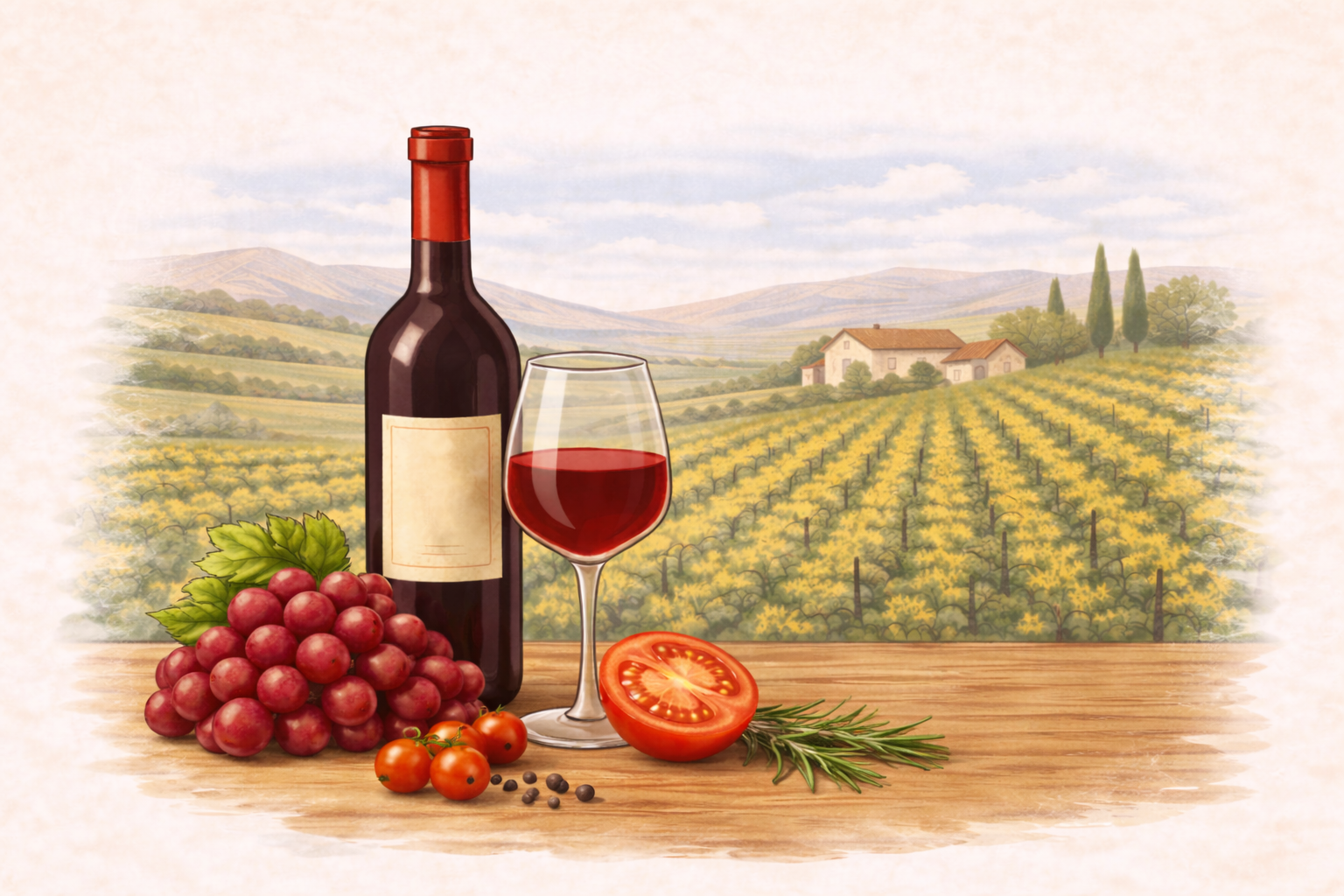
Sangiovese is one of the most important red grapes in Italy but if you’re new to wine, there’s a good chance you’ve tasted it without realizing it. That’s because Sangiovese is the grape behind many popular Italian wines, especially Chianti and Brunello di Montalcino. It’s widely loved for its bright acidity, food-friendly personality, and savory, earthy style. In other words: it usually tastes less soft and jammy than many beginner-friendly reds from California, but that’s exactly why so many people end up loving it. If you’ve ever had a red wine that felt tart, structured, herbal, or especially good with food, there’s a decent chance Sangiovese was involved.
What Does Sangiovese Taste Like?
Sangiovese is usually a medium-bodied red wine with high acidity, moderate tannins, and a flavor profile that leans more toward fresh red fruit and savory notes than rich sweetness. Common tasting notes include:
cherry
tart raspberry
dried herbs
tomato leaf
leather
earth
tea
spice
Some bottles feel bright and juicy. Others feel more rustic, structured, and serious. That range is part of what makes Sangiovese so interesting. If you’re used to plush, fruit-forward reds, Sangiovese can feel a little firmer at first. But if you like wines that feel lively, balanced, and food-friendly, it can be incredibly satisfying.
Sangiovese Is More About Energy Than Weight
One of the easiest ways to understand Sangiovese is this, it usually doesn’t try to impress you with heaviness. It wins with lift, tension, and freshness. That’s why Sangiovese often feels:
brighter than Merlot
less dense than Cabernet Sauvignon
more savory than many New World reds
It’s a great grape for learning how acidity shapes a wine, because that freshness is often one of the first things people notice. If you’re still getting familiar with wine structure, it helps to understand how acidity, tannin, and alcohol work together in the glass. In fact, this grape is one of the best examples of that relationship. You can read more about that here: Acidity vs Tannin vs Alcohol: How Wine Structure Really Works.
Why Sangiovese Often Feels So Food-Friendly
This is where Sangiovese really shines. Because it has naturally high acidity, it tends to pair beautifully with foods that would make heavier, softer reds feel flat or clumsy especially tomato-based dishes, roasted vegetables, pizza, pasta, and herb-driven meals. That’s one reason Italian wines and Italian food work so well together. They often evolved side by side. Sangiovese doesn’t usually dominate a meal. It tends to lift it. That makes it a fantastic “real life” wine not just a tasting room wine.
Is Chianti the Same as Sangiovese?
Not exactly but they’re very closely related. Sangiovese is the grape. Chianti is a wine/style/region that is usually based on Sangiovese. So if you enjoy Chianti, there’s a good chance you already like Sangiovese. If you want to understand how this grape shows up in one of its most famous forms, check out Chianti Explained: What It Tastes Like and Why It’s So Popular.
And if you want the bigger regional picture, Tuscany Wine Guide gives you a great overview of where these wines come from and why they taste the way they do.
What Kind of Wine Drinker Usually Likes Sangiovese?
Sangiovese is a great fit if you tend to enjoy wines that are:
fresh instead of heavy
savory instead of sweet
structured instead of soft
better with food than on their own
It’s especially good for people who are starting to move beyond “smooth and easy” reds and want something with a little more personality without jumping straight into something super tannic or intense.
What to Expect Before You Buy a Bottle
Here’s the simple version: If you buy a bottle of Sangiovese, expect a red wine that is usually:
medium-bodied
high in acidity
cherry-driven
slightly earthy or herbal
better with food than by itself
It’s not usually the richest or boldest red on the shelf. But it’s often one of the most versatile. And once you understand what it’s doing, it becomes a very easy grape to appreciate.
Final Thoughts
Sangiovese is one of those grapes that teaches you a lot about wine without trying too hard. It shows how acidity creates energy, how savory notes can be just as compelling as fruit, and how some wines are built more for balance and food than pure power. If you’re trying to understand your palate better, this is a very smart grape to spend time with. And once you start noticing its signature style, you’ll begin spotting it everywhere.
If you’re trying to figure out which wines you actually like, keeping track of what stood out — fruit, acidity, texture, or overall feel — makes it much easier to spot patterns over time. That’s exactly the kind of thing Somm Scribe is built to help with.
