
How to Tell If You’ll Like an Italian Wine Before You Buy It
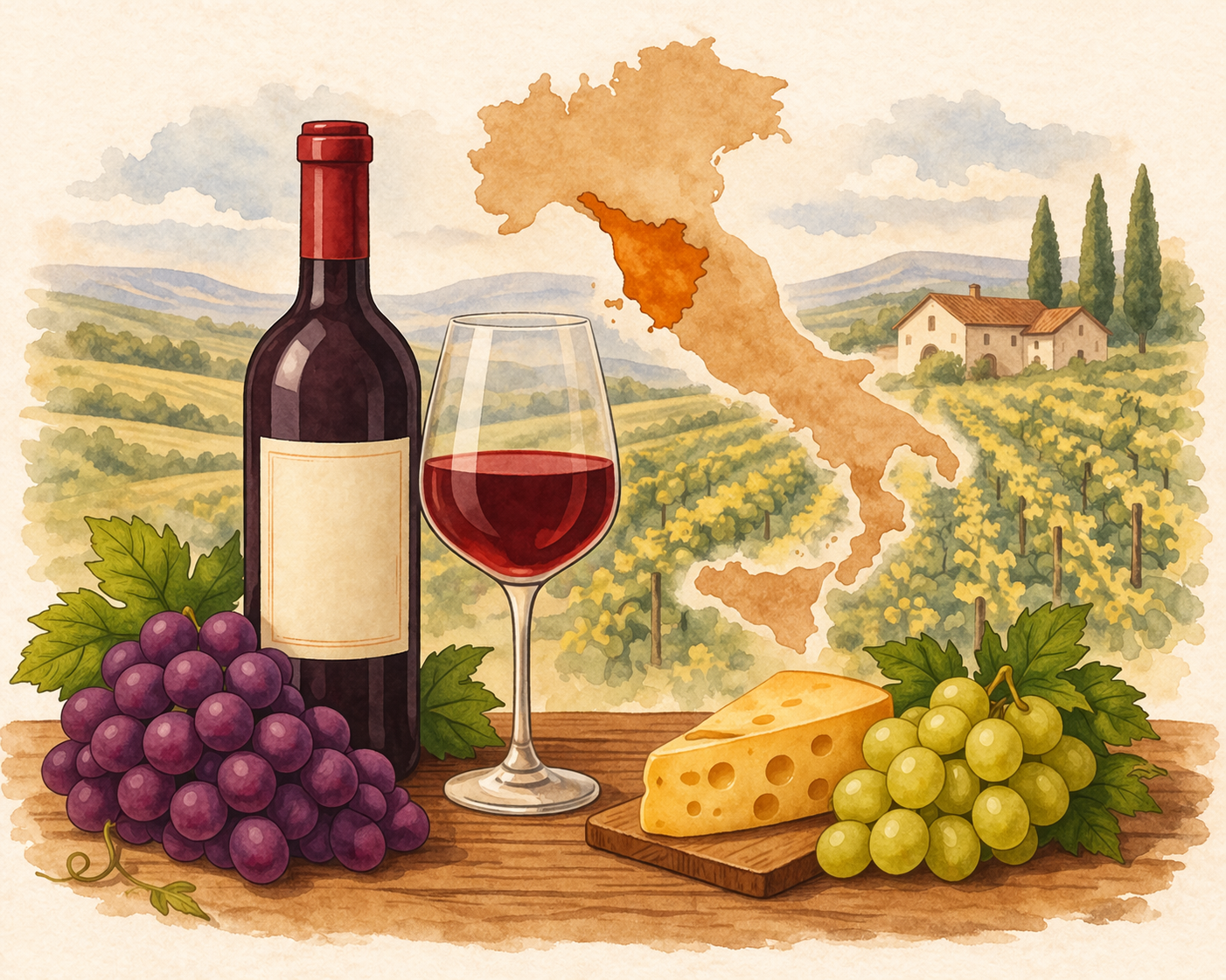
Italian wine can be one of the most rewarding sections of the wine aisle and one of the most confusing. A lot of bottles don’t lead with the grape. The names can feel unfamiliar. And if you’ve ever picked one up and thought, I have absolutely no clue what this is supposed to taste like, that is a very normal reaction. The good news is you do not need to understand all of Italy to buy an Italian wine you’ll enjoy. You just need a few better signals. Because most of the time, the real question isn’t “Is this a good Italian wine?”, it’s “Will I actually like drinking this?”
That’s a much better question and a much more useful one.
Start with your taste, not the label
This is the easiest mistake to make with Italian wine: starting with what the bottle is supposed to mean instead of what you actually enjoy. Before you look at the region, the producer, or the pronunciation challenge staring back at you, ask yourself this. Do I usually like wines that feel like the following?
bright and fresh?
smooth and soft?
bold and structured?
That matters more than most wine advice will admit. Because if you already know you don’t love sharp acidity or firm tannins, you probably don’t need to force yourself into a bottle just because it looks “serious.” And if you love wines that feel lively and food-friendly, there are a lot of Italian wines that will absolutely work for you. Italian wine gets much easier once you stop trying to “get it right” and start trying to match your palate.
Region is one of the most useful clues
Italian wine often tells you more through place than through grape. That’s why region matters so much here. In a lot of other wine categories, you can often rely on the front label to tell you the grape and give you a rough idea of what to expect. Italian wine doesn’t always work like that. Many bottles are built around traditional regional naming, which means the location is doing a lot of the work.
And honestly, that’s not a bad thing once you know how to use it. For example, if you see a bottle from Tuscany, there’s a good chance it will lean more savory, structured, and acidity-driven than soft and plush. That doesn’t mean every wine from Tuscany tastes the same, but it does mean the region gives you a helpful starting point. If you want a better feel for that overall style, your Tuscany Wine Guide is a great next read.
This is especially useful with wines like Chianti. A lot of people see the name without really knowing what it means, but once you understand the style, it becomes much easier to decide whether it sounds like your kind of bottle. If you want that breakdown, Chianti Explained is the natural follow-up.
Don’t worry about memorizing — look for patterns instead
This is the part where people usually assume they need to study. You don’t. You do not need to memorize every Italian region, subregion, or grape name to buy wine well. That’s a fast path to burnout and not actually how most people learn wine in real life anyway. What helps more is noticing a few simple patterns. Some Italian wines tend to feel:
more fresh and lifted
more savory than fruity
more structured than soft
That’s why Italian wine can sometimes surprise people who are used to smoother, fruit-forward bottles. It’s not that the wine is “bad” or “too serious.” It’s just operating on a different style profile. And once you understand that, it gets way easier to shop with intention instead of guessing.
Acidity is one of the biggest clues
If there’s one thing that helps predict whether you’ll like an Italian wine, it’s the answer to this question - how do you feel about acidity? Because a lot of Italian wines, especially reds, are built around freshness and structure. That can show up as:
a more mouthwatering finish
a brighter, livelier feel
less softness than you might expect
For some people, that’s exactly what makes Italian wine so good. It feels energetic, balanced, and incredibly food-friendly. For other people, it can feel sharper than expected at first. That doesn’t mean one reaction is more “correct” than the other. It just means your preferences matter. If you already know you tend to like rounder, softer wines, that’s useful information. And if you love wines that feel fresh and alive, Italian wine may be very much your lane.
Prestige is not the same thing as fit
This is where a lot of people waste money. A bottle can be more expensive, more traditional, or more “respected” and still not be the right wine for you. That matters. Because sometimes the bottle everyone says is impressive is actually:
too structured for what you enjoy
too earthy for your taste
too serious for the moment you’re buying for
And there is nothing wrong with that. You are not failing wine because you prefer something more approachable on a random Tuesday night. A wine can be high quality and still not be a good match for you. That’s why buying confidence has less to do with prestige and more to do with recognizing style. If you want a practical version of that idea, How to Tell If a Wine Is “Worth It” Before You Buy It is a really useful companion.
The back label can help — just don’t let it boss you around
Back labels are not useless. They’re just a little dramatic sometimes. Every bottle somehow manages to be:
elegant
balanced
expressive
complex
perfect with food
Convenient. Still, there are a few words that actually help. If you see words like bright, fresh, savory, crisp or lively you’re probably heading toward a wine with more lift and structure. If you see rich, velvety, ripe or full-bodied you’re probably looking at something rounder and more powerful. These words are not perfect, but when you combine them with the region and your own taste preferences, they become much more useful.
A simple way to buy Italian wine with more confidence
If you’re standing in the store trying to make a quick decision, this is the only framework you really need.
Ask yourself:
What kind of wine do I usually enjoy?
Fresh? Smooth? Bold?
What region is this from?
Does that region generally move in the direction I like?
What clues are on the label?
Not prestige clues, style clues.
Am I drinking this on its own or with food?
Italian wine often shows up differently depending on the context.
That’s it. Not perfect knowledge. Not wine school. Just better pattern recognition.
You do not need to “understand Italian wine” all at once
You just need to get a little better at recognizing what tends to line up with your palate. That’s how wine gets easier. Not because you memorized every region in Italy. Not because you suddenly know what every label means. But because you start noticing what usually works for you. One bottle at a time, that becomes confidence.
The easiest way to get better at choosing wine is to remember what you’ve already liked. If you want a simple place to track bottles, tasting notes, and the patterns behind your preferences, Somm Scribe was built to help with exactly that.
