
Sauvignon Blanc Explained: Crisp, Herbal, and Easy to Love
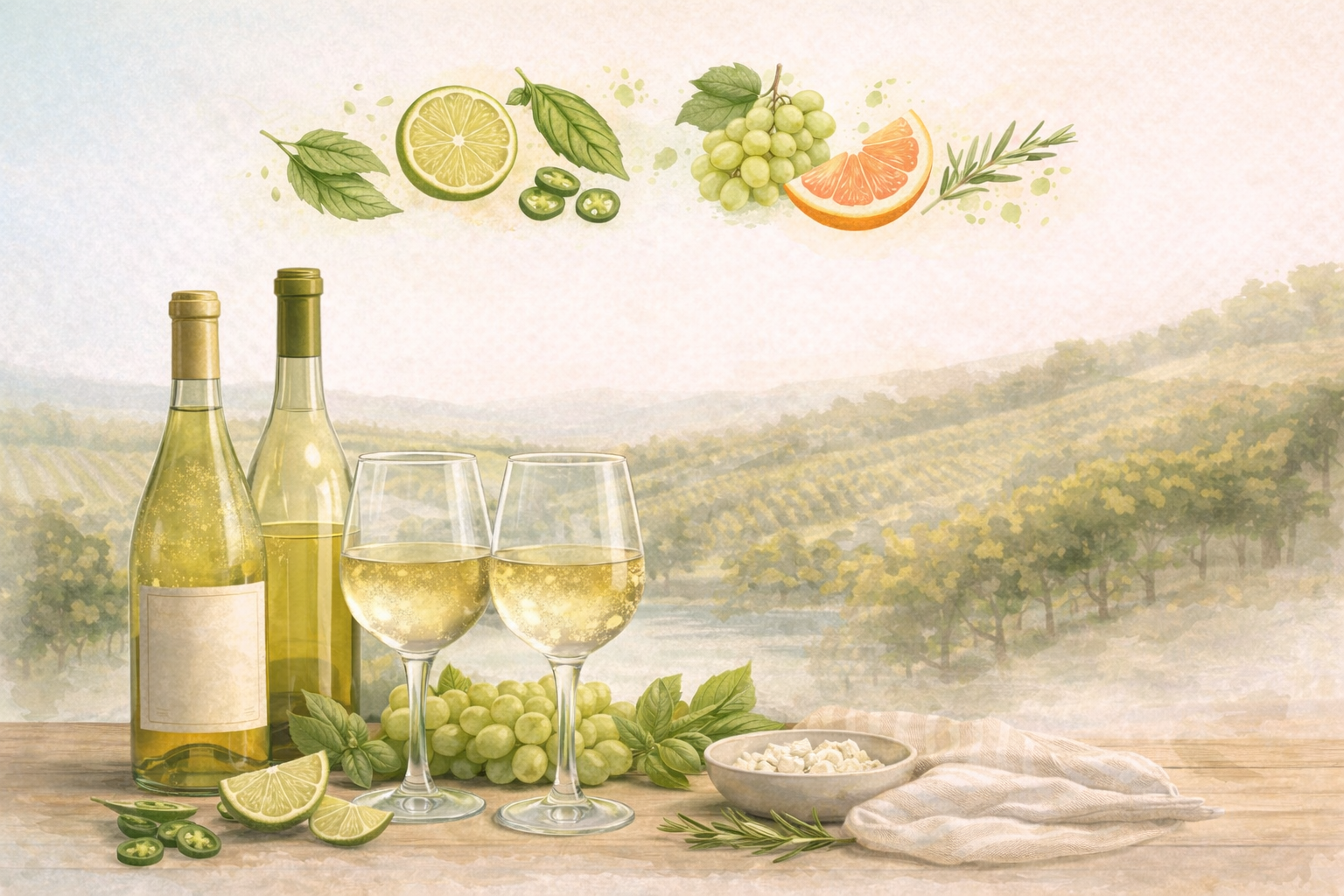
If you’ve ever had a white wine that tasted bright, zippy, citrusy, or a little grassy, there’s a good chance it was Sauvignon Blanc. It’s one of the easiest white wines to recognize once you know what to look for and one of the easiest to enjoy if you like wines that feel fresh, clean, and lively. But Sauvignon Blanc can also be confusing at first. Sometimes it tastes like lime and grapefruit. Sometimes it tastes like herbs, cut grass, or even jalapeño. Sometimes it feels sharp and lean. Other times it’s softer and more tropical.
So what’s actually going on? This guide breaks down what Sauvignon Blanc tastes like, why it tastes that way, and how to know if it’s the kind of white wine you’ll actually like.
What Is Sauvignon Blanc?
Sauvignon Blanc is a white grape variety known for producing wines that are usually:
high in acidity
light to medium in body
fresh and aromatic
often citrusy, herbal, or mineral-driven
In plain English, Sauvignon Blanc usually feels bright, crisp, and refreshing, not rich, heavy, or creamy. If Chardonnay often lives in the rounder, softer, richer part of the white wine world, Sauvignon Blanc usually lives on the leaner, sharper, fresher side. That’s part of why it’s so popular it tends to feel clean and easy to drink, especially if you don’t love heavier white wines.
If you’re still figuring out what kind of wines you gravitate toward, this is a good grape to understand because it sits clearly on the fresh end of the spectrum. If that language still feels fuzzy, our post on Fresh vs Rich Wines: A Better Way to Choose What You’ll Like helps make that distinction easier.
What Does Sauvignon Blanc Taste Like?
The short version: citrus + green fruit + herbs + freshness. Common Sauvignon Blanc tasting notes include:
lime
grapefruit
lemon zest
green apple
gooseberry
passionfruit
fresh-cut grass
jalapeño
bell pepper
herbs
wet stone
That sounds like a weird mix until you actually taste it. The easiest way to think about Sauvignon Blanc is this; it usually tastes bright, green, energetic, and lifted rather than soft, creamy, or mellow. That “green” character is a big part of its identity. In some wines, it shows up as fresh herbs or citrus peel. In others, it can lean more into grass, green pepper, or leafy notes. That doesn’t mean it’s bad or underripe. That’s often exactly what makes Sauvignon Blanc feel so distinctive.
Why Does Sauvignon Blanc Taste So “Herbal”?
This is one of the reasons people either love Sauvignon Blanc immediately or need a second date with it. Some Sauvignon Blancs have a very obvious herbal or grassy quality, and that comes from the grape itself plus where and how it’s grown.
Cooler climates tend to preserve:
acidity
green fruit character
herbal aromas
Warmer climates tend to push Sauvignon Blanc toward:
riper citrus
tropical fruit
softer edges
So if you’ve had one Sauvignon Blanc that tasted like lime and grass and another that tasted more like passionfruit and grapefruit, that doesn’t mean one of them was “wrong.” It just means Sauvignon Blanc has range.
That’s also part of why it shows up so often in places like the Loire Valley, where climate and style help create some of the most classic versions of the grape. If you want a region-level version of this conversation, our Loire Valley Wine Guideis a great next read.
Is Sauvignon Blanc Dry or Sweet?
Most Sauvignon Blanc is dry. That means it usually has little to no residual sugar, even if it smells fruity or tastes juicy. This is where a lot of people get tripped up. A wine can taste like grapefruit, pineapple, passionfruit and/or peach and still be completely dry.
That’s because fruit flavor is not the same thing as sweetness. Sauvignon Blanc often tastes very expressive and aromatic, which can make it feel more “fruit-forward” than people expect from a dry white wine. But in most cases, it still lands firmly in the dry category. If dry wine still feels confusing, you’re not alone — and our post on Wine Styles Explained: Light, Medium, and Full (Across Red & White) can help you better understand where Sauvignon Blanc fits overall.
What Does Sauvignon Blanc Feel Like in Your Mouth?
This matters just as much as flavor. Sauvignon Blanc usually feels:
light to medium-bodied
high in acidity
bright and mouthwatering
clean on the finish
That’s why it often feels so “refreshing.” You’re not just tasting citrus or herbs, you’re also feeling:
tension
lift
crispness
energy
This is the kind of wine that often makes your mouth water a little after you sip it. That’s acidity doing its job. If Chardonnay can sometimes feel broader or rounder, Sauvignon Blanc usually feels more angular and refreshing. That’s one of the easiest ways to know if you’ll like it:
If you like wines that feel clean, crisp, and lively, Sauvignon Blanc is probably worth exploring.
If you prefer wines that feel softer, creamier, or more mellow, it may not be your first pick.
Where Sauvignon Blanc Usually Falls on the Style Spectrum
Sauvignon Blanc is usually:
fresh
crisp
light to medium-bodied
high-acid
more herbal than creamy
It is usually not:
buttery
rich
heavy
soft
oak-driven
That’s why Sauvignon Blanc is such a useful “reference wine” for beginners. It teaches you how to recognize:
acidity
freshness
herbal notes
lighter white wine structure
And once you know what Sauvignon Blanc tastes like, it becomes easier to compare it to other whites later.
Who Usually Likes Sauvignon Blanc?
Sauvignon Blanc is a great fit if you tend to like:
crisp white wines
citrusy flavors
dry wines
refreshing wines
herbal or mineral styles
lighter-feeling wines
It’s especially good for people who say things like:
“I don’t want anything too sweet.”
“I want something clean and fresh.”
“I don’t love buttery Chardonnay.”
“I want a white wine that feels easy to drink.”
That last one matters. Sauvignon Blanc is one of those wines that often feels immediately understandable, even if you’re still learning wine. And that makes it useful.
What to Try If You Like Sauvignon Blanc
If Sauvignon Blanc clicks for you, that tells you something important about your palate. You may naturally prefer wines that are:
higher in acidity
lighter in body
fresher in style
more citrus/herbal than creamy/oaky
That gives you a much better roadmap for what to try next. You may also like:
dry Riesling
unoaked Chardonnay
Loire whites
crisp rosé
other fresh, mineral-driven white wines
And if Sauvignon Blanc doesn’t click? That’s useful too. That may mean you prefer wines that feel:
softer
rounder
richer
less sharp
That’s exactly the kind of pattern worth paying attention to because once you start noticing those preferences, choosing wine gets dramatically easier.
Final Take
Sauvignon Blanc is popular for a reason. It’s one of the clearest examples of a wine that feels:
fresh
bright
dry
alive
And once you know how to recognize its mix of citrus, herbs, acidity, and crisp structure, it becomes a really helpful wine for building your palate. Not because you need to memorize it. But because it teaches you what you actually like.
If you’re starting to notice patterns in what you like crisp vs rich, herbal vs fruity, sharp vs smooth that’s exactly the kind of thing worth tracking. Somm Scribe helps you log wines, remember what stood out, and make sense of your taste over time.
