
Wine Tasting Notes Explained (With Examples & Simple Template)
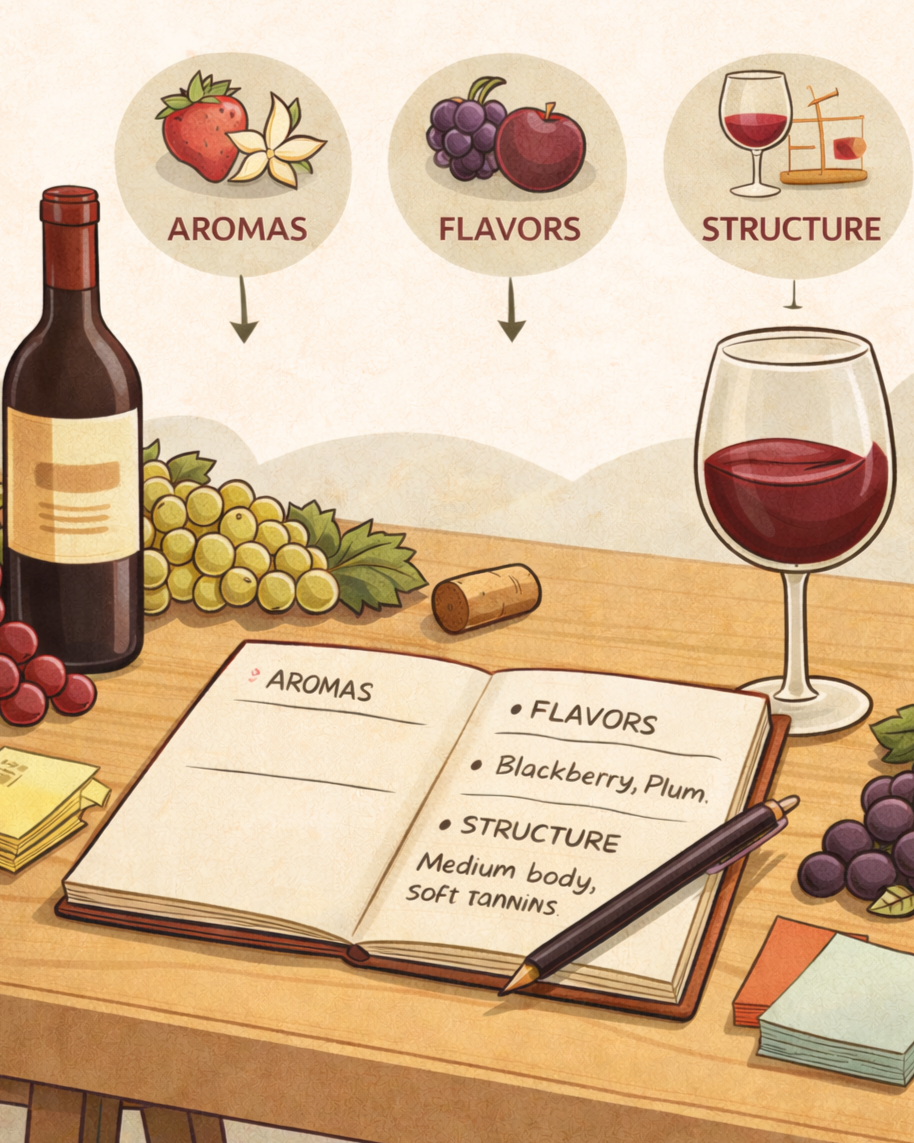
Wine tasting notes are a simple way to describe what you smell, taste, and feel in a wine. They don’t need to be complicated or technical. In fact, the best tasting notes are clear, simple, and personal. In this guide, you’ll learn:
what wine tasting notes are
how to write them step by step
simple examples you can follow
and an easy template you can use right away
Trying to figure out what wines you actually like? Somm Scribe helps you save tasting notes, track patterns, and remember bottles worth buying again.
What Are Wine Tasting Notes?
Wine tasting notes are short descriptions of a wine’s:
Aromas (what you smell)
Flavors (what you taste)
Structure (how the wine feels in your mouth)
They help you remember what you like, compare wines, and make better choices over time. That’s all they are—no need to overcomplicate it. If you’re brand new to wine tasting, it helps to start with a beginner’s guide to How to Taste Wine.
A Simple Wine Tasting Note Template
You don’t need a paragraph or poetic language. This format works perfectly:
Aromas:
What you smelled
Flavors:
What you tasted
Structure:
Body, acidity, tannins, finish
Overall impression:
One short sentence about how the wine felt
That’s a complete tasting note.
Why Wine Tasting Notes Matter
Tasting notes aren’t about being “right” or impressive. They’re about making wine easier to understand.
You remember what you liked
Instead of “that one wine in the blue bottle,” you get:“I like citrusy, high-acid white wines.”
You learn your palate
Over time, patterns start to show:
fruit-forward reds
low-tannin wines
tropical white wines
earthy, Old World styles
You shop better
Wine shops and menus become easier to navigate.
You build confidence
You stop guessing—and start trusting your own experience.
How to Write Wine Tasting Notes (Step-by-Step)
Step 1: Describe the Aromas
Swirl the glass and take a slow sniff.
Ask yourself:
Do I smell fruit?
Is it floral, herbal, or earthy?
Do I notice spice or vanilla?
Common aroma categories:
Fruit: apple, lemon, cherry, blackberry
Floral: rose, jasmine
Herbal: mint, dried herbs
Spice: vanilla, cinnamon
Earthy: mushroom, tobacco
You don’t need to be specific. Broad categories are enough.
Step 2: Describe the Flavors
Take a sip and notice the overall impression.
Ask yourself:
Do I taste fruit or citrus?
Is it sweet or dry?
Do I notice oak or spice?
Does it feel fresh or soft?
Flavors often mirror aromas—but not always.
Step 3: Describe the Structure
Structure is how the wine feels in your mouth.
Focus on:
Body: light, medium, or full
Acidity: does your mouth water?
Tannins: do your gums feel dry? (mostly in red wine)
Finish: how long does the flavor last?
Even identifying one of these is enough to write a useful note.
Wine Tasting Notes Examples (Beginner-Friendly)
Example 1 — Sauvignon Blanc
Aromas: Lime, grapefruit, fresh herbs
Flavors: Lemon, green apple, grassy notes
Structure: Light body, high acidity, crisp finish
Overall: Bright and refreshing, great with seafood
Example 2 — Pinot Noir
Aromas: Cherry, raspberry, light spice
Flavors: Red fruit, subtle oak, earthy notes
Structure: Light body, soft tannins, medium acidity
Overall: Smooth, easy-drinking red
Example 3 — Cabernet Sauvignon
Aromas: Blackberry, cassis, vanilla
Flavors: Dark fruit, spice, oak
Structure: Full body, firm tannins, long finish
Overall: Rich and structured
Use this same tasting note structure inside Somm Scribe so you can remember what you smelled, tasted, rated, and would buy again.
What Makes a Good Tasting Note?
A good tasting note is:
Clear
Simple
Honest
You don’t need:
fancy vocabulary
rare flavor references
perfect accuracy
A simple note like:
“Fresh, medium-bodied, with soft tannins and a smooth finish”
…is far more useful than something overly complicated.
Common Beginner Mistakes
Most people don’t struggle because they lack ability—they struggle because they rush.
Skipping the smelling step
Focusing only on flavor
Trying to identify too many aromas
Not writing anything down
Wine tasting improves quickly when you slow down.
Tips for Writing Better Tasting Notes
Don’t force specifics
Compare wines side by side
Use the same words consistently
Write notes right after tasting
Consistency builds skill faster than complexity.
Why Writing Your Tasting Notes Changes Everything
This is where things start to click. When you write even a few words:
patterns emerge
preferences become clear
confidence grows
That’s why sommeliers keep notebooks. And it’s exactly what Somm Scribe is designed to help you do—track your wines, notice patterns, and build real understanding over time.
Build your personal wine memory.
Save what you drank, what you noticed, and whether you’d buy it again. Over time, Somm Scribe helps you understand your taste instead of guessing every time you shop.
