
How to Choose Wine at the Grocery Store Without Overthinking It
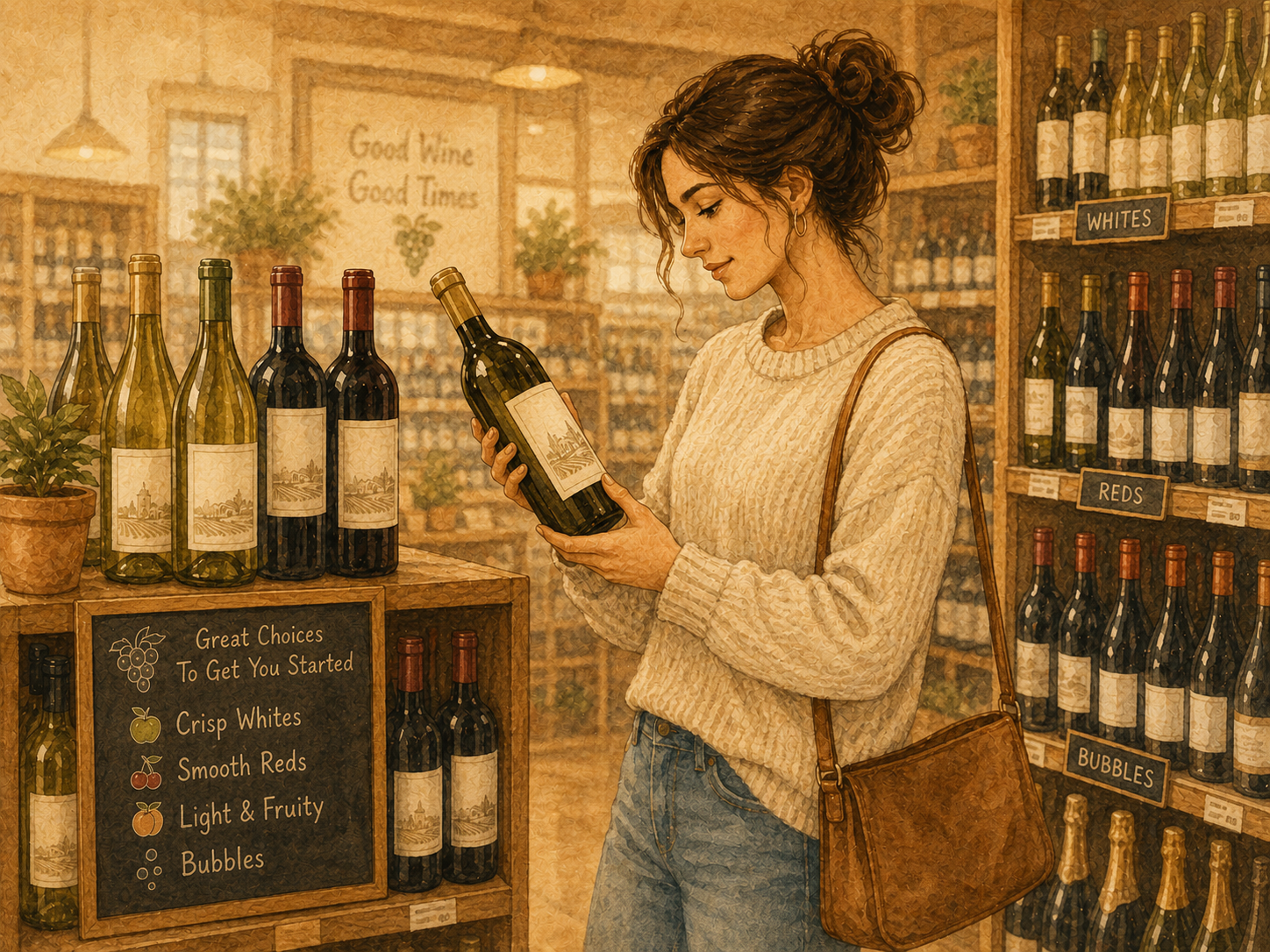
Standing in the grocery store wine aisle can feel strangely intimidating. There may be hundreds of bottles arranged by grape, country, region, price, or some system that is not immediately obvious. Labels mention vineyards you have never heard of. Shelf tags promise everything from “silky” to “jammy.” And somehow, you are supposed to pick the right bottle before your frozen food starts melting.
The good news is that you do not need to understand every grape, region, or vintage to choose a wine you will enjoy. You just need a simple way to narrow down your options. This guide will help you choose wine at the grocery store based on what you actually like, what you are eating and how much you want to spend without standing in the aisle researching every bottle on your phone.
Start With the Occasion
Before looking at grape varieties or wine labels, ask one basic question: What is this wine for?
You might be buying wine for:
A casual weeknight dinner
Pizza or takeout
A holiday or dinner party
A gift
A relaxing glass after work
Something new to try
A bottle you already know you like
The occasion helps determine how much thought and money you really need to put into the decision. A casual Tuesday night bottle does not need to be impressive. It just needs to taste good to you. A bottle for a dinner party might need to work with several foods and appeal to different preferences. Knowing the purpose of the bottle immediately makes the wine aisle feel smaller.
Decide Between Red, White, Rosé, or Sparkling
You do not need to begin with a specific grape. Start with the broadest category.
Choose red wine when you want:
Darker fruit flavors
A richer or warmer drinking experience
Something to serve with burgers, steak, pasta, or roasted meat
A wine that feels smooth, bold, or savory
Choose white wine when you want:
A lighter or more refreshing wine
Citrus, apple, pear, or tropical fruit flavors
Something to serve with seafood, chicken, salads, or lighter meals
A crisp or creamy drinking experience
Choose rosé when you want:
Something refreshing but slightly fruitier than many white wines
A versatile option for warm weather, appetizers, or casual gatherings
A wine that can work with several different foods
Choose sparkling wine when you want:
Something celebratory
A refreshing aperitif
A wine for salty foods, fried foods, brunch, or snacks
A bottle that feels special without necessarily costing a lot
There is no rule saying red wine is more serious or that sparkling wine is only for celebrations. Pick the category that sounds best at that moment.
Think in Terms of Style, Not Expertise
Most casual wine buyers do not need to memorize regions or producers. It is more useful to understand a few basic style preferences. Ask yourself which of these sounds best:
Light and crisp
Fruity and refreshing
Smooth and mellow
Rich and creamy
Bold and full-bodied
Dry and savory
Once you know the style you want, you can look for familiar grapes that commonly fit it.
For light and crisp wines, try:
Sauvignon Blanc
Pinot Grigio
Albariño
Dry Riesling
Vinho Verde
For smooth and mellow reds, try:
Merlot
Pinot Noir
Grenache
Red blends described as smooth or medium-bodied
For bold and full-bodied reds, try:
Cabernet Sauvignon
Malbec
Syrah or Shiraz
Zinfandel
For rich or creamy whites, try:
Oaked Chardonnay
White Rhône-style blends
Viognier
These are general patterns, not guarantees. Winemaking style, climate and region can all affect how a bottle tastes. But this is more than enough information to make a reasonable grocery-store decision.
Stop guessing which bottles you liked.
Record the wines you try, what they tasted like and whether you would buy them again with Somm Scribe.
Set a Price Range Before You Browse
One of the easiest ways to reduce decision fatigue is to choose your budget before studying the shelves. For an everyday grocery-store bottle, a practical starting range is often around $10 to $20. You can certainly find enjoyable wines below or above that range, but setting a limit prevents you from comparing a $9 bottle with a $35 bottle as though they serve the same purpose.
Price does not automatically tell you whether you will like a wine. A more expensive wine may use higher-quality fruit, come from a more prestigious location, or require more labor to produce. That does not mean it will match your personal preferences. A $28 earthy, tannic red is not a better purchase for you if you would be happier with a smooth $14 Merlot.
For a deeper explanation, read Price vs Quality in Wine. It explains what you may actually be paying for and why spending more does not guarantee greater enjoyment.
A simple grocery-store price strategy
Use these ranges as a loose starting point:
Under $10: Look for simple, fruity, easy-drinking wines from reliable producers.
$10 to $15: A strong range for casual weeknight bottles.
$15 to $25: Often offers more variety, balance and regional character.
Over $25: Consider this when you want something specific, special, or more complex.
These are not quality rankings. They are simply useful shopping categories.
Read the Helpful Parts of the Label
Wine labels can be confusing because they do not all organize information the same way. Some bottles prominently display the grape variety, such as Cabernet Sauvignon or Chardonnay. Others emphasize the region, producer, vineyard, or traditional wine name. You do not need to decode every detail. Focus on a few useful clues:
Grape variety
Country or region
Alcohol percentage
Sweetness terminology
Producer
Back-label description
If a bottle lists a grape you already know you enjoy, that is usually a better clue than an illustration, fancy crest, or impressive-sounding vineyard name. The alcohol percentage can also offer a rough hint about style. Lower-alcohol wines may feel lighter, while higher-alcohol wines may feel fuller, warmer, or riper. This is not a perfect rule, but it can help you compare similar bottles. The back label may include words such as:
Crisp
Bright
Juicy
Creamy
Oaky
Smooth
Full-bodied
Tannic
Dry
Sweet
Treat these descriptions as clues rather than promises. For a complete breakdown of the terms and information you may see, visit How to Read a Wine Label.
Use the Shelf Tags But Do Not Trust Them Completely
Many grocery stores place tasting notes, ratings, staff recommendations, or food-pairing suggestions below the bottles. These can be useful, especially when they describe the wine’s style in plain language. A shelf tag that says “light-bodied with cherry flavors and soft tannins” gives you information you can actually use.
A large score by itself is less helpful. A wine rated 92 points may be well-made according to a particular critic, but that does not mean you will personally enjoy it. Critics may reward complexity, tannin, aging potential, or intensity qualities that are not always what a casual buyer wants. Prioritize descriptions that match your preferences over the highest numerical score.
Be Careful With Vague Marketing Words
Wine packaging often uses attractive language that does not tell you much. Words such as “premium,” “reserve,” “select,” “private collection,” or “vintner’s choice” may sound impressive, but their meaning varies. In some regions, certain terms are regulated. In many grocery-store contexts, they are primarily marketing language.
Instead of choosing the bottle with the fanciest wording, look for details that connect to taste:
Is it light or full-bodied?
Is it dry or sweet?
Does it mention citrus, berry, vanilla, herbs, or spice?
Is it described as crisp, soft, creamy, or bold?
Have you enjoyed this grape or producer before?
The front label is designed to catch your attention. Your job is to look past the design and find useful information.
Match the Wine to the Main Flavor of the Meal
Wine pairing does not need to be complicated. Rather than matching wine only to the protein, think about the strongest flavor on the plate. For example:
Chicken with a creamy sauce may work better with Chardonnay than a very light white wine.
Spicy tacos may work better with off-dry Riesling, rosé, or a fruity red than a highly tannic Cabernet.
Pasta with tomato sauce often works well with Sangiovese, Chianti, Barbera, or another bright red with noticeable acidity.
Burgers can work with Cabernet Sauvignon, Malbec, Zinfandel, or a red blend.
Pizza is flexible and can pair with Sangiovese, Barbera, Montepulciano, Grenache, or an approachable red blend.
Salmon can work with Pinot Noir, Chardonnay, rosé, or Sauvignon Blanc depending on the preparation.
When serving several foods, choose a versatile wine rather than chasing a perfect pairing. Pinot Noir, dry rosé, Sauvignon Blanc, sparkling wine and medium-bodied red blends are often flexible grocery-store options.
Understand Why Some Inexpensive Wines Taste Harsh
Affordable wine is not automatically bad. Plenty of inexpensive bottles are enjoyable, balanced and well-suited to casual drinking. However, some low-priced wines may taste unusually bitter, sour, hot, sharp, or rough. That harshness may come from:
Strong tannins
High acidity
Noticeable alcohol
Too much sweetness
An imbalance between the wine’s components
A style that simply does not match your preferences
A bold young red may taste rough when opened but soften slightly after sitting in the glass. A very acidic white may taste sharp on its own but much better with food. Sometimes, though, you simply do not like the bottle and that is useful information. Read Why Cheap Wine Can Taste Harshto understand what may be causing that rough sensation and how to make better choices next time.
Pick Reliable Grapes When You Are Unsure
Trying new wines is worthwhile, but every grocery trip does not need to be an experiment. When you are tired, rushed, or buying for a regular dinner, choose a grape or style you already understand. A few dependable beginner-friendly directions include:
For a refreshing white
Look for Sauvignon Blanc, Pinot Grigio, or an unoaked Chardonnay.
For a smoother red
Look for Merlot, Pinot Noir, Grenache, or a red blend described as soft or medium-bodied.
For a bolder red
Look for Malbec, Cabernet Sauvignon, Syrah, or Zinfandel.
For something slightly sweet
Look for off-dry Riesling, Moscato, or a bottle clearly marked semi-sweet.
For a versatile gathering wine
Consider dry rosé, sparkling wine, Pinot Noir, or Sauvignon Blanc.
This is not about finding the universally best grape. It is about giving yourself a manageable starting point.
Found a dependable grocery-store bottle? Save it before you forget it.
Somm Scribe helps you track your favorites and recognize the grapes, regions and styles you consistently enjoy.
When in Doubt, Choose the Familiar Producer
If you have enjoyed a bottle from a particular producer before, exploring another wine from that producer can be a reasonable next step. Producers often maintain a recognizable house style. Their wines may lean fruitier, drier, richer, more restrained, or more approachable across several grape varieties.
This does not mean every bottle will taste the same. It simply gives you one more useful clue when facing an unfamiliar shelf. You can also look for:
A grape you recognize from a country you have enjoyed before
Another bottle from a familiar region
A similar tasting description
A comparable alcohol level
The same level of sweetness
Each bottle you try gives you information for your next purchase.
Avoid Buying Entirely Based on the Label Design
An attractive label can absolutely be part of the fun. Wine is a physical product and packaging affects how we perceive it. But a beautiful label tells you almost nothing about whether the wine is crisp, sweet, bold, tannic, oaky, or smooth.
When two bottles seem equally suitable, choosing the better-looking label is perfectly reasonable. Just do not let the artwork replace every other buying clue. A minimalist label is not automatically more sophisticated. A traditional label is not automatically higher quality. A playful label is not automatically cheap or sweet. Use the design as a tiebreaker not your entire decision-making system.
Ask an Employee One Specific Question
You do not need to give a lengthy explanation or prove that you understand wine. A specific question will usually get a more useful recommendation than asking, “What wine is good?”
Try saying:
“I want a smooth red under $15 that is not too dry.”
“I need a crisp white for seafood.”
“I usually like Sauvignon Blanc. Is there something similar I should try?”
“I need a red for pizza that will appeal to several people.”
“I want a Chardonnay that is not heavily oaked.”
“I liked this bottle. Is there anything similar?”
A helpful employee can work with those details. Even when the employee is not a wine specialist, narrowing the question by color, style, food and budget improves your chances of receiving a relevant answer.
Build a Small Rotation of Dependable Wines
The easiest way to stop overthinking grocery-store wine is to create a personal rotation. Your rotation might include:
One crisp white
One richer white
One light or smooth red
One bold red
One rosé or sparkling wine
One inexpensive crowd-pleaser
You do not need to buy the exact same bottle every time. You can rotate between a few grapes, producers, or regions that regularly work for you. This gives you a reliable fallback while still leaving room to experiment. For example, your rotation might look like:
Sauvignon Blanc for salads, seafood, or warm evenings
Chardonnay for chicken, creamy pasta, or sipping
Pinot Noir for flexible food pairing
Malbec for burgers or grilled meat
Dry rosé for gatherings
Prosecco for brunch or appetizers
Read How to Build a Go-To Wine Rotation for a simple system that helps you keep dependable options on hand without getting bored.
Use the One-New-Bottle Rule
If you want to learn more about wine without wasting money, use a simple shopping rule: Buy one familiar bottle and one new bottle.
The familiar bottle gives you a dependable option. The new bottle helps you explore a different grape, region, producer, or style. This removes the pressure for every unfamiliar purchase to be perfect. When trying something new, change only one or two variables at a time. For example:
Try the same grape from a different country.
Try a different grape with a similar style.
Try a bottle from the same producer.
Move slightly above or below your normal price.
Compare an oaked and unoaked version of the same grape.
That makes it easier to understand why you preferred one bottle over another.
A Simple Grocery-Store Wine Checklist
When you are standing in the aisle, use this process:
Choose the occasion.
Is this for dinner, a gathering, a gift, or casual drinking?Choose the category.
Red, white, rosé, or sparkling?Choose the style.
Crisp, fruity, smooth, creamy, or bold?Set your budget.
Decide what you want to spend before comparing bottles.Look for useful clues.
Check the grape, region, alcohol percentage and tasting description.Consider the food.
Match the wine to the strongest flavors in the meal.Choose familiar or experimental.
Decide whether you want a safe option or something new.Make the decision and move on.
You do not need to find the single best bottle in the store.
A good wine purchase is one that fits your budget, matches the situation and gives you a reasonable chance of enjoying it.
What to Remember After You Drink It
Choosing the bottle is only half the process. After you taste it, write down:
The wine name
Grape or blend
Approximate price
Where you bought it
Whether it tasted light, smooth, crisp, rich, or bold
Flavors you noticed
What you ate with it
Whether you would buy it again
You do not need to write a professional tasting note. Even a sentence such as “smooth red, lots of dark fruit, good with burgers, would buy again” gives you useful information. Over time, those notes reveal patterns.
You may discover that you prefer New Zealand Sauvignon Blanc, California Zinfandel, Argentine Malbec, dry rosé, or unoaked Chardonnay. You may learn that wines above a certain alcohol level feel too heavy or that you regularly dislike strongly oaked whites. That knowledge makes every future grocery-store trip easier.
Final Sip
There is no secret bottle that every shopper should buy. The right wine depends on your budget, your meal, your mood and your personal taste. Ratings, regions, vintages and expert recommendations can all be helpful, but they are secondary to what you actually enjoy drinking. Start with a broad style. Set a comfortable budget. Use the label for clues. Keep track of what works.
Then give yourself permission to make a decision without analyzing every bottle in the aisle. You are not taking a wine exam. You are buying something to enjoy.
Make your next wine purchase easier than the last.
Track what you liked, what you did not and which bottles deserve a place in your regular rotation.
