
Best Wine for Beginners: How to Pick Your First Few Bottles
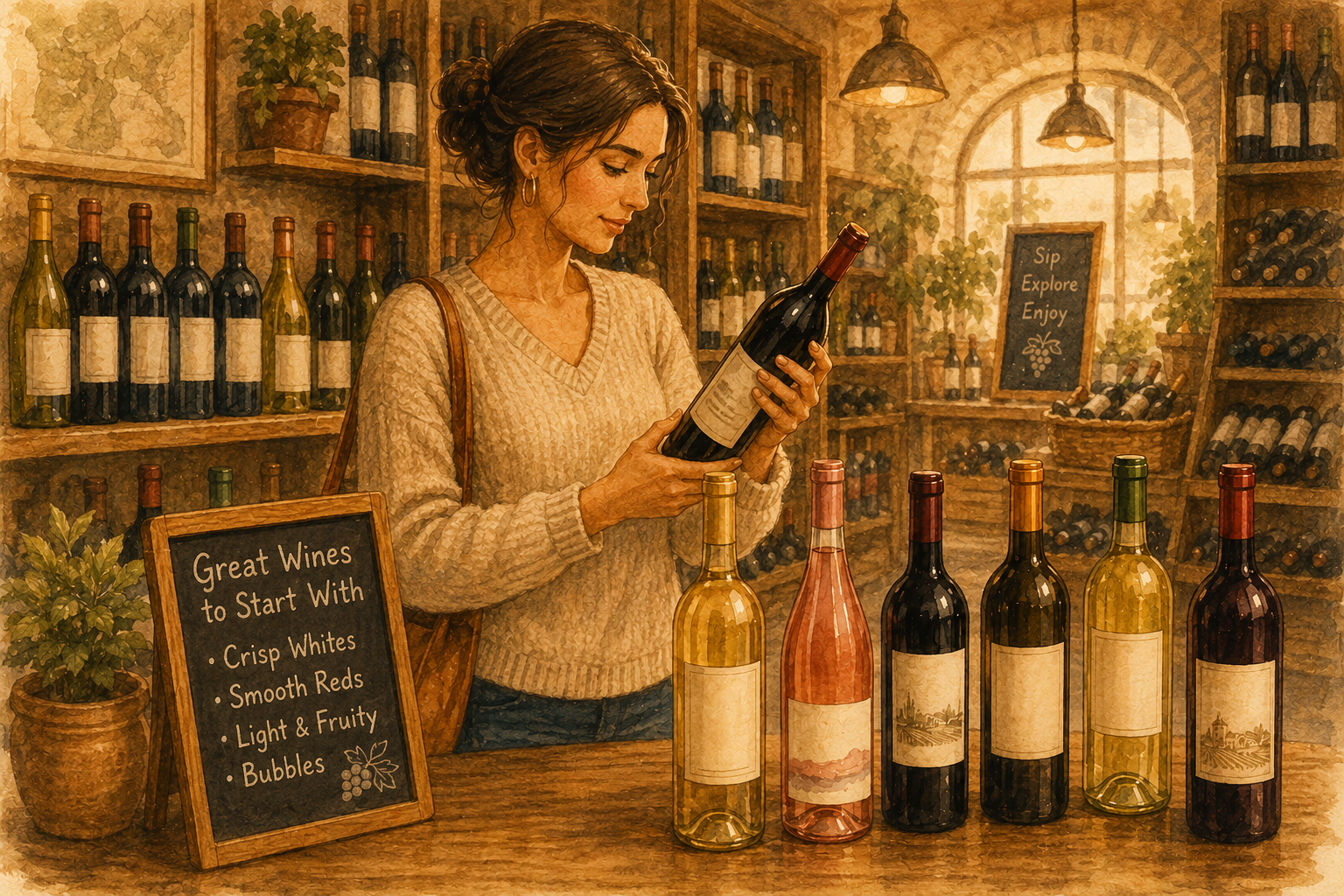
Walking into a wine shop as a beginner can feel unnecessarily complicated. There are hundreds of bottles, unfamiliar regions, different grape varieties, and labels that rarely explain what the wine will actually taste like. Even a simple question like “What is a good wine for beginners?” can lead to an overwhelming number of answers. The good news is that you do not need to understand every grape, region, or vintage before buying wine.
Your first few bottles are simply an opportunity to discover what kinds of flavors and textures you enjoy. Instead of searching for the single “best” beginner wine, choose a small variety of approachable bottles that help you compare different styles. This guide will show you which wines to start with, what to look for when shopping, and how to gradually figure out your personal taste.
There Is No Single Best Wine for Every Beginner
Wine preferences are personal. One person might immediately enjoy a crisp, refreshing Sauvignon Blanc. Someone else may prefer a smooth red wine with ripe fruit flavors. Another beginner may find that they enjoy sweeter or sparkling wines more than traditional dry reds and whites. That is why choosing your first wines should be less about finding the bottle that experts consider “best” and more about trying a few noticeably different options. A useful starting point is to think about four broad characteristics:
Light or full-bodied
Crisp or soft
Dry or slightly sweet
Fruity or earthy
You do not need to memorize these terms. They simply give you an easier way to describe what you like. Our guide to Wine Styles Explained breaks down the major wine styles in beginner-friendly language.
Ready to start figuring out what you like?
The Best First Wines for Beginners
Rather than buying several similar bottles, choose wines that give you a range of flavors and textures.
The following wines are widely available, relatively easy to understand, and useful for discovering your preferences.
1. Sauvignon Blanc: Crisp, Fresh, and Refreshing
Sauvignon Blanc is one of the easiest wines for beginners to recognize. It is usually light-bodied, dry, and high in acidity, which gives it a crisp and refreshing taste. Common flavors include citrus, green apple, grapefruit, herbs, and tropical fruit. You may enjoy Sauvignon Blanc if you like:
Lemon or lime flavors
Tart fruit
Refreshing drinks
Wines that feel clean and lively
Light seafood, salads, or fresh vegetables
Sauvignon Blanc is a good first bottle because its personality is usually easy to notice. It can help you determine whether you enjoy bright, acidic wines. Look for bottles from New Zealand if you want bold grapefruit and tropical fruit flavors. French Sauvignon Blanc, particularly from the Loire Valley, may taste more subtle, mineral, or herbal.
2. Chardonnay: Smooth, Versatile, and Widely Available
Chardonnay can taste very different depending on how it is made. Some Chardonnay is light, fresh, and citrusy. Other versions are richer, creamier, and more buttery, with flavors of vanilla or baking spice. This makes Chardonnay especially useful for beginners because it demonstrates how winemaking can change the flavor and texture of the same grape. You may enjoy Chardonnay if you like:
Apple, pear, peach, or pineapple flavors
Creamy textures
Vanilla or buttery flavors
A white wine with more body
Chicken, pasta, seafood, or creamy sauces
When shopping, look for the words unoaked or oaked. Unoaked Chardonnay is typically fresher and crisper. Oaked Chardonnay is usually richer, softer, and more likely to have vanilla, toast, or butter flavors. Our beginner comparison of Chardonnay vs Sauvignon Blanccan help you decide which white wine is more likely to match your taste.
3. Pinot Grigio: Light, Simple, and Easy to Drink
Pinot Grigio is often a safe choice for beginners who want a light and uncomplicated white wine. It is typically dry, crisp, and subtle, with flavors such as lemon, green apple, pear, or white peach. It usually does not feel heavy, intensely sweet, or strongly oaked. You may enjoy Pinot Grigio if you like:
Mild, refreshing flavors
Light-bodied drinks
Dry white wines
Wines that do not overpower food
Simple seafood, salads, or appetizers
Pinot Grigio may not be the most complex wine, but that can be helpful when you are just getting started. It gives you a clear example of a light, crisp style.
4. Riesling: Fruity, Aromatic, and Sometimes Sweet
Riesling is an excellent beginner wine, especially for people who are unsure whether they enjoy completely dry wine. It is highly aromatic and often has flavors of apple, peach, apricot, citrus, or flowers. Riesling can range from bone-dry to noticeably sweet, so checking the label or asking for help is important. You may enjoy Riesling if you like:
Fruity flavors
Floral aromas
A little sweetness
Spicy foods
Wines with bright acidity
A slightly sweet Riesling can be a comfortable introduction for someone who finds dry wine too sharp or bitter. It also pairs especially well with spicy Asian dishes, barbecue, and salty foods. Ask a wine shop employee for an off-dry Riesling if you want a wine that is slightly sweet without tasting like dessert.
5. Pinot Noir: A Lighter Introduction to Red Wine
Pinot Noir is one of the most approachable red wines for beginners. It is generally lighter in body than Cabernet Sauvignon and usually has softer tannins. Common flavors include cherry, strawberry, raspberry, herbs, and earthy spices. You may enjoy Pinot Noir if you like:
Red fruit flavors
Lighter, smoother reds
Wines that are not too heavy
Chicken, salmon, mushrooms, or pork
A softer introduction to dry red wine
Pinot Noir is a good first red because it often feels less drying and powerful than heavier varieties. Look for Pinot Noir from California, Oregon, or New Zealand for fruit-forward examples. French Pinot Noir, particularly Burgundy, can be more earthy and subtle but may also be more expensive.
6. Merlot: Soft, Fruity, and Approachable
Merlot is another beginner-friendly red wine because it is often smooth, round, and fruit-forward. Typical flavors include plum, black cherry, blackberry, chocolate, and mild spice. While Merlot can still have tannins, they are often softer than those found in Cabernet Sauvignon. You may enjoy Merlot if you like:
Ripe, dark fruit
Smooth textures
Medium- to full-bodied reds
Less bitterness or dryness
Burgers, roasted meats, pasta, or pizza
Merlot is a useful middle ground between lighter Pinot Noir and more powerful Cabernet Sauvignon.
7. Cabernet Sauvignon: Bold, Structured, and Flavorful
Cabernet Sauvignon is one of the most popular red wines in the world, but it can be more intense than other beginner options. It is usually full-bodied, dry, and higher in tannin. Tannin creates the drying sensation you may notice on your gums after taking a sip. Common flavors include blackberry, black cherry, cedar, herbs, tobacco, and baking spice. You may enjoy Cabernet Sauvignon if you like:
Bold flavors
Blackberries or dark cherries
Strong coffee or dark chocolate
Grilled steak or burgers
Drinks with more structure and intensity
Cabernet Sauvignon may not be the easiest first red for everyone, but it is worth trying because it gives you a clear example of a bold wine style. Start with a ripe, fruit-forward Cabernet from California, Chile, or Australia. These are often easier for beginners than more earthy or heavily tannic versions. Read our Cabernet Sauvignon Beginner’s Guidebefore choosing your first bottle.
8. Moscato: Sweet, Fruity, and Low in Alcohol
Moscato is a popular starting point for beginners who prefer sweeter drinks. It often tastes like peach, orange blossom, apricot, or ripe citrus. Many versions are lightly sparkling and lower in alcohol than traditional dry wine. You may enjoy Moscato if you like:
Sweet flavors
Fruit-forward drinks
Light bubbles
Lower-alcohol options
Brunch, fruit, light desserts, or spicy food
There is nothing wrong with starting with sweet wine. Many people gradually explore drier styles over time, while others continue enjoying sweet wines because that is simply what they prefer. Your goal is not to develop the “correct” taste. It is to understand your own.
9. Prosecco: Fruity, Sparkling, and Easygoing
Prosecco is an approachable sparkling wine that is usually less expensive and more fruit-forward than Champagne. Common flavors include green apple, pear, peach, citrus, and flowers. It is usually light-bodied, refreshing, and easy to drink. You may enjoy Prosecco if you like:
Bubbles
Fresh fruit flavors
Light, celebratory drinks
Brunch or appetizers
Sparkling wine without intense dryness
Look for Brut if you want a drier style. Extra Dry Prosecco is confusingly a little sweeter than Brut.
A Simple Beginner Wine Shopping List
You do not need to buy every bottle mentioned above. Start with four wines that give you clear contrasts:
Sauvignon Blanc for something crisp and refreshing
Chardonnay for something rounder and potentially creamier
Pinot Noir for a lighter, softer red
Cabernet Sauvignon for a bolder, more structured red
This group lets you compare:
White wine versus red wine
Crisp versus smooth
Light-bodied versus full-bodied
Low tannin versus higher tannin
You can also replace one of the dry wines with Riesling or Moscato if you want to explore something sweeter. For another simple way to narrow your choices, read Light, Crisp, Smooth, or Bold: Which Wine Style Fits You?
How Much Should a Beginner Spend on Wine?
You do not need to buy expensive wine to learn what you like. For your first few bottles, a price range of approximately $12 to $25 is usually reasonable. There are plenty of good beginner-friendly wines in this range, and you will not feel pressured to like a bottle simply because it was expensive. Very inexpensive wine can sometimes taste overly sweet, flat, harsh, or artificial. Expensive wine, on the other hand, may have subtle qualities that are difficult to appreciate when you are still learning your preferences.
The goal of your first bottles is comparison, not collecting. Once you know which grapes and styles you enjoy, you can explore more expensive examples with greater confidence.
What to Look for on a Wine Label
Wine labels can be confusing, but beginners only need to identify a few key details.
Grape Variety
Look for familiar names such as:
Sauvignon Blanc
Chardonnay
Riesling
Pinot Noir
Merlot
Cabernet Sauvignon
Some European wines are labeled by region rather than grape, which can make them harder to understand at first. Starting with bottles that clearly list the grape variety makes shopping easier.
Region or Country
The region can offer clues about the style. For example:
New Zealand Sauvignon Blanc is often highly aromatic and citrusy.
California Chardonnay is often ripe, full-bodied, and sometimes oaky.
Oregon Pinot Noir is often elegant and red-fruited.
California Cabernet Sauvignon is often rich and dark-fruited.
You do not need to memorize regions yet. Simply write them down so you can notice patterns later.
Alcohol Percentage
Higher alcohol often contributes to a fuller, warmer, and heavier wine. As a general starting point:
Around 8% to 11% may indicate a lighter or sweeter wine.
Around 12% to 13.5% is common for many balanced table wines.
Around 14% or higher may indicate a richer, fuller-bodied style.
Alcohol percentage does not tell you everything, but it can provide a helpful clue.
Sweetness Terms
For sparkling wines, terms such as Brut usually indicate a dry style. For still wines, sweetness is not always clearly labeled. Riesling producers sometimes use a sweetness scale on the back label, but you may need to ask a store employee whether the bottle is dry, off-dry, or sweet.
Ask for Help at the Wine Shop
You do not need to pretend you know more than you do. Wine shop employees can usually give much better recommendations when you describe the flavors you already enjoy. Instead of asking, “What is a good wine?” try saying:
“I want a crisp white wine that is not sweet.”
“I want a smooth red that is not too dry.”
“I usually like fruity drinks but do not want dessert wine.”
“I want to spend around $15.”
“I am new to wine and want an approachable Cabernet.”
These details make it easier for someone to recommend a bottle that actually fits your preferences.
Do Not Judge a Wine After One Sip
The first sip is not always a reliable indicator of whether you like a wine. Wine may taste sharp, bitter, or unfamiliar at first, especially if you usually drink sweeter beverages. Take a few sips and try it with food before making a final decision.
Red wine may also improve after being open for 20 to 30 minutes. Exposure to air can soften some of the stronger aromas and tannins. You are still allowed to dislike it. The point is simply to give yourself enough time to form a fair opinion.
What to Notice When You Taste Each Bottle
You do not need to write professional tasting notes. Start with a few simple questions:
Did I like it?
Did it taste light or heavy?
Did it feel crisp, smooth, sweet, bitter, or drying?
Which fruit or flavor did it remind me of?
Did I like it better with food?
Would I buy it again?
Your answers can be extremely simple. For example:
Crisp and lemony. Very refreshing. I would drink this again in the summer.
Smooth and fruity, but a little heavier than I prefer. Good with dinner.
These observations are more useful than trying to force complicated wine vocabulary.
Keep track of each bottle while the details are fresh.
Pay Attention to Patterns, Not Individual Bottles
One bottle may not represent an entire grape variety.
You might dislike one Chardonnay because it was heavily oaked but enjoy another that was fresh and unoaked. You may dislike a very tannic Cabernet but enjoy a softer one from a warmer region.
Avoid making broad conclusions too quickly.
Instead of saying, “I hate Chardonnay,” try to be more specific:
“I did not like the buttery flavor.”
“I prefer lighter white wines.”
“I liked the fruit but not the oak.”
“I want something with more acidity.”
The more specific your notes become, the easier it will be to choose future bottles.
Common Beginner Wine-Buying Mistakes
Buying Only by the Label
An attractive label tells you very little about how the wine tastes. Check the grape, region, alcohol level, and back-label description before making a decision.
Assuming Expensive Means Better
A more expensive wine is not automatically more enjoyable. Price can reflect scarcity, production methods, reputation, aging, or region. None of those factors guarantee that the wine will match your taste.
Starting With Extremely Bold Wine
Some beginners begin with heavily tannic Cabernet Sauvignon because it is familiar and popular. There is nothing wrong with trying Cabernet, but a lighter Pinot Noir or softer Merlot may be a more comfortable introduction to red wine.
Avoiding Sweet Wine Because It Seems Less Serious
Sweetness is a preference, not a sign of inexperience. Starting with Moscato or off-dry Riesling is perfectly reasonable. You may eventually enjoy drier wines, or you may continue preferring sweeter styles.
Trying to Learn Everything at Once
You do not need to study every wine region before opening a bottle. Taste first. Pay attention. Learn the vocabulary gradually as it becomes useful.
A Simple Plan for Your First Six Bottles
Here is an easy progression that introduces several major wine styles.
Bottle 1: Sauvignon Blanc
Notice the acidity, citrus flavors, and crisp finish.
Bottle 2: Chardonnay
Compare its body and texture with the Sauvignon Blanc. Is it smoother, rounder, or creamier?
Bottle 3: Riesling
Notice whether it tastes sweeter and more aromatic. Do you prefer it to the dry whites?
Bottle 4: Pinot Noir
Focus on the lighter body, red fruit, and softer tannins.
Bottle 5: Merlot
Compare its darker fruit and fuller texture with Pinot Noir.
Bottle 6: Cabernet Sauvignon
Notice the bold flavor, heavier body, and drying sensation from tannin. By the end of these six bottles, you will probably have a clearer idea of whether you prefer:
Red or white wine
Light or full-bodied wine
Crisp or smooth textures
Dry or sweeter styles
Bright fruit or darker, richer flavors
That information is far more valuable than memorizing a list of highly rated wines.
Final Sip
Learning about wine does not begin with memorizing regions or using expert vocabulary. It begins by tasting a bottle, noticing your reaction, and remembering what you liked or disliked. Choose a few different styles. Keep the price reasonable. Compare them slowly. Write down a few honest observations after each one. Before long, you will stop wondering which wine beginners are supposed to like and start recognizing which wines are right for you.
