
Why California Wines Taste So Different From European Wines
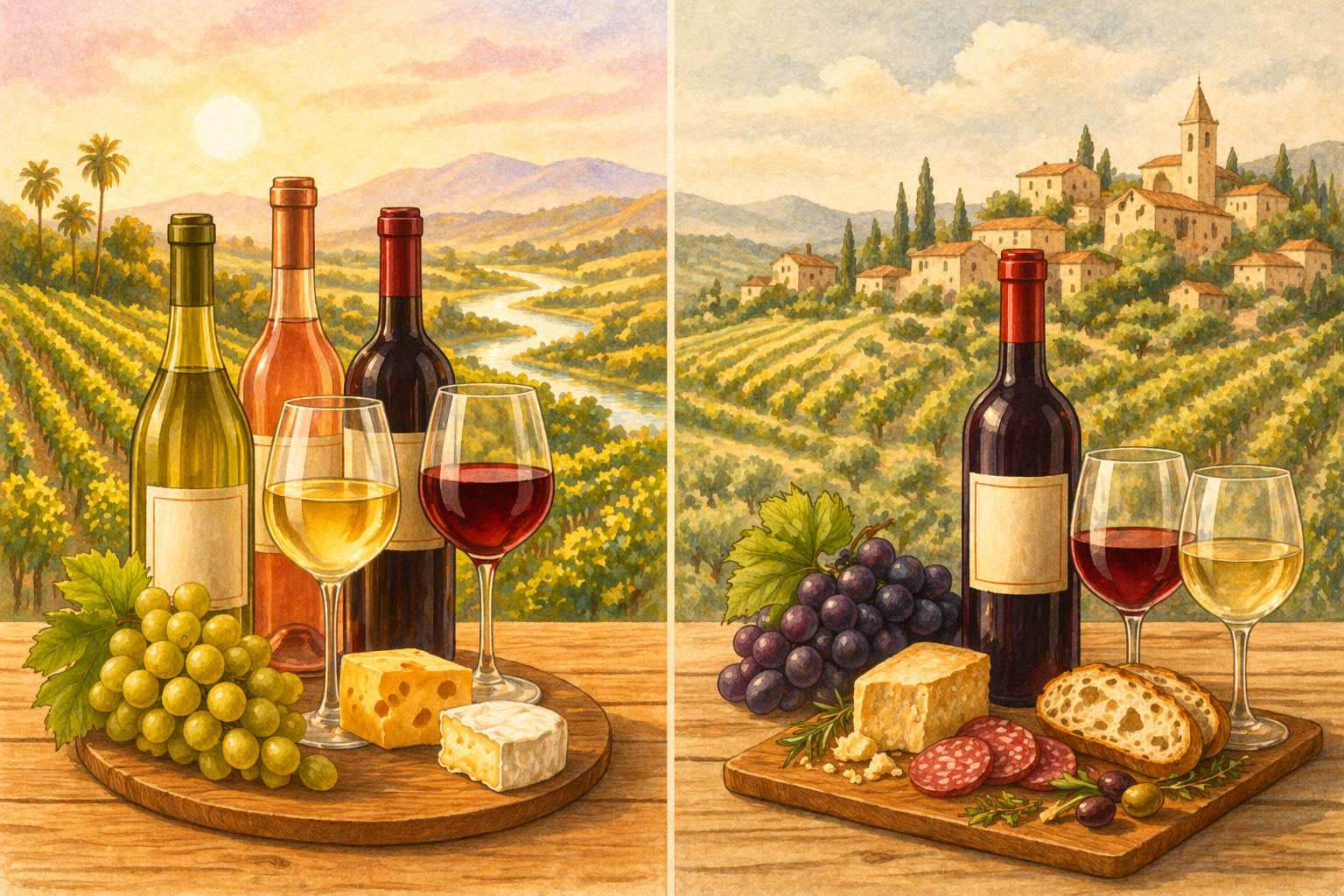
Ever notice how California wines feel bigger, richer, and more fruit-forward than European wines even when they’re made from the same grape? That’s not random. And once you understand why it happens, choosing wine gets a lot easier.
It Starts With Climate
The biggest reason California and European wines taste different comes down to two things, sunlight and temperature. California (especially places like Napa Valley) gets consistent warmth and long, sunny growing seasons. That allows grapes to ripen fully (and often more quickly).
More sun → more ripeness → more sugar → more alcohol → bigger, fruitier flavors.
European regions like Bordeaux or Tuscany are generally cooler and less predictable. Grapes ripen more slowly, which leads to wines with:
Higher acidity
Lower alcohol
More restrained fruit
This is the foundation behind what people mean when they talk about Old World vs New World wine. If you’ve ever seen that term and thought “cool… but what does that actually mean?”, this post breaks it down simply: Old World vs New World Wine.
Ripe vs Restrained: Why the Same Grape Tastes Different
Here’s where it really clicks. The same grape can taste completely different depending on where it’s grown. Take Cabernet Sauvignon:
In California → ripe blackberry, plum, sometimes even jammy
In France → blackcurrant, earth, tobacco, more structure
Same grape. Totally different experience. This is one of those moments where wine starts to make sense. Once you see it, you’ll start noticing it everywhere. If you want to go deeper into this idea, this is one of the most useful concepts to understand: Why the Same Grape Can Taste So Different.
Winemaking Style Matters Too
Climate sets the direction but winemakers still make choices. In California, the style often leans into richness:
Grapes are picked later (more ripeness)
Oak aging is more common
Textures tend to be smoother and rounder
In Europe, tradition usually pushes the opposite direction:
Earlier harvests
Less intervention
More focus on structure and balance
Neither is better, they’re just aiming for different experiences. California often says: “Let’s make this delicious right now.” Europe often says: “Let’s make this interesting over time.”
Why California Wines Feel “Bigger”
If you’ve ever thought “this wine feels heavy” or “this one is easier to sip”, you’re noticing something real. That difference is mostly driven by alcohol and ripeness.
Warmer climates → more sugar → more alcohol → fuller body.
Cooler climates → less sugar → lower alcohol → lighter body.
Once you understand this, words like bold, light, and smooth stop feeling vague and start becoming predictable.
Why This Actually Matters
This isn’t just wine theory, it’s a shortcut for making better choices. If you know what you like, you can use this to guide what you buy:
Like bold, fruit-forward wines? → lean California
Prefer lighter, more structured wines? → lean European
Now you’re not guessing based on labels—you’re choosing based on how wine behaves.
A Real-World Shortcut
Let’s say you’re deciding between:
A Napa Valley Cabernet
A Bordeaux blend
Even without knowing the producers, you can predict:
Napa → bigger, riper, smoother
Bordeaux → more structured, less fruit-forward, more earthy
That’s the kind of pattern recognition that builds real confidence. If you want to explore this style further, start here: Napa Valley Wine Guide. Next time you buy wine, pick the same grape from two places:
One from California
One from Europe
Taste them side by side. This single exercise will teach you more than reading labels ever will.
The Bottom Line
California and European wines taste different because of:
Climate (the biggest driver)
Ripeness levels
Winemaking philosophy
Once you understand that, wine stops feeling random. You start seeing patterns and once you see them, you can’t unsee them.
One Last Thing Most People Miss
Trying more wine isn’t the hard part. Remembering what you liked is. Most people forget what they tasted the second they finish the glass which is why everything starts to blur together. If you actually want to get better at choosing wine, the goal isn’t just to try more. It’s to notice patterns in what you enjoy over time.
That’s exactly what we built Somm Scribe for—so you can connect what you taste to what you like, without overthinking it.
