
How to Read a French Wine Label (Without Memorizing Regions)
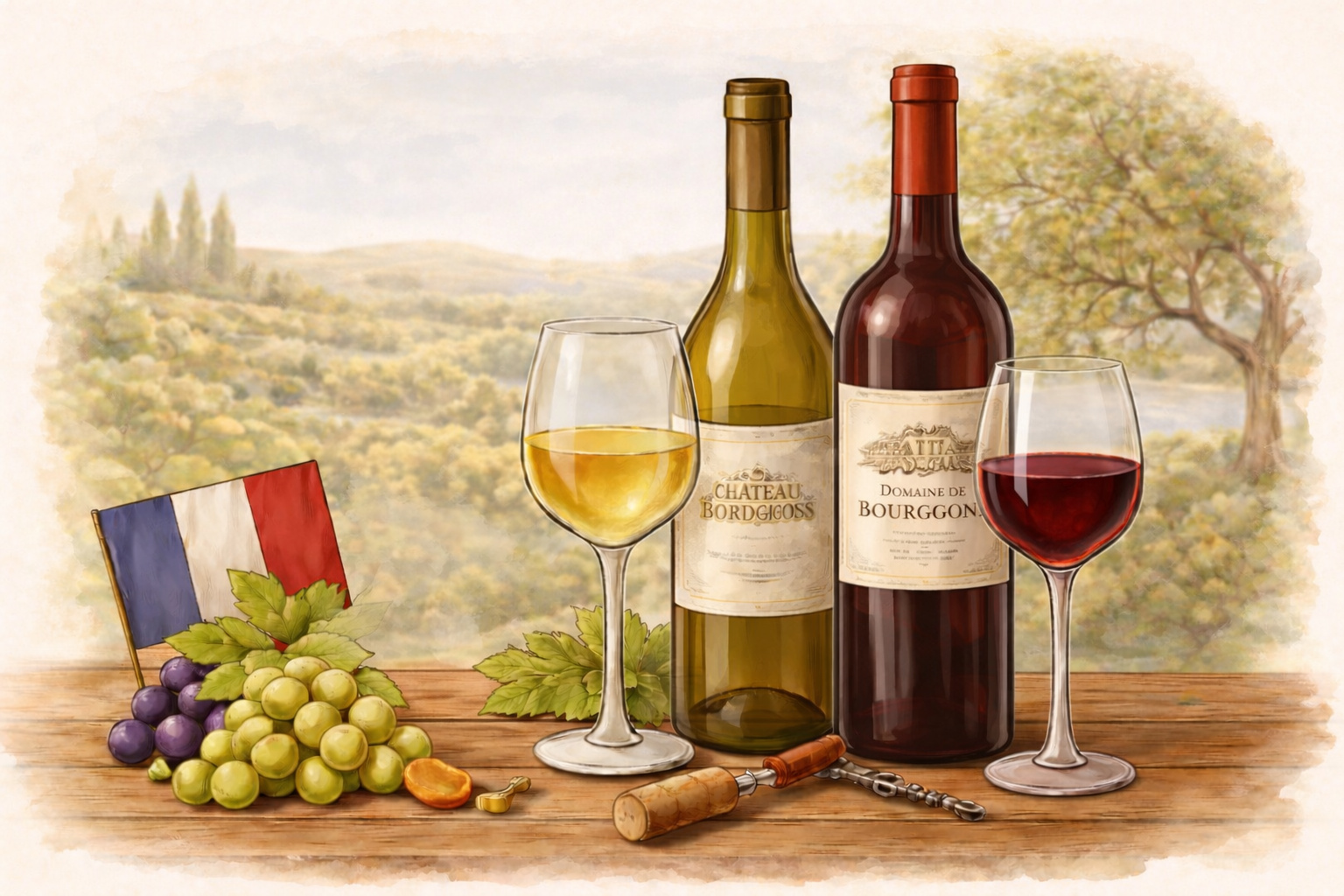
French wine labels have a reputation. They look minimal. They don’t list the grape. They’re full of names you’ve never heard of. And somehow, you’re still expected to know what’s inside the bottle. If you’ve ever picked up a French wine and thought, “How am I supposed to know what this is?” You’re not alone. The good news is you don’t need to memorize every region in France to understand French wine. You just need a simple way to decode what the label is actually telling you.
Why French Wine Labels Feel So Confusing
Most wines you see (especially from the U.S., Australia, or South America) are labeled by grape:
Cabernet Sauvignon
Chardonnay
Pinot Noir
French wines usually aren’t. Instead, they’re labeled by place. So instead of seeing Sauvignon Blanc, You might see Sancerre. And unless you already know that Sancerre is made from Sauvignon Blanc, it feels like a guessing game. This is the key shift, French wine labels tell you where the wine is from not what grape is in it. That’s not a flaw. It’s just a different system.
And once you understand that system, everything starts to click. If this idea feels new, it connects directly to how Old World wines work compared to newer wine regions. Our post on Old World vs New World Wine breaks that down further.
The Simple Way to Read a French Wine Label
Instead of trying to memorize everything, use this:
1. Start with the place (big or small)
Look for:
a region name
a village name
or a well-known appellation
That’s the most important clue on the bottle. Examples:
Bordeaux
Sancerre
Chablis
That name is doing a lot of work. It tells you:
what grapes are likely used
what style to expect
how the wine might feel (light, rich, structured, etc.)
2. Think: “What style does this place usually produce?”
You don’t need perfect knowledge, just patterns.
For example:
Sancerre → usually crisp, citrusy, high-acid white wine
Bordeaux → usually structured red blends (Cabernet / Merlot)
Chablis → usually lean, mineral-driven Chardonnay
You’re not memorizing every detail. You’re building associations over time. That’s enough. If you’ve read our Loire Valley Wine Guide, you’ve already seen how place connects directly to style.
3. Look for a few key words (optional but helpful)
French labels often include terms like:
Appellation d’Origine Contrôlée (AOC)
Mis en bouteille au château / domaine (bottled at the estate)
vintage year (the harvest year)
You don’t need to obsess over these. But in general:
AOC → controlled origin (quality + rules)
estate bottling → more direct production (often a good sign)
Think of these as supporting details, not the main signal.
4. Ignore what doesn’t matter (at least for now)
You don’t need to:
memorize every French region
know every producer
decode every word on the label
That’s where people get stuck. Instead, focus on place, style and expectation.
A Real Example (How This Works in Practice)
Let’s say you pick up a bottle labeled Sancerre. Even if that’s all you recognize, you now know:
it’s from the Loire Valley
it’s almost always Sauvignon Blanc
it’s likely crisp, citrusy, and high in acidity
That’s enough to decide “Do I want something fresh and bright right now?”
Same idea with Bordeaux. You can expect:
a red wine (most of the time)
more structure
more body
less obvious fruit, more balance
That’s already more useful than just knowing the grape. If you want a deeper breakdown of what Bordeaux actually tastes like, our Bordeaux Wine Explained for Beginners post walks through that in a simple way.
Why France Uses This System
French wine is built on the idea that where a wine is grown matters as much (or more) than the grape itself. Climate, soil, and tradition all shape how a wine tastes. So instead of saying, “This is Chardonnay”, They’re saying “This is Chablis”. Which implies a very specific kind of Chardonnay.
Once you start thinking this way, French labels stop feeling confusing and start feeling precise.
How to Use This at the Store
Next time you’re looking at French wine:
Find the place name
Ask yourself: “What style does this usually mean?”
Decide if that matches what you’re in the mood for
That’s it. You don’t need to know everything. You just need to recognize patterns.
Final Take
French wine labels aren’t harder they’re just different. They’re built around place, style and tradition. Not grape names. And once you shift your thinking from “What grape is this? to “What kind of wine does this place usually produce?” everything gets a lot simpler.
If you’re starting to notice patterns like which regions or styles you enjoy most, that’s exactly the kind of thing worth tracking. Somm Scribe helps you log wines, remember what stood out, and make smarter choices the next time you’re staring at a label that doesn’t say much.
