
Cabernet Sauvignon vs. Pinot Noir: How to Choose Between Them
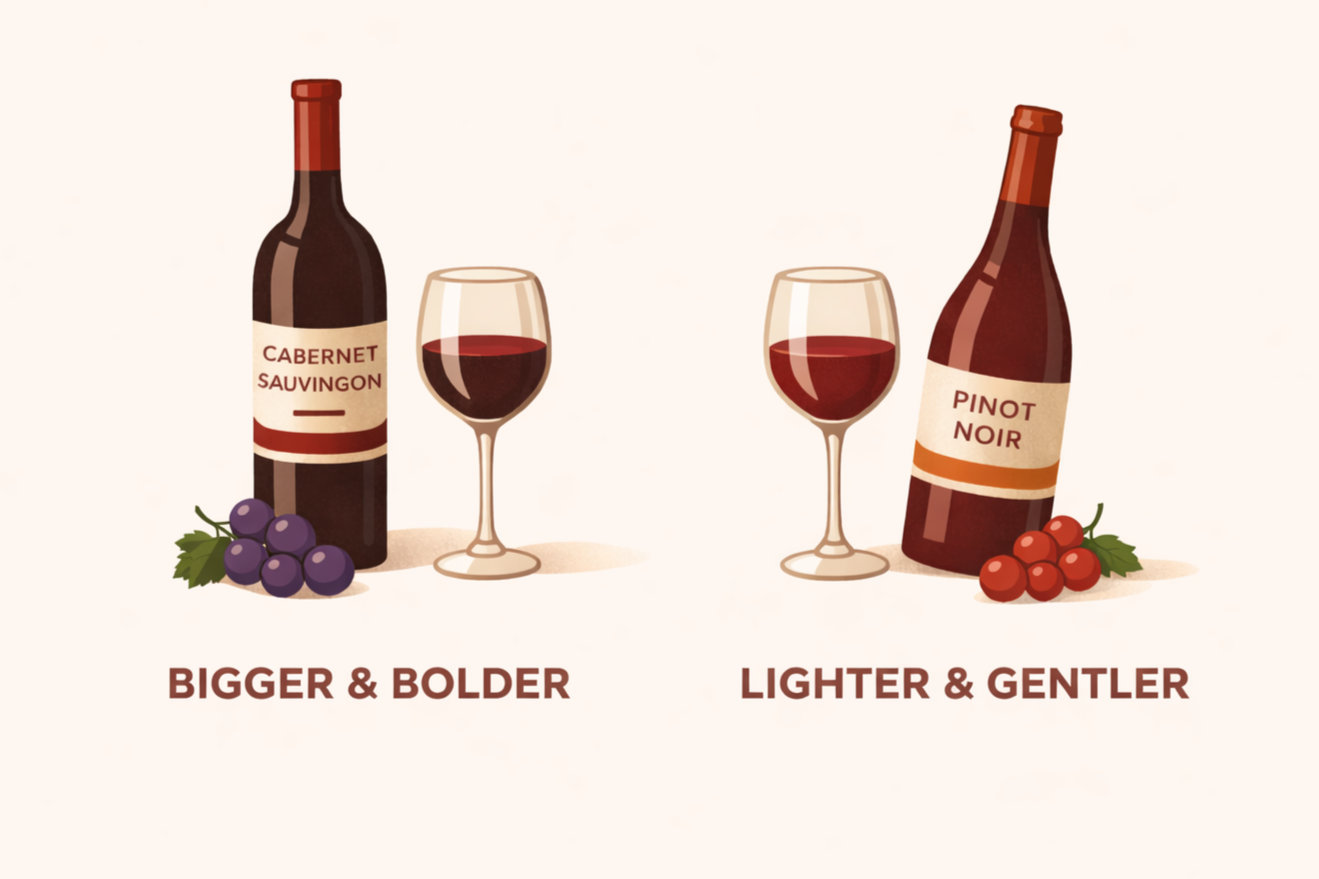
If you’ve ever stood in front of a wine shelf or scanned a wine list deciding between Cabernet Sauvignon and Pinot Noir, you’re not alone. These are two of the most common red wines you’ll see and also two of the most misunderstood.
The good news is this choice doesn’t require memorizing grape facts or knowing what you’re “supposed” to like. Cabernet Sauvignon and Pinot Noir simply offer different experiences. Once you understand that difference, choosing between them becomes surprisingly easy. By the end of this post, you’ll know which one fits your mood, your meal, and your moment.
The big-picture difference (the part to remember)
Before getting into details, here’s the simplest way to think about it:
Cabernet Sauvignon is about structure, depth, and intensity
Pinot Noir is about lightness, nuance, and transparency
Neither is better. They just speak different languages. If you remember nothing else, remember this contrast.
How they feel in your mouth (texture matters more than flavor)
A big part of why these wines feel so different has nothing to do with flavor and everything to do with texture.
Cabernet Sauvignon tends to feel:
Fuller and heavier on the palate
More firm, with a noticeable grip
Like it “plants itself” in your mouth
Pinot Noir tends to feel:
Lighter and more fluid
Smoother and silkier
Like it moves gently across your palate
This difference in feel is often more important than whether you taste blackberry or cherry—and it’s one of the fastest ways to know which you prefer. If you’re new to wine tasting, start with our simple beginner’s guide here - How to Taste Wine: A Simple Beginner’s Guide.
Fruit style: dark vs. red
Another helpful shortcut is thinking about fruit style, rather than trying to pin down specific flavors. Cabernet Sauvignon often gives a darker fruit impression, which tends to feel deeper and more intense overall. Pinot Noir usually leans toward a red-fruit impression, which comes across as brighter and more lifted on the palate.
If you want to go deeper into this idea, our post Red Fruit vs. Dark Fruit in Wine explores why this difference shows up and how to notice it without overthinking.
The key takeaway is that these fruit styles create different moods. Dark-fruit wines often feel more grounding and concentrated, while red-fruit wines tend to feel fresher and more agile. Neither is better—just suited to different moments.
Why Cabernet Sauvignon feels “bigger”
Many people describe Cabernet Sauvignon as “big” or “bold,” and that usually comes down to structure.
Cabernet Sauvignon is more likely to have:
Higher tannins (that drying sensation)
More influence from oak aging
A firmer overall shape
If tannins or oak have ever felt confusing, our posts Tannins vs. Oak: What’s the Difference? and How Oak Aging Changes Wine are great resources to learn more.
Pinot Noir, by contrast, is usually built to be:
Less tannic
Less overtly oaky
More about clarity and expression than power
Think of Cabernet as a solid building and Pinot Noir as a well-lit room—you notice different things in each.
Food pairing: when each one shines
You don’t need pairing rules to enjoy either wine, but it helps to understand why they behave differently with food. Cabernet Sauvignon tends to shine alongside richer, heartier dishes because its structure gives it something to push against. When there’s fat or protein on the plate, the wine feels smoother and more balanced, and it’s less likely to overpower the meal.
Pinot Noir, on the other hand, is often at its best with lighter or more subtle foods. Its gentler structure lets it mirror what’s on the plate rather than dominate it, especially when dishes have earthy or savory notes. Instead of standing apart from the food, Pinot Noir tends to weave itself into the experience.
Mood and occasion: the underrated deciding factor
Sometimes the best way to choose isn’t about the food—it’s about the moment.
You might reach for Cabernet Sauvignon when you want:
Something grounding and substantial
A bold, “serious” wine experience
A wine that feels like the main event
You might reach for Pinot Noir when you want:
Ease and approachability
A wine that doesn’t tire your palate
Something you can keep sipping without effort
This is similar to how you might choose different music for different moods. Same idea, different volume.
A simple decision shortcut
If you want a quick way to decide:
Choose Cabernet Sauvignon when you want power, depth, and structure
Choose Pinot Noir when you want lightness, nuance, and flow
That’s it. No expertise required.
If you enjoy noticing differences between wines, you might also like How to Compare Wines Side by Side, which turns curiosity into confidence without turning it into homework.
One last thing
Liking Pinot Noir doesn’t mean you’ve “outgrown” Cabernet, and enjoying Cabernet doesn’t mean you’re missing subtlety. Wine isn’t a ladder you climb—it’s a set of experiences you move between. The more you pay attention to how wines feel and how they fit different moments, the easier these choices become. That’s what real wine confidence looks like.
