
Dry vs Sweet Wine: How to Tell the Difference Before You Buy
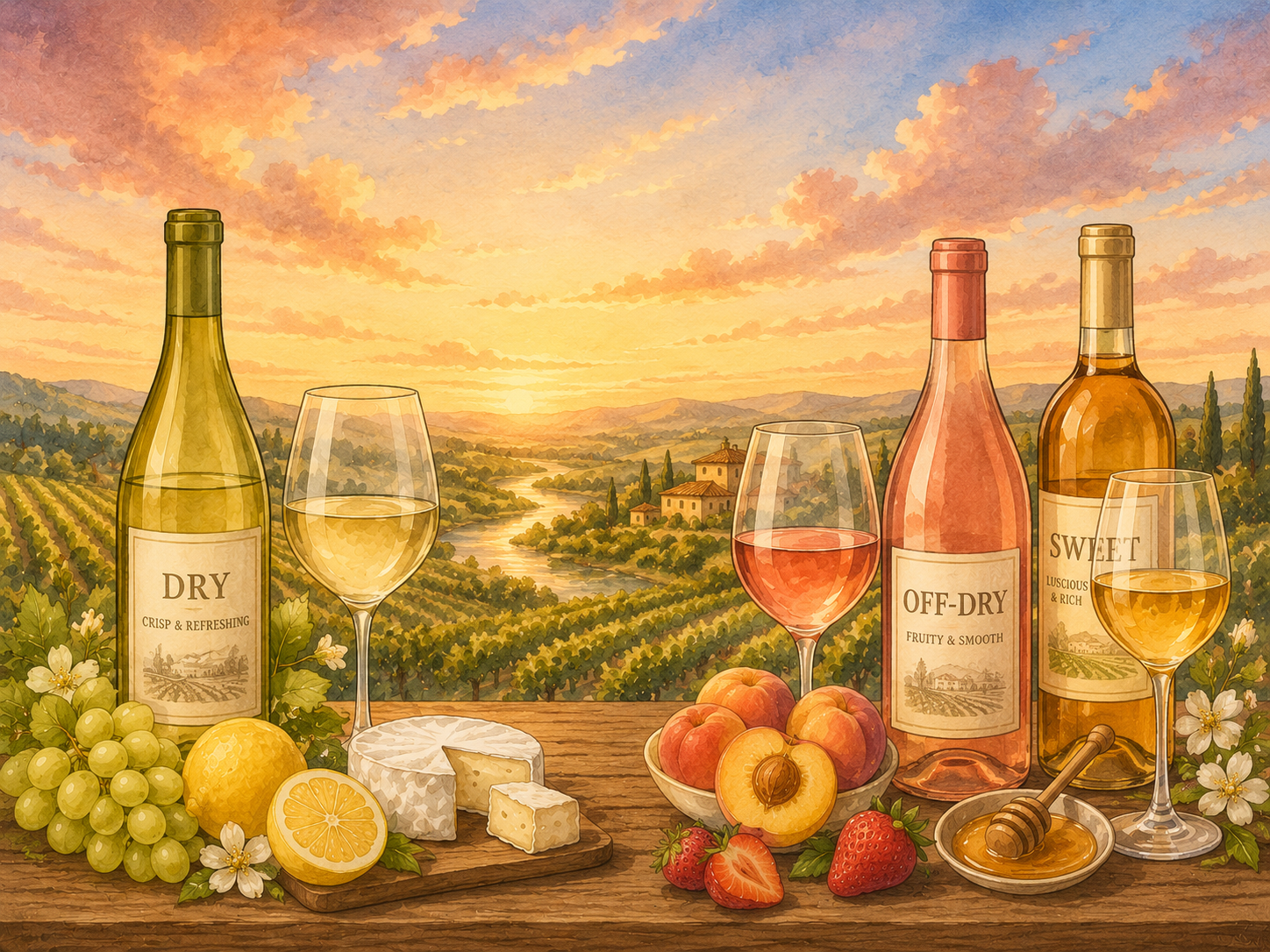
Buying wine gets a lot easier once you understand one simple thing. Dry does not mean bitter. Sweet does not mean fruity. That mix-up is where a lot of wine confusion starts. You pick up a bottle that says “dry,” expect something sharp or harsh, and end up surprised when it tastes smooth and fruity. Or you buy a wine because someone says it has notes of peach, cherry, or honey, only to find out it is not actually sweet at all. Annoying? Yes. Your fault? Not really. Wine labels do not always make this easy. So let’s make it simpler. Here is how to tell the difference between dry and sweet wine before you buy, without needing to memorize grape charts, decode every label, or pretend you know what “residual sugar” means at the store.
First, What Does “Dry Wine” Actually Mean?
A dry wine is a wine that has little to no noticeable sugar left in it. That’s it. Dry is about sweetness, not texture, bitterness, alcohol, or how serious the wine looks on the shelf. When grapes are turned into wine, yeast eats the grape sugar and turns it into alcohol. If most of that sugar gets converted, the wine tastes dry. If more sugar remains, the wine tastes sweeter. So when someone says a wine is dry, they are usually saying, “This wine does not taste noticeably sweet.”
That does not automatically mean the wine is harsh, sour, heavy, or difficult to drink. A dry wine can still taste like:
ripe berries
peaches
apples
citrus
flowers
vanilla
spices
That is where beginners often get tripped up. A wine can taste fruity and still be dry. If you want a deeper breakdown, this connects directly toWhat Makes Wine Dry.
What Makes a Wine Sweet?
A sweet wine has enough remaining sugar that you can actually taste sweetness in the glass. Sometimes that sweetness is obvious, like in dessert wine. Other times it is softer and more subtle, like a slightly sweet Riesling or Moscato. Sweet wines can taste like:
honey
peach
apricot
ripe tropical fruit
candied citrus
jam
brown sugar
But again, the important part is not the flavor note. The important question is, does the wine actually taste sweet on your tongue? That is the difference. Fruit flavors describe what the wine reminds you of. Sweetness describes how much sugar you perceive. That is why a dry Sauvignon Blanc can smell like grapefruit and passion fruit but still taste crisp and dry. And a sweet Riesling can taste like peach and honey because it has noticeable sugar left in the wine. For more detail, this is whereWine Sweetness Levels Explainedis useful.
Fruity Does Not Always Mean Sweet
This is probably the biggest beginner wine trap. A wine can be fruity without being sweet. Think about black coffee for a second. Some coffees taste fruity, chocolatey, or nutty. That does not mean someone added sugar. Wine works the same way. A dry red wine might taste like cherry, blackberry, or plum. A dry white wine might taste like lemon, green apple, pear, or peach. Those fruit flavors come from the grape, fermentation, aging, and winemaking style. They do not automatically mean the wine contains noticeable sugar.
Here is the simple version:
Fruity = flavor
Sweet = sugar.
That one distinction will save you from a lot of bad guesses. A Pinot Noir can be dry and still taste like red cherries. A Chardonnay can be dry and still taste like apple, pear, or pineapple. A Sauvignon Blanc can be dry and still smell intensely tropical. So when a label says “notes of ripe peach” or “flavors of juicy berries,” don’t assume the wine is sweet. It may just be fruity.
How to Tell If a Wine Is Dry or Sweet Before You Buy
Unfortunately, most wine labels do not just say, “This is dry, you’ll be fine.” But there are clues. You do not need to know everything. You just need to know what to look for.
1. Look for Sweetness Words on the Label
Some labels are kind enough to give you a direct hint. Words that usually suggest a dry or less sweet wine include:
dry
brut
extra brut
sec, depending on the style
trocken, often used on German wines
secco, often used on Italian wines
Words that usually suggest a sweeter wine include:
sweet
semi-sweet
off-dry
doux
demi-sec
dolce
late harvest
ice wine
dessert wine
Sparkling wine is especially label-driven. If you are buying Champagne, Prosecco, Cava, or another sparkling wine, terms like brut usually mean dry, while demi-sec means noticeably sweeter. Still wines can be less obvious, but these words are a good start. If label terms feel confusing, How to Read a Wine Labelcan help you get comfortable with the basics.
2. Know Which Wine Styles Are Usually Dry
This is not a perfect rule, but it helps. Many common table wines are usually dry unless the label says otherwise. Common dry reds include:
Cabernet Sauvignon
Merlot
Pinot Noir
Syrah or Shiraz
Malbec
Chianti
Tempranillo
Common dry whites include:
Sauvignon Blanc
Chardonnay
Pinot Grigio
Albariño
Grüner Veltliner
dry Chenin Blanc
If you grab a typical Cabernet Sauvignon, Pinot Noir, Sauvignon Blanc, or Chardonnay from a standard wine section, there is a good chance it will be dry. That does not mean you will automatically like it. Dry wines can still be light, bold, crisp, smooth, oaky, earthy, or fruity. But sweetness is usually not the main thing going on.
3. Be Careful With Wines That Can Go Either Way
Some wines are trickier because they can be made dry, off-dry, or sweet. These are the ones where beginners often get surprised. Examples include:
Riesling
Moscato
Gewürztraminer
Chenin Blanc
Rosé
Lambrusco
some sparkling wines
Riesling is the classic example. Some Riesling is bone dry. Some is gently sweet. Some is full-on dessert wine territory. Same with rosé. Some rosé is crisp and dry. Some is soft and fruity. Some is sweet enough that you’ll notice right away. So with these wines, do not rely on the grape name alone. Look for sweetness clues on the label, check the alcohol percentage, or look up the producer’s tasting notes.
4. Check the Alcohol Percentage
This is not foolproof, but it is one of the better clues when you are standing in a store.In general:
Lower alcohol can sometimes mean more sweetness.'
Higher alcohol often means the wine is drier.
Why? Because if fermentation stops before all the grape sugar becomes alcohol, the wine may have both lower alcohol and more remaining sweetness. For example, a Riesling at 8% alcohol is more likely to have noticeable sweetness than a Riesling at 12.5% alcohol. That does not mean every low-alcohol wine is sweet. And it does not mean every higher-alcohol wine is dry. But when you are comparing bottles of the same grape, alcohol percentage can be a helpful clue. Especially with Riesling, Moscato, and some German or Austrian white wines.
5. Look at the Back Label, Not Just the Front
The front label is often built for branding. The back label is where the useful clues usually live. Look for phrases like:
crisp and dry
refreshing acidity
bone dry
lightly sweet
off-dry
honeyed finish
dessert-style
ripe and plush
smooth and jammy
Some of these are more helpful than others. “Crisp and dry” is pretty direct. “Ripe and plush” does not necessarily mean sweet. It may just mean the wine has rich fruit flavor. That’s where you have to remember the fruity vs sweet distinction. A back label that mentions “honey,” “candied fruit,” or “sweet finish” may be a sign of sweetness. A back label that mentions “citrus,” “minerality,” “freshness,” or “crisp acidity” is more likely pointing you toward dry. Again, not perfect. But better than guessing based on the prettiest label.
6. Use the Shelf Tag or Store Description
If you are buying wine at a shop, grocery store, or online, the shelf tag can sometimes be more useful than the bottle itself. Look for a sweetness scale or words like:
dry
off-dry
semi-sweet
sweet
dessert
Some retailers also include flavor profiles like “crisp,” “rich,” “fruity,” “bold,” or “sweet.” Just be careful: “fruity” still does not always mean sweet. Yes, we are beating that drum again. Because it matters.
So Which Should You Buy: Dry or Sweet?
That depends on what you actually enjoy. If you like wines that feel crisp, refreshing, savory, bold, or food-friendly, you may lean dry.
Try:
Sauvignon Blanc
Pinot Grigio
dry Riesling
Chardonnay
Pinot Noir
Cabernet Sauvignon
Chianti
If you like wines that feel softer, fruitier, easier to sip, or gently sugary, you may enjoy off-dry or sweet styles.
Try:
Moscato
off-dry Riesling
sweet rosé
Lambrusco
demi-sec sparkling wine
late harvest wines
There is no moral victory in drinking dry wine. Some people act like sweet wine is “beginner wine,” which is both lazy and annoying. Sweet wines can be simple, cheap, and mass-market. They can also be beautifully made, balanced, and complex. The goal is not to graduate out of sweetness. The goal is to understand what you like and buy better bottles because of it.
The Best Way to Learn Your Preference
The next time you drink a wine, don’t just ask, “Do I like this?”, ask “Does this taste dry, off-dry, or sweet to me?” Then ask, “Is it fruity, even if it is not sweet?” That second question is where your palate starts getting sharper. You may realize you like dry wines with lots of fruit flavor. Or you may realize you like a little sweetness, but only when the wine also has enough acidity to keep it fresh. That is the kind of pattern that makes wine easier. Not memorizing every grape. Not pretending to know every region. Just noticing what is in your glass and connecting it to what you buy next.
Final Sip
Dry vs sweet wine is one of the most useful distinctions you can learn before buying a bottle.
Just remember:
Dry means little to no noticeable sweetness.
Sweet means you can taste sugar.
Fruity means fruit flavor, not automatically sugar.
Once that clicks, wine labels become less intimidating. You stop guessing based on random words like “juicy,” “ripe,” or “smooth,” and start reading the bottle with a little more confidence. And that is the whole point. Wine should feel easier to understand before you even pull the cork.
Want to get better at recognizing what you actually like in wine? Somm Scribe helps you track what you taste, notice your patterns, and make better picks the next time you buy a bottle.
